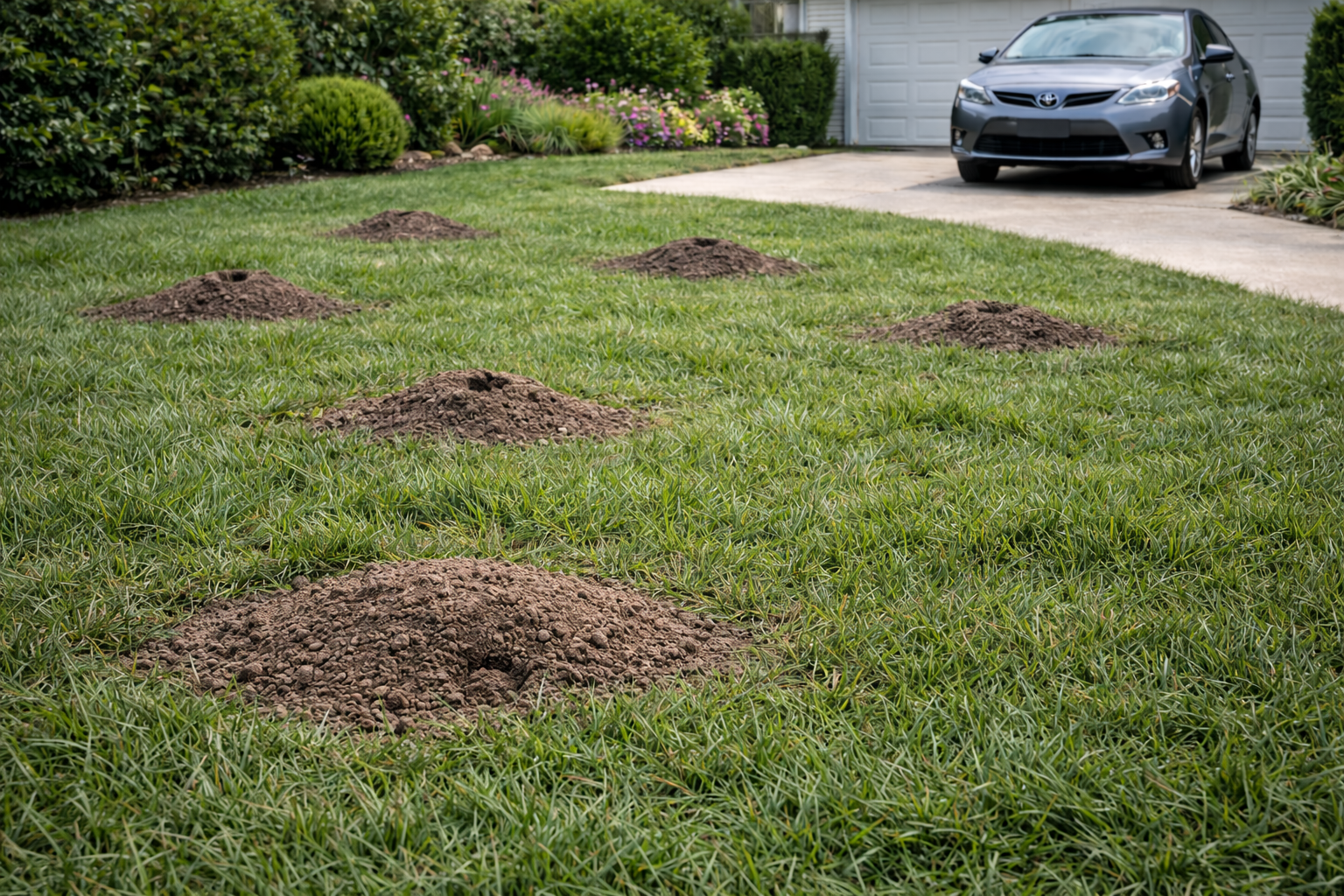
Gopher Activity in Agoura Hills, CA

Gopher activity represents a persistent ecological and residential challenge throughout Agoura Hills, a community located in the northwest portion of Los Angeles County, California. The combination of suburban landscaping, productive irrigated gardens, and proximity to native chaparral and oak woodland habitats creates ideal conditions for pocket gopher populations to thrive. Property owners and land managers in this region frequently encounter evidence of gopher burrowing, which can affect everything from ornamental gardens to agricultural plots and irrigation infrastructure.

Why Agoura Hills Has Significant Gopher Activity

Agoura Hills sits at an elevation ranging from approximately 800 to 2,000 feet above sea level, positioned on the southern slopes of the Santa Monica Mountains. This topography, combined with the region's diverse soil composition, creates particularly favorable habitat for pocket gophers. The area features a mixture of clay loam, sandy loam, and silty soils—substrates that are ideal for the extensive burrowing activities gophers require for feeding, nesting, and movement.

The Mediterranean climate of Agoura Hills, characterized by warm, dry summers and mild, wet winters, influences both gopher behavior and landscape management practices. Annual rainfall typically ranges from 15 to 20 inches, with most precipitation falling between November and March. During this wet season, soil moisture increases significantly, softening earth and making excavation easier for burrowing animals. Simultaneously, the increased moisture triggers plant growth, providing abundant food sources that support gopher populations.

Residential and commercial properties throughout Agoura Hills rely heavily on irrigation systems to maintain landscaping during the dry season, which typically extends from April through October. This supplemental water creates subsurface moisture that sustains vegetation and invertebrate populations that gophers depend upon for survival. Additionally, the proximity of developed areas to undisturbed chaparral and oak woodland habitat means gophers have ready access to refuge areas when human activities become uncomfortable. The interface between managed landscapes and native habitat serves as a corridor facilitating regular gopher movement into and out of residential zones.

Common Gopher Species in Agoura Hills

The Botta's pocket gopher (Thomomys bottae) represents the primary gopher species encountered throughout Agoura Hills and the surrounding region. This species is named after its external fur-lined cheek pouches, or "pockets," which the animal uses to transport food and nesting material through tunnels. Adult Botta's pocket gophers typically measure 5 to 6 inches in body length, with a short, sparsely haired tail adding another 1 to 1.5 inches. Their fur coloration ranges from light brown to dark brown, with variations often correlating to local soil colors—an adaptation that provides camouflage when the animal ventures aboveground.

Botta's pocket gophers possess several physical adaptations perfectly suited to subterranean life. Their eyes are small and function minimally; instead, the animal relies on highly sensitive whiskers and tactile hairs to navigate underground tunnels and locate food sources. The front feet are remarkably powerful, equipped with large claws specialized for excavating soil and removing rocks from burrow systems. The hard palate extends behind the front teeth, allowing the gopher to gnaw on roots and bulbs while keeping soil out of its mouth during feeding—a unique anatomical feature that differentiates gophers from many other burrowing rodents.

Within Agoura Hills specifically, Botta's pocket gophers inhabit both native and developed landscapes. In undisturbed areas, they occupy chaparral grasslands and oak woodland understory where native perennials and bulbs provide seasonal food sources. In residential neighborhoods such as those in the valley floor near Las Virgenes Road or the hillside communities near Malibu Canyon, gophers occupy gardens, lawns, and landscaped areas where ornamental plants, vegetables, and turf grass create concentrated food resources far exceeding those available in native habitat.

When Gopher Activity Peaks in Agoura Hills

Gopher activity in Agoura Hills follows seasonal patterns that correlate directly with rainfall, soil moisture, plant phenology, and reproductive cycles. The most intense period of burrowing and surface activity typically occurs from January through March, when winter and early spring rains saturate the soil throughout the region. During this window, the ground becomes soft and workable, allowing gophers to excavate new burrow systems and expand existing tunnel networks with minimal energy expenditure. Simultaneously, winter rains trigger germination and growth of annual plants, forbs, and grass species that provide fresh, nutrient-dense vegetation that gophers exploit intensively.

The January-through-March period also encompasses gopher breeding season, during which males actively search for females, resulting in increased movement above and below ground. Male gophers may travel considerable distances seeking mates, and this dispersal behavior brings them into new yards and creates new burrow systems. Pregnant females expand burrow systems in preparation for nesting, and lactating mothers require substantial food intake to support milk production, driving increased foraging activity.

Secondary activity peaks often occur in autumn, typically September through November, as gophers build food caches in preparation for winter. This caching behavior involves excavating tubers, bulbs, and roots, which are then transported to underground storage chambers. Fall activity tends to be less pronounced than spring activity in Agoura Hills, however, because autumn soils remain relatively dry and hard, making excavation more laborious. Summer months (June through August) typically show the lowest gopher surface activity, as the combination of dry soil, reduced plant growth, and extreme heat encourages animals to remain deeper within burrow systems where temperatures remain more stable and moisture persists longer.

Signs of Gopher Damage in Agoura Hills Yards

Property owners in Agoura Hills can identify active gopher populations through several distinctive signs. The most obvious and characteristic evidence is the presence of gopher mounds—fresh, crescent-shaped or fan-shaped piles of excavated soil appearing on the landscape surface. These mounds represent the displaced earth removed during tunnel construction and maintenance. Fresh mounds typically appear dark and moist, while older mounds become lighter in color and develop cracks as they dry. A yard with numerous fresh mounds scattered across lawn or garden areas indicates active gopher presence and significant subsurface burrowing activity.

Gopher tunnels cause visible subsidence and settling in affected yards, creating subtle depressions or soft spots in lawn areas. Walking across severely infested properties may feel like treading on unstable ground due to the extensive void spaces created by tunnel networks. This subsidence can damage irrigation systems, as underground drip lines and poly pipe become exposed, kinked, or pinched as soil settles around burrow systems. Pooling water in low areas and inconsistent plant irrigation often result from gopher damage to buried irrigation infrastructure.

Vegetation damage in Agoura Hills yards reflects gopher feeding behavior. Plants wilting or dying despite adequate irrigation may have had their roots severed or girdled by gophers feeding from below. Ornamental bulbs and tubers, commonly planted in Agoura Hills landscapes, are particular targets for gopher predation. Vegetable gardens may show complete loss of planted crops when gophers gain access to beds. Gnaw marks on tree bark near ground level and damage to young tree roots sometimes occur when gophers feed on bark and root tissues. In native oak woodland areas adjacent to residential properties, gopher activity may affect native bulb and grass populations that comprise the understory ecology.

Landscape Considerations for Agoura Hills Properties

The landscaping aesthetic prevalent throughout Agoura Hills reflects the region's Mediterranean climate and semi-rural character. Many properties feature a combination of native plantings—coast live oak, California bay laurel, California buckwheat, and California poppy—interspersed with cultivated ornamental plants and productive gardens. This mixed approach to landscape design, while ecologically valuable and visually appealing, inevitably attracts gopher populations. Native oak woodlands and chaparral plant communities occur naturally in the Santa Monica Mountains above and surrounding developed areas, and many property owners intentionally cultivate native species for aesthetic and ecological reasons.

Gophers show particular preference for certain cultivated plants commonly found in Agoura Hills yards. Ornamental bulbs such as daffodils, tulips, and iris—frequently planted for spring color in local gardens—attract gopher feeding even though many bulb species contain compounds that make them toxic to many vertebrates. Root vegetables including carrots, beets, turnips, and parsnips suffer significant predation in vegetable gardens. Fruit trees, particularly young specimens, face damage from gopher gnawing on roots and bark. Herbaceous perennials and annuals with tender, succulent growth provide concentrated food resources that gophers exploit when they discover suitable habitat.

The distribution of hardscape versus softscape in Agoura Hills properties influences gopher populations. Properties with extensive paved areas, decorative rock mulch, or hardscape features create barriers to gopher burrowing and reduce overall habitat suitability. Conversely, properties with large turf grass areas, extensive planting beds, and minimal hardscape provide continuous habitat that supports sustained gopher populations. Properties along the boundaries between suburban development and native habitat experience particularly intense gopher activity, as animals utilize native areas as refugia while exploiting cultivated landscape resources. Understanding these landscape-level patterns helps residents and land managers comprehend why certain properties seem particularly affected by gopher activity while neighboring properties remain relatively unaffected.