Gopher Control Information & Resources
GopherControl.org is an independent educational resource dedicated to helping Southern California residents understand pocket gophers, identify infestations, and learn about available management strategies. This site provides factual, research-based information about gopher biology, behavior, and control methods—empowering property owners with knowledge to make informed decisions. Whether you're dealing with an active infestation or seeking preventive information, our guides and city-specific resources offer comprehensive coverage of gopher-related topics across the region.
Understanding Gophers in Southern California
Southern California's climate, soil composition, and landscaping practices create an ideal environment for pocket gopher populations. The region's mild winters eliminate the harsh seasonal pressures that naturally limit gopher numbers in colder climates, allowing year-round breeding and activity. Residential and agricultural areas throughout Los Angeles, Orange, San Bernardino, Riverside, and Ventura counties feature the well-irrigated lawns, gardens, and orchards that gophers favor—providing abundant food sources and soft, workable soil.
The sandy and loamy soils common to Southern California are particularly conducive to tunnel construction. Gophers can excavate extensive burrow systems with minimal effort in these soil types, creating the characteristic mounds and surface runs that homeowners and property managers frequently observe. Urban and suburban development has fragmented natural predator populations, further reducing natural population controls. Combined with the region's favorable moisture conditions and diverse plantings, these factors explain why gopher activity remains persistent across Southern California's diverse landscape—from coastal communities to inland valleys and foothill regions.
What is a Pocket Gopher?
The pocket gopher most commonly encountered in Southern California is the Botta's pocket gopher (Thomomys bottae), a small rodent typically measuring 5 to 7 inches in body length with a short tail. These animals are characterized by their robust, compact build, small eyes and ears, and powerful front limbs equipped with long claws designed specifically for digging. The name "pocket" gopher derives from their fur-lined cheek pouches, which they use to transport food and nesting material through their tunnel systems. Their coloration ranges from brown to gray, providing camouflage in their underground environment.
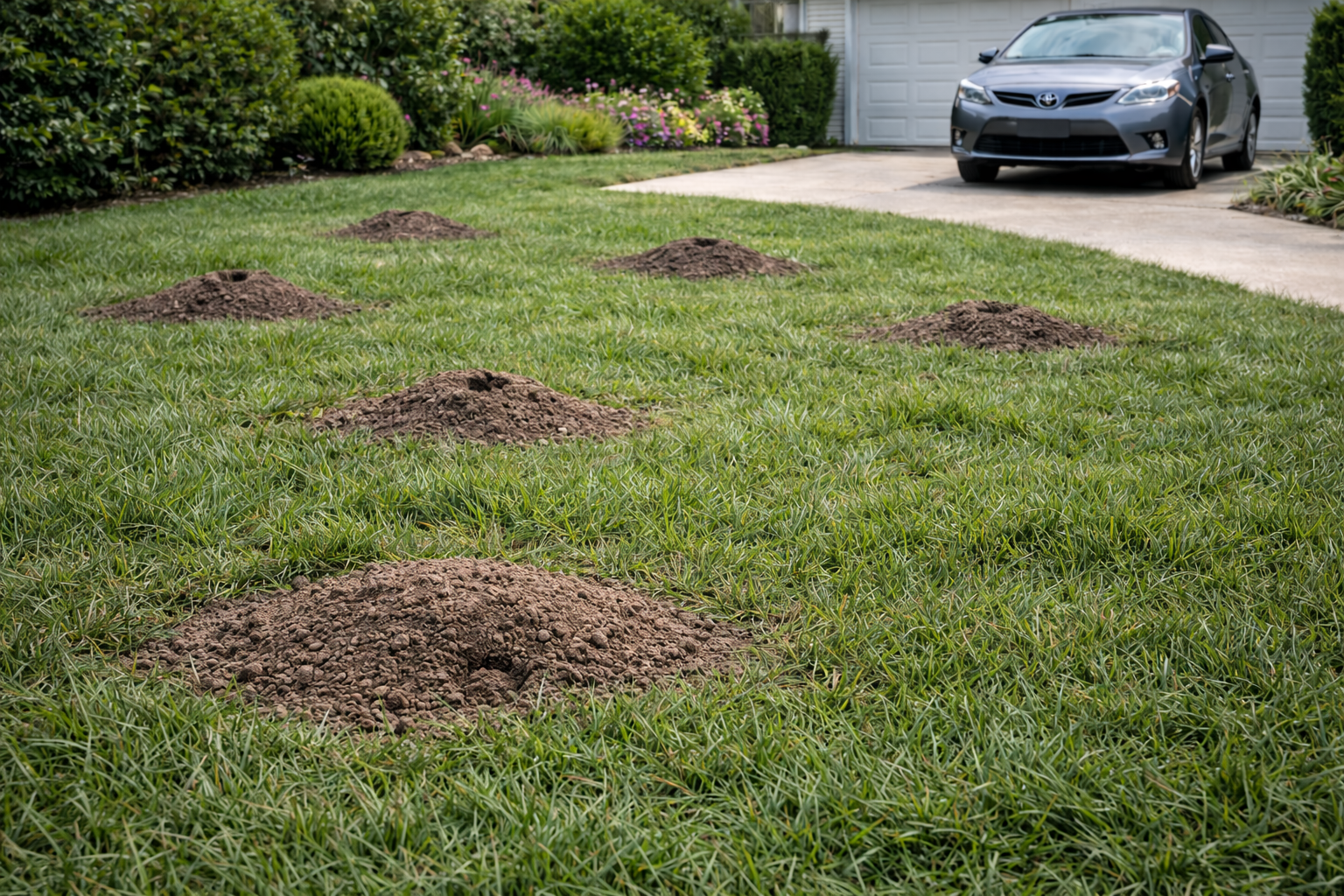
Pocket gophers are solitary, territorial animals that spend most of their lives in underground burrow systems. Each gopher maintains and defends a personal tunnel network that can extend across several hundred square feet, depending on food availability and soil conditions. They are voracious herbivores, feeding on roots, bulbs, tubers, and above-ground vegetation—particularly favoring tender plant material and agricultural crops. Gophers are capable of moving significant quantities of soil, creating the mounds visible on surface lawns as they excavate new passages and dispose of excavated dirt. Their tunneling activity, while a natural ecological behavior, frequently conflicts with human landscaping, irrigation systems, and agricultural operations.
Featured Guides
Complete Gopher Removal Guide
A comprehensive overview of gopher identification, infestation assessment, and step-by-step removal strategies. Covers trapping techniques, exclusion methods, and habitat modification approaches to address active gopher populations.
Gopher vs Mole: How to Tell the Difference
Detailed comparison of pocket gophers and moles, including physical characteristics, burrowing patterns, and behavioral differences. Essential reading for accurate pest identification before selecting control methods.
Pet-Safe Gopher Control Methods
Exploration of control strategies suitable for properties with dogs, cats, and other pets. Discusses mechanical traps, habitat modification, and exclusion techniques that minimize risk to companion animals.
Carbon Monoxide Gopher Control Explained
Technical explanation of how carbon monoxide gas treatment works in gopher burrow systems, including application methods, safety considerations, and effectiveness data for Southern California conditions.
Gopher Control Methods Compared
Side-by-side analysis of all major gopher control approaches: trapping, exclusion, fumigation, repellents, and habitat management. Includes cost considerations, effectiveness rates, and practical applicability.
Professional Exterminator vs DIY
Balanced examination of professional versus do-it-yourself gopher management. Discusses skill requirements, equipment needs, time investment, and situations where each approach may be most appropriate.
Gopher Activity by City
Gopher populations and activity levels vary across Southern California's diverse cities and regions. The following city-specific pages contain localized information about gopher prevalence, soil conditions, common control challenges, and regional factors affecting gopher management. Select your city to learn about gopher activity patterns and relevant considerations for your area.
For professional gopher control in Southern California, visit Rodent Guys — serving Los Angeles, Orange, San Bernardino, and Riverside counties.