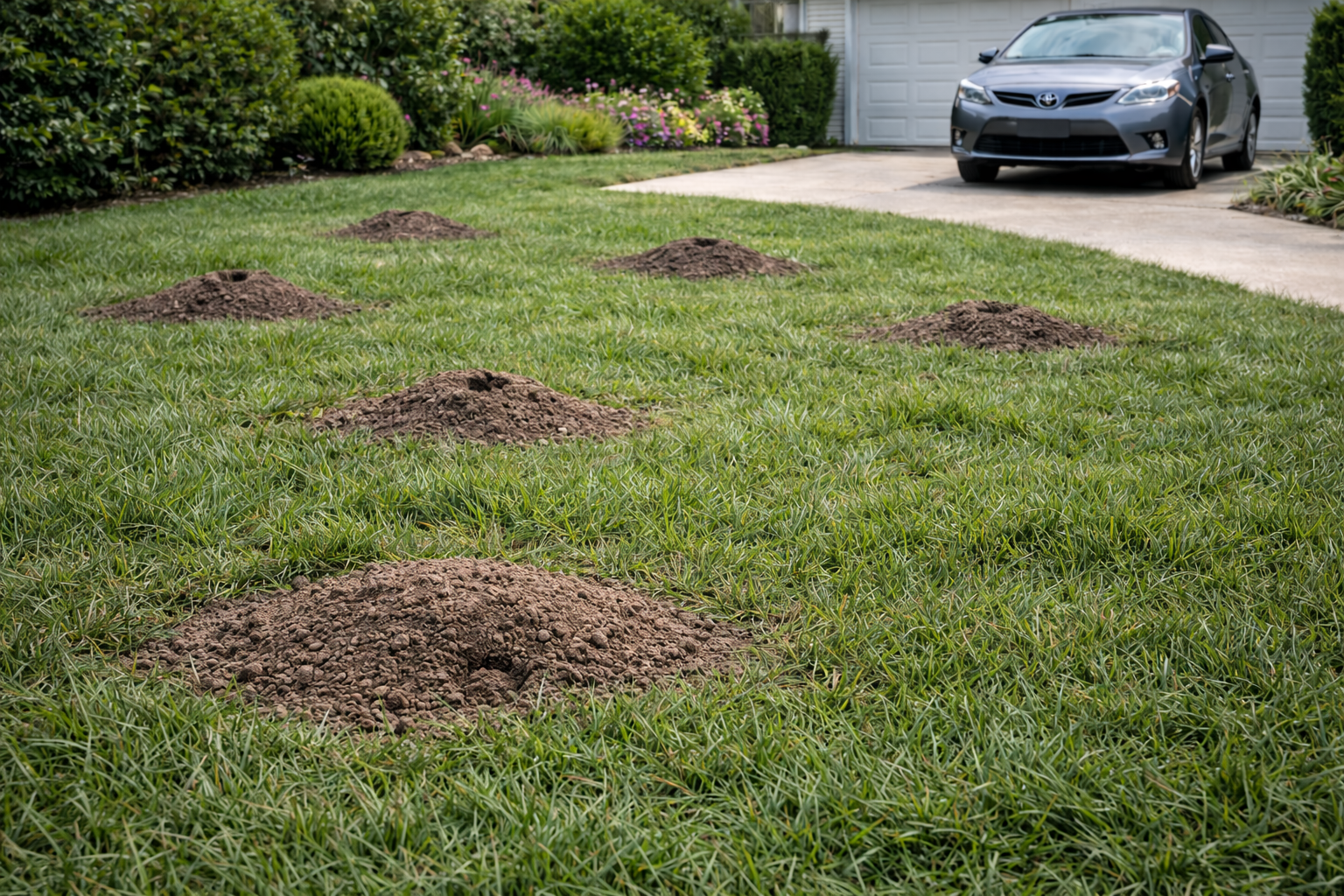
Gopher Activity in Aliso Viejo, CA
Aliso Viejo, nestled in Orange County's scenic foothills between Laguna Hills and Laguna Niguel, experiences consistent gopher activity throughout the year. The city's blend of residential developments, open space preserves, and transitional terrain creates ideal conditions for pocket gopher populations. Property owners in Aliso Viejo frequently encounter evidence of gopher tunneling systems, particularly in landscaped yards and irrigated areas.
Why Aliso Viejo Has Significant Gopher Activity
Aliso Viejo's environmental characteristics make it particularly suitable for gopher populations. The region sits on alluvial soils derived from the Santa Ana River watershed, with sandy loam compositions that are relatively easy for gophers to excavate. The city's elevation ranges from approximately 500 to 1,200 feet above sea level across its roughly 8 square miles, creating varied microclimates and soil compositions that support established gopher colonies.
The Mediterranean climate of Aliso Viejo—characterized by mild winters and dry summers—provides year-round habitat suitability. Annual rainfall averages 14 to 16 inches, concentrated primarily between November and March. Despite the naturally dry conditions, Aliso Viejo's extensive network of irrigation systems, common in the city's master-planned communities, creates persistent moisture that attracts and sustains gopher populations. Landscaped yards with regular watering maintain soft, workable soil conditions that facilitate tunnel construction and foraging activities.
The city's proximity to natural open spaces, including portions of the Aliso and Wood Canyons Wilderness Park, maintains a continuous source of wild gopher populations. These undeveloped areas serve as reservoirs for gophers that gradually expand into adjacent residential neighborhoods. The gradual transition from wilderness to suburban development means that many Aliso Viejo properties border or are relatively near to natural habitat, facilitating gopher migration and colonization.
Common Gopher Species in Aliso Viejo
The Botta's pocket gopher (Thomomys bottae) is the primary gopher species found throughout Aliso Viejo and Orange County. This species exhibits modest size compared to other pocket gopher varieties, typically weighing between 2 to 4 ounces with body lengths ranging from 4.5 to 6 inches, not including the short tail. Botta's pocket gophers display brown to grayish-brown coloration, with darker fur on the back and lighter shades on the underside.
The name "pocket gopher" derives from the distinctive fur-lined cheek pouches these animals possess, which extend from the mouth to the shoulder region. These pouches allow gophers to transport seeds, roots, and soil materials without using their forelimbs, freeing their hands for digging activities. Botta's pocket gophers possess powerful front claws and continuously growing incisors adapted for gnawing through soil and roots alike.
Within Aliso Viejo, Botta's pocket gophers inhabit both natural canyon areas and residential landscapes. They prefer areas with adequate moisture and vegetation, making irrigated yards and landscaped properties with diverse plantings particularly attractive. The species shows adaptability across the elevation ranges found in Aliso Viejo, from lower-elevation developed areas to higher chaparral zones. Individual gophers maintain solitary, territorial habits, with each adult typically occupying and defending its own tunnel system across an area of roughly one-quarter to one-half acre.
When Gopher Activity Peaks in Aliso Viejo
Gopher activity in Aliso Viejo follows distinct seasonal patterns influenced by local precipitation and temperature cycles. The primary breeding season occurs from January through March, coinciding with Aliso Viejo's rainy period. During these months, increasing soil moisture softens earth and makes tunneling less energetically demanding. Male gophers expand their tunnel systems and range more widely during breeding season, increasing the likelihood of visible activity and mound construction.
Spring months, particularly February through April, typically show the most dramatic gopher activity as newly softened soils and emerging vegetation provide abundant resources. Homeowners often notice fresh mounds and tunnel damage most prominently during this window. The activity gradually diminishes through late spring and summer as soil moisture declines and gophers concentrate on established tunnel systems and existing food sources.
Summer in Aliso Viejo brings predictably dry conditions, with June through September experiencing minimal precipitation. During these months, gophers reduce surface activity and concentrate efforts on maintaining deeper tunnel systems that access moisture. However, properties with consistent irrigation maintain gopher activity year-round, as artificial watering simulates the conditions gophers prefer. Fall and early winter see moderate activity levels as cooler temperatures and occasional rain events encourage increased foraging. The cycle then intensifies again as January rains arrive and breeding season commences.
Signs of Gopher Damage in Aliso Viejo Yards
Identifying gopher activity begins with recognizing characteristic mound formations. Pocket gophers create distinctive volcano-shaped or crescent-shaped mounds, typically 4 to 8 inches in diameter and 2 to 4 inches in height. These mounds appear most frequently in lawns, flower beds, and areas of soft soil. Unlike mole mounds, gopher mounds originate from a single tunnel opening, and the excavated soil is typically pushed laterally and compacted firmly. The soil texture in gopher mounds often appears darker and more uniform than surrounding earth.
Subsurface tunneling activity manifests as shallow ridges or raised lines running across yards, particularly visible in lawns. These ridges indicate the pathways of active tunnels near the surface, used for foraging and movement. Gophers clip vegetation at or just below ground level as they forage, leaving clean-cut plant remains near tunnel entrances and creating bare patches in otherwise vegetated areas.
Root damage appears prominently in Aliso Viejo yards containing fruit trees, vegetable gardens, or valued ornamentals. Gophers gnaw on tree and shrub roots, potentially girdling young trees and causing sudden wilting or decline. Newly planted specimens prove particularly vulnerable. Damage to buried irrigation lines represents another common sign, with gophers gnawing through drip lines, PVC pipes, and traditional sprinkler components. In severe cases, irrigation line damage can affect water delivery across entire sections of a property.
Landscape Considerations for Aliso Viejo Properties
Aliso Viejo's residential landscape design reflects Southern California's water-conscious aesthetic, with many properties featuring combinations of drought-tolerant plants, hardscape elements, and turf areas. Native plant communities in the region include California buckwheat, sage varieties, and drought-tolerant shrubs, influencing landscape preferences among homeowners. Contemporary Aliso Viejo properties frequently incorporate succulent plantings, native oak trees, and Mediterranean-style landscaping alongside traditional turf lawns.
Certain plants prove more vulnerable to gopher predation than others. Root crops including carrots, potatoes, and turnips face significant damage in vegetable gardens. Newly planted trees and shrubs lack established root systems capable of withstanding gopher activity. Young fruit trees, citrus varieties, and ornamental flowering trees attract gopher attention. Conversely, established trees with deep, woody root systems show greater resistance. Plants with toxic or unpalatable properties, including some native plants, receive less gopher pressure than tender herbaceous vegetation.
Properties utilizing extensive hardscape—patios, pathways, and raised beds—experience reduced gopher activity in those specific areas. However, the presence of hardscape often concentrates gophers in remaining soft soil zones. Aliso Viejo properties with substantial irrigation systems create persistent gopher habitat regardless of plant selection. The interaction between soil type, irrigation patterns, plant composition, and local gopher populations produces variable damage patterns across the city's diverse residential areas.
For professional gopher control in Southern California, visit Rodent Guys — serving Los Angeles, Orange, San Bernardino, and Riverside counties.