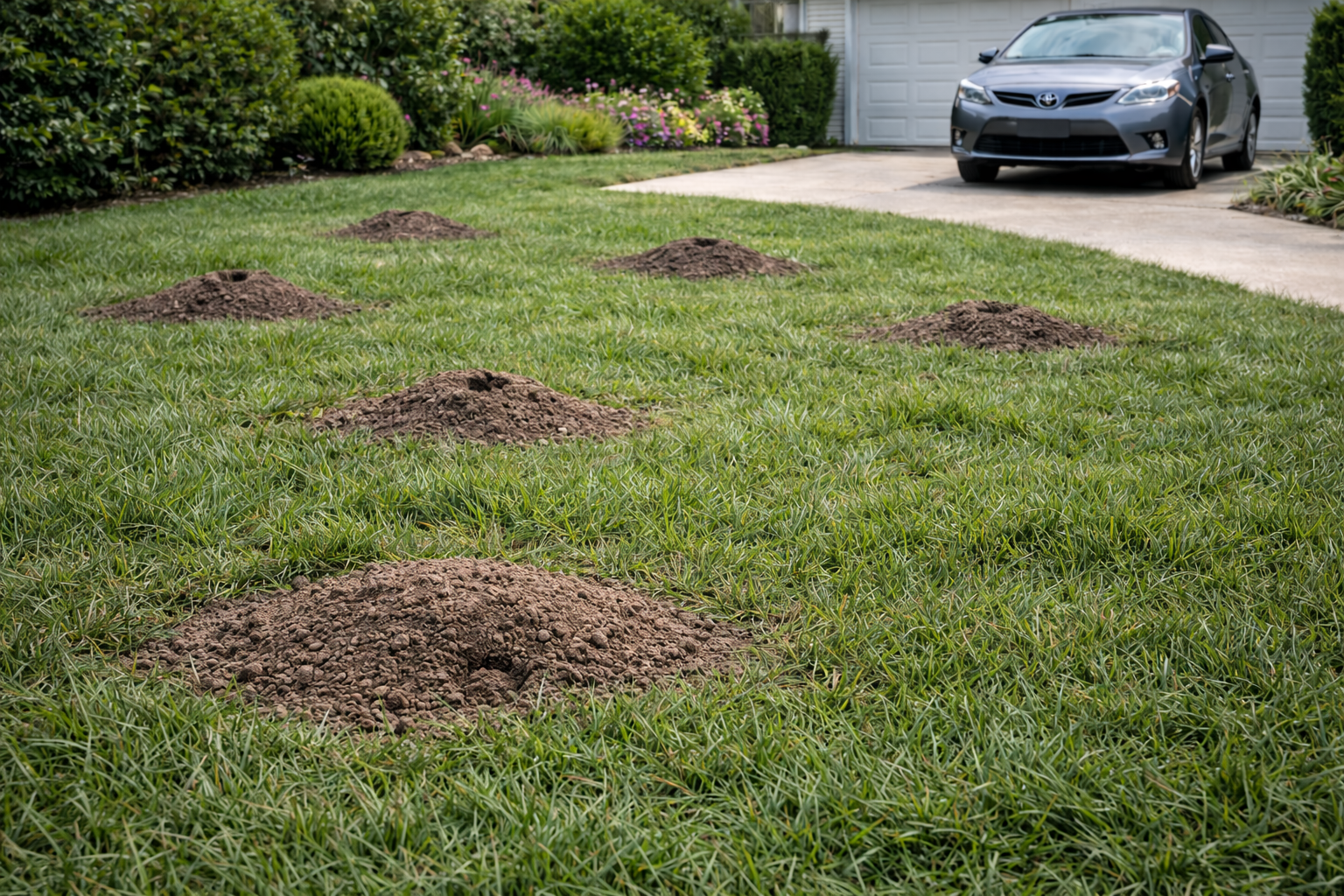
Gopher Activity in Anaheim Hills, CA

Anaheim Hills residents frequently encounter gopher activity throughout the community, particularly in the residential areas that blend into the foothills of the Santa Ana Mountains. The combination of well-irrigated residential landscapes, expansive open space preserves, and transitional terrain creates an environment where pocket gophers thrive year-round. Understanding gopher presence and behavior patterns helps property owners recognize damage early and make informed decisions about landscape management.

Why Anaheim Hills Has Significant Gopher Activity

Anaheim Hills' geography and development patterns create ideal conditions for pocket gopher populations. The region sits at the northeastern edge of Orange County, with elevations ranging from approximately 500 to 1,200 feet above sea level. This topography transitions from developed residential neighborhoods in the lower elevations to more open, undeveloped terrain toward the Santa Ana Mountains.

The soil composition throughout Anaheim Hills consists primarily of alluvial deposits and residual soils derived from granite and metamorphic parent material. These soils are generally well-draining loams and sandy loams, conditions that pocket gophers find exceptionally suitable for burrowing. The soil structure allows for relatively easy tunnel construction while providing adequate stability to prevent frequent cave-ins.

Residential irrigation systems present another major factor supporting gopher populations. Most Anaheim Hills properties maintain landscape irrigation, particularly for decorative plants, fruit trees, and maintained turf areas. The consistent moisture from irrigation systems softens soil, making excavation easier, and also attracts the root systems and bulbs that gophers consume. Additionally, the semi-arid climate—with annual rainfall averaging around 14 inches concentrated in the winter months—means that irrigated landscapes represent concentrated food and water sources that gophers actively seek.

The proximity of residential areas to open space preserves, including portions of the Anaheim Hills Open Space, also contributes to gopher populations. These undeveloped areas serve as source populations from which gophers disperse into neighboring residential neighborhoods.

Common Gopher Species in Anaheim Hills

The Botta's pocket gopher (Thomomys bottae) is the dominant gopher species throughout Anaheim Hills and most of Orange County. Named after naturalist Paolo Botta, this species is found across much of the western United States but reaches high population densities in Southern California's residential and semi-developed areas.

Botta's pocket gophers are medium-sized rodents, typically weighing between 4 and 8 ounces, with stocky bodies adapted for underground life. Adults measure approximately 5 to 6 inches in body length, with relatively short tails extending 1 to 2 inches. Their fur coloration varies considerably throughout their range; Anaheim Hills populations typically display brown to grayish-brown coloring that provides effective camouflage against local soil types.

Several physical features distinguish Botta's pocket gophers from other rodent species. Their small eyes and ears are positioned high on the head, an adaptation to their subterranean lifestyle where vision and hearing are less critical than in above-ground environments. The front feet bear long, curved claws specialized for digging. Most notably, external cheek pouches—the "pockets" referenced in the common name—extend from the mouth to the shoulders and are used to transport food and nesting material through tunnel systems.

Within Anaheim Hills, Botta's pocket gophers inhabit both developed residential properties and adjacent open spaces. Their preference for well-draining soils with adequate moisture means they are found throughout the community, though populations tend to be denser in areas with consistent irrigation.

When Gopher Activity Peaks in Anaheim Hills

Gopher activity in Anaheim Hills follows seasonal patterns linked to breeding cycles and soil moisture availability. The primary breeding season occurs from January through March, coinciding with the region's winter rainy season. During this period, male gophers become more mobile as they seek mates, and pregnant females require increased nutrition to support developing litters. This increased movement translates to more visible surface activity and new tunnel construction during these months.

Activity remains elevated through spring, particularly following the region's winter storms. Anaheim Hills receives most of its annual precipitation between November and March, with occasional storms extending into April. These rains soften the soil significantly, making excavation less energy-intensive. Property owners typically notice new mounds and fresh tunnel systems appearing within days or weeks following substantial rainfall events.

Summer activity declines noticeably as soil moisture decreases and temperatures rise. Gophers retreat deeper into tunnel systems where soil remains cooler and more stable. However, on properties with active irrigation systems, summer activity may continue at elevated levels since the consistent soil moisture replicates spring conditions.

By late autumn, gopher activity increases again as animals prepare for winter and take advantage of fall vegetation and seed availability. This secondary peak, though less pronounced than the spring peak, can result in noticeable damage in lawns and gardens during September through November. Winter months show variable activity depending on whether rainfall occurs; dry winters see less activity, while wet winters sustain high activity levels throughout the season.

Signs of Gopher Damage in Anaheim Hills Yards

Property owners in Anaheim Hills can identify gopher presence through several distinctive signs. The most obvious indicator is the appearance of earth mounds in yards and landscaped areas. Gopher mounds are conical or crescent-shaped accumulations of loose soil pushed up from tunnel systems below. Mounds typically measure 6 to 12 inches in diameter and 3 to 6 inches in height, though multiple mounds in proximity to each other often form larger disturbed areas. The soil in fresh mounds typically appears darker and more finely textured than surrounding soil.

Irrigation system damage represents another significant sign of gopher activity in Anaheim Hills. As gophers tunnel through yards, they frequently damage drip irrigation lines, soaker hoses, and subsurface supply lines. Property owners may notice sudden dry patches in otherwise irrigated landscapes, reduced water pressure in certain zones, or visible water damage above tunnel systems. This damage often appears before obvious mounding, making it an early warning sign.

Plant damage patterns also indicate gopher presence. Gophers consume roots, bulbs, and tubers underground, often killing plants without leaving obvious above-ground evidence. Properties with flowering bulbs—tulips, daffodils, or iris—may show plants that flower normally one year but fail to emerge the next season after gophers consume the bulbs during dormancy. Fruit trees, vegetable gardens, and ornamental plants with accessible root systems show wilting or decline as gophers feed on roots. In some cases, plants may be partially excavated as gophers tunnel beneath them.

Shallow surface tunnels, appearing as ridges or raised runs just beneath the soil or lawn surface, indicate recent gopher activity. These tunnels are often created by young gophers or by established populations moving between feeding areas and main burrow systems.

Landscape Considerations for Anaheim Hills Properties

Anaheim Hills residents maintain diverse landscaping styles reflecting both the region's Mediterranean-influenced climate and individual aesthetic preferences. Many properties feature combinations of drought-tolerant ornamentals, maintained lawns, fruit and shade trees, and decorative shrubs. This landscape diversity creates variable gopher vulnerability across the community.

Traditional turf grass lawns, common in Anaheim Hills despite drought considerations, present attractive targets for gophers. The accessible root systems and shallow soil profile make lawn irrigation systems particularly vulnerable to gopher damage. Properties with established turf areas frequently experience the most noticeable mounding activity.

Hardscape features—patios, pathways, decorative stone, and raised beds—provide some protection against gopher tunneling, though determined animals may tunnel beneath or around these barriers. Elevated planters and containers eliminate gopher access entirely to the planted area, though gophers may tunnel beneath raised beds if soil depth permits.

Fruit and shade trees common in Anaheim Hills yards include fig, apple, peach, citrus, and valley oak varieties. Young trees remain particularly vulnerable to gopher damage, as the developing root systems lack the depth and established networks of mature specimens. Mature trees may tolerate gopher activity for extended periods before showing visible stress, though root damage can predispose trees to disease and pest establishment.

Ornamental plantings featuring bulbs and tubers—including aloe, agapanthus, and other popular Anaheim Hills landscape plants—face seasonal vulnerability during dormant periods when gophers access stored energy reserves in underground structures.