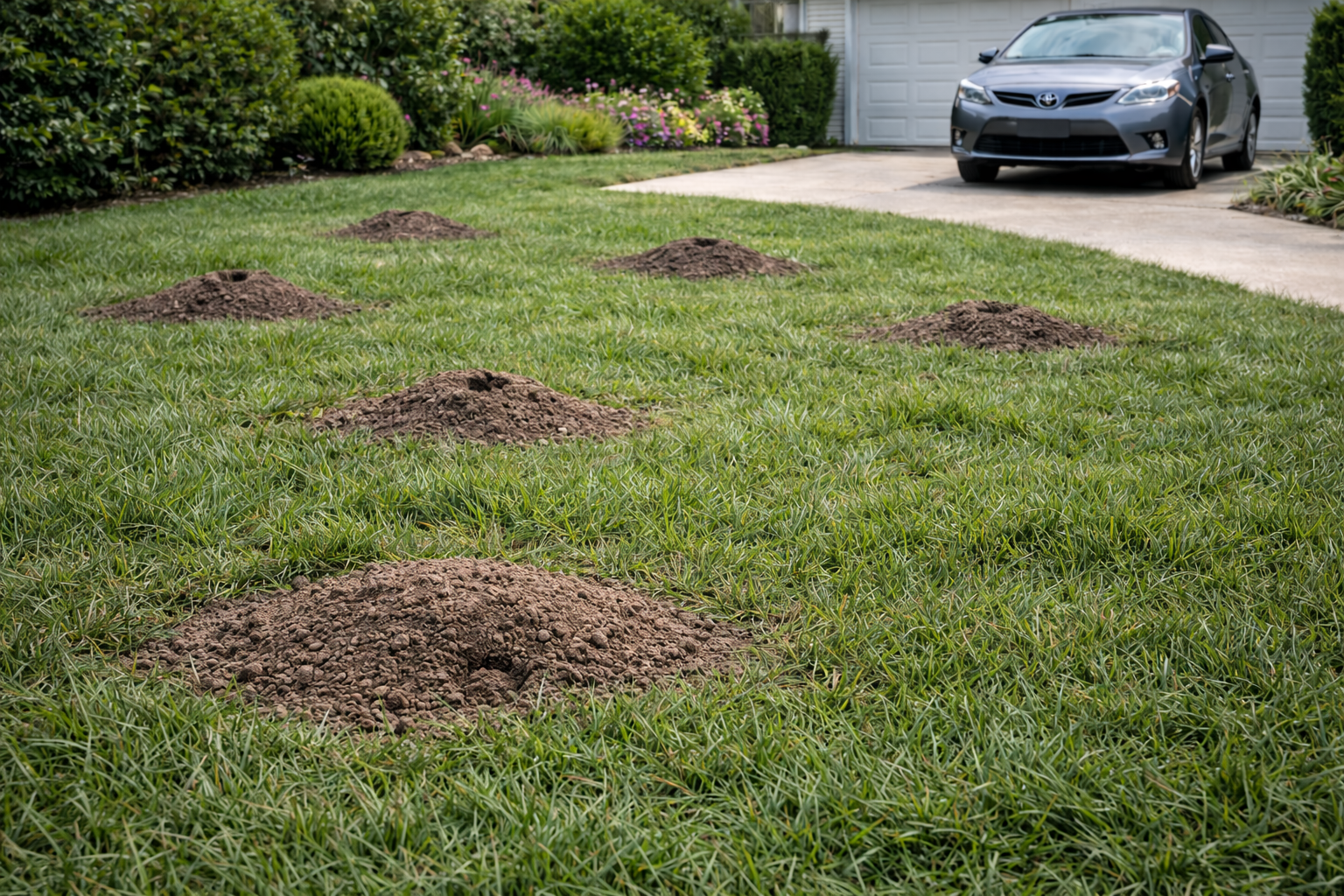
Gopher Activity in Arcadia, CA

Arcadia, located in the San Gabriel Valley foothills of Los Angeles County, experiences significant gopher activity due to its unique combination of suburban development, irrigated landscaping, and proximity to natural habitat. The city's temperate climate, abundant water resources from the San Gabriel River system, and predominantly loamy soil create ideal conditions for pocket gopher populations to thrive. Property owners throughout Arcadia—from the residential neighborhoods near Huntington Drive to the hillside communities bordering the Angeles National Forest—frequently encounter evidence of gopher burrowing activity.

Why Arcadia Has Significant Gopher Activity

Arcadia's geographic position makes it particularly susceptible to gopher infestations. The city sits at the base of the San Gabriel Mountains, with elevations ranging from approximately 280 feet in the valley floor to over 1,500 feet in the foothills. This topography creates a natural transition zone where gophers from mountain habitats readily move into developed areas. The soil composition throughout much of Arcadia consists of sandy loam and clay loam derived from alluvial deposits, which is exceptionally easy for gophers to excavate and ideal for tunnel construction.

Water availability represents another critical factor driving gopher populations. Arcadia's residential areas depend heavily on irrigation systems to maintain lawns, gardens, and landscaping year-round. Golf courses, parks, and commercial properties add to the total irrigated landscape. This constant moisture keeps soil conditions favorable for gopher activity and ensures abundant plant roots for food sources. The warm, dry summers typical of the San Gabriel Valley mean that irrigation becomes essential, creating an artificial environment where gophers can remain active even during naturally drier periods.

Climate patterns also contribute significantly. Arcadia experiences mild winters with average lows around 46°F, allowing gophers to remain active throughout the year, though activity intensifies during spring and early summer. The city's position relative to the San Gabriel Mountains creates local microclimates that support diverse vegetation—from drought-resistant native plants to water-loving ornamentals. Additionally, Arcadia's proximity to undeveloped areas, including the Angeles National Forest to the north and various regional open spaces, maintains a steady source of gopher populations that continuously migrate into developed neighborhoods.

Common Gopher Species in Arcadia

The pocket gopher species most commonly found in Arcadia is Thomomys bottae, commonly known as the Botta's pocket gopher. This species dominates the San Gabriel Valley region and is well-adapted to the local environment. Botta's pocket gophers are robust, stocky rodents typically weighing between 2 and 4 ounces, with adults reaching lengths of 5 to 7 inches from nose to tail. They possess powerful front legs with elongated claws specifically adapted for digging, small eyes suited for their subterranean lifestyle, and external cheek pouches used to transport food and nesting materials.

These gophers display variable coloration depending on local soil types. In Arcadia's sandy and loamy regions, individuals range from light brown to reddish-brown, often matching the color of the surrounding soil. This coloration serves as camouflage when gophers emerge from their burrows. Their fur is dense and relatively short, providing insulation in cool mountain regions and during cooler months. The tail is hairless and relatively short compared to other rodent species, another adaptation suited to underground existence where a long tail would be impractical.

Botta's pocket gophers are solitary animals with the exception of brief mating periods. They establish extensive burrow systems that can extend across multiple properties, with tunnel networks sometimes spanning 500 to 1,500 linear feet. In Arcadia neighborhoods, where properties range from quarter-acre suburban lots to multi-acre hillside residences, a single gopher or small family group can cause damage across several adjoining properties. Individuals show strong site fidelity, remaining in established territories for extended periods unless environmental conditions deteriorate significantly.

When Gopher Activity Peaks in Arcadia

Gopher activity in Arcadia exhibits distinct seasonal patterns driven by breeding cycles and moisture availability. The primary breeding season extends from January through March, corresponding to the region's winter rainy season. During this period, male gophers actively expand their burrow systems while searching for mates, resulting in increased mounding and surface activity. Property owners often notice the most obvious signs of gopher presence during this window—fresh soil mounds appearing almost daily on lawns and in garden beds.

Spring and early summer, from April through June, represent the secondary activity peak. Young gophers born during winter breeding disperse to establish their own territories, creating additional burrowing activity. Arcadia's spring weather during this period typically brings warm days and occasional light rains that keep soil conditions ideal for tunnel expansion. Irrigation systems activated for spring planting and summer maintenance provide consistent moisture that encourages continued digging activity. Many property owners notice significant damage to newly planted gardens during late spring, as young plants become vulnerable to root damage and gophers actively forage for fresh vegetation.

Summer months from July through September see somewhat reduced but still significant activity. While extreme heat can drive gophers deeper into the soil profile seeking cooler, more humid conditions, ongoing irrigation in residential landscapes maintains favorable conditions near the surface. Fall brings another moderation in activity as temperatures cool and soil moisture decreases unless supplemented by irrigation. Winter activity varies with rainfall patterns; wet winters prompt increased burrowing, while drier winters may see gophers remaining more sedentary in established burrow systems.

Signs of Gopher Damage in Arcadia Yards

Property owners in Arcadia can identify gopher activity through several distinctive signs. The most obvious indicator is the presence of fresh mounds of excavated soil, typically crescent or horseshoe-shaped, scattered across lawns and garden areas. These mounds result from gophers pushing soil upward while extending their tunnel systems. Fresh mounds appear dark and moist, contrasting with weathered mounds from previous activity that appear lighter and more crumbled. In Arcadia's sandy loam soils, mounds can reach 3 to 6 inches in height and spread 8 to 12 inches in diameter.

Damage to irrigation systems represents a significant and often expensive consequence of gopher activity. As gophers excavate tunnels, they frequently intersect buried drip irrigation lines, micro-irrigation tubing, and underground sprinkler systems common throughout Arcadia's residential and commercial landscapes. Gopher teeth continuously grow throughout their lives, and they gnaw on plastic irrigation components to manage tooth wear, creating leaks that waste water and reduce irrigation efficiency. Some property owners discover damaged systems only when unexpected water bills arrive or when previously healthy plants suddenly wilt.

Plant damage manifests in multiple ways. Gophers feed on roots, bulbs, and underground portions of plants, causing sudden wilting and death of ornamental plants, vegetables, and young trees. In Arcadia neighborhoods featuring native plant landscaping, gophers damage drought-resistant plants like California poppies and salvias. They also eat newly planted seedlings entirely, pulling plants down into burrows. Additionally, gopher tunneling creates air pockets beneath the root zone, causing soil to settle unevenly and root damage from loose soil contact. Raised garden beds, common throughout Arcadia's residential properties, prove particularly vulnerable to gopher damage as gophers readily burrow into these accessible locations.

Landscape Considerations for Arcadia Properties

Arcadia's landscaping patterns reflect its position as a foothill suburban community with both traditional and native plant-oriented approaches. Many established neighborhoods feature mature trees including coast live oaks, California sycamores, and various ornamental species underplanted with turf grass and shade-tolerant shrubs. Newer developments increasingly incorporate native plant gardens featuring California buckwheat, toyon, coyote brush, and native grasses that require minimal supplemental irrigation. These diverse landscaping styles present different vulnerability profiles to gopher activity. Traditional turf grass and regularly irrigated gardens attract and support larger gopher populations due to consistent moisture and abundant roots for food sources.

Certain plants prove particularly vulnerable to gopher damage in Arcadia landscapes. Young fruit and nut trees, including citrus varieties historically important to the region, suffer significant root damage. Ornamental bulbs such as tulips, daffodils, and lilies represent delicacies that gophers actively seek. Root vegetables including carrots, parsnips, and radishes planted in Arcadia's numerous vegetable gardens face constant predation risk. Conversely, native plants with deep taproots—including desert marigold and certain sage species—show greater resistance to gopher damage. Mature trees with established root systems tolerate gopher activity better than newly planted specimens.

The balance between hardscape and softscape elements influences gopher activity and damage potential. Properties emphasizing pavers, rock mulch, and architectural features rather than extensive turf experience reduced gopher pressure. Hardscape features create barriers to burrowing, though determined gophers readily tunnel beneath and around them. Arcadia properties with extensive lawns, particularly those featuring high-quality turf requiring regular irrigation, typically support more active gopher populations. Homeowners seeking to reduce gopher activity often benefit from reducing overall irrigated area, incorporating hardscape barriers, and selecting native or gopher-resistant plant species suited to Arcadia's Mediterranean climate.