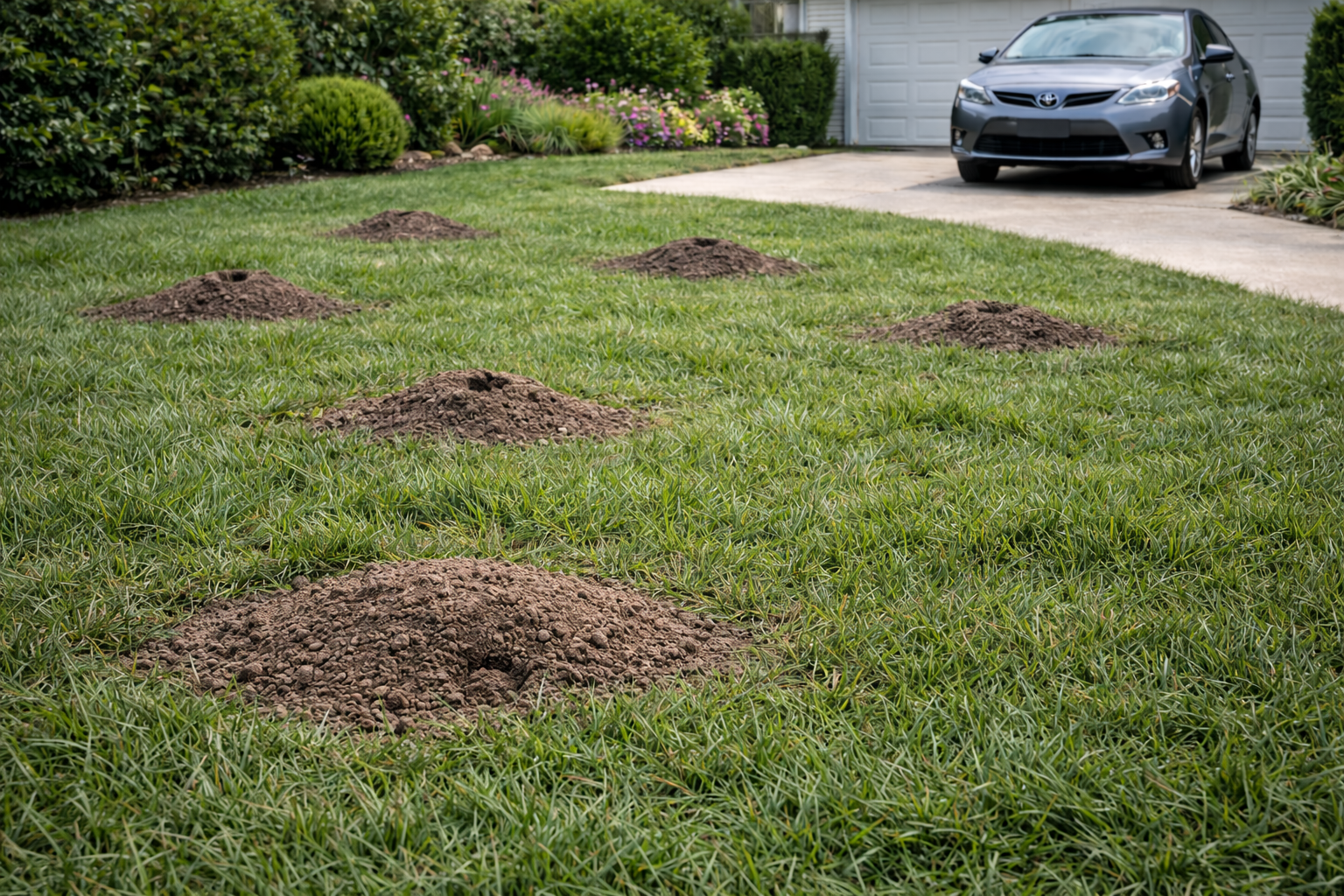
Gopher Activity in Azusa, CA
Gophers have established a notable presence throughout Azusa, the foothill community in Los Angeles County situated at the base of the San Gabriel Mountains. The combination of the city's temperate climate, extensive irrigation systems supporting residential and commercial landscaping, and proximity to natural chaparral and oak woodland ecosystems creates ideal conditions for gopher populations to thrive. Property owners in Azusa regularly encounter evidence of gopher tunneling, particularly in yards with established vegetation and irrigation infrastructure.
Why Azusa Has Significant Gopher Activity
Azusa's geographic and environmental characteristics make it particularly suitable for gopher populations. The city sits on the alluvial plain transitioning toward the San Gabriel Mountains, where soils tend to be well-draining yet rich enough to support dense root systems—precisely what gophers seek. The underlying geology, influenced by the region's history of mountain runoff and soil deposition, creates the kind of friable, workable earth where pocket gophers can tunnel with relative ease.
The region's irrigation infrastructure compounds gopher activity. Residential neighborhoods throughout Azusa depend on regular watering to maintain landscaping in the semi-arid climate, and this artificial moisture creates year-round conditions favorable to gophers. Unlike dryland areas where gophers must migrate seasonally to find adequate moisture, irrigated properties in Azusa provide consistent water access and vegetative growth.
Additionally, Azusa's proximity to the San Gabriel Mountains means wild gopher populations exist in the surrounding chaparral and foothill oak communities. As natural spaces experience seasonal dry periods, gophers naturally move toward irrigated yards and gardens. The city's expanding residential developments have increasingly fragmented these wild habitats, pushing gopher populations into suburban yards where food and moisture are abundant.
Common Gopher Species in Azusa
The Botta's pocket gopher (Thomomys bottae) is the primary gopher species found throughout Azusa and the greater Los Angeles County foothills. Named after the conspicuous fur-lined cheek pouches used to carry food, these rodents are solitary, territorial creatures that spend most of their lives underground. An adult Botta's pocket gopher typically measures 5 to 8 inches in body length, with an additional 1 to 2 inches of tail, and weighs between 2 and 4 ounces.
Botta's pocket gophers display brownish to grayish fur coloration that varies slightly depending on local soil types—a phenomenon known as soil-color matching. In Azusa's tan to reddish alluvial soils, gophers often exhibit coloring that blends with their immediate surroundings. They possess powerful forelimbs and elongated claws adapted for excavating tunnels, along with small eyes that reflect their subterranean lifestyle.
These gophers are specialized herbivores with a preference for roots, tubers, bulbs, and shoots of plants. The pocket gopher's ecological role as a burrower significantly modifies soil structure, aerating earth while simultaneously creating problems for human property owners. In Azusa's neighborhoods, Botta's pocket gophers readily establish populations in both maintained landscaping and neglected yards, demonstrating considerable adaptability across varying conditions.
When Gopher Activity Peaks in Azusa
Gopher activity in Azusa follows predictable seasonal patterns influenced by the region's Mediterranean climate and breeding cycles. The breeding season typically occurs between January and March, during which male gophers become more active and mobile as they seek females. This period often marks the beginning of increased surface activity and mounding in Azusa yards. Property owners frequently report discovering fresh mounds in late winter and early spring, coinciding with breeding behavior and increased territorial movements.
Spring rains, which characteristically fall in February and March in the Los Angeles area, trigger rapid plant growth and soil softening. These conditions make tunneling easier and provide abundant fresh vegetation for feeding. The combination of moisture, growth, and breeding activity creates a surge in visible gopher damage during spring months. Summer and early fall typically show somewhat reduced surface activity as gophers remain in deeper tunnels to escape heat, though tunneling continues throughout the year in irrigated yards.
Late fall can see another minor increase in activity as gophers prepare for winter and take advantage of fall plantings. In Azusa, where irrigation maintains moisture year-round, gophers never truly enter dormancy. The peaks and valleys of seasonal activity are less pronounced in irrigated areas compared to wild populations, meaning property owners may encounter active gopher tunneling during any season, with winter and early spring representing the most visible periods.
Signs of Gopher Damage in Azusa Yards
The most visible sign of gopher presence is the distinctive mounding pattern created during tunnel excavation. Botta's pocket gophers in Azusa yards produce fan-shaped or crescent-shaped mounds as they push soil upward while creating lateral tunnel systems. These mounds typically measure 4 to 8 inches in diameter and 2 to 4 inches in height, appearing suddenly overnight in lawns and garden beds. Unlike mole mounds, gopher mounds are often asymmetrical and packed with loose soil plugs.
Beyond mounding, property owners in Azusa observe systematic root damage in established plants, shrubs, and trees. Gophers clip roots from beneath the soil surface, sometimes completely severing root systems from valuable landscape plants. Affected vegetation may wilt, yellow, or decline over weeks without obvious surface causes. In vegetable gardens and newly planted areas, gophers create particularly noticeable damage by consuming seeds, seedlings, and bulbs.
Irrigation system damage represents another significant problem in Azusa properties. Gopher tunneling frequently intersects with drip lines, soaker hoses, and irrigation tubing, creating leaks that waste water and undermine system functionality. Underground burrows also disturb hardscape features, occasionally causing settlement cracks in patios or altering drainage patterns on properties. Gophers may also create subsurface pathways that allow water to collect abnormally in certain yard areas, creating soggy spots that promote fungal growth in landscape plantings.
Landscape Considerations for Azusa Properties
Azusa's residential landscape aesthetic has evolved to accommodate the region's semi-arid climate while maintaining green, appealing yards. Contemporary landscaping in Azusa typically combines drought-tolerant shrubs such as toyon, manzanita, and California buckwheat with ornamental grasses and carefully zoned irrigation. Older established neighborhoods feature more traditional plantings including fruit trees, roses, and densely vegetated gardens—exactly the conditions that attract gophers. Many properties blend these approaches with hardscape elements including patios, walkways, and retaining walls characteristic of foothill communities.
Certain plants commonly found in Azusa landscapes are particularly vulnerable to gopher damage. Fruit trees including citrus, stone fruits, and nuts represent significant investments, yet their root systems attract heavy gopher predation. Vegetable gardens, raised or in-ground, consistently experience damage from gophers accessing plants from below. Ornamental bulbs such as tulips and daffodils, popular in Azusa spring plantings, are consumed readily by gophers. Conversely, established native shrublands naturally present in foothill areas see gopher activity as a normal ecological process.
Properties with extensive softscape—lawns, beds, and densely planted areas—provide optimal gopher habitat. Yards transitioning toward hardscape features including gravel, decomposed granite, and stone mulches offer less suitable tunneling substrate and can deter gopher activity somewhat. However, gophers readily adapt to various conditions, and even properties with significant hardscape may experience tunneling in adjacent soft soil zones. The irrigation infrastructure supporting Azusa's landscaping ultimately remains the primary factor encouraging and sustaining gopher populations regardless of specific plant selection.
For professional gopher control in Southern California, visit Rodent Guys — serving Los Angeles, Orange, San Bernardino, and Riverside counties.