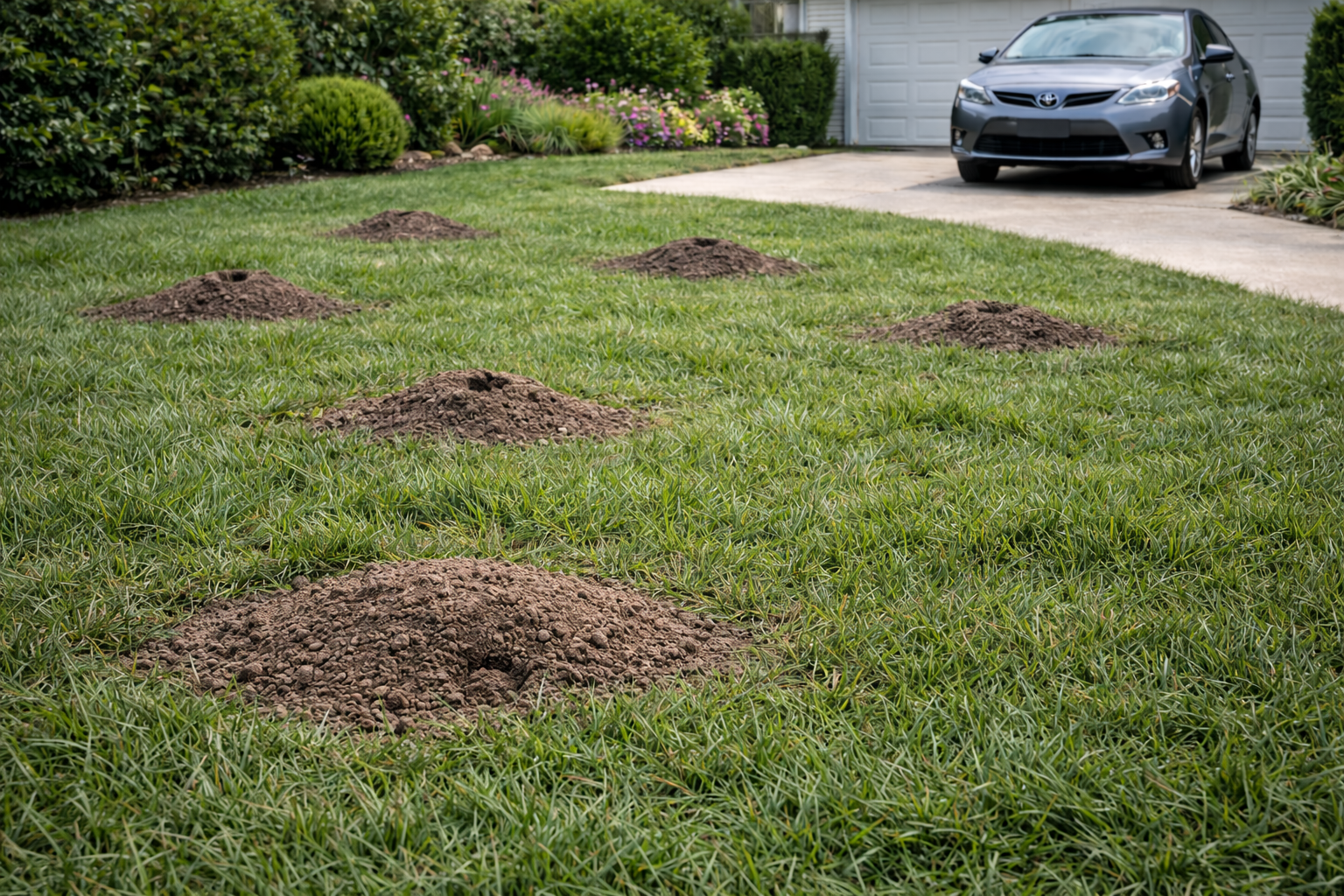
Gopher Activity in Bell Gardens, CA
Bell Gardens, a small municipality in southeast Los Angeles County positioned between Downey and Paramount, experiences consistent gopher activity throughout the year. The combination of residential landscaping, agricultural heritage, and local soil composition creates an ideal environment for pocket gopher populations to establish and thrive. Property owners in Bell Gardens frequently encounter evidence of gopher tunneling systems, particularly during spring and early summer months when ground moisture levels support extensive burrowing activity.
Why Bell Gardens Has Significant Gopher Activity
Bell Gardens' geographic location and environmental characteristics create particularly favorable conditions for gopher colonization. The municipality sits within the Los Angeles Basin, an area with historically productive agricultural land that transitioned to suburban residential development. The underlying soil composition in Bell Gardens consists primarily of fine-textured alluvial deposits—silts and clays that compact moderately, making them suitable for tunnel construction without requiring excessive energy expenditure by burrowing animals.
The region's climate patterns significantly influence gopher activity levels. Bell Gardens experiences a semi-arid Mediterranean climate with most precipitation concentrated between November and March, with annual rainfall averaging approximately 14-15 inches. This seasonal moisture pattern corresponds with peak gopher breeding and activity cycles. The winter and early spring rains soften the soil, making excavation easier, while irrigation systems throughout residential neighborhoods provide supplemental moisture during drier months—extending the period during which gophers can actively tunnel and forage.
Proximity to remaining open spaces and coastal sage scrub habitat in nearby Whittier Narrows adds another dimension to Bell Gardens' gopher population dynamics. The preserved natural areas serve as source populations, with individual gophers dispersing into residential zones where food resources are abundant and predation pressure is reduced. The abundant ornamental plantings common in Bell Gardens landscaping—including fruit trees, vegetable gardens, and decorative shrubs—attract gophers seeking both food and suitable burrowing habitat.
Common Gopher Species in Bell Gardens
The Botta's pocket gopher (Thomomys bottae) represents the primary gopher species encountered throughout Bell Gardens and surrounding Los Angeles County areas. This medium-sized rodent measures approximately 5-6 inches in body length, with a tail adding another 1-1.5 inches. The fur coloration typically ranges from dark brown to grayish-brown, providing effective camouflage in local soil environments. Botta's pocket gophers display the characteristic features of pocket gopher family members: small eyes, small rounded ears, and prominent front incisors used for excavation and gnawing.
The species derives its common name from the external fur-lined cheek pouches used to transport soil and food materials. These pouches can extend from the mouth to the shoulders, allowing individual gophers to move substantial quantities of soil during tunneling operations. In Bell Gardens' predominantly residential setting, property owners may observe the evidence of these pouches' work—extensive mounding across lawns and garden beds—more frequently than they observe the animals themselves, as Botta's pocket gophers are primarily subterranean and nocturnal.
Botta's pocket gophers maintain solitary territorial habits throughout most of the year, with individual animals occupying and defending home ranges that may extend 200-600 square feet depending on food availability and soil conditions. In Bell Gardens' mixed residential environment, where yard sizes vary considerably and landscaping intensity differs from property to property, individual gophers may concentrate activity in resource-rich areas—such as vegetable gardens or newly irrigated landscaping—while avoiding less suitable habitat.
When Gopher Activity Peaks in Bell Gardens
Gopher activity in Bell Gardens follows seasonal patterns largely determined by moisture availability and reproductive biology. The breeding season typically extends from January through March, coinciding with the region's winter rainfall period. During these months, male gophers expand their movements seeking breeding opportunities, resulting in increased mounding activity and greater likelihood of property owners observing fresh excavation. The metabolic demands of reproduction also increase overall activity levels during this window.
Spring months (April-May) represent the secondary activity peak in Bell Gardens. As soil moisture from winter rains persists and temperatures warm, young gophers from early breeding efforts disperse from maternal burrows seeking their own territories. This dispersal phase generates visible damage across properties as juvenile animals tunnel extensively while establishing new burrow systems. Simultaneously, property owners typically initiate spring irrigation and landscaping projects, further softening soil and attracting gopher attention to newly cultivated areas.
Summer activity (June-August) declines somewhat in Bell Gardens as soil moisture decreases and temperatures rise. However, irrigation systems maintaining landscape moisture through the dry season can sustain gopher populations and prolong active tunneling. Fall months (September-November) generally show reduced activity as the approaching winter influences gopher behavior and as vegetation maturity makes certain food sources less palatable. Winter activity continues at moderate levels, particularly following significant rainfall events that soften ground conditions and increase earthworm and grub availability, both important seasonal food sources.
Signs of Gopher Damage in Bell Gardens Yards
The most visible indicator of gopher activity in Bell Gardens properties involves mound formation. As gophers excavate burrow systems, they must remove considerable quantities of soil. Unlike moles that create continuous ridges, pocket gophers deposit soil in distinct conical mounds typically 4-8 inches in diameter and 2-4 inches in height. These mounds frequently appear in clusters across lawns, following linear patterns that correspond to subsurface tunnel routes. In established burrow systems, individual gophers may maintain multiple mound locations, using some as primary excavation points and others as secondary vents.
Gopher damage to irrigation infrastructure represents a particularly common problem in Bell Gardens' residential landscape. Pocket gophers tunnel beneath irrigation lines seeking roots and rhizomes, often severing polyethylene tubing during excavation. Property owners frequently notice sudden drops in irrigation system pressure or unexpected dry patches in otherwise well-watered landscape sections, symptoms indicating pipeline damage from gopher activity. The persistent moisture from damaged irrigation further attracts gophers, creating a reinforcing cycle where landscape irrigation investments are compromised by burrowing activity.
Plant damage from gopher feeding extends beyond surface vegetation. Gophers consume plant roots, bulbs, and tubers directly, explaining the sudden wilting or death of ornamental shrubs, fruit trees, and garden vegetables without visible insect damage. The extent of damage often surprises property owners, as relatively small animals can eliminate substantial plants by consuming root systems entirely. Garden beds with high concentrations of gopher activity may show multiple dead or dying plants scattered throughout, with underground investigation revealing extensive root consumption and tunnel networks disrupting soil structure.
Landscape Considerations for Bell Gardens Properties
Bell Gardens' residential landscape character reflects a mix of older suburban development and gradual renovation, with property owners employing diverse landscaping approaches. Many established properties feature traditional ornamental plantings including flowering shrubs, accent trees, and herbaceous perennials typical of mid-20th century suburban design. More recent renovations increasingly incorporate drought-tolerant native and adapted plant palettes reflecting regional water conservation awareness. Both approaches present gopher-related challenges, though the specific vulnerable plant categories differ between traditional and contemporary landscape styles.
Traditional Bell Gardens landscapes often feature fruit and nut trees—citrus, avocado, and walnut species—that attract gopher populations seeking nutrient-rich roots and fallen fruit. Root systems of these trees, particularly those recently planted, suffer significant predation from gopher activity. Similarly, vegetable gardens remain popular in many Bell Gardens neighborhoods given the area's agricultural history, and raised beds or in-ground garden plots experience substantial gopher pressure, especially during growing seasons when abundant plant material provides attractive food sources.
Contemporary drought-tolerant landscaping in Bell Gardens typically incorporates succulents, native shrubs, and Mediterranean-climate plants that require less supplemental water. While such landscapes reduce irrigation-related moisture that attracts gophers, many drought-tolerant species possess substantial root systems or underground storage organs equally attractive to burrowing rodents. Properties implementing hardscape-dominated designs—with extensive pavers, rock features, and minimal planting—experience reduced gopher activity simply due to decreased burrowing substrate and reduced food availability, though complete elimination remains difficult in areas with established regional populations.