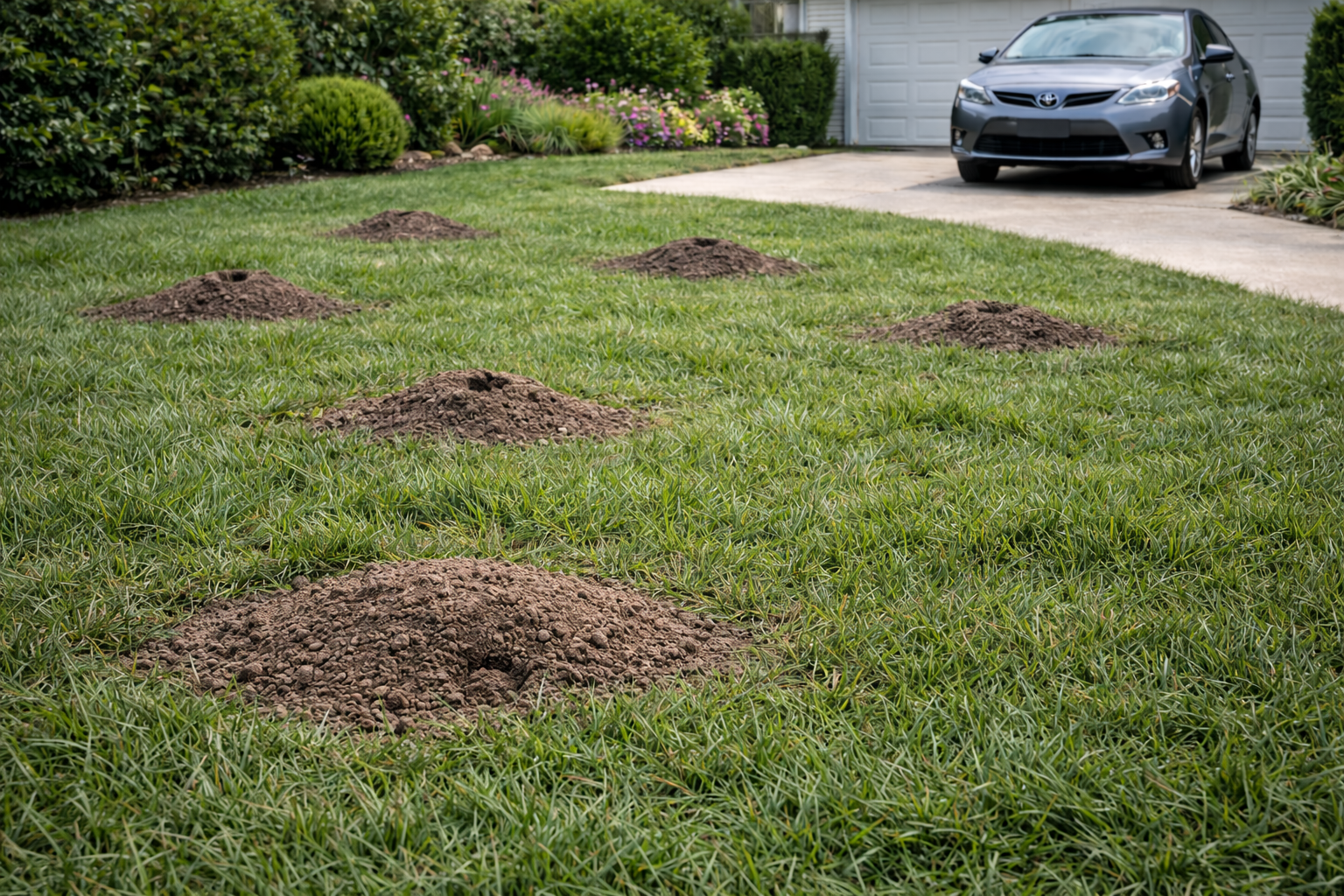
Gopher Activity in Beverly Hills, CA
Gopher activity represents a persistent challenge for property owners throughout Beverly Hills, a community where manicured landscapes and extensive irrigation systems create ideal conditions for burrowing rodents. The combination of the region's Mediterranean climate, premium residential landscaping, and proximity to natural open spaces means gophers are not merely occasional visitors but established residents across many neighborhoods. Understanding the scope and nature of gopher presence in Beverly Hills helps residents recognize problems early and make informed decisions about management strategies.
Why Beverly Hills Has Significant Gopher Activity
Beverly Hills sits within the Santa Monica Mountains foothills and overlies soils that are particularly conducive to gopher burrowing. The area's native soil composition includes silty loams and clay loams derived from weathered granite and sedimentary parent materials—soil types that gophers can excavate efficiently while providing structural integrity to their tunnel systems. The region's elevation ranges from approximately 200 feet in lower areas near West Hollywood to over 1,000 feet in the Hollywood Hills portions, creating varied terrain that supports gopher populations across diverse microhabitats.
The extensive irrigation infrastructure throughout Beverly Hills amplifies gopher habitat suitability considerably. Residential and commercial properties depend on consistent watering to maintain the lush landscaping typical of the community, and this irrigation creates soft, workable soil conditions year-round—a dramatic contrast to the drier conditions that would naturally exist in this semi-arid climate. Gophers require moist soil for effective tunneling, and the abundant water availability transforms Beverly Hills into prime gopher territory. Additionally, Beverly Hills' proximity to the Santa Monica Mountains and other undeveloped open spaces means gopher populations can migrate from wild areas into residential zones, particularly during seasonal shifts or when wild food sources become scarce. The abundance of ornamental plants, turf grasses, and vegetable gardens provides superior nutrition compared to native scrubland vegetation, making residential properties especially attractive to foraging gophers.
Common Gopher Species in Beverly Hills
The Botta's pocket gopher (Thomomys bottae) represents the primary gopher species affecting Beverly Hills properties, though closely related pocket gopher species occasionally appear in foothill locations. The name "pocket gopher" derives from the external fur-lined cheek pouches these animals use to transport food and nesting materials. Adult Botta's pocket gophers typically measure five to seven inches in body length with a short tail extending one to two inches, presenting a robust, compact appearance adapted for subterranean life.
Physically, Botta's pocket gophers possess powerful front legs with enlarged claws specifically designed for digging, small eyes suited to low-light tunnel environments, and sensitivity to vibrations that helps them navigate underground. Their fur ranges from light brown to nearly black, with regional variation across Southern California populations. Beverly Hills gophers tend toward medium-brown coloration, though significant individual variation occurs. These rodents are solitary and territorial, with each individual maintaining and defending a complex tunnel network that can extend across hundreds of square feet. A single gopher may excavate tunnel systems spanning multiple properties, creating the characteristic mounds and subsurface damage that property owners encounter. Botta's pocket gophers remain active throughout the year, though they adjust activity patterns seasonally in response to soil moisture, food availability, and breeding cycles.
When Gopher Activity Peaks in Beverly Hills
Gopher activity in Beverly Hills exhibits distinct seasonal patterns driven by the region's Mediterranean climate and gopher breeding cycles. The most visible activity surge occurs during late winter and early spring, typically from January through March, when gophers engage in breeding behavior and soil conditions become increasingly favorable for tunneling. Winter and early spring rains in the Beverly Hills area increase soil moisture, making excavation easier and reducing energy expenditure for burrowing. These months also coincide with increased plant growth, providing abundant food resources as cool-season vegetation emerges and ornamental landscaping begins active growth phases.
Spring represents a secondary peak period extending through May, as soil remains adequately moist from winter precipitation while temperatures increase and plant productivity accelerates. Summer activity typically decreases somewhat as soil dries considerably in the upper layers, though gophers maintain active tunneling in deeper, moister zones and continue foraging in irrigated areas. By autumn, as summer watering continues and fall rains begin, gopher activity can increase again, particularly in September and October. Winter activity never ceases entirely since gophers do not hibernate, but reduced soil workability and decreased plant availability moderate population visibility. Property owners in Beverly Hills should monitor for fresh mounding activity most vigilantly during late January through May, when conditions optimally support rapid population increase and active tunnel expansion. Winter rains prove particularly important; unusually wet winters can trigger significantly elevated gopher populations the following spring.
Signs of Gopher Damage in Beverly Hills Yards
The most obvious sign of gopher presence involves the characteristic mounding pattern created during tunnel excavation. Gophers push loosened soil to the surface, creating crescent or horseshoe-shaped mounds typically four to six inches high and eight to twelve inches wide, though larger mounds occur in looser soils or where multiple tunneling sessions concentrate material. These mounds appear throughout Beverly Hills yards, particularly in lawn areas, garden beds, and areas with consistent irrigation. Unlike mole mounds, which form symmetrical volcano-shaped structures, gopher mounds typically appear more asymmetrical with a plugged tunnel opening on one side.
Beyond surface mounding, gophers cause subsurface tunnel damage that undermines property infrastructure and landscaping. Their tunnel networks destabilize irrigation lines, creating leaks that waste water and increase utility costs—a significant concern given Beverly Hills' semi-arid climate and water conservation focus. Tree and shrub roots often grow into gopher tunnels, exposing roots to air and desiccation. Valuable ornamental plants throughout Beverly Hills properties show decline from gopher root pruning, where gophers sever roots while foraging or simply clear tunnel pathways. Vegetable gardens suffer dramatic losses as gophers consume crops underground, often killing plants entirely. Lawn areas develop visible settling where tunnel networks create voids beneath the surface; foot traffic in these areas causes sudden collapse and uneven terrain. Some Beverly Hills properties experience damage to hardscape features as settling soil undermines patios, walkways, and pool decking. Fresh mounding activity indicates current occupation, while old, compressed mounds suggest previous activity that may have moved to adjacent properties.
Landscape Considerations for Beverly Hills Properties
Beverly Hills properties typically feature diverse landscaping reflecting both Mediterranean traditions and contemporary design aesthetics. Many established properties maintain mature specimen trees including coast live oaks, California sycamores, and various imported species, while contemporary landscaping often emphasizes California native plants suited to the region's climate. Ornamental plantings commonly include rosemary, sage, agapanthus, and ornamental grasses, while turf grass remains prevalent despite water conservation trends. Gophers pose particular threats to younger plantings and newly established landscapes where root systems remain shallow and vulnerable to damage. Mature, deeply-rooted trees show greater resilience, though gophers can still cause significant harm to valuable landscape investments.
Certain plants attract gopher feeding pressure more intensely than others. Root vegetables including carrots, beets, and turnips face heavy predation in Beverly Hills vegetable gardens, as do tender shoots of newly planted shrubs and young tree roots. Gophers demonstrate dietary flexibility, readily consuming a wide range of vegetation including grass roots, clover, chickweed, and broadleaf weeds. Hardscape elements such as stone patios, raised planters, and gravel pathways offer limited food resources and less attractive burrowing substrates, making them less desirable habitat. Properties combining hardscape features with strategically placed containers reduce gopher attraction compared to properties with extensive turf and in-ground plantings. Beverly Hills' upscale residential character means landscaping holds substantial property value implications; gopher damage to premium plantings can affect overall landscape aesthetics and property appeal. Understanding which landscape elements attract gophers helps Beverly Hills residents make informed design and maintenance decisions that balance aesthetic goals with practical gopher management considerations.
For professional gopher control in Southern California, visit Rodent Guys — serving Los Angeles, Orange, San Bernardino, and Riverside counties.