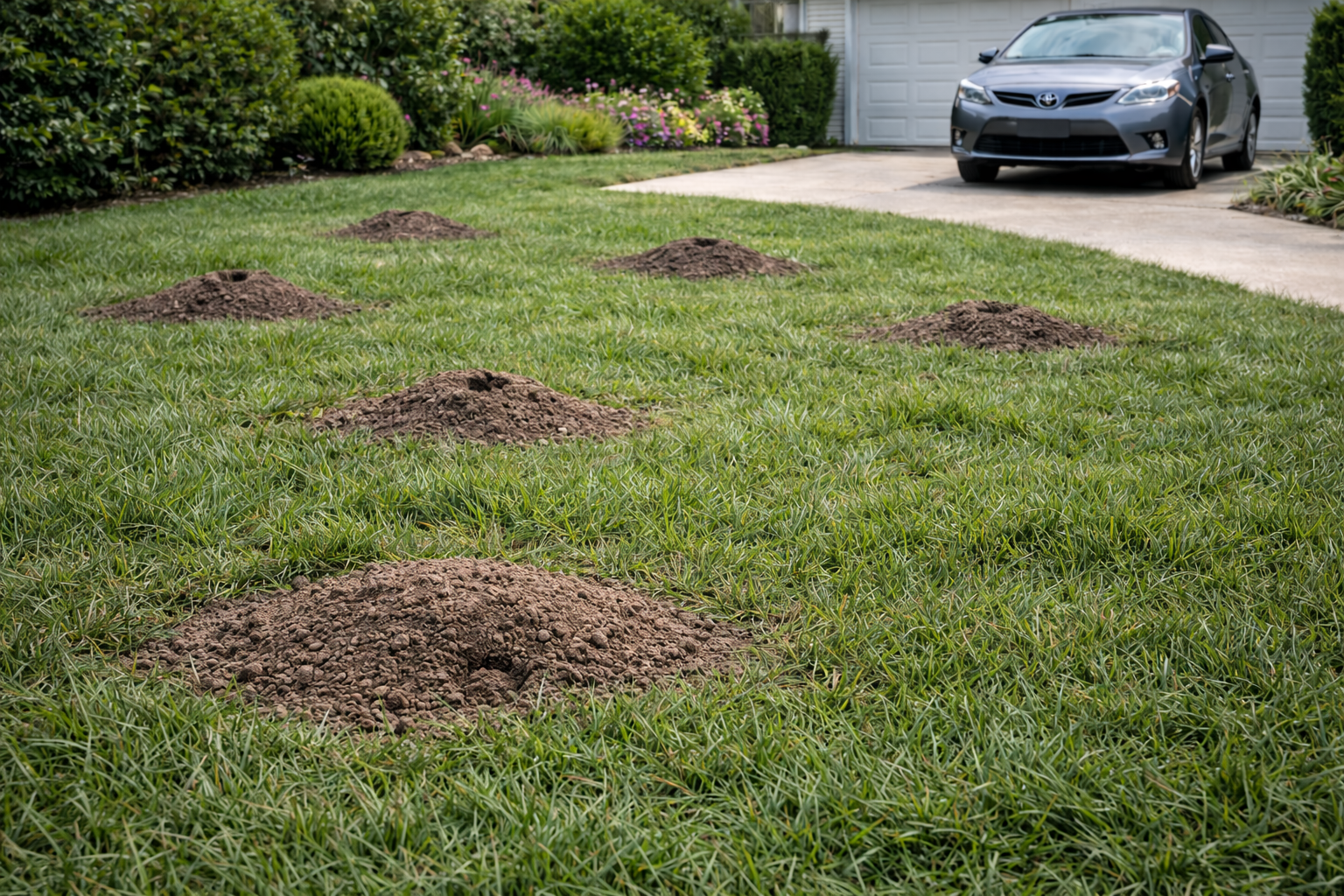
Gopher Activity in Brea, CA
Gophers are a persistent presence throughout Brea, California, a city in northern Orange County that encompasses approximately 9 square miles of residential, commercial, and open space areas. The combination of the region's Mediterranean climate, clay-loam soils, and extensive irrigation systems creates ideal conditions for pocket gopher populations to establish and thrive. Property owners in Brea frequently encounter evidence of gopher activity in lawns, gardens, and landscaped areas, particularly during the wetter months when soil moisture is highest.
Why Brea Has Significant Gopher Activity
Brea's geological and environmental conditions make it particularly susceptible to gopher colonization. The city sits within the coastal plains and hills of Orange County, where soils tend to be a mixture of clay and loam—the exact soil composition that gophers prefer for tunnel construction. These soil types compact readily yet remain loose enough for efficient burrowing, allowing gophers to create extensive underground networks without excessive expenditure of energy.
Water availability is another critical factor. Brea experiences a semi-arid Mediterranean climate with most precipitation falling between November and March. Property owners throughout the city rely on landscape irrigation systems to maintain lawns, ornamental gardens, and trees during the dry season. These irrigation systems keep the soil moist year-round, which sustains gopher populations far longer than the natural dry season would allow. The constant availability of water, combined with irrigated vegetation, provides both ideal burrowing conditions and abundant food resources.
Additionally, Brea's proximity to undeveloped wildland areas contributes to gopher populations. The city's eastern borders interface with open spaces and canyons that serve as reservoir populations for wild gophers. Wind gaps, seasonal flooding, and natural range expansion allow gophers to continuously recolonize residential properties. Developers and property owners cannot eliminate gophers from surrounding natural areas, which means pressure from wild populations remains constant.
Common Gopher Species in Brea
The primary gopher species found in Brea is the Botta's pocket gopher (Thomomys bottae), a medium-sized rodent well-adapted to the local environment. Adults typically measure 5 to 6 inches in body length, with an additional 1.5 to 2-inch tail. Their coloring ranges from dark brown to grayish-brown, though individual color variation exists depending on local soil composition—a phenomenon called soil-color matching, where gophers in clay-rich areas tend toward darker coats.
Botta's pocket gophers derive their common name from the external fur-lined cheek pouches they use to transport food and nesting material. These pouches extend from the mouth and can stretch to remarkable sizes relative to the animal's head. The species is solitary and territorial, with each individual maintaining a burrow system that may span 200 to 600 square feet depending on food availability and soil conditions.
This species is uniquely adapted to the Orange County environment. Their powerful front claws and teeth enable them to excavate through compacted clay soils found beneath many Brea properties. Unlike ground squirrels or moles, pocket gophers are fossorial specialists—they spend nearly their entire lives underground, emerging only rarely when they change tunnel locations or during dispersal periods. Their nocturnal and subterranean habits mean residents rarely observe individual gophers directly; instead, they encounter evidence of tunneling activity.
When Gopher Activity Peaks in Brea
Gopher activity in Brea follows distinct seasonal patterns tied to the local climate and breeding cycle. Peak mounding activity typically occurs during spring months (March through May), when winter rains saturate the soil and gophers intensify their tunnel construction. Moist soil is easier to excavate and presents less compaction resistance, allowing rapid expansion of burrow networks. Property owners often notice multiple new mounds appearing overnight during this period.
Breeding season for Botta's pocket gophers generally occurs from January through March, though the timing can vary slightly depending on rainfall patterns. When adequate soil moisture is present, female gophers produce litters that drive population increases. Young gophers disperse in late spring and early summer, seeking unoccupied territories. This dispersal period (roughly May through July) frequently creates problems in neighborhoods as juvenile gophers establish new burrow systems in residential gardens and yards.
Summer and early fall bring reduced mounding activity in Brea, particularly in dry years or after irrigation schedules decrease. As soil dries out, gopher tunneling becomes more difficult and energetically costly. However, maintained irrigation systems prevent true dormancy. Properties with consistent summer watering may experience year-round gopher activity, while those with drought-tolerant landscaping or reduced irrigation show seasonal declines. Late fall rains often trigger renewed activity as moisture returns to surface soil layers.
Signs of Gopher Damage in Brea Yards
The most visible evidence of gopher presence is the characteristic mound—a conical pile of excavated soil typically 2 to 4 inches high and 4 to 8 inches in diameter. Gophers create these mounds by pushing soil upward as they expand their tunnel networks. In Brea's clay soils, mounds often have a consolidated, compact appearance with a lateral displacement where the animal pushed soil sideways before raising it to the surface. Mounds in sandy areas appear more uniform and rounded.
Beyond mounding, property owners notice damage to subsurface irrigation drip lines and low-pressure systems. Gophers do not eat irrigation tubing but often inadvertently sever it while tunneling, causing water leaks and system failures. This is particularly problematic in Brea yards with complex irrigation networks designed to manage the dry season. Dry patches that suddenly appear in otherwise well-watered lawns sometimes indicate severed irrigation lines rather than disease or poor maintenance.
Plant damage provides another key sign of gopher activity. Gophers eat roots, bulbs, and underground plant parts. Young trees and shrubs with established root systems may suddenly wilt or die when gophers girdle roots near the soil surface. Vegetable gardens frequently suffer complete crop loss to gopher predation. Ornamental bulbs planted in fall often fail to emerge in spring because gophers have harvested them over winter. In Brea's typical landscaping with mixed plantings of shrubs, trees, and groundcovers, selective damage to particular plants may indicate active gopher tunneling in those specific areas.
Landscape Considerations for Brea Properties
Brea's landscape character reflects its Orange County location, with properties featuring a mix of native chaparral elements, irrigated turf, Mediterranean plantings, and drought-tolerant species. Many residences maintain warm-season lawns (typically bermudagrass or zoysia) that require regular irrigation during the dry season. These maintained lawns are particularly attractive to gophers because the combination of moist soil and accessible grass roots creates an ideal food resource. The neighborhoods developed in the 1960s through 1980s often include mature landscape infrastructure where established trees and shrubs provide both food and deep soil conditions suitable for burrowing.
More recent Brea developments increasingly incorporate drought-tolerant or native landscaping, featuring plants such as California buckwheat, toyon, sage species, and non-turf groundcovers. While these landscape styles reduce overall water demand, gophers still tunnel through properties regardless of vegetation type. However, the reduced irrigation associated with native plantings may decrease population density compared to heavily irrigated conventional landscapes. Hardscape elements—patios, pathways, and rock gardens—do not prevent gophers from tunneling beneath them but may restrict surface mounding visibility.
Vulnerable plants in Brea yards include newly planted trees and shrubs during their establishment phase, root vegetables (carrots, potatoes, beets), and flowering bulbs. Established native oaks and other deep-rooted species are less affected by surface gopher tunneling, though root damage remains possible. Citrus trees, once common in Brea's foothill areas, are particularly susceptible to gopher damage. Property owners with valuable landscape investments recognize that gopher management requires ongoing attention rather than one-time solutions.
For professional gopher control in Southern California, visit Rodent Guys — serving Los Angeles, Orange, San Bernardino, and Riverside counties.