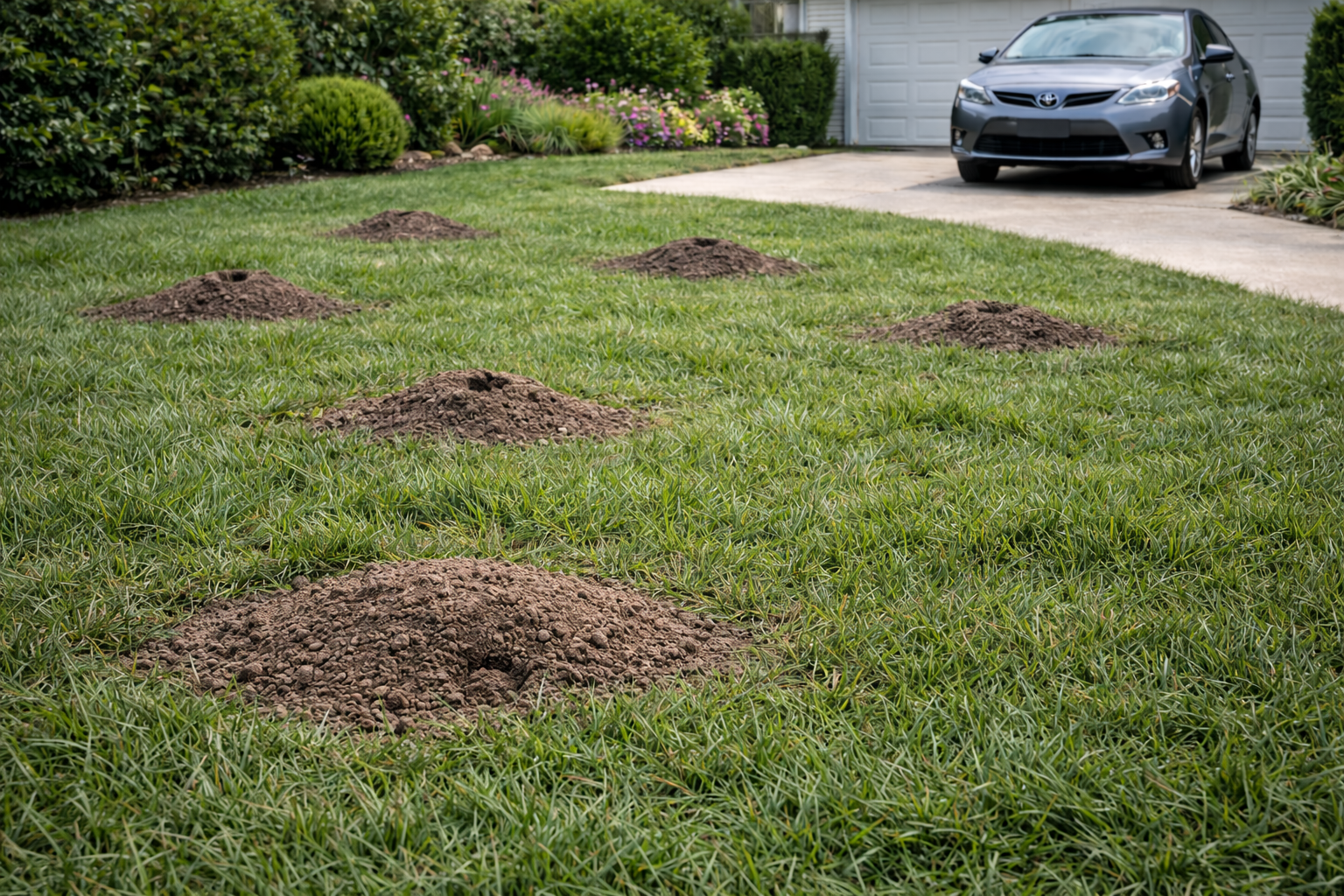
Gopher Activity in Buena Park, CA
Buena Park, located in central Orange County between Knott's Berry Farm and the Santa Ana River, experiences consistent gopher pressure due to its combination of residential landscaping, agricultural heritage, and proximity to undeveloped riparian corridors. The city's temperate Mediterranean climate and well-irrigated yards create ideal conditions for pocket gopher populations to thrive year-round. Property owners throughout Buena Park regularly encounter mounding, tunneling, and vegetation damage from these burrowing rodents.
Why Buena Park Has Significant Gopher Activity
Buena Park's gopher problem stems from several interconnected environmental factors. The city sits on alluvial soils deposited by the Santa Ana River system, which are typically loamy and easy for gophers to excavate. These soils retain moisture well, supporting the vegetation that gophers depend on for food. The region's Mediterranean climate—with mild winters and warm, dry summers—allows gopher populations to remain active throughout the year, unlike areas with harsh winters that restrict breeding seasons.
The city's extensive irrigation infrastructure compounds the issue. Residential properties, commercial landscaping, and public spaces maintain consistent watering schedules to keep lawns and ornamental plantings healthy despite the region's limited summer rainfall. This artificial moisture creates the moist soil conditions that pocket gophers prefer. Additionally, Buena Park's location adjacent to the Santa Ana River riparian habitat and nearby open space areas in unincorporated Orange County means that gopher populations can migrate from wild populations into developed neighborhoods. The transition zone between Buena Park's suburban development and these natural areas provides continual recolonization pathways, making gopher management a persistent challenge rather than a one-time problem.
Common Gopher Species in Buena Park
The Botta's pocket gopher (Thomomys bottae) represents the dominant and essentially only gopher species encountered in Buena Park. This species is native to California and distributed throughout Orange County and the greater Los Angeles basin. Adult Botta's pocket gophers typically measure 5 to 7 inches in body length, with a short, sparsely haired tail adding another 1 to 1.5 inches. Their fur coloration ranges from brown to tan to occasionally nearly black, with individual variation occurring even within small geographic areas.
Several physical characteristics make Botta's pocket gophers distinctive and well-adapted to their burrowing lifestyle. Their front legs feature long, curved claws optimized for excavation. The animals possess small eyes and reduced ear pinnae—adaptations for a subterranean existence where vision and hearing matter less than in surface-dwelling rodents. The name "pocket" gopher derives from external cheek pouches that these animals use to transport food and nesting material through their tunnel networks. In Buena Park specifically, Botta's pocket gophers inhabit lawns, gardens, agricultural remnants, and irrigated landscaping throughout residential neighborhoods, commercial properties, and parks. They are solitary creatures except during breeding season, with each individual maintaining its own tunnel system that can extend 50 to 200 feet depending on soil conditions and available food resources.
When Gopher Activity Peaks in Buena Park
Gopher activity in Buena Park follows seasonal patterns influenced by the region's climate and the animals' reproductive biology. The primary breeding season typically occurs from January through March, when soil moisture levels are highest following winter rainfall. During these months, males become more active in searching for mates, leading to increased surface activity, more frequent mounding, and greater likelihood of encountering gophers. This winter and early spring period represents the peak time for visible gopher damage in most Buena Park yards.
Activity remains substantial throughout spring and early summer as young gophers disperse from their birth tunnels to establish new territories. Spring rains, while less intense than winter precipitation in most years, extend the period of moist soil favorable for gopher activity. By mid-summer, activity typically moderates as soils dry out despite irrigation efforts, and established animals focus on maintaining existing tunnels rather than extensive excavation. However, consistent irrigation in maintained landscapes means that Buena Park gophers never experience the profound dormancy periods that characterize populations in non-irrigated areas. Fall typically brings renewed activity as cooler temperatures and occasional rain create conditions favorable for feeding and tunnel maintenance. Year-round mild temperatures in Buena Park mean that gophers remain active during winter months when populations in colder climates reduce their movements, making winter and spring the most critical periods for monitoring and managing gopher populations.
Signs of Gopher Damage in Buena Park Yards
The most visible indicator of gopher presence is the characteristic mound of fresh earth. These mounds appear as crescent or horseshoe-shaped piles of soil pushed up through the surface, typically 6 to 12 inches high and 8 to 16 inches in diameter. Unlike mole mounds, which form along ridgelines as animals tunnel, gopher mounds occur in scattered locations where animals push soil through vertical shafts to the surface. Buena Park property owners may notice 5 to 20 mounds appearing in a lawn or garden over the course of a week, indicating active gopher occupation.
Underground damage often manifests before surface mounding becomes obvious. Gopher tunnels disrupt irrigation lines, causing water to spray from burst drip tubing or leaking soakers in unexpected locations. Plants wilt despite adequate watering when root systems are severed by tunneling activity. In vegetable gardens and planted beds common throughout Buena Park neighborhoods, gophers girdle roots and pull plants downward into tunnels for consumption. Sudden, unexplained dead patches in otherwise healthy lawns frequently result from gopher activity. Soft, spongy areas in turf indicate tunnel networks lying just beneath the surface. Careful probing with a rod or screwdriver can often locate these shallow tunnels before they cause extensive damage. In landscaped properties featuring the drought-resistant plants common in Buena Park—such as California natives and Mediterranean species—gopher activity may be less visually obvious but still causes gradual plant decline as root systems are compromised.
Landscape Considerations for Buena Park Properties
Buena Park's typical residential landscaping creates varying levels of gopher vulnerability. Properties featuring traditional water-intensive turf grass are highly susceptible, as the combination of consistent moisture and abundant roots provides ideal gopher habitat. The city's more contemporary native plant landscaping—increasingly common throughout Orange County as water conservation gains emphasis—offers somewhat greater resistance, though gophers readily exploit these installations as well. Drought-tolerant species such as California buckwheat, toyon, and native sages may experience less total damage than high-water-use ornamentals, but only because they receive less irrigation, not because gophers avoid them.
Hardscape features such as patios, pathways, and decorative rock can create barriers to gopher activity. Properties with extensive paving or gravel surface coverage experience less gopher colonization than those with predominantly soft landscape composition. However, gophers readily tunnel beneath hardscaping to access vegetated areas on the opposite side, making complete hardscape barriers impractical for most properties. Raised beds with barriers extending underground offer some protection by preventing gopher intrusion from below. In Buena Park's diverse neighborhood contexts—from older, established areas with large specimen trees to newer developments with uniform landscaping—gopher management must account for property-specific conditions. Properties bordering open space or agricultural areas face greater recolonization pressure than those surrounded by other developed properties. Understanding these landscape variables helps residents anticipate problem severity and plan appropriate responses to gopher activity.
For professional gopher control in Southern California, visit Rodent Guys — serving Los Angeles, Orange, San Bernardino, and Riverside counties.