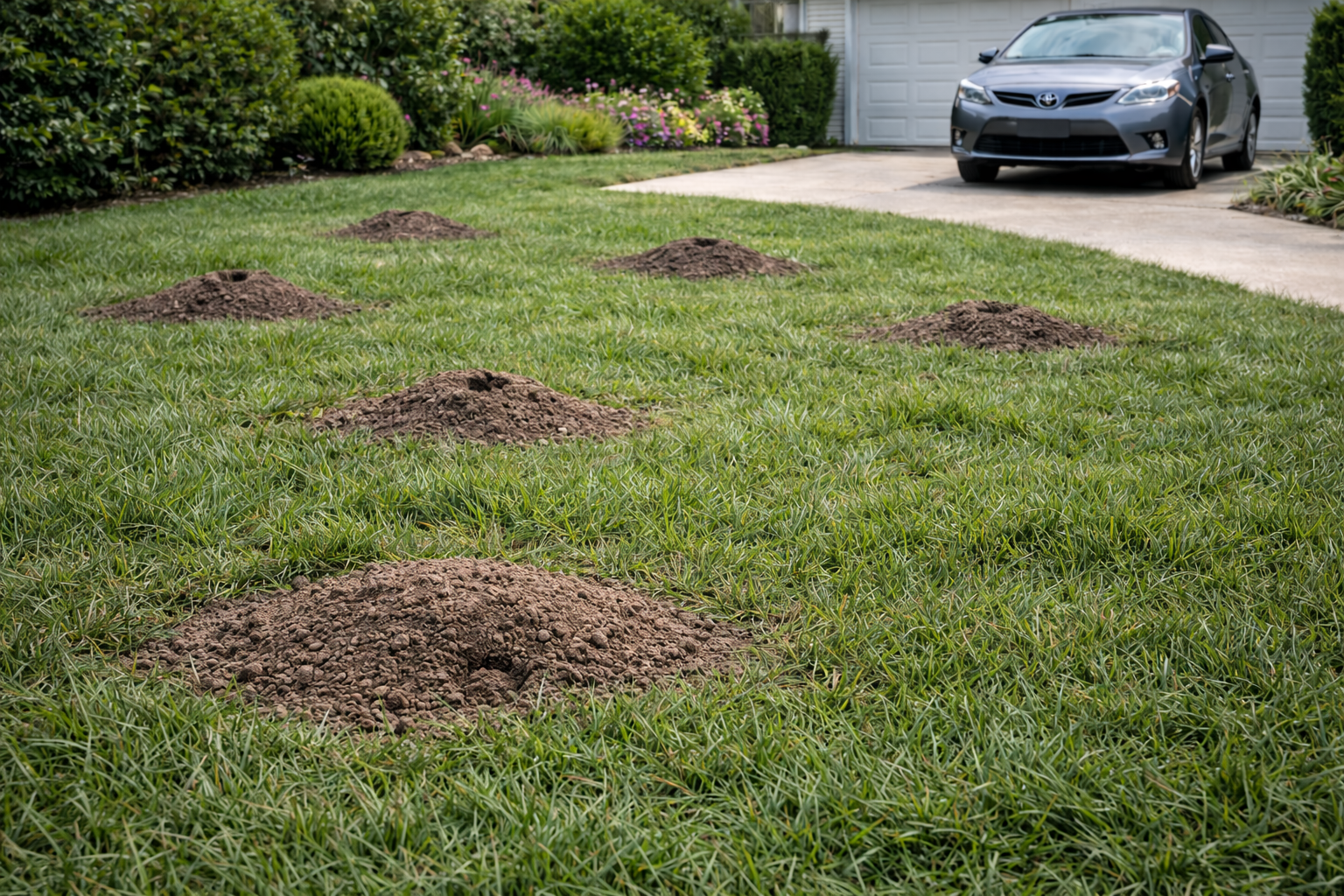
Gopher Activity in Calabasas, CA
Calabasas, located in western Los Angeles County at the intersection of Ventura and Los Angeles counties, sits within prime gopher habitat. The area's combination of clay-rich soil, Mediterranean climate, and extensive residential landscaping creates ideal conditions for pocket gophers to thrive. Property owners throughout Calabasas regularly encounter mounding activity, particularly on sloped terrain and in irrigated yards.
Why Calabasas Has Significant Gopher Activity
The geological and environmental characteristics of Calabasas create particularly favorable conditions for gopher populations. The region's soil composition consists primarily of clay loam and silty loam derived from weathered bedrock and alluvial deposits from nearby canyons—exactly the type of soil that pocket gophers prefer for burrowing. These soils are dense enough to hold tunnel shape yet workable enough for efficient excavation, making Calabasas properties substantially more susceptible to infestation than areas with sandy or rocky soils.
The local climate amplifies gopher activity considerably. Calabasas experiences warm, dry summers with average temperatures reaching the low 80s Fahrenheit and mild winters where temperatures rarely drop below freezing. This extended growing season keeps soil conditions favorable for gopher tunneling year-round. Perhaps most significantly, the area's winter and spring precipitation—averaging 15 to 20 inches annually, concentrated between November and April—creates peak periods of soil moisture that trigger increased gopher breeding and foraging activity.
Residential irrigation systems fundamentally reshape the gopher landscape in Calabasas. Properties throughout neighborhoods like The Oaks, Calabasas Park, and areas around Las Virgenes Road maintain year-round lawn and landscape irrigation that sustains soft vegetation and keeps soil workable during the naturally dry season. This artificial moisture extension essentially creates gopher habitat where the native chaparral ecosystem would otherwise dominate. Additionally, Calabasas's proximity to undeveloped hillsides and canyon systems—including areas along Malibu Canyon Road and tributaries feeding into Calabasas Creek—provides continuous population sources from wild gophers that migrate into residential areas.
Common Gopher Species in Calabasas
The Botta's pocket gopher (Thomomys bottae) represents the predominant gopher species throughout Calabasas and the broader Los Angeles County region. This medium-sized rodent typically measures 8 to 10 inches in total body length, with stocky, robust builds adapted for underground excavation. Botta's pocket gophers display variable coloring depending on local soil types—populations in Calabasas commonly exhibit brownish or grayish-brown fur that blends effectively with the region's clay and silty soils.
Identification of Botta's pocket gophers relies on several distinctive characteristics. The species possesses notably small eyes and ears, adaptations reflecting their underground lifestyle where vision provides minimal advantage. Their front feet feature elongated claws specifically evolved for digging, and like all pocket gophers, they possess external cheek pouches—hence the name "pocket gopher"—that extend from their mouths and can hold substantial quantities of soil or vegetation. The incisors never stop growing throughout their lives, requiring constant use for gnawing activities that maintain proper length.
Within Calabasas, Botta's pocket gophers occupy the transition zone between chaparral hillsides and developed residential areas. They thrive in the clay soils of canyon floors and valley bottoms where moisture concentrates, and they readily colonize landscaped properties featuring irrigated vegetation. Gophers maintain individual territory systems, with each animal controlling roughly 200 to 2,000 square feet depending on soil quality and food availability. In irrigated Calabasas yards with abundant food, territories tend toward the smaller end of this range, allowing higher population densities than occur in wild habitat.
When Gopher Activity Peaks in Calabasas
Gopher activity in Calabasas follows pronounced seasonal patterns driven by the region's Mediterranean climate and breeding cycles. The most dramatic activity surge occurs between January and March, the period encompassing gopher breeding season. During these months, males and females actively excavate tunnel systems in search of mates, and pregnant females construct elaborate nesting chambers. This reproductive period coincides with peak soil moisture from winter rains, which softens clay-rich Calabasas soils and makes digging substantially more efficient than during dry months.
Spring represents the secondary activity peak, particularly following significant rainfall events that saturate soil throughout the region. These moisture pulses trigger renewed foraging and tunnel expansion as gophers exploit optimal conditions. Residents throughout Calabasas—from properties near Mulholland Drive to subdivisions in the central valley—typically observe the greatest number of fresh mounds appearing during late February through April.
Summer activity notably decreases as Calabasas enters its naturally dry season and irrigation becomes the primary moisture source. Individual property irrigation patterns substantially influence local gopher behavior; intensively irrigated properties maintain higher activity levels through summer months, while properties with minimal supplemental watering experience reduced gopher presence. Fall months exhibit moderate activity as cooling temperatures and occasional early rains stimulate some renewed burrowing, though activity never approaches spring intensity. Understanding this seasonal dynamic helps residents interpret gopher presence on their properties and comprehend why certain times bring dramatically increased surface mounding and damage.
Signs of Gopher Damage in Calabasas Yards
Mound identification represents the most reliable indicator of active gopher presence on Calabasas properties. Pocket gophers create distinctive crescent or horseshoe-shaped mounds as they excavate burrows and push soil to the surface. These mounds typically measure 3 to 6 inches in height and 4 to 8 inches in diameter, appearing relatively fresh with loose, recently disturbed soil. Unlike moles, which create ridge-like tunnel runs visible above ground, gophers push soil directly upward, resulting in discrete mounds scattered across yards. Calabasas properties with clay soils often display dozens of fresh mounds following winter rains, creating an unmistakable pattern of recent activity.
Subsurface tunnel systems cause damage distinct from surface mounding. Extensive burrow networks undermine soil stability, creating hazardous conditions for pedestrians and potentially destabilizing shallow-rooted landscaping. Property owners frequently notice sudden settling in lawn areas or unexpected collapse of soil around trees and shrubs as the underlying support structure erodes through gopher tunneling.
Direct vegetation damage from gopher feeding provides another diagnostic sign. Gophers consume roots, bulbs, and herbaceous plants from below the soil surface, often causing sudden plant death without visible external injury. Newly planted trees and shrubs throughout Calabasas frequently experience gopher damage, with the animals severing roots from underground. Vegetable gardens suffer severe losses, particularly crops featuring bulbs or fleshy roots—carrots, beets, potatoes, and newly planted fruit trees fall victim regularly. Gophers also damage underground irrigation lines by gnawing through plastic tubing while excavating burrows, leading to water leaks and system inefficiency across Calabasas properties.
Landscape Considerations for Calabasas Properties
Calabasas residential landscaping patterns significantly influence gopher susceptibility and damage potential. The region's upscale communities feature diverse horticultural approaches, from native California chaparral plantings to conventional lawn-and-shrub designs. Properties incorporating extensive turf grass and irrigated ornamental plantings inherently attract and support larger gopher populations than xeriscape-oriented properties emphasizing native plants and minimal supplemental irrigation.
Certain plant species popular in Calabasas landscaping prove particularly vulnerable to gopher damage. Newly installed trees and shrubs—oak varieties, fruit trees, ornamental species—face substantial gopher predation during their establishment phase when tender roots extend through soil. Vegetable gardens and edible landscaping, increasingly common in Calabasas communities seeking local food production, experience devastating losses without gopher management. Root vegetables, bulb plantings, and young fruit-bearing trees represent premium gopher food sources.
The ratio of hardscape to softscape considerably affects gopher presence patterns. Properties with extensive patios, concrete walkways, and paved surfaces provide less burrowing habitat and fewer feeding areas, naturally supporting smaller populations. Conversely, properties with large lawn areas, densely planted shrub borders, and extensive vegetable gardens create ideal gopher habitat and generally experience more severe infestations. Canyon-view properties and hillside locations in Calabasas often require particular attention, as sloped terrain facilitates gopher burrowing and allows gravity-assisted soil movement during tunnel construction, making these locations especially prone to visible mounding activity.
For professional gopher control in Southern California, visit Rodent Guys — serving Los Angeles, Orange, San Bernardino, and Riverside counties.