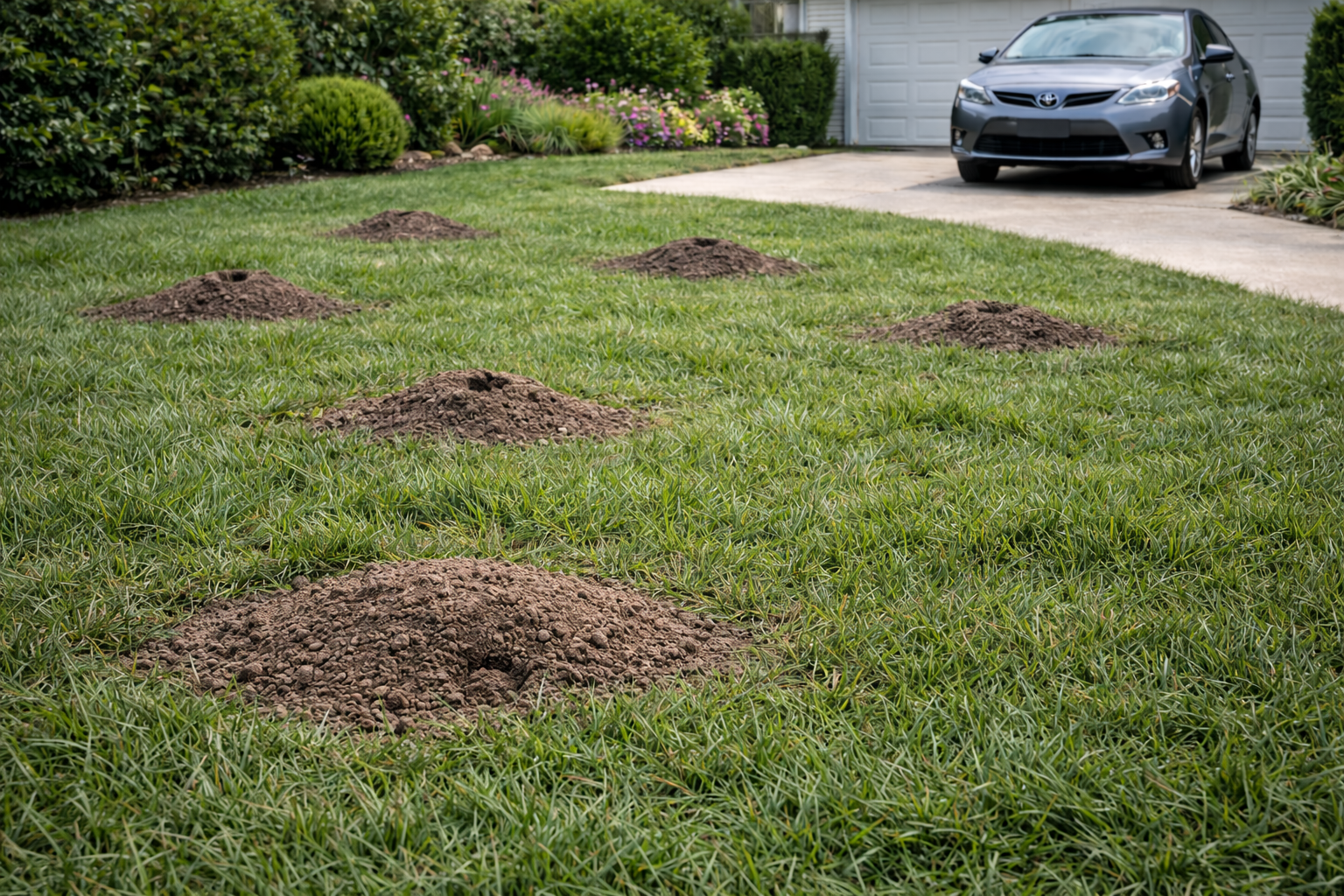
Gopher Activity in Carson, CA

Gophers are a persistent presence throughout Carson, California, particularly in residential and semi-developed areas where soil conditions and landscaping practices create ideal habitats. The city's coastal plain geography, combined with its extensive irrigation infrastructure and diverse plant communities, supports robust gopher populations year-round. Property owners in Carson encounter evidence of gopher activity with regularity, making understanding these animals and their behavior patterns an important aspect of local land management.

Why Carson Has Significant Gopher Activity

Carson's location on the Los Angeles coastal plain creates soil conditions that strongly favor gopher populations. The region's naturally occurring alluvial soils—composed of sediment deposited by historical water flows from the San Gabriel River watershed—are typically loose, well-draining, and easy for gophers to excavate. These soils lack the dense clay layers that would impede tunnel construction, allowing gophers to establish extensive burrow systems with minimal energy expenditure.

The city's Mediterranean climate, characterized by mild winters and warm, dry summers, permits year-round gopher activity. Daytime temperatures rarely drop below freezing even in winter months, and frost penetration into the soil remains shallow. This extended activity season contrasts sharply with interior valley or mountain regions where ground freezes and limits burrowing during winter.

Carson's extensive irrigation infrastructure significantly influences gopher distribution and population density. The city's network of residential sprinkler systems, local parks, and commercial landscaping creates persistent soil moisture that keeps gopher tunnels from collapsing and makes root systems of plants more tender and palatable. Areas receiving regular irrigation support higher gopher densities than dry, unwatered properties. Additionally, Carson's proximity to the Dominguez Gap—a natural wildlife corridor connecting coastal sage scrub and grassland habitats—facilitates gopher immigration from adjacent undeveloped areas into residential neighborhoods.

Common Gopher Species in Carson

The Botta's pocket gopher (Thomomys bottae) is the primary gopher species found throughout Carson and the greater Los Angeles area. Named for the external cheek pouches used for carrying excavated soil and food materials, Botta's pocket gophers are stocky, fossorial rodents typically measuring 5 to 7 inches in body length with a short tail extending 1 to 1.5 inches. Their fur coloration generally matches local soil tones, ranging from dark brown to reddish-brown, with lighter underside fur. Small eyes, reduced ear pinnae, and powerful forelimbs with elongated claws reflect their subterranean lifestyle.

Unlike ground squirrels or prairie dogs, pocket gophers are solitary and remain largely underground except during breeding dispersal periods. Individual gophers typically occupy and defend small territories of 200 to 2,000 square feet, depending on soil quality and food availability. In Carson's urban and suburban landscape, gophers exploit both native vegetation remnants and introduced ornamental plants. They feed on roots, bulbs, and underground plant parts, and occasionally consume above-ground vegetation near burrow entrances. The species has demonstrated remarkable adaptability to residential environments, thriving in yards, parks, and landscaped corridors throughout the city's various neighborhoods from west Carson near the refineries to east Carson bordering Long Beach.

When Gopher Activity Peaks in Carson

Gopher activity patterns in Carson follow seasonal rhythms tied to reproductive cycles and soil moisture availability. The primary breeding season extends from January through March, when male gophers actively disperse seeking mates and establish new burrow systems. This period typically coincides with increasing soil moisture from winter and early spring precipitation, creating ideal conditions for tunnel excavation. Property owners frequently observe increased mounding activity during these months as dispersing juveniles and seeking males expand burrow networks.

A secondary activity peak often occurs in autumn (September through November) as gophers establish food caches and expand burrow systems in preparation for winter. While Carson's mild winters do not force dormancy, gophers remain active underground throughout December and January, though surface evidence may decrease. Spring rains, typically occurring February through April, further intensify activity by softening soil and promoting tender plant growth. Summer months (June through August) show reduced surface evidence as dry conditions compact soil and gophers remain deeper underground, though subsurface activity continues. The late fall through early spring period—October through April—represents the window of greatest observable gopher impact on Carson properties.

Signs of Gopher Damage in Carson Yards

The most visible indicator of gopher presence is the characteristic earthen mound—a crescent or horseshoe-shaped accumulation of excavated soil at burrow entrusions. Carson property owners typically observe these mounds in lawns, garden beds, and landscaped areas following rainy periods or active irrigation cycles. Mounds in Carson yards range from 4 to 12 inches in diameter and 2 to 6 inches in height. Unlike mole mounds, which are circular and volcano-shaped, gopher mounds are characteristically asymmetrical with a plugged tunnel opening to one side.

Subsurface damage often exceeds visible surface evidence. Gopher burrow systems disrupt irrigation lines and drainage pipes, creating water waste and dry spots in otherwise irrigated lawns—a particular concern in Carson given the city's reliance on municipal water supplies and the cost of residential irrigation. Root damage affects ornamental plants, vegetables, and woody landscape species. Property owners may observe sudden wilting or death of young trees, shrubs, and perennials as gophers sever roots below the soil surface. In vegetable gardens, complete plant disappearance indicates gophers pulling plants down into burrows. Subsurface burrow systems also create settling and settling within lawns and garden beds, and can compromise the structural integrity of walkways, patios, and building foundations if networks extend beneath hardscapes.

Landscape Considerations for Carson Properties

Carson's diverse neighborhoods—from established single-family residential communities to commercial corridors and industrial areas—feature variable landscaping practices that influence gopher vulnerability. Older established neighborhoods in central and east Carson typically feature mature trees, lawns, and mid-century plantings, while newer developments emphasize low-water xeriscaping with drought-tolerant shrubs and decorative rock. Despite these differences, virtually all landscaping styles in Carson include plants that attract gophers.

Vegetable gardens, fruit trees, and herbaceous perennials are particularly vulnerable to gopher damage. Root vegetables including carrots, potatoes, and turnips, along with bulbs and corms such as tulips, daffodils, and gladiolus, represent preferred food sources. Woody plants including young fruit trees, cypress, and flowering ornamentals suffer significant root damage. Native plants and California natives commonly planted in Carson gardens, including California poppy, ceanothus, and toyon, experience variable gopher pressure depending on soil conditions and individual plant vigor.

Properties relying on extensive turf grass and regular irrigation systems face particular challenges, as the combination of soft soil and abundant water-dependent root systems creates optimal gopher habitat. Conversely, properties with hardscape-dominated landscaping (patios, pathways, rockscaping) and minimal irrigation experience lower gopher pressure, though subsurface burrows may still extend beneath paved areas. Understanding these landscape-gopher interactions helps Carson property owners make informed decisions about plant selection, irrigation design, and habitat management strategies suited to their specific circumstances.