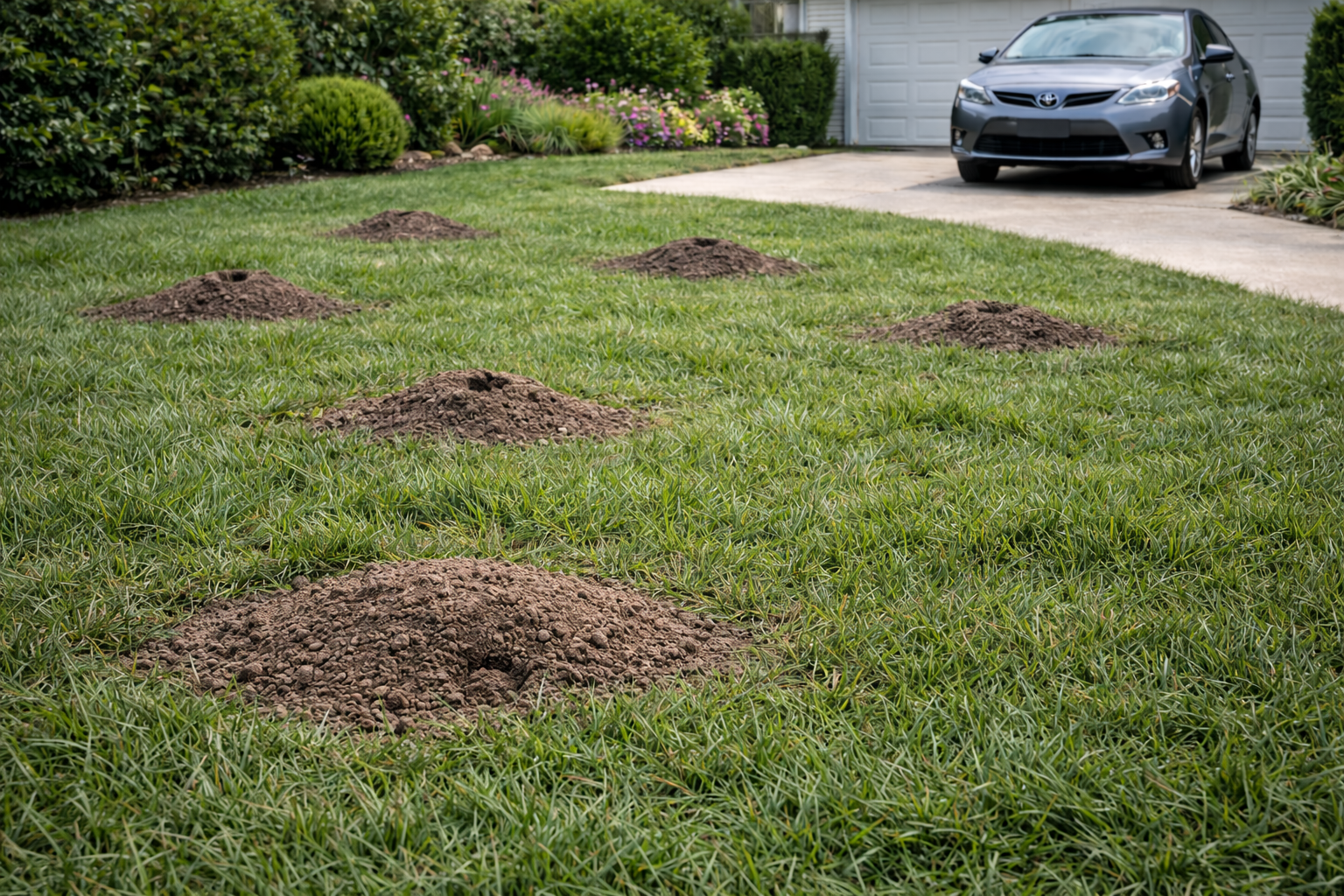
Gopher Activity in Cerritos, CA

Gophers are a persistent presence throughout Cerritos, a community located in northwest Los Angeles County in the Gateway Cities region. The combination of residential landscaping, active irrigation systems, and proximity to natural open spaces creates ideal conditions for gopher populations to thrive year-round. Understanding gopher behavior, seasonal patterns, and local environmental factors helps residents recognize activity on their properties and appreciate why control efforts often require ongoing attention in this area.

Why Cerritos Has Significant Gopher Activity

Cerritos's geographic position and environmental characteristics make it particularly susceptible to gopher colonization. The community sits on relatively flat terrain typical of the Los Angeles basin, with predominantly clay-loam and silt-loam soils that are moderately firm yet workable—ideal conditions for gopher burrowing. These soil types, combined with the region's Mediterranean climate of mild winters and warm, dry summers, support year-round gopher activity without the harsh freezing temperatures that would naturally limit populations in colder regions.

The extensive residential landscaping throughout Cerritos, featuring irrigated lawns, ornamental gardens, and planted shrub beds, provides abundant food sources and moisture that gophers depend on for survival. Homes in neighborhoods like Cerritos Park East and Cerritos Park West typically feature maintained yards with regular watering schedules, creating consistently moist soil conditions that make tunneling easier and sustain vegetation that gophers consume. Additionally, Cerritos's proximity to larger undeveloped areas and the Los Angeles River basin to the south means that natural gopher populations in these spaces periodically disperse into residential zones, replenishing local populations. The irrigation infrastructure common to Southern California residential development—including lawn sprinklers, drip lines, and decorative water features—further enhances habitat suitability by maintaining soil moisture levels that would otherwise be insufficient during the region's dry season.

Common Gopher Species in Cerritos

The Botta's pocket gopher (Thomomys bottae) is the predominant gopher species active in Cerritos and throughout Los Angeles County. This medium-sized rodent typically measures 6 to 8 inches in body length, with relatively short tails and powerful front legs equipped with long claws specialized for excavation. Botta's pocket gophers display fur coloration ranging from brown to reddish-brown, with some individuals exhibiting darker or lighter variants depending on local soil composition—a phenomenon called soil-color matching that helps camouflage these animals when they emerge above ground.

Named for their external cheek pouches that resemble pockets and extend from the mouth to the shoulders, Botta's pocket gophers use these pouches to transport food items back to underground caches and burrow systems. In Cerritos, these gophers establish extensive burrow networks that can extend 200 to 600 feet across a property, with multiple tunnels at varying depths. Deeper tunnels, often 12 to 18 inches below the surface, serve as main thoroughfares and nesting chambers, while shallow feeding tunnels closer to the surface branch off to access roots and vegetation. The species is solitary and territorial, with individual gophers defending established burrow systems against intruders. Adult males are typically larger than females and maintain larger territory ranges, particularly during breeding season when they expand movements to locate mates.

When Gopher Activity Peaks in Cerritos

Gopher activity in Cerritos follows seasonal patterns linked to reproductive cycles and precipitation patterns. The primary breeding season occurs from January through March, when male gophers become more mobile and active in search of females. During this period, residents often observe increased mound formation and surface activity as males tunnel through previously established territories and females prepare nesting chambers for upcoming litters. Spring rains, which occasionally occur in Cerritos between February and April, temporarily soften soils and increase plant growth, creating ideal conditions for gopher feeding and tunneling activity.

Summer months (June through August) in Cerritos bring reduced rainfall and increased temperatures, which naturally dries surface soils and can cause gophers to concentrate activity in areas receiving supplemental irrigation. This is why landscaped residential yards often experience intensified gopher pressure during summer despite the hotter conditions. Fall months (September through November) represent a secondary period of increased activity as gophers prepare for winter by expanding food caches and reinforcing burrow systems. While gophers in Cerritos remain active throughout winter due to the region's mild climate, activity decreases noticeably during the coldest months of December and early January. Late fall and early winter activity can be particularly destructive to landscapes as gophers stockpile significant quantities of roots, bulbs, and plant material in underground chambers.

Signs of Gopher Damage in Cerritos Yards

The most visible indicator of gopher activity in Cerritos is the appearance of mounds—crescent-shaped or roughly circular piles of excavated soil scattered across lawns and garden beds. Gophers typically construct mounds while clearing soil from tunnels, and a single gopher can create multiple mounds across a property, sometimes appearing overnight after soil conditions become favorable following irrigation or rainfall. Unlike mole mounds, which are more symmetrical and dome-shaped, gopher mounds are often asymmetrical and sometimes display a visible plug or opening on one side where soil was pushed upward from a tunnel below.

Subsurface damage in Cerritos properties frequently includes severed irrigation lines and damaged sprinkler systems, as gophers tunnel through landscaped areas and inadvertently rupture drip irrigation tubing and lateral water lines. Above-ground vegetation damage appears as wilted or dying plants whose roots have been partially or completely severed by gopher tunneling, alongside plants whose foliage has been clipped to ground level as gophers feed on young shoots and leaves. In vegetable gardens and ornamental plantings common to Cerritos residential properties, gophers cause significant damage by consuming bulbs, roots, and seed crops while tunneling through planted areas. Shallow surface tunnels create visible ridges or depressions across lawns and garden beds, indicating high-traffic routes between feeding areas. In severe infestations, the cumulative effects of numerous burrows, mounds, and root damage can render portions of a landscape unsightly and structurally compromised.

Landscape Considerations for Cerritos Properties

Cerritos residential properties typically feature a mix of traditional Southern California landscaping styles, including expansive irrigated lawns, mixed shrub borders, and ornamental tree plantings. Many properties throughout the community incorporate Mediterranean and California native plants alongside non-native ornamentals, creating diverse landscape compositions that attract gophers due to varied food sources and vegetation density. Commonly planted species vulnerable to gopher damage in Cerritos include fruit trees (citrus, avocado, and stone fruits), flowering shrubs, perennials, vegetable gardens, and young trees that are still establishing root systems.

Hardscape elements such as concrete patios, stone pathways, and driveways provide some protection against gopher intrusion simply by preventing tunneling in those zones, yet gophers frequently tunnel beneath hardscape features to access landscaped areas on the opposite side. Properties with extensive softscape—areas of soil, planting beds, and turf—naturally experience greater gopher colonization than those with balanced hardscape integration. Many Cerritos properties have begun transitioning toward drought-resistant landscaping and reduced-irrigation designs that lower overall gopher habitat suitability, though established ornamental plantings still require supplemental water that maintains conditions favorable for gopher activity. The prevalence of underground utilities, irrigation systems, and drainage infrastructure beneath Cerritos properties adds complexity to gopher management, as burrow systems frequently intersect with these essential service lines, creating both damage liability and access barriers for intervention efforts.