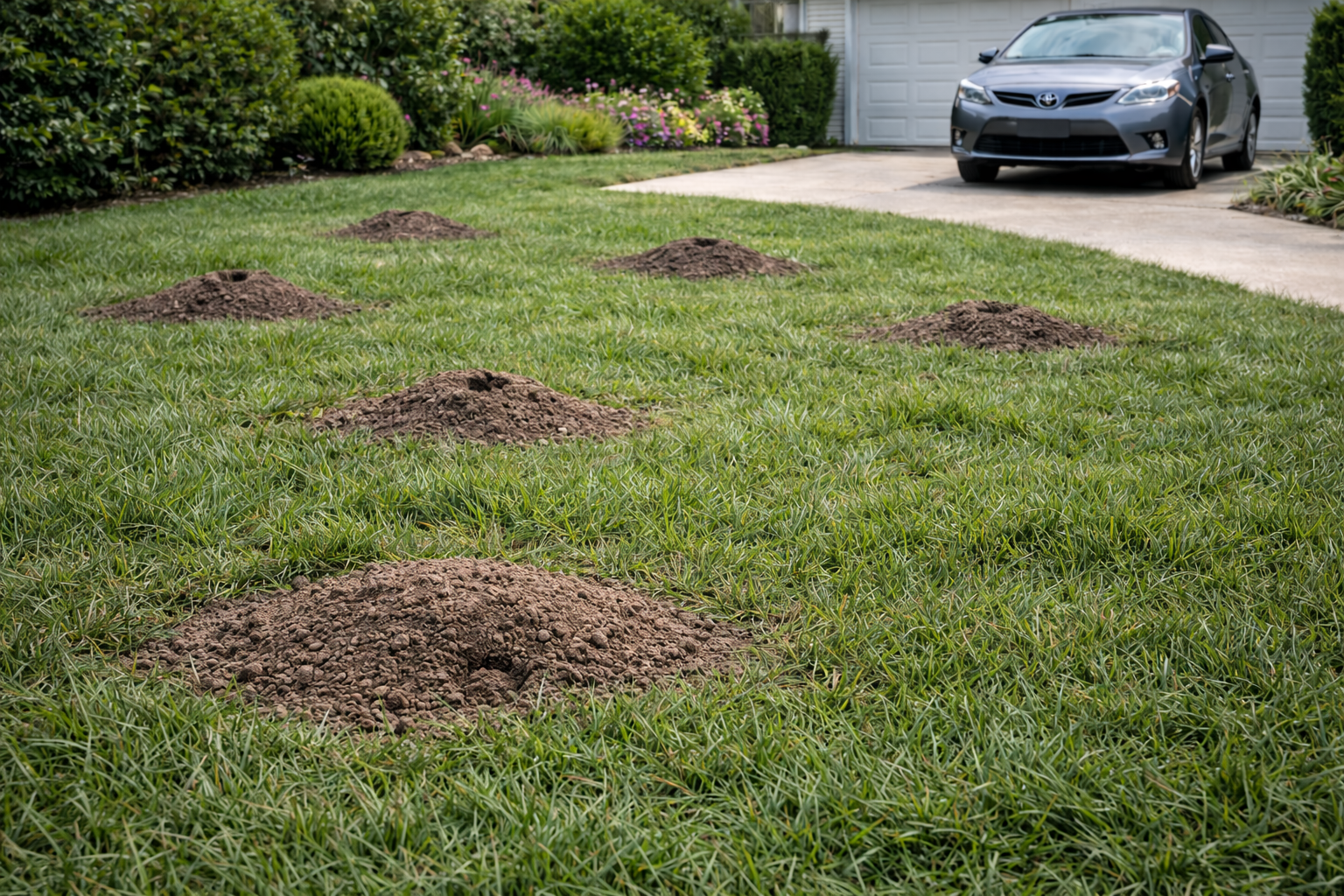
Gopher Activity in Chatsworth, CA
Chatsworth, located in the northwestern portion of the San Fernando Valley in Los Angeles County, experiences consistent gopher activity throughout the year. The combination of suitable soil composition, established landscaping, and proximity to undeveloped foothills creates an environment where pocket gophers thrive. Property owners in this community frequently encounter evidence of gopher tunneling systems beneath their lawns, gardens, and irrigation infrastructure.
Why Chatsworth Has Significant Gopher Activity
The geological and environmental conditions in Chatsworth create particularly favorable circumstances for gopher populations. The San Fernando Valley floor, where much of Chatsworth sits, consists of alluvial soils deposited over thousands of years. These soils—typically sandy loams and loamy sands—are ideal for the extensive burrowing activities that pocket gophers require. The soil composition allows gophers to excavate tunnels with relative ease while maintaining structural integrity, which is essential for their survival and reproduction.
Water availability significantly influences gopher populations in Chatsworth. The area receives municipal water through established irrigation systems that service residential properties, commercial landscapes, and public spaces. This consistent irrigation creates soil moisture conditions that remain favorable year-round, even during the region's dry summers. Moist soil is easier to tunnel through and supports a richer diversity of plant roots—the gophers' primary food source. Additionally, Chatsworth's proximity to the Santa Susana Mountains and Simi Hills means that wild gopher populations exist in the surrounding chaparral and grassland habitats. Gophers naturally disperse from these undeveloped areas into residential neighborhoods, particularly when food sources become limited in their native habitats or when population densities increase.
The climate pattern of the San Fernando Valley also contributes to gopher activity levels. Winters are mild, with average January temperatures rarely dropping below 40 degrees Fahrenheit, which allows gophers to remain active throughout the season rather than entering hibernation. This extended activity period means that tunneling, feeding, and reproductive behaviors continue even during winter months when other regions experience reduced gopher presence.
Common Gopher Species in Chatsworth
The primary gopher species found throughout Chatsworth and the greater San Fernando Valley is the Botta's pocket gopher, scientifically known as Thomomys bottae. This species is named after the external fur-lined cheek pouches that gophers use to transport food and nesting materials through their tunnel systems. Botta's pocket gophers are medium-sized rodents, typically measuring 5 to 6 inches in body length, with relatively short tails that rarely exceed 2 inches. Their fur coloration ranges from dark brown to lighter tan, with variations occurring even within the same local population.
Botta's pocket gophers possess several physical adaptations that make them highly effective burrowers. Their front feet feature prominent claws designed specifically for excavation, and their powerful shoulder and forelimb muscles provide the force necessary to move substantial quantities of soil. Their eyes and ears are relatively small and positioned high on their heads, an arrangement that allows them to navigate tunnels while remaining alert to threats. Their lips close behind their front teeth, preventing soil from entering their mouths while they tunnel.
In Chatsworth specifically, Botta's pocket gophers inhabit a wide range of environments. They are found in residential yards with established vegetation, agricultural areas where remaining orchards and gardens exist, disturbed sites undergoing development, and the native scrubland transitioning toward the local foothills. Their ability to adapt to both human-modified and natural landscapes makes them particularly successful in the interface zones between urban and wild areas that characterize much of Chatsworth's northern and western boundaries.
When Gopher Activity Peaks in Chatsworth
Gopher activity in Chatsworth follows distinct seasonal patterns, though the mild climate means that activity never completely ceases. The primary breeding season for pocket gophers extends from January through March, corresponding with late winter and early spring in Southern California. During this period, gopher tunneling activity increases noticeably as males search for females and females prepare nesting chambers for approaching litters. Property owners often observe increased mounding activity during these months, particularly following periods of rainfall that soften the soil.
Spring represents the second peak activity period in Chatsworth. Between late February and May, newly weaned juvenile gophers disperse from their birth tunnels, creating new tunnel systems throughout the landscape. This dispersal phase intensifies visible evidence of gopher presence, as young gophers establish their own territories and feeding areas. Additionally, the spring rains that typically fall in March and April create soil conditions ideal for tunneling. The increased moisture makes soil easier to move and excavate, while simultaneously stimulating plant growth that provides abundant food resources.
Summer and fall bring moderate gopher activity in Chatsworth. While the heat and dryness of summer months may slow tunneling activity compared to spring, established gophers continue their feeding and maintenance activities. The absence of significant rainfall during summer actually causes some property owners to become complacent about gopher problems, despite the fact that the animals remain present and active beneath the surface. Fall, particularly October and November, shows another modest uptick in activity as gophers prepare for winter and take advantage of fall vegetation growth in response to occasional autumn rains.
Signs of Gopher Damage in Chatsworth Yards
The most visible and recognizable sign of gopher activity is the characteristic mound of freshly excavated soil. In Chatsworth yards, these mounds typically measure 4 to 8 inches in diameter and 2 to 4 inches in height, though some can be substantially larger. The mounds form an asymmetrical shape, with one side appearing higher than the other. This asymmetry results from the gopher pushing soil to one side as it excavates a vertical tunnel. Gophers typically create mounds at intervals along their tunnel runs, and following heavy rains or in early morning hours, property owners may notice multiple fresh mounds appearing across a lawn or garden area.
Beyond visible mounding, gopher tunneling causes damage to irrigation infrastructure common in Chatsworth properties. The region's landscape tradition emphasizes drought-resistant plantings supplemented by drip irrigation and in-ground sprinkler systems. Gophers frequently gnaw through irrigation lines and tubing as they construct their tunnel networks, resulting in water leaks, reduced water pressure to affected zones, and wasted water. Locating and repairing these underground breaks can be time-consuming and expensive for property owners.
Plant damage represents another consequence of gopher activity in Chatsworth. Gophers feed on roots, bulbs, and tubers of a wide variety of plants. In ornamental landscapes, popular specimens like roses, flowering shrubs, fruit trees, and perennials may show signs of gopher feeding. Young trees planted in Chatsworth yards sometimes decline or die following gopher root damage that undermines their ability to absorb water and nutrients. Vegetable and herb gardens become particularly susceptible to gopher damage, as gophers readily consume root vegetables, potatoes, and other underground plant parts.
Landscape Considerations for Chatsworth Properties
Chatsworth's landscape character reflects a blend of Mediterranean climate aesthetics and practical approaches to water conservation in Southern California. The established neighborhoods of southern Chatsworth feature traditional landscaping with mixed deciduous and evergreen trees, foundation plantings of shrubs, and maintained turfgrass areas. Newer developments increasingly incorporate native and drought-tolerant species, including California native oaks, toyon, sage varieties, and other plants adapted to the region's semi-arid conditions. This diversity of landscape types creates variable vulnerability to gopher damage across different properties.
Certain plants commonly found in Chatsworth yards demonstrate particular susceptibility to gopher predation. Fruit and nut trees—including apricot, peach, walnut, and apple varieties—face significant risk from root damage. Ornamental bulbs such as tulips, daffodils, and lilies are especially attractive to gophers because the bulbs provide concentrated nutritional resources. Ground covers like ivy and sedum may be damaged when gophers tunnel through the soil beneath them, disrupting plant establishment and appearance. Conversely, some Chatsworth residents have observed that mature trees with extensive, well-established root systems seem more resistant to gopher damage than younger plantings still in establishment phases.
The relationship between hardscape and softscape elements influences gopher activity patterns in Chatsworth. Properties featuring extensive paving, decking, and rock mulch provide less tunneling habitat than those dominated by irrigated soil and planted areas. However, gophers still tunnel extensively beneath patios and structures, and damage to subsurface utilities and irrigation lines remains common. Chatsworth properties transitioning from traditional turfgrass lawns to drought-resistant landscape designs with native plants and reduced irrigation may experience changes in gopher populations, as reduced soil moisture and altered plant root systems modify the habitat quality for these burrowing rodents.
For professional gopher control in Southern California, visit Rodent Guys — serving Los Angeles, Orange, San Bernardino, and Riverside counties.