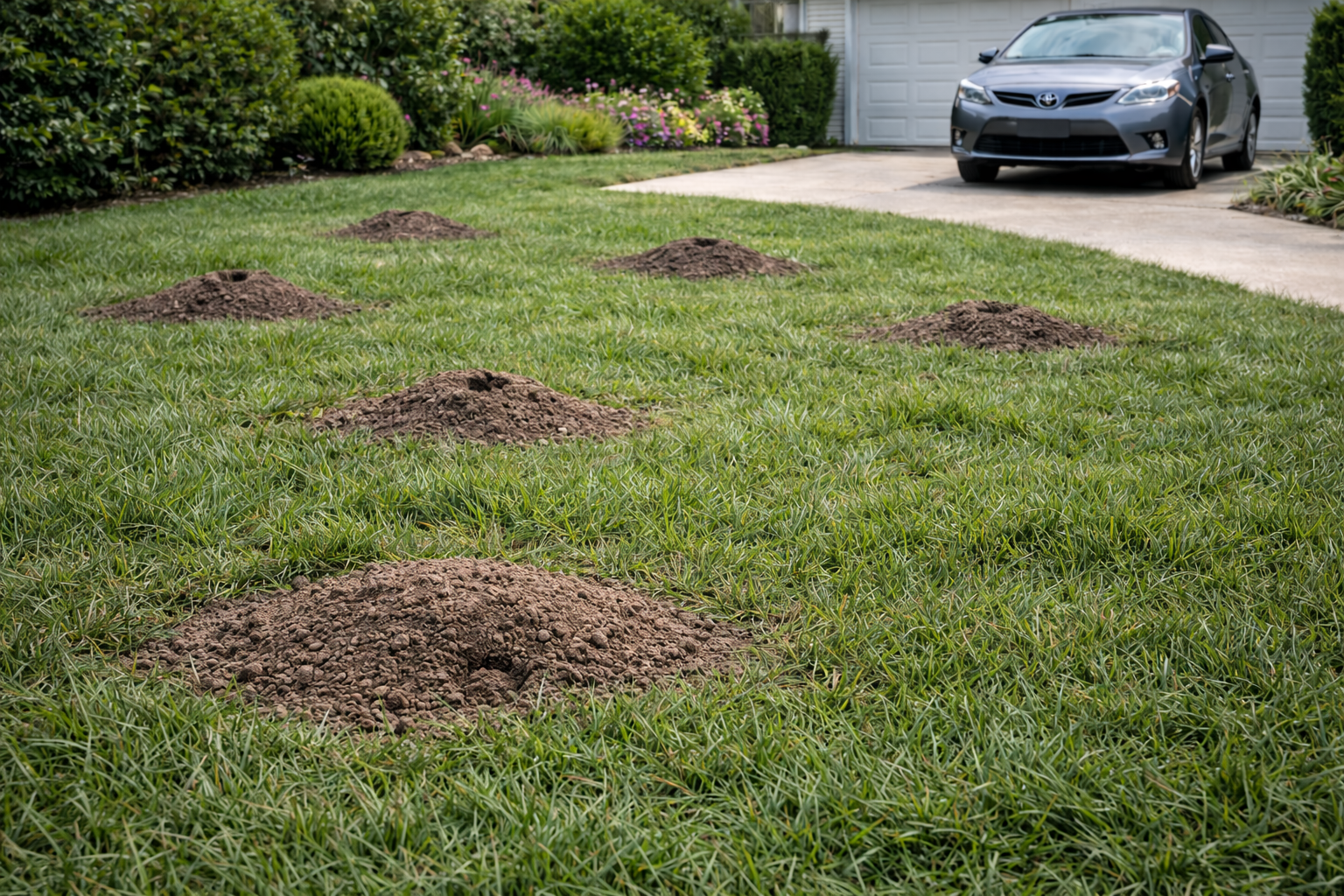
Gopher Activity in Chino Hills, CA

Chino Hills, nestled in the foothills of San Bernardino County and Orange County, sits within a region where pocket gophers are a persistent and widespread presence. The combination of the area's suburban development, rolling terrain, and proximity to the Chino Hills State Park creates ideal conditions for gopher populations to thrive. Property owners throughout residential neighborhoods and newer developments frequently encounter evidence of gopher tunneling systems beneath their lawns and gardens.

Why Chino Hills Has Significant Gopher Activity

The geological and environmental factors that define Chino Hills make the area particularly suitable for gopher populations. The region's soil composition—primarily consisting of fine-textured, well-draining alluvial soils with adequate moisture retention—provides ideal conditions for tunnel construction and burrowing. Gophers can navigate these soils with relative ease, and the stability of these earth types allows tunnel systems to remain structurally sound over extended periods.

Chino Hills' Mediterranean climate, characterized by mild, wet winters and hot, dry summers, directly influences gopher behavior and breeding cycles. The area receives most of its annual precipitation between November and March, which softens the soil and makes it easier for gophers to excavate. During these months, gophers are most active in their tunnel construction and foraging activities.

The extensive irrigation infrastructure throughout Chino Hills neighborhoods—including landscape irrigation systems, golf courses, and maintained turf areas—creates an artificial moisture environment that extends gopher foraging opportunities beyond the natural rainy season. This consistent availability of water keeps soil conditions favorable for tunneling and root vegetation growth throughout much of the year. Additionally, Chino Hills' proximity to natural open spaces, including the Chino Hills State Park and surrounding undeveloped hillsides, means that gopher populations have continuous access to wildlife corridors and undisturbed habitats where they can maintain robust breeding populations.

Common Gopher Species in Chino Hills

The Botta's pocket gopher (Thomomys bottae) is the primary gopher species found throughout Chino Hills and the surrounding San Bernardino and Orange County regions. This species is identifiable by its stocky build, small dark eyes, and distinctive cheek pouches—external pouches that run from the mouth toward the shoulders on either side of the face. Adult Botta's pocket gophers typically measure 5 to 7 inches in body length, with very short tails that are nearly hairless and measure only 1 to 2 inches.

The gopher's fur coloration varies depending on local soil types and geological conditions. In Chino Hills, where soils range from lighter sandy loams in some areas to darker clay-rich compositions in others, gophers display corresponding color variations—typically ranging from brown to grayish-brown. This variability in appearance represents the gopher's adaptation to local environmental conditions, a phenomenon known as soil-color matching.

Botta's pocket gophers are strictly solitary and territorial animals, with each individual maintaining its own tunnel system. Male and female gophers only interact during the breeding season. These rodents are almost entirely fossorial, meaning they spend the vast majority of their lives underground. They emerge from their burrows only occasionally and for brief periods, making direct observation relatively rare despite their significant impact on surface landscapes. Their presence is most commonly detected through the characteristic mounds and surface evidence they create while tunneling and moving soil.

When Gopher Activity Peaks in Chino Hills

Gopher activity in Chino Hills follows distinct seasonal patterns tied to the local climate and reproductive cycles. The breeding season occurs primarily between January and March, coinciding with the region's winter rainy season. During this period, male gophers become more mobile as they search for mates, and females prepare underground nesting chambers. This increased movement translates to visible surface activity, including the construction of new mounds and more extensive tunnel networks.

Spring months—March through May—represent another peak activity period in Chino Hills. As winter rains taper off but soil moisture remains relatively high, vegetation growth accelerates. Gophers actively forage on new plant shoots, roots, and bulbs, expanding their tunnels to access new food sources. Young gophers born during winter breeding are growing rapidly and require increasing food availability, which further drives tunneling and foraging activity throughout spring.

Summer and early fall, despite Chino Hills' hot and generally dry conditions, do not necessarily result in reduced gopher activity. The presence of irrigation systems and maintained landscapes provides consistent moisture and vegetation, allowing gophers to remain active even during the region's naturally dry season. However, the rate of visible surface mounding may decrease slightly as gophers focus on maintaining existing tunnel systems rather than excavating extensive new passages. Late fall typically shows a minor lull in activity as gophers prepare for winter, though activity never ceases entirely in the Chino Hills area.

Signs of Gopher Damage in Chino Hills Yards

The most obvious and immediate sign of gopher presence in Chino Hills properties is the characteristic earthen mound. These mounds typically measure 4 to 12 inches in diameter and 2 to 4 inches in height, though larger mounds do occur. Gophers create these mounds by pushing soil upward from their tunnel systems, and they often plug the mound opening with additional soil. In Chino Hills neighborhoods, where many properties feature maintained lawns and decorative landscapes, these mounds become visually prominent and disruptive to aesthetic landscaping.

The location of mounds provides information about gopher activity patterns. In residential Chino Hills yards, mounds typically cluster near landscape beds, vegetable gardens, and areas with higher moisture content. Gophers may create multiple mounds along a single tunnel line, and property owners often observe new mounds appearing within days or weeks, indicating active tunnel expansion.

Subsurface damage often precedes visible mounding. Underground tunneling can sever irrigation lines, creating water waste and dry spots in landscapes. Gophers actively damage plant roots and bulbs, causing wilting, yellowing, and death of ornamental plants and vegetables. In Chino Hills properties with extensive irrigation systems—common in the region's suburban neighborhoods—gopher tunneling through landscape beds can disrupt carefully designed water distribution. Furthermore, the tunnel networks themselves create soft, unstable zones in lawns where surface settlement becomes apparent after heavy irrigation or rainfall. Property owners may observe sunken areas, collapsed soil, or sections of lawn that feel spongy or uneven underfoot, all indicators of tunnel systems beneath the surface.

Landscape Considerations for Chino Hills Properties

Chino Hills residential landscaping typically reflects the region's semi-arid climate and aesthetic preferences, featuring combinations of drought-tolerant plantings, turf grass, hardscaping, and irrigation-dependent ornamental gardens. Many properties incorporate native Southern California plants such as California buckwheat, white sage, and various native shrubs alongside non-native ornamentals and maintained lawn areas. This diverse landscaping approach creates variable levels of gopher susceptibility across different properties.

Certain plant types commonly found in Chino Hills yards attract concentrated gopher attention. Root vegetables, bulb flowers, and tender herbaceous plants—including tulips, daffodils, carrots, and certain succulents—are preferred gopher food sources. Properties featuring vegetable gardens or extensive bulb plantings experience notably higher gopher pressure. Additionally, newly planted trees and shrubs with young, tender roots are more vulnerable than established woody plants.

The relationship between hardscape and softscape significantly influences gopher activity distribution on individual properties. Areas with extensive paving, rock outcroppings, and hardscape features experience less gopher activity, as these surface materials limit tunneling access. In contrast, properties with larger lawn areas, landscape beds, and continuous vegetated zones provide unobstructed tunneling corridors. Chino Hills properties featuring open lawn designs typical of suburban development are more conducive to extensive gopher colonization than those with segmented or hardscape-dominated layouts. Understanding how specific landscaping choices—from plant selection to hardscape integration—influences gopher pressure enables property owners to make informed decisions about landscape design and management in this gopher-active region.