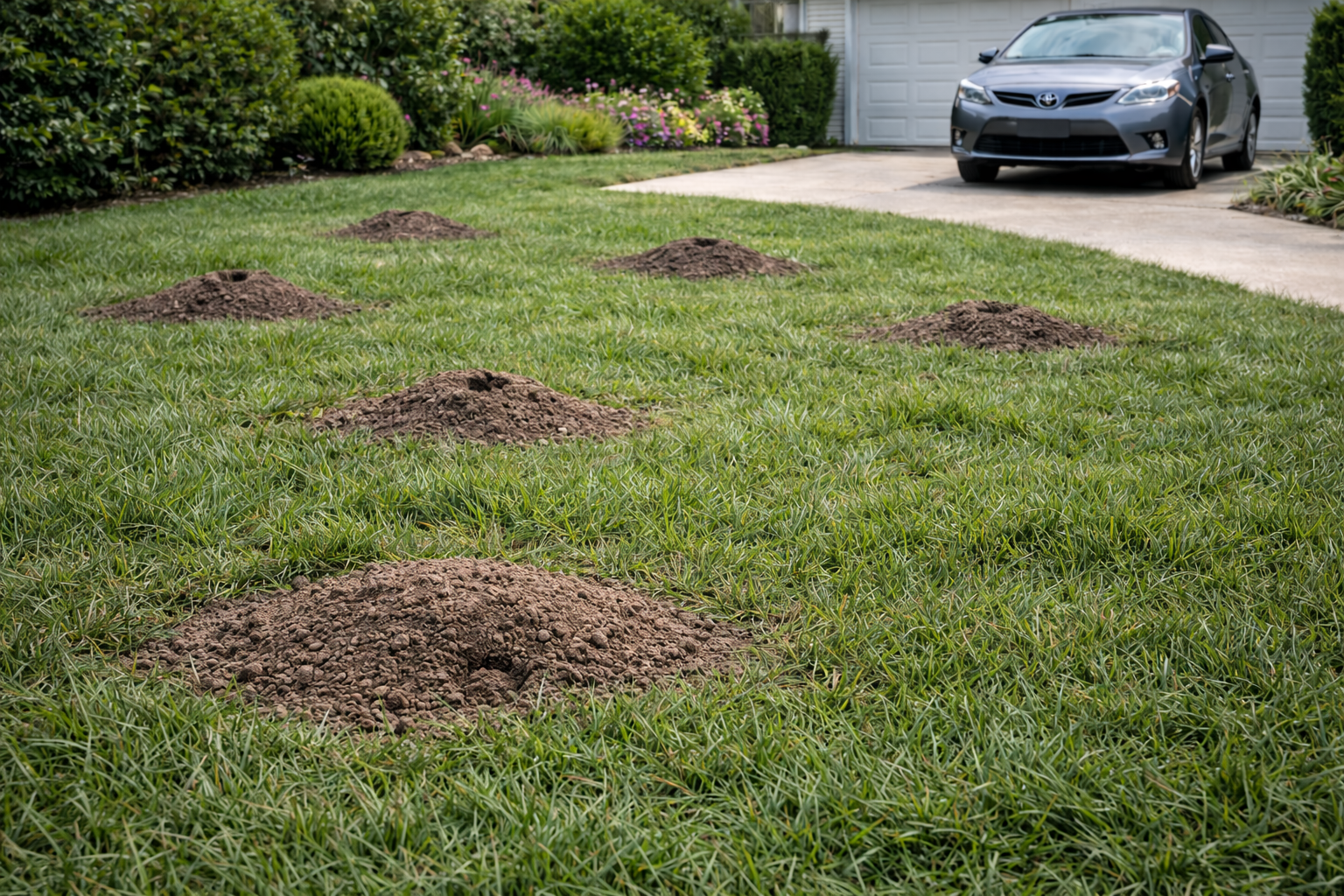
Gopher Activity in Chino, CA
Gophers are a persistent presence throughout Chino, California, a city situated in western San Bernardino County that experiences conditions ideal for pocket gopher populations. The combination of irrigated residential properties, agricultural heritage, and proximity to natural open spaces creates an environment where gophers thrive year-round. Property owners in Chino frequently encounter evidence of gopher tunneling systems that can compromise landscaping, irrigation infrastructure, and structural integrity.
Why Chino Has Significant Gopher Activity
Chino's geography and climate create nearly optimal conditions for gopher populations to flourish. The city sits at approximately 600 feet elevation in a valley setting with primarily clay loam and loamy soil types—textures that gophers find relatively easy to excavate compared to rocky or heavily compacted earth. The region receives most of its annual precipitation between November and March, with total yearly rainfall averaging around 15 inches. This seasonal moisture pattern, combined with year-round irrigation systems that maintain landscape moisture during the dry season, provides gophers with consistently workable soil conditions.
The semi-arid climate characteristic of inland San Bernardino County means that property owners rely heavily on landscape irrigation to maintain ornamental plants, citrus groves, and grass areas. This irrigation creates subsurface moisture zones that gophers exploit for both food resources and easier tunneling. Additionally, Chino's position near the Chino Hills and transitional zones between developed residential areas and remaining agricultural land means gophers have natural population reservoirs from which they can expand into suburban settings. The city's extensive use of decorative landscaping and maintained yards provides abundant food sources including roots, bulbs, and tender plant material that attract and sustain gopher populations.
Common Gopher Species in Chino
The Botta's pocket gopher, scientifically identified as Thomomys bottae, represents the primary gopher species found throughout Chino and the greater San Bernardino County region. This species derives its common name from the external cheek pouches that gophers use to transport soil and plant material while excavating tunnel systems. Adult Botta's pocket gophers typically measure between 5 and 7 inches in body length, with relatively short tails measuring 1 to 1.5 inches—proportions that facilitate movement through confined underground passages.
Botta's pocket gophers display coloration ranging from light tan to dark brown, often with slightly darker dorsal surfaces compared to ventral regions. Their robust, cylindrical body shape and powerful forelimbs with elongated claws make them highly specialized for subterranean existence. In Chino's specific habitat, these gophers establish both shallow feeding tunnels near the surface, where they search for plant roots and bulbs, and deeper burrow systems extending 12 inches or more underground where nesting chambers and food storage areas are located. The species is solitary by nature, with individual gophers maintaining exclusive territories defended against intruding individuals, which means multiple gophers in a yard indicate either separate territories or reproduction during breeding seasons.
When Gopher Activity Peaks in Chino
Gopher activity in Chino follows seasonal patterns closely tied to local precipitation and soil moisture conditions. The primary breeding season extends from January through March, when gophers exhibit increased tunnel construction activity and heightened territorial behavior. During these months, mating activity generates more surface disturbance as males establish routes through territory and females prepare nesting chambers. Property owners frequently observe their most visible gopher damage during late winter and early spring when breeding imperative drives intensive digging.
Following the winter breeding season, spring rains typical of Chino's climate pattern further increase gopher activity through April and May. The combination of soil moisture from seasonal precipitation and warmer temperatures stimulates plant growth that provides expanded food resources. Gophers expand existing tunnel systems and establish new feeding galleries in response to emerging vegetation. Summer months, June through August, show somewhat reduced surface activity as Chino's heat and natural soil drying make tunneling more energetically costly, though subsurface gopher populations remain active. Fall months present a transitional period as gophers prepare for winter by expanding food storage areas and deepening burrow systems. Year-round irrigation in many Chino properties can somewhat blur these seasonal patterns by maintaining workable soil moisture even during naturally drier periods, potentially sustaining elevated gopher activity throughout the calendar year.
Signs of Gopher Damage in Chino Yards
Identifying gopher presence requires familiarity with the distinctive signs that gophers create while tunneling and foraging. The most obvious indicator is the presence of mounds—crescent or horseshoe-shaped accumulations of loose soil pushed to the surface as gophers excavate tunnel systems. Chino property owners should recognize that gopher mounds differ distinctly from mole hills; gopher mounds typically display a plugged hole offset from the mound's center, while mole hills show a more centered depression. These characteristic mounds appear regularly across affected yards, often arranged in patterns indicating the direction of tunnel networks.
Beyond mounding activity, gophers cause direct plant damage that becomes apparent in Chino's manicured landscapes. Gophers feeding on plant roots cause unexpected wilting and death of ornamental plants, shrubs, and young trees despite adequate irrigation. Established fruit trees, common throughout Chino's neighborhoods with residual agricultural heritage, may show sudden decline when gophers girdle roots or consume significant portions of root systems. Irrigation system damage presents another costly consequence of gopher activity; tunnels frequently intersect with drip lines, soaker hoses, and buried irrigation pipes, creating leaks that increase water waste and reduce irrigation efficiency. Property owners may notice sudden soft areas or settling in lawn sections where gopher tunnels undermine surface integrity. In some cases, surface runoff patterns shift noticeably as subsurface tunnel systems alter soil water movement, creating unexpected erosion or soggy areas where previous drainage was adequate.
Landscape Considerations for Chino Properties
Chino's residential landscape aesthetic reflects its semi-arid climate position with a mixture of maintained turf areas, ornamental shrubs, and ornamental trees typical of suburban San Bernardino County communities. Many Chino properties feature low-water landscaping with native and adapted species including California native shrubs, desert-adapted ornamentals, and strategically placed shade trees. Simultaneously, traditional landscaping remains common, featuring irrigated lawns, foundation plantings of junipers and similar shrubs, and fruit trees reflecting the area's agricultural history.
Different landscape elements present varying vulnerability to gopher damage. Turf areas and herbaceous garden plantings suffer obvious damage from mounding activity that disrupts aesthetic appearance and surface uniformity. Ornamental shrubs and small trees with fibrous root systems are particularly susceptible to gopher feeding. Species such as junipers, privets, and similar shrubs common in Chino foundation plantings experience rapid decline when gophers damage root systems. In contrast, hardscape features—patios, walkways, rock landscaping, and similar elements—are less directly vulnerable to gopher damage, though subsurface gopher tunneling can undermine hardscape stability and create settling issues. Fruit trees and larger shade trees demonstrate variable susceptibility; young specimens with tender roots suffer more significantly than mature trees with extensive established root systems. Properties incorporating rock mulch, gravel beds, and xeriscaping experience somewhat reduced gopher pressure compared to heavily irrigated, densely planted properties, though gophers readily inhabit all landscape types found throughout Chino.
For professional gopher control in Southern California, visit Rodent Guys — serving Los Angeles, Orange, San Bernardino, and Riverside counties.