Gopher Activity in City of Industry, CA
The City of Industry, located in Los Angeles County's San Gabriel Valley, experiences substantial gopher activity throughout much of the year. This industrial and commercial hub, situated on land historically used for agriculture, maintains soil conditions and landscape features that support healthy gopher populations. Property owners and facility managers in City of Industry frequently encounter evidence of burrowing activity despite the city's urban and industrial character.
Why City of Industry Has Significant Gopher Activity
City of Industry's geographic location and environmental conditions create ideal circumstances for gopher colonization and persistence. The city sits in the San Gabriel Valley on alluvial soils deposited by the San Gabriel River system—these soils are typically loamy and moderately dense, making them easier to excavate than clay-heavy soils found in other parts of Los Angeles County. The valley floor's relatively flat terrain allows gophers to establish extensive burrow systems without encountering the rocky substrates that would hinder tunneling in foothill areas.
The region's semi-arid climate receives most precipitation between November and April, with average annual rainfall around 15 inches. This seasonal moisture pattern encourages vegetation growth in spring and fall, providing abundant plant material that attracts and sustains gopher populations. The city's maintained landscape areas—including commercial properties, parks, and median strips—rely on irrigation systems that keep soil moist year-round, creating favorable burrowing conditions even during dry summers.
City of Industry's proximity to less developed areas and regional open spaces contributes to ongoing gopher activity. The nearby San Dimas Canyon and surrounding foothills maintain wild gopher populations that can serve as source populations, recolonizing treated areas. Additionally, the San Gabriel River's riparian corridor, though modified, still supports natural gophers that periodically spread into adjacent developed areas.
Common Gopher Species in City of Industry
The Botta's pocket gopher (Thomomys bottae) is the primary gopher species found throughout City of Industry and the broader San Gabriel Valley region. This medium-sized rodent measures approximately 8 to 10 inches in total body length, with a stocky build, small eyes, and prominent front teeth adapted for gnawing through soil and plant material. Botta's pocket gophers display fur coloration ranging from light tan to dark brown, with considerable individual variation even within localized populations.
These gophers possess distinctive external cheek pouches—the "pockets" that give the species its common name—which they use to transport food and nesting material throughout their burrow systems. Their front feet feature long claws suited for digging, while their hind feet are smaller and used primarily for pushing excavated soil backward toward tunnel entrances. The tail is relatively short and hairless, adapted for sensitive tactile feedback in underground environments.
Botta's pocket gophers in City of Industry show ecological flexibility, thriving in both cultivated landscapes and native vegetation. Historical agricultural use across much of the San Gabriel Valley created conditions that favored these burrowing rodents, and this legacy persists today despite industrial development. The species remains active year-round in Southern California, though seasonal population fluctuations occur in response to breeding cycles and food availability.
When Gopher Activity Peaks in City of Industry
Gopher activity in City of Industry follows predictable seasonal patterns driven by breeding biology and environmental conditions. The primary breeding season extends from January through March, when males actively disperse to locate mates and females prepare nesting chambers. During these months, gopher tunneling activity intensifies noticeably, with fresh mounds appearing frequently and existing burrow systems expanding as males range more widely than usual.
Spring precipitation events, typically occurring between February and April, stimulate vegetation growth that attracts and feeds gopher populations. The combination of seasonal breeding activity and increased food availability creates a pronounced peak in gopher-related damage reports and observable surface activity during late winter and early spring. Property owners frequently notice new mounds appearing on landscapes during this period, particularly following rain events that soften soil.
Secondary activity increases occur in fall, roughly September through November, when juvenile gophers from spring litters establish independence and seek territories. Environmental conditions during fall remain favorable due to lingering summer moisture in irrigated landscapes, supporting continued gopher survival and movement. Summer months (June-August) typically show reduced surface activity in City of Industry due to drier conditions, though gophers remain present and active in deeper burrows. Winter activity remains substantial in the city's frost-free climate, particularly when mild temperatures persist without extended cold snaps.
Signs of Gopher Damage in City of Industry Yards
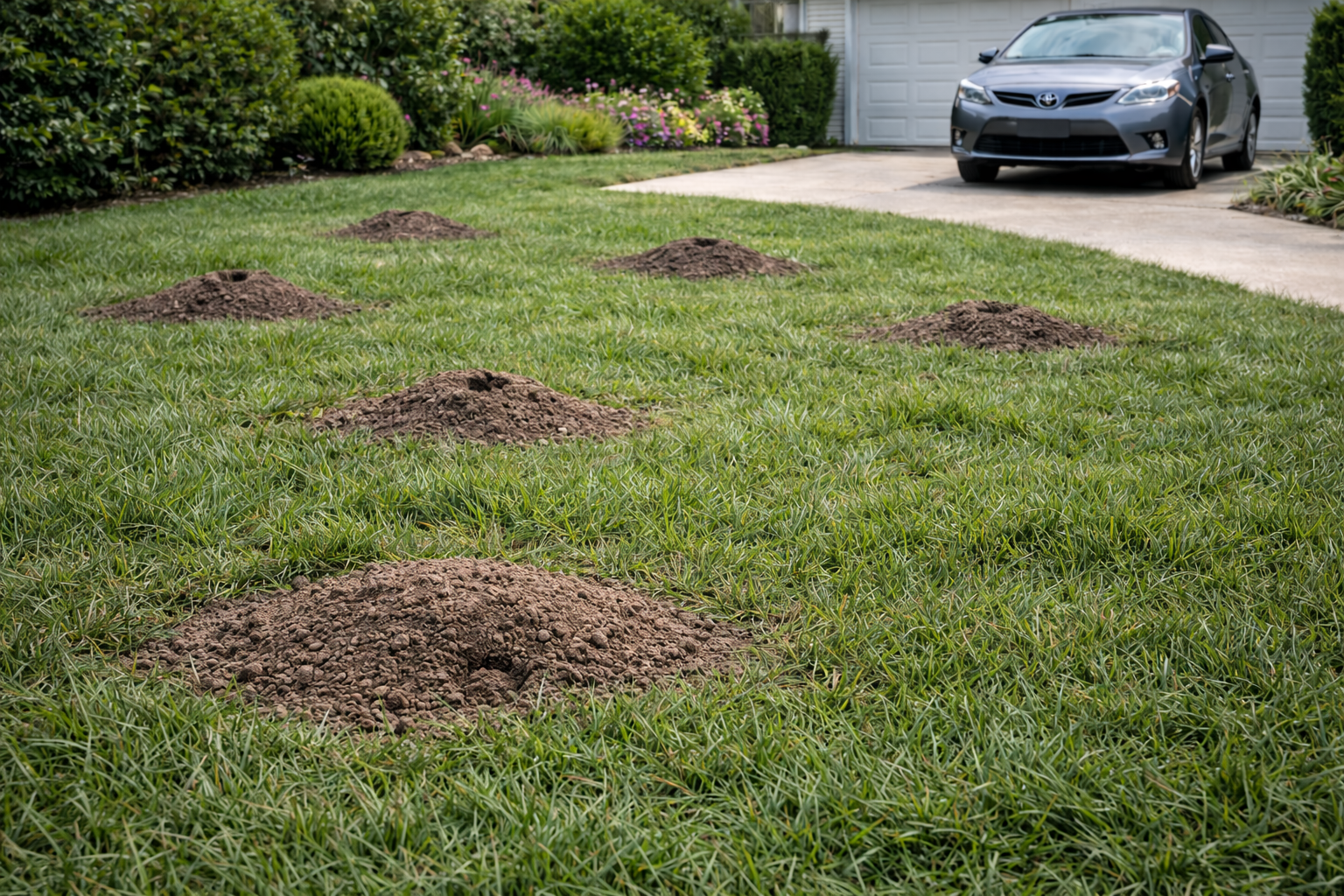
Gopher presence in City of Industry landscapes announces itself through distinctive mound formation patterns. Fresh mounds appear as crescent or circular raised areas of loose soil, typically 4 to 12 inches in diameter and 2 to 6 inches high, scattered across yards and landscaped areas. The mound shape results from gophers pushing soil upward from main tunnels—crescent-shaped mounds form when gophers seal the tunnel opening from inside, whereas open mounds with a hole indicate active burrow entrances. Property managers in City of Industry should expect to find multiple new mounds during peak activity seasons.
Subsurface burrowing causes subsidence and irregular settling across lawns and landscaped areas, creating sunken patches that trap water and disrupt the visual appearance of maintained grounds. Extensive tunnel systems directly beneath landscape surfaces cause damage to irrigation lines and buried utilities, leading to water loss and system malfunctions. Many City of Industry properties experience unexpected increases in water consumption related to irrigation line damage from gopher activity.
Vegetation damage from gopher feeding includes plant mortality, bark stripping on young trees, and severed roots that destabilize established plantings. Gophers gnaw on roots, bulbs, and plants from underground positions, and this feeding damage becomes apparent when plants wilt despite adequate irrigation. In City of Industry's mixed commercial and landscaped areas, gopher feeding frequently targets ornamental plants, turf, and vegetable gardens with equal severity, making damage prevention a consistent concern for property maintenance.
Landscape Considerations for City of Industry Properties
City of Industry's landscape character combines commercial hardscaping with maintained turf and ornamental plantings typical of Southern California industrial parks and commercial developments. The predominant landscape type features large expanses of irrigated lawn with perimeter plantings of drought-tolerant shrubs, ornamental grasses, and accent trees—a style that provides abundant food and suitable burrowing habitat for gopher populations. The city's design standards for landscaped setbacks and green corridors create extensive softscape areas attractive to gophers.
Particularly vulnerable plant species in City of Industry landscapes include fruit and nut trees, young shade trees such as oak and liquidambar varieties, flowering shrubs, and herbaceous ornamentals. Gophers demonstrate preference for legumes, including acacia and locust species; they readily consume roots of ornamental grasses and feed on spring bulb plantings common in City of Industry commercial properties. Turf grasses covering substantial areas provide both food and concealment, supporting gopher populations more effectively than hardscape-dominated properties.
Properties featuring extensive hardscape elements—including pavement, decorative rock, and non-vegetated ground covers—experience reduced gopher activity compared to landscapes dominated by soil and plants. City of Industry properties transitioning from turf to xeriscaping or hardscape alternatives may notice declining gopher populations over time. However, the city's climate and irrigation infrastructure make complete elimination of soft landscaping impractical for most properties, meaning gopher management remains a continuing consideration for facility maintenance planning.
For professional gopher control in Southern California, visit Rodent Guys — serving Los Angeles, Orange, San Bernardino, and Riverside counties.