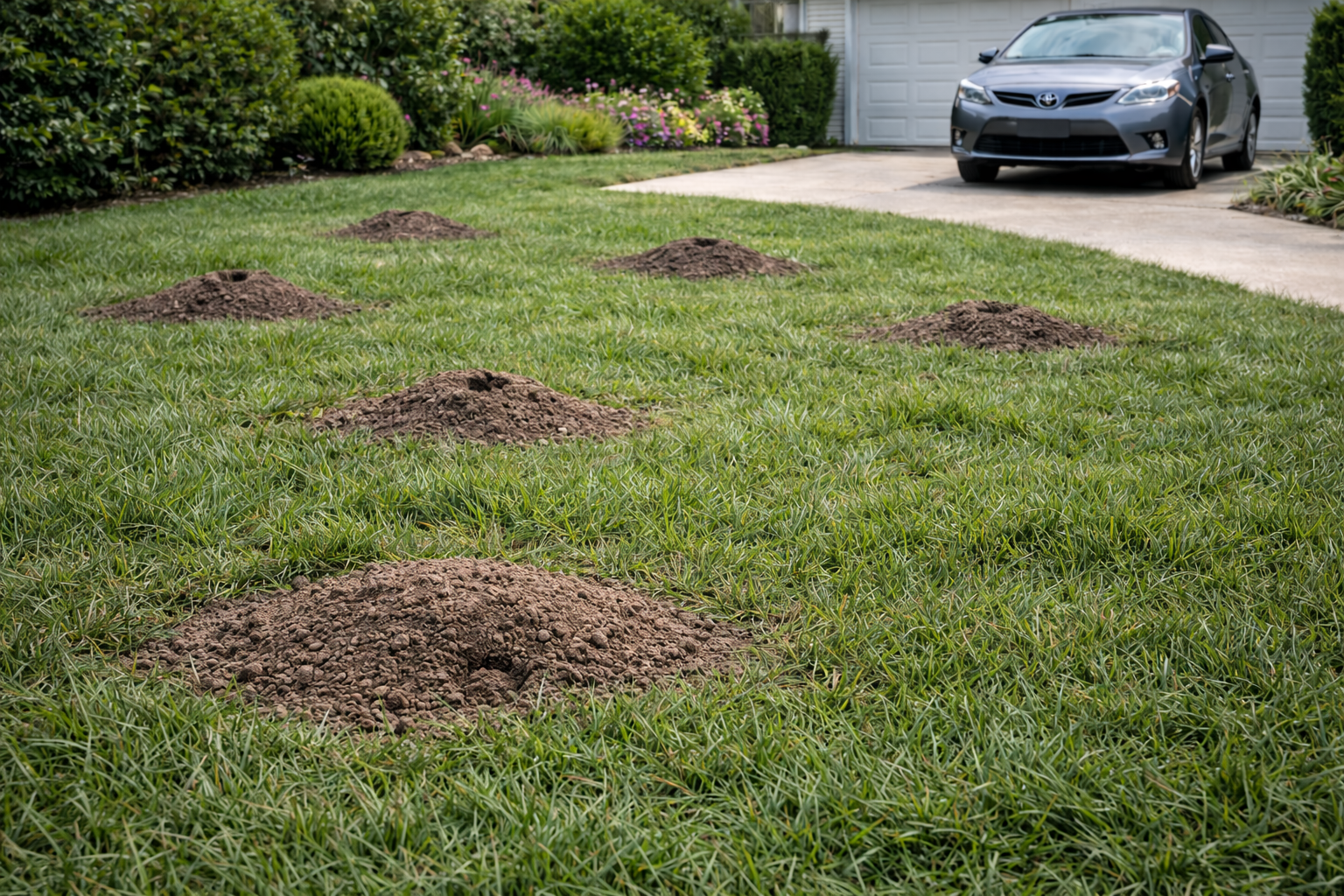
Gopher Activity in Claremont, CA

Gophers are a persistent feature of the Claremont landscape, where the combination of fine-textured soils, abundant irrigation, and proximity to natural habitat creates ideal conditions for their populations. Residents throughout the city—from the neighborhoods near the Claremont Colleges to the hillside properties bordering the San Gabriel Mountains foothills—frequently encounter evidence of gopher activity. Understanding the patterns, seasonality, and damage potential of gophers in this region helps property owners make informed decisions about their landscapes.

Why Claremont Has Significant Gopher Activity

Claremont's location at the base of the San Gabriel Mountains, combined with its specific soil composition and water availability, makes it particularly attractive to pocket gophers. The city sits on alluvial soils deposited by mountain streams—primarily composed of silt and clay loams that are ideal for burrowing. These fine-textured soils are easier for gophers to excavate than sandy or rocky substrates, requiring less energy expenditure as they tunnel and create their characteristic mound systems.

The region's climate also supports sustained gopher populations. Claremont experiences mild winters with average January temperatures around 48°F, meaning gophers remain active throughout the year rather than entering hibernation. The city receives most of its annual precipitation between November and March, with typical annual rainfall between 14 and 16 inches. This winter and early spring moisture softens the soil, making it more workable for tunneling and promoting the growth of tender roots and bulbs that gophers consume.

Perhaps most significantly, residential landscaping in Claremont depends heavily on supplemental irrigation. From the manicured college campuses to established neighborhoods with mature trees and shrub borders, irrigation systems maintain soil moisture even during the dry California summer months. This consistent water availability, combined with the ornamental plants, vegetables, and grasses that characterize Claremont properties, creates a year-round food supply for pocket gopher populations that would struggle to survive in non-irrigated native habitat.

Common Gopher Species in Claremont

The Botta's pocket gopher, scientifically known as Thomomys bottae, is the predominant gopher species throughout Claremont and the greater Los Angeles basin. Named for early naturalist Karl Botta, this species thrives in the foothill and valley environments characteristic of San Gabriel Valley communities. Botta's pocket gophers are medium-sized rodents, typically weighing between 2 and 4 ounces and measuring 5 to 7 inches in body length, with relatively short tails compared to some gopher species.

Physically, Botta's pocket gophers display stocky builds adapted for digging, with powerful forelimbs and specialized claws. Their fur coloration typically ranges from brown to grayish-brown, providing natural camouflage in the region's soil conditions. The species derives its common name "pocket gopher" from external fur-lined cheek pouches, which the animals use to transport food and nesting material through their tunnel systems—these pouches can be turned inside out for cleaning, a distinctive behavior of pocket gophers.

In Claremont specifically, Botta's pocket gophers exploit both disturbed residential areas and the transitional zones between developed properties and the natural chaparral-covered foothills. They are most active in areas with good soil moisture and established vegetation, making neighborhoods with mature landscaping particularly susceptible to colonization. Individual gophers establish and defend tunnel systems that can extend across multiple properties, making control challenging in densely developed neighborhoods where properties adjoin one another.

When Gopher Activity Peaks in Claremont

Gopher activity in Claremont follows distinct seasonal patterns tied to the regional climate and reproductive cycles. The breeding season extends from January through March, coinciding with Claremont's rainy season. During this period, male gophers increase their tunnel activity as they search for mates, and pregnant or nursing females expand their burrow systems in preparation for litters. This heightened activity results in more visible mounding and increased damage reports during the winter and early spring months.

As temperatures warm and the dry season approaches in late spring and summer, gopher activity often appears to diminish in some areas, though this largely reflects reduced soil workability rather than population decline. The continued availability of irrigation water in residential landscapes means that summer activity persists in maintained gardens and lawns, even as unirrigated native areas dry completely. Fall rains, typically arriving in October or November, trigger another period of increased activity as soil moisture returns and vegetation regrows.

Property managers and homeowners in Claremont frequently observe that the period from January through April represents peak detection time for gopher presence. This coincides with both biological breeding activity and the most favorable soil conditions for tunnel construction. However, the year-round availability of irrigated plants and relatively mild winters mean that Claremont gophers can remain active and cause damage throughout all seasons, unlike populations in colder climates where winter cold limits activity.

Signs of Gopher Damage in Claremont Yards

The most visible indicator of gopher presence is the characteristic mounding pattern created as animals excavate tunnel systems. Gopher mounds appear as crescent or crescent-shaped accumulations of loose soil, typically 3 to 12 inches in diameter and 1 to 3 inches high, with the distinctive gopher hole often plugged with soil pushed from below. In Claremont's clay-loam soils, these mounds are typically compact and clay-rich, appearing darker and more consolidated than mounds in sandier regions. Individual gophers may create dozens of mounds across a property over several weeks as they expand their tunnel networks.

Beyond visible mounding, gophers cause damage through their feeding activity. Gophers consume plant roots and bulbs, often killing ornamental shrubs and undermining the stability of trees by severing root systems. In Claremont's common landscaping—including roses, native California shrubs, fruit trees, and decorative bulbs—gopher feeding can quickly degrade the appearance and health of established plants. Vegetable gardens are particularly vulnerable, with gophers readily consuming lettuce, carrot roots, potato tubers, and other garden crops.

Gophers also damage irrigation systems, a particularly costly impact in Claremont where drip irrigation and automated watering systems are common. Gopher burrows collapse under or around irrigation lines, and the animals sometimes chew through plastic tubing, leading to water leaks and system failures. In some cases, gopher activity disrupts irrigation distribution to the point where previously healthy landscaping begins to stress from water loss. The combination of root damage and irrigation disruption can result in sudden plant decline that may be mistaken for disease or pest infestation rather than gopher activity.

Landscape Considerations for Claremont Properties

Claremont's landscaping reflects the region's Mediterranean climate and its history as a planned educational community. Properties typically feature combinations of native California oaks and shrubs alongside ornamental plantings, fruit trees, and maintained turf areas. The City of Claremont's long-standing commitment to tree canopy and the landscaping traditions established by the Claremont Colleges have created properties with substantial vegetation—conditions that simultaneously support the community's character and provide food sources for resident gopher populations.

Certain plants common to Claremont landscapes are particularly vulnerable to gopher damage. Fruit trees, including the citrus, avocado, and deciduous fruit trees found throughout residential neighborhoods, are highly susceptible because gophers consume both roots and the plant material near the soil surface. Ornamental bulbs—including tulips, daffodils, and amaryllis—are preferred gopher foods and often disappear completely when populations establish in bulb gardens. Roses, another traditional Claremont landscape element, frequently suffer from gopher root damage that weakens plants and allows disease entry.

The distinction between hardscaping and softscape becomes significant in gopher management contexts. Properties with extensive patios, pathways, and rocky groundcover areas provide less suitable habitat for gopher tunneling, whereas properties dominated by lawn, garden beds, and planted borders invite colonization. In Claremont's established neighborhoods, many properties evolved with extensive softscape, creating continuous suitable habitat across multiple adjacent properties. Understanding these landscape patterns helps residents anticipate where gopher activity is most likely and assess the potential scope of management efforts.