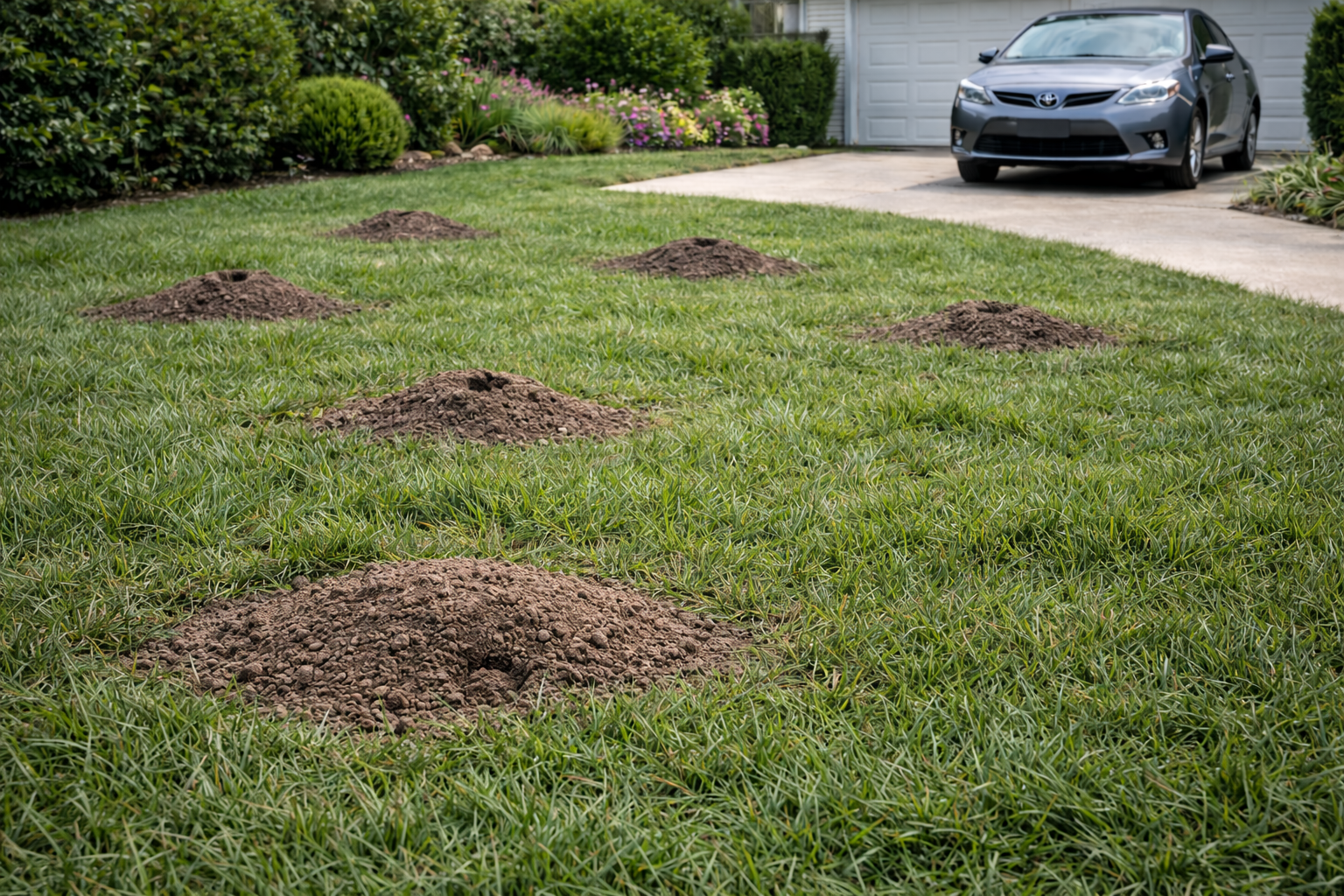
Gopher Activity in Colton, CA
Gopher populations thrive throughout Colton, a city in San Bernardino County located in the Inland Empire region of Southern California. The combination of irrigation-dependent residential and commercial properties, alluvial soil composition, and proximity to undeveloped land creates ideal conditions for pocket gophers to establish and maintain active colonies. Understanding gopher behavior and seasonal patterns helps property owners in Colton recognize activity early and make informed decisions about landscape management.
Why Colton Has Significant Gopher Activity
Colton's geography and infrastructure make it particularly susceptible to gopher colonization. The city sits within the San Bernardino Valley, an area characterized by alluvial soils deposited by historical water flows from mountain ranges to the north and east. These soils—typically composed of sand, silt, and clay mixtures—are relatively easy for gophers to excavate and tunnel through compared to hardpan or rocky substrates found in surrounding foothill areas.
The local irrigation systems that support Colton's landscape infrastructure attract and sustain gopher populations. Properties throughout the city rely on regular watering cycles to maintain lawns, ornamental plantings, and agricultural operations. Irrigation creates moist soil conditions that gophers prefer, as moisture makes soil easier to work and supports the vegetation gophers feed on. Additionally, water lines and irrigation pipes create physical structures that gophers navigate around and sometimes damage during their burrowing activities.
Colton's semi-arid climate with hot summers and mild winters means gophers can remain active year-round, unlike in colder regions where they may reduce activity during winter months. Annual precipitation in Colton averages around 10-12 inches, concentrated primarily in the winter months between November and March. This seasonal rainfall pattern, combined with artificial irrigation, maintains soil conditions suitable for continuous gopher activity throughout the year.
The city's location adjacent to open spaces and transitional lands on its eastern and southern edges provides gopher populations with movement corridors. As development expands into previously undeveloped areas, gophers from wild populations colonize new residential zones, establishing themselves in yards, parks, and landscaped commercial properties.
Common Gopher Species in Colton
The Botta's pocket gopher (Thomomys bottae) is the primary gopher species found throughout Colton and the broader Inland Empire region. This species derives its common name from the large, external cheek pouches visible on each side of its face—adaptations that allow the animal to carry soil and plant material while tunneling. Adult Botta's pocket gophers typically measure 5 to 6 inches in body length, with an additional 1 to 1.5 inches of tail.
Botta's pocket gophers display coloration that varies from dark brown to yellowish-brown, with fur that tends toward lighter tones on the ventral (belly) side of the body. Their physical structure reflects specialized burrowing adaptation: powerful front legs with large claws, reduced eye size relative to body size, and flexible skin that allows movement within tight tunnel spaces without friction. The animal's teeth are continuously growing, requiring constant gnawing and grinding to maintain appropriate length—a behavior that occasionally damages irrigation pipes and wooden structures encountered during tunneling.
In Colton's landscape, Botta's pocket gophers inhabit residential yards, park grounds, golf courses, and agricultural properties. They prefer areas with adequate vegetation for food and soil suitable for tunneling. The species tolerates a wide range of soil types and moisture conditions, though it favors the well-irrigated soils common to developed properties in Colton. Unlike some gopher species that live in smaller colonies, Botta's pocket gophers typically maintain solitary or paired territories, with individuals defending exclusive home ranges from other gophers.
When Gopher Activity Peaks in Colton
Gopher activity in Colton follows seasonal patterns driven by reproductive cycles, soil moisture conditions, and food availability. The primary breeding season for Botta's pocket gophers occurs between January and March, coinciding with Colton's rainy season when winter precipitation increases soil moisture and stimulates new plant growth. During this period, gopher activity becomes most visible as animals expand tunnel systems, establish new territories, and move more frequently through soil.
Spring months from April through May represent another period of heightened gopher activity. As daytime temperatures warm and soil moisture from winter rains persists, gophers feed more intensively on emerging vegetation. Juvenile gophers dispersing from maternal tunnels increase population visibility during late spring and early summer. Property owners in Colton typically observe the most gopher mounding activity during these months.
Summer activity (June through August) decreases somewhat as soil moisture declines and gophers concentrate their activities in areas receiving regular irrigation. However, gophers remain active even during dry periods by maintaining tunnels at depths where soil retains more moisture. The late summer to early fall transition can see renewed activity as gophers prepare for breeding season by establishing food caches and expanding tunnel systems.
Winter months in Colton see reduced but continued gopher activity. While the species does not hibernate, gophers spend more time in deeper tunnel systems during the coldest periods. The arrival of winter rains in November through December begins stimulating activity once again, leading into the January-March breeding season peak. Understanding these seasonal patterns helps explain why Colton property owners observe gopher evidence at specific times throughout the year.
Signs of Gopher Damage in Colton Yards
The most visible sign of gopher activity in Colton yards is the characteristic mound of soil. Botta's pocket gophers create mounds by pushing loosened soil upward as they excavate tunnels near the surface. Colton mounds typically measure 4 to 8 inches in diameter and 2 to 4 inches in height, composed of compacted earth with a somewhat symmetrical, volcano-like appearance. A single gopher may create multiple mounds in its territory over the course of several weeks, particularly during spring activity peaks.
Tunnel systems extend from mound locations in networks across Colton yards. While most tunnels run 6 to 12 inches below the surface, gophers also maintain deeper burrows that serve as nesting chambers and food storage areas. Surface tunnels sometimes create raised ridges of soil running across lawns and through planting beds, disrupting the aesthetic appearance of landscaped areas.
Gophers cause direct plant damage by severing roots and bulbs while feeding underground or by consuming above-ground vegetation pulled into burrows. In Colton's residential landscaping, damage frequently affects fruit trees, vegetable gardens, flowering bulbs, and ornamental shrubs. Tree and shrub damage often manifests as sudden wilting or death when root systems are severed, sometimes across an entire row of plants as a gopher works along a line of similar species.
Irrigation system damage represents another common consequence of gopher activity in Colton. Drip irrigation lines, soaker hoses, and PVC pipes running through soil frequently sustain punctures or crushing damage from gopher tunneling. This damage can go unnoticed initially if located in areas not regularly observed, but eventually results in water loss, landscape stress, and increased irrigation costs.
Landscape Considerations for Colton Properties
Colton's landscape character reflects its position in the Inland Empire and semi-arid climate. Residential properties throughout the city commonly feature Mediterranean-style drought-tolerant landscaping, xeriscaping with native and adapted plants, and traditional turf grass lawns often concentrated in front yards. Commercial properties frequently incorporate hardscape elements—concrete, stone, and pavers—to reduce maintenance while managing water use in accordance with California's water conservation standards.
Certain plants commonly used in Colton landscaping prove particularly vulnerable to gopher damage. Newly planted trees and shrubs, with developing root systems not yet established beyond the primary root ball, suffer high mortality rates when gophers sever roots. Fruit trees—including citrus, which grows well in Colton's climate—attract gophers to root systems and require protection for successful establishment. Bulb flowers like tulips, daffodils, and dahlia varieties, popular in Colton ornamental gardens, face particular risk as gophers actively seek out bulbs as food sources.
Properties with extensive turf grass areas present larger targets for gopher colonization compared to landscapes emphasizing hardscape, xeriscaping, or densely planted shrub beds. The soft, irrigated soil under grass lawns provides ideal gopher habitat, particularly in neighborhoods like the northeast residential areas of Colton where larger yards with more extensive plantings predominate. Commercial properties and streetscape areas with significant hardscape coverage experience less gopher activity, though gophers successfully establish colonies in any soft-soil area with adequate vegetation.
Irrigation infrastructure represents a landscape consideration that paradoxically supports gopher populations while also being damaged by them. Properties dependent on regular irrigation to maintain landscaping create the precise conditions gophers prefer. Underground irrigation systems provide both water that keeps soil moist and physical structures that gophers must navigate around during tunneling activities, sometimes leading to damage that requires repair or replacement.
For professional gopher control in Southern California, visit Rodent Guys — serving Los Angeles, Orange, San Bernardino, and Riverside counties.