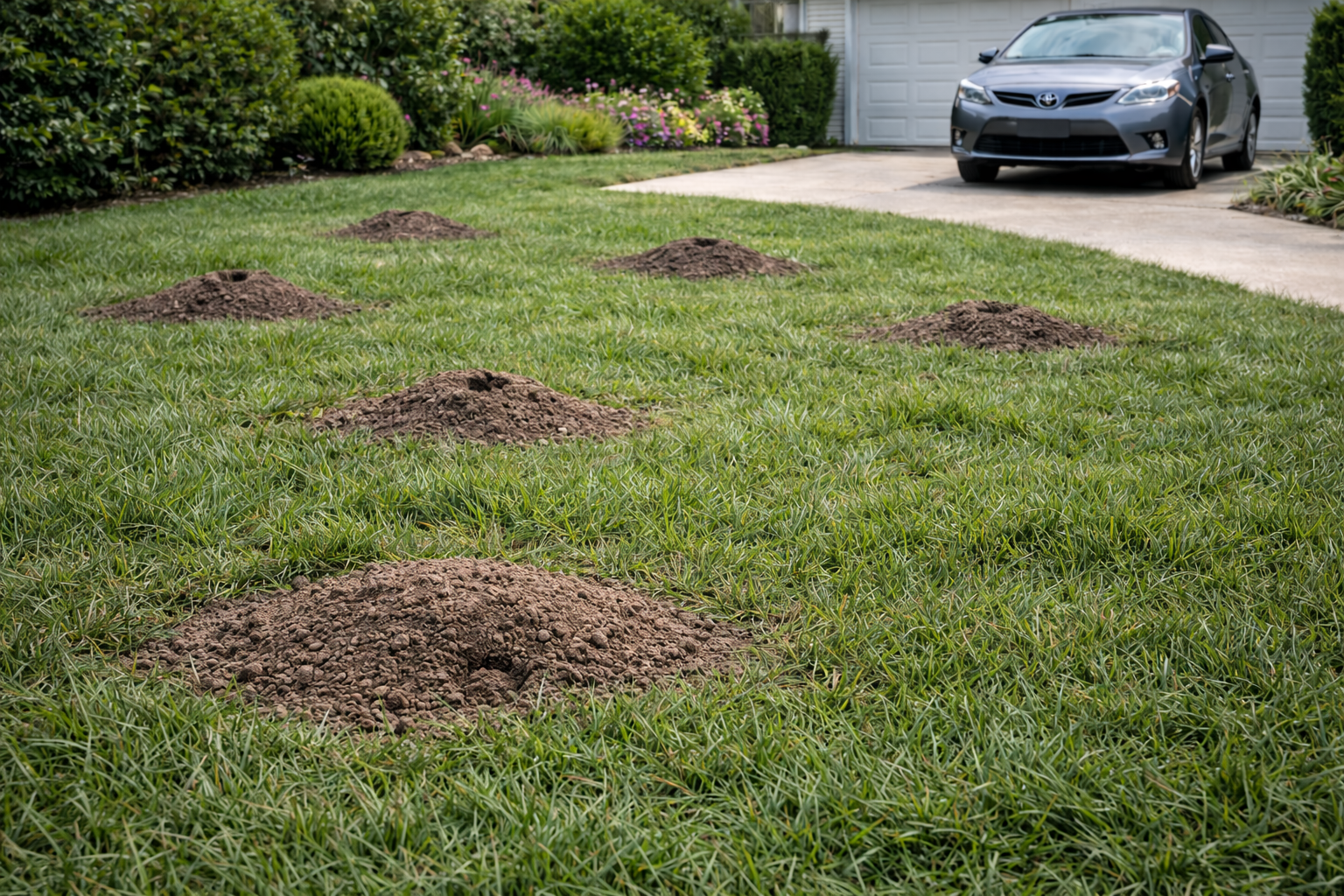
Gopher Activity in Compton, CA
Gophers represent a persistent wildlife management challenge throughout Compton, located in southwestern Los Angeles County. The city's unique combination of residential neighborhoods, pocket parks, and irrigated landscaping creates ideal conditions for pocket gopher colonization. Property owners across Compton's diverse communities frequently encounter evidence of gopher activity, from telltale mounds in yards to damage beneath the soil surface.
Why Compton Has Significant Gopher Activity
Compton's environmental conditions actively support thriving gopher populations. The city sits within the Los Angeles Plain, characterized by alluvial soils deposited by the Los Angeles River and its tributaries over thousands of years. These soils—typically loamy and moderately compacted—provide ideal burrowing conditions. Gophers can navigate these substrates with relative ease, creating extensive tunnel networks that extend several feet into the ground.
The region's Mediterranean climate pattern, marked by dry summers and mild, wet winters, influences gopher breeding cycles and activity levels. Winter and early spring precipitation softens the soil, making tunnel excavation considerably easier for gophers. Additionally, Compton's extensive irrigation infrastructure—common throughout residential and commercial properties—maintains soil moisture year-round. This consistent moisture availability allows gophers to forage on plant roots and bulbs regardless of seasonal drought patterns that would otherwise restrict their activity.
Compton's proximity to undeveloped areas, including portions of Long Beach and surrounding unincorporated regions, provides source populations from which gophers can disperse. The presence of vacant lots, transitional spaces, and naturalized areas throughout various Compton neighborhoods offers refugia for gopher populations. Once established, these burrowing rodents readily colonize nearby residential properties, particularly those with established landscaping and regular irrigation.
Common Gopher Species in Compton
The Botta's pocket gopher (Thomomys bottae) represents the primary gopher species encountered throughout Compton and the broader Los Angeles Basin. Named after the Spanish botanist Paolo Botta, this species occurs from Oregon through California to Baja California and inland to Nevada and Arizona.
Botta's pocket gophers display distinctive morphological features well-suited to subterranean life. Adults typically measure 5 to 7 inches in head-and-body length, with a relatively short, sparsely haired tail extending 1 to 2 inches. Their fur coloration varies considerably across populations, ranging from pale brown to nearly black, with Compton populations generally displaying medium to dark brown pelage. The species exhibits characteristic cheek pouches—fur-lined external pouches opening from the cheek into the mouth—which serve as transport mechanisms for food and nesting materials.
Physical adaptations reflect their burrowing lifestyle extensively. Front feet possess disproportionately large claws relative to body size, enhanced musculature, and specialized skeletal modifications that facilitate soil excavation. Eyes and ear pinnae remain relatively small, appropriate for an animal spending most of its life underground where light and airborne sound detection provide minimal advantage. Their incisors continue growing throughout life, requiring constant use for gnawing to prevent overgrowth.
Within Compton, Botta's pocket gophers occupy residential yards, parks, gardens, irrigated landscaping, and grassy areas throughout the city. They demonstrate strong habitat flexibility, establishing colonies in both native and ornamental plant communities wherever soil conditions permit burrow construction.
When Gopher Activity Peaks in Compton
Gopher activity in Compton follows predictable seasonal patterns driven by reproductive cycles and environmental conditions. The primary breeding season extends from January through March, coinciding with Compton's wet season when soil moisture levels peak. During this period, males become increasingly mobile, searching for receptive females and establishing dominance within territories. This enhanced movement results in noticeably increased surface activity, with fresh mounds appearing frequently across properties.
Spring represents a secondary peak in observable activity, particularly from March through May. Juvenile gophers emerge from maternal burrows and begin establishing their own territories, creating new burrow systems and surface disturbances. Spring precipitation, characteristic of Compton's climate pattern, maintains favorable soil conditions for this dispersal phase.
Summer activity declines somewhat as soil dries and gophers focus energy on foraging and maintaining existing burrows rather than excavating new ones. However, continued irrigation in residential and commercial landscapes sustains soil moisture pockets that support ongoing gopher presence and activity throughout the dryer months.
Fall activity increases moderately as gophers prepare for winter, building food caches and expanding burrow systems. The period from October through December sees renewed mounding activity before the winter breeding season commences. Year-round irrigation in Compton effectively eliminates true dormancy, allowing gopher populations to remain active and visible throughout all seasons, unlike populations in non-irrigated regions experiencing more pronounced seasonal fluctuation.
Signs of Gopher Damage in Compton Yards
Identifying gopher presence relies primarily on recognizing characteristic surface and subsurface damage signatures. The most obvious indicator consists of fresh mounds appearing in yards, lawns, and landscaped areas. These mounds form as gophers excavate burrow systems and push accumulated soil to the surface. Compton gopher mounds typically measure 3 to 6 inches in height and 4 to 8 inches in diameter, though variation occurs depending on soil type and moisture content. Characteristically, the opening hole appears offset from the mound's center, representing the tunnel entrance that the gopher subsequently covered during excavation activity.
Subsurface damage often precedes visible mound appearance. Gophers feeding on plant roots cause wilting, yellowing, and eventual death in ornamental shrubs, vegetables, and turf grass. Compton properties featuring drought-resistant landscaping common to the region—including California natives, Mediterranean species, and succulent plantings—experience significant damage when gophers sever roots or consume underground portions of plants. Irrigation lines frequently sustain punctures from gopher tunnels or direct gnawing, causing water leaks that create boggy patches and increase water bills.
Structural damage can result from extensive tunnel systems destabilizing shallow foundations, pathways, and lawn integrity. Properties with sprinkler systems throughout Compton frequently experience disruptions as gophers tunnel through installation areas. Burrow collapse creates surface subsidence, leaving depressions and hazardous footing conditions. In worst-case scenarios, compromised soil stability affects walkways, patios, and building foundations, particularly in areas with high gopher density.
Landscape Considerations for Compton Properties
Compton's diverse neighborhoods feature varied landscaping approaches reflecting cultural preferences, property ages, and microclimate conditions. Established residential areas in central and eastern Compton often display mature tree canopies with mixed understory plantings, while newer developments may feature drought-resistant native plantings aligned with contemporary water conservation practices. The city's industrial and commercial corridors increasingly incorporate hardscape features, though many older properties maintain traditional turf-and-ornamental combinations.
Certain plant species favored in Compton landscaping exhibit particular vulnerability to gopher predation. Root crops, including carrot, beet, and turnip varieties, experience complete crop loss when gophers access garden beds. Ornamental bulbs—especially tulips, daffodils, and lilies popular in Compton foundation plantings—constitute preferred gopher foods, with animals selectively harvesting bulbs without necessarily killing aboveground plant portions immediately.
Woody ornamentals and young trees commonly planted throughout Compton neighborhoods face gopher damage through root girding and root consumption. California pepper trees, crape myrtles, liquidambars, and various drought-resistant specimens employed in Compton's xeriscape movement remain vulnerable despite their overall hardiness. Native California live oaks and coast live oaks, increasingly featured in restoration and conservation-minded plantings, sustain damage from gopher activity on residential properties and in neighborhood parks.
Properties emphasizing hardscape features—decomposed granite pathways, concrete patios, native rock outcrops—experience less gopher pressure than heavily irrigated, densely planted softscape areas. However, gophers readily tunnel beneath hardscape to access adjacent planted areas, and surface disruption still occurs where burrow systems undermine paving and structures.
For professional gopher control in Southern California, visit Rodent Guys — serving Los Angeles, Orange, San Bernardino, and Riverside counties.