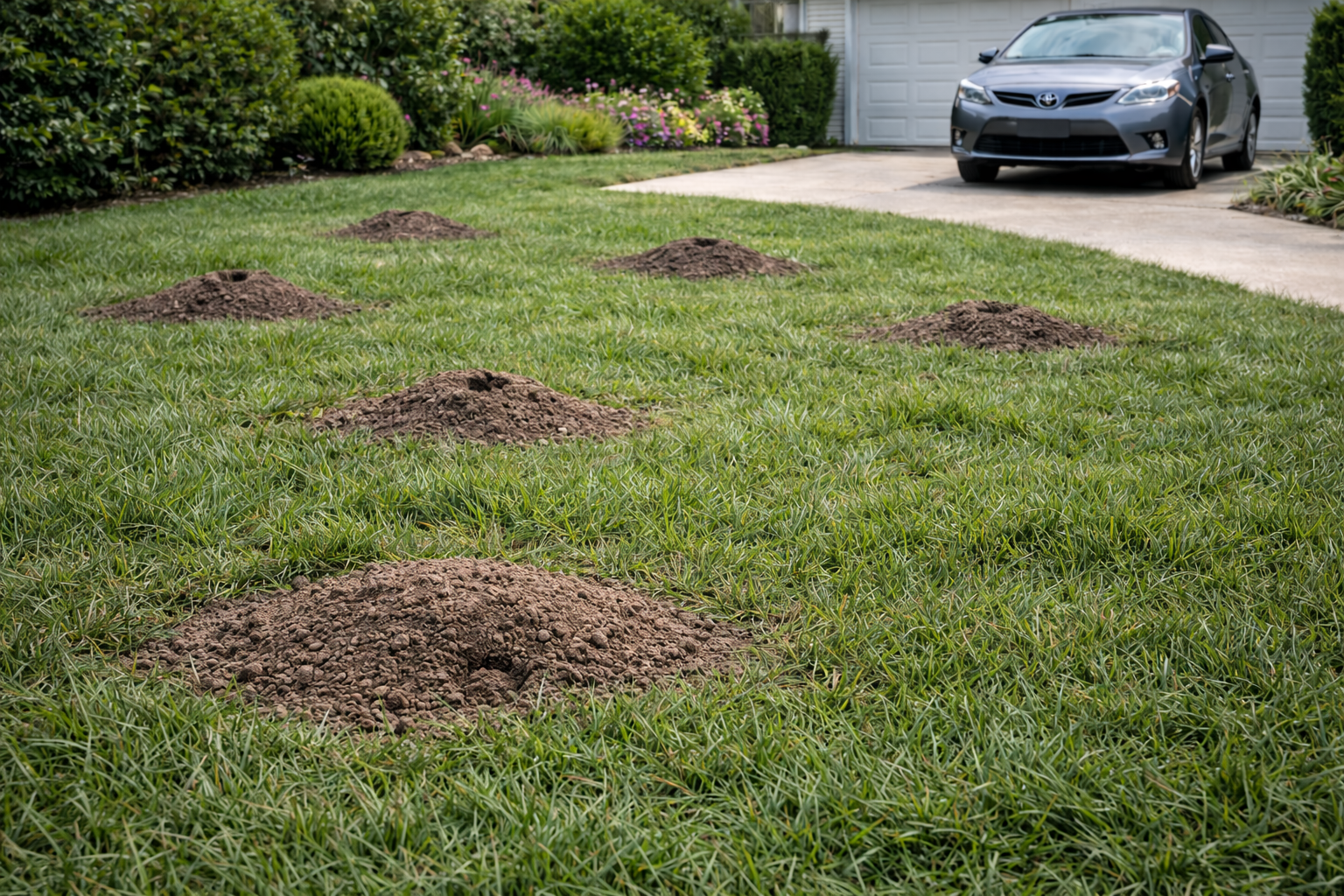
Gopher Activity in Corona, CA
Gophers are a persistent presence throughout Corona, California, particularly in residential neighborhoods and landscaped properties across the city. The combination of irrigated yards, sandy loam soils, and the region's Mediterranean climate creates ideal conditions for sustained gopher populations. Understanding gopher behavior and activity patterns in Corona's specific environment helps property owners recognize and respond to infestations more effectively.
Why Corona Has Significant Gopher Activity
Corona's geography and climate make it exceptionally suitable for gopher establishment and proliferation. Located in western Riverside County at approximately 1,500 feet elevation, the city sits at the transition between the Santa Ana Mountains to the north and the flatter inland valleys to the south. This transitional zone provides natural corridors for gophers migrating from wild chaparral areas into developed residential areas.
The soil composition throughout Corona significantly contributes to gopher activity. Much of the city, particularly in neighborhoods like Temescal Valley and the areas west of Highway 91, sits on Ramona sandy loam and similar granular soil types. These soils are relatively easy to excavate and maintain stable tunnel systems—exactly the substrate gophers prefer for burrowing. The soil drains well enough to prevent flooding during seasonal rains but retains sufficient moisture to support the vegetation gophers depend on for food.
Corona's irrigation infrastructure is another critical factor. The city's extensive use of lawn irrigation, drip systems, and landscape watering creates artificially moist soil conditions throughout the year. Gophers actively burrow in irrigated soil because the moisture softens the earth and supports dense plant growth. Properties with established irrigation systems—common throughout Corona's residential areas—essentially advertise their presence to local gopher populations.
The region's climate pattern of dry summers and winter rainfall creates predictable seasonal rhythms that affect gopher behavior. Average annual precipitation in Corona ranges from 12 to 16 inches, concentrated between November and March. Winter rains soften the soil and stimulate plant growth, triggering increased gopher activity and breeding during these months.
Common Gopher Species in Corona
The gopher species dominant throughout Corona and the broader Inland Empire region is the Botta's pocket gopher, scientifically known as Thomomys bottae. This species is native to California and appears throughout Southern California's coastal and inland regions, making it the primary concern for Corona property owners. Understanding the physical characteristics and behavioral patterns of Botta's pocket gophers helps distinguish genuine gopher activity from damage caused by other burrowing animals.
Botta's pocket gophers are medium-sized rodents, typically weighing between 2 and 4 ounces and measuring 5 to 7 inches in body length. They possess stocky builds, small eyes, and prominent front teeth adapted for gnawing through soil and roots. The species name references their external cheek pouches—specialized fur-lined pockets used for transporting food and nesting material. These pouches are unique to gophers and distinguish them from other California burrowing rodents like ground squirrels or voles.
Coloration in Botta's pocket gophers varies considerably based on local soil composition. In Corona's sandy loam areas, gophers typically display tan to light brown pelage, while individuals from areas with darker volcanic soil may appear darker. In Corona's neighborhoods, this color variation sometimes leads residents to assume multiple gopher species are present when, in reality, a single population may display considerable color variation.
Botta's pocket gophers in the Corona region are solitary, territorial animals that maintain individual burrow systems. Unlike social rodent species, each gopher defends its territory against intruders. This territorial behavior means that visible mounds and damage in a Corona yard typically represent one to several individual gophers rather than large colonies, though multiple burrow systems may interconnect across neighboring properties.
When Gopher Activity Peaks in Corona
Gopher activity in Corona follows seasonal patterns linked to breeding cycles and environmental conditions. The primary breeding season occurs from January through March, coinciding with the region's winter rainy period. During these months, male gophers expand their territories and engage in more surface activity searching for mates. Property owners typically notice increased mounding and soil disturbance during this three-month window.
Winter rains, arriving typically between November and January, trigger the initial surge in gopher activity. The moisture penetrates Corona's normally dry sandy loam soils, softening them for easier excavation. Simultaneously, winter rains stimulate germination of annual plants and new growth on established vegetation, creating abundant food resources. This combination of softer soil and increased vegetation makes winter the optimal period for gopher tunneling and feeding activity.
Secondary activity peaks occur in spring and early summer as young gophers disperse from maternal burrows. This dispersal period, typically April through June, results in increased surface movement as juvenile gophers seek new territories. Property owners may notice new mound activity in previously undisturbed areas during this period as young gophers establish their own burrow systems.
Summer represents a relative quiet period in Corona's gopher activity cycle. The intense heat and dry conditions from June through September make soil excavation more difficult. Gophers retreat deeper into established burrow systems where soil moisture persists. While surface activity diminishes, underground feeding and tunnel maintenance continue. Fall months, September through November, show gradual increases in activity as temperatures moderate and approaching winter rains soften surface soils.
Signs of Gopher Damage in Corona Yards
Identifying active gopher presence requires recognizing several distinct signs commonly observed in Corona properties. The most visible indicator is fresh mounding—the characteristic piles of soil gophers push to the surface while excavating tunnels. Gopher mounds in Corona's sandy loam appear as roughly circular piles, typically 4 to 6 inches tall and 6 to 12 inches in diameter. Fresh mounds display loose, fine-textured soil with a distinctive "volcano" or "disk" shape. Over days or weeks, these mounds flatten and consolidate, becoming harder to identify.
The location and pattern of mounds provide information about gopher activity intensity. Scattered individual mounds may indicate a single gopher with a small territory, while clusters of multiple mounds across a property suggest either established populations or multiple overlapping territories. In Corona's larger properties, particularly those with extensive landscaping in areas like the Temescal Valley neighborhoods, mound patterns often reveal gopher tunnel systems running in lines connecting feeding areas.
Irrigation damage represents a significant secondary indicator of gopher presence. Active burrows frequently intersect with drip lines, soaker hoses, and underground irrigation pipes. Water leaking from damaged irrigation lines creates wet spots in yards and muddy areas where gophers burrow more actively. Corona property owners with established irrigation systems should regularly inspect for unexplained wet patches or areas of poor plant performance, as these often coincide with underground gopher activity and irrigation damage.
Plant damage follows several patterns characteristic of gopher feeding. Gophers gnaw on roots, bulbs, and underground plant parts, causing plants to wilt, yellow, or die without obvious surface damage. In Corona's common landscape plantings—including fruit trees, ornamental shrubs, and vegetable gardens—gopher damage often manifests as sudden plant decline. Gophers also consume underground portions of groundcovers, leaving bare patches in previously dense vegetation. The absence of above-ground evidence of damage, combined with dead or dying plants, strongly suggests gopher activity rather than disease or other causes.
Landscape Considerations for Corona Properties
Corona's landscape character reflects its semi-arid climate and Inland Empire location. The city's most common landscaping approach combines irrigated lawns with drought-tolerant shrubs, fruit trees, and both native and adapted ornamental plants. This mixed landscape style—prevalent in established neighborhoods throughout Corona from the downtown area through suburban zones—creates diverse opportunities for gopher feeding and burrowing. Understanding which landscape elements are particularly vulnerable to gopher damage helps Corona property owners make informed landscaping decisions.
Softscape areas, including lawns and planted beds with fine-rooted plants, are highly attractive to gophers. Irrigated turf grass provides both soft soil for burrowing and edible plant material. Gophers readily gnaw on grass roots and feed on tender shoots, creating dead patches and undermining soil stability. In Corona's traditional neighborhoods with established lawns, this damage is particularly visible and problematic. Flowering perennials and groundcovers commonly planted in Corona—including salvias, Mexican sunflowers, and various groundcover species—are also vulnerable to gopher root damage.
Fruit trees, common in Corona residential areas due to the region's agricultural heritage, face particular vulnerability to gopher damage. Young trees with thin bark are especially susceptible to gopher gnawing on trunks and major roots below the soil surface. Established citrus, stone fruit, and nut trees frequently suffer gopher damage that weakens them, creates disease entry points, or kills entire trees. Corona property owners with orchard-style plantings or multiple fruit trees should regularly inspect for gopher activity around the base of trees.
Hardscape elements—including patios, walkways, driveways, and stone features—are indirectly affected by gopher activity. Burrowing beneath hardscape features causes soil subsidence, creating cracks and uneven surfaces. In Corona neighborhoods with mixed hardscape and softscape designs, gophers frequently tunnel under paved areas connecting underground feeding zones. This subsurface activity can compromise structural integrity of patios and pathways over time, making gopher management an important consideration for property maintenance planning.
For professional gopher control in Southern California, visit Rodent Guys — serving Los Angeles, Orange, San Bernardino, and Riverside counties.