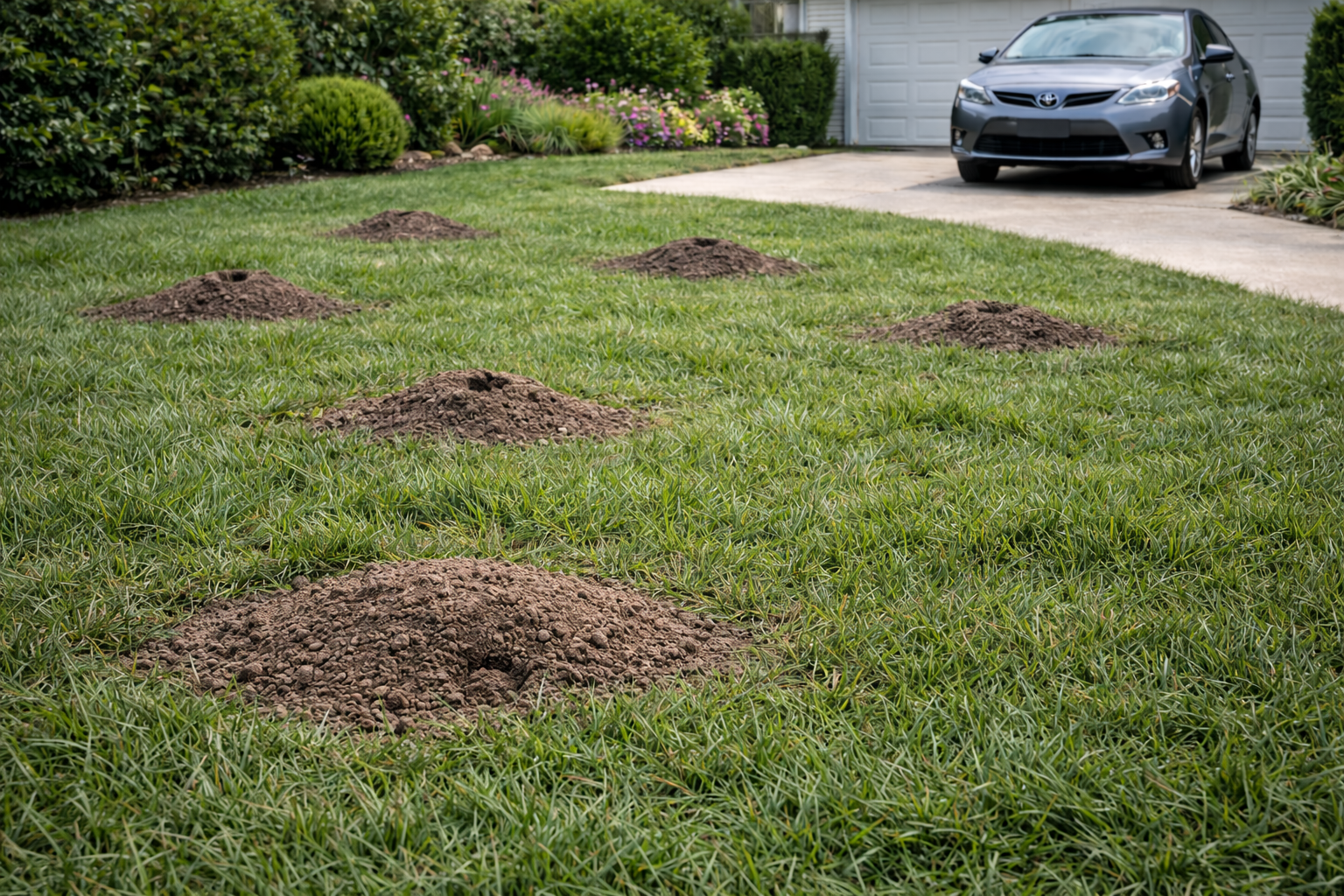
Gopher Activity in Diamond Bar, CA
Diamond Bar, located in the southeastern Los Angeles County foothills, experiences persistent gopher activity due to its unique combination of suburban development, agricultural legacy, and proximity to the San Dimas Experimental Forest and other natural areas. Residents throughout the city—from the established neighborhoods near Diamond Bar High School to newer developments in the eastern sections—regularly encounter evidence of burrowing pocket gophers on their properties. Understanding the scope and nature of this activity is essential for property owners seeking to protect landscaping investments and maintain healthy yards in this distinctive Southern California community.
Why Diamond Bar Has Significant Gopher Activity
Diamond Bar's geography and environmental conditions create ideal circumstances for gopher populations to thrive. The city sits at elevations ranging from approximately 500 to 2,800 feet, with most residential areas occupying the foothills transitioning between the Los Angeles Basin and the San Gabriel Mountains. This elevation gradient means that Diamond Bar spans multiple soil zones, many of which are deeply workable and suitable for the extensive tunnel systems that pocket gophers excavate.
The soil composition across Diamond Bar largely consists of well-draining alluvial deposits and decomposed granite soils—precisely the types of substrate that pocket gophers prefer for burrowing. Areas with clay content, particularly near the flatter western portions of Diamond Bar closer to Pomona, still provide adequate digging conditions, though gophers show stronger preference for the more friable soils found in the foothills and canyons. The region's Mediterranean climate, characterized by dry summers and winter rainfall concentrated between November and March, supports vigorous plant growth during winter and spring months—periods when gophers are most actively feeding and expanding their territories.
Extensive irrigation systems installed throughout Diamond Bar's residential neighborhoods and at local parks keep soil moisture levels favorable year-round, an adaptation that extends gopher activity beyond natural seasonal patterns. Furthermore, Diamond Bar's location immediately adjacent to wild chaparral and oak woodland reserves—including portions of the Chino Hills State Park boundary—provides a continuous wildlife corridor through which gophers migrate into developed areas. The presence of these natural refugia means that gopher populations remain consistently replenished, even in areas where management efforts reduce local numbers.
Common Gopher Species in Diamond Bar
The Botta's pocket gopher (Thomomys bottae) is the primary gopher species encountered throughout Diamond Bar and surrounding Los Angeles County communities. This species is named for its distinctive cheek pouches, which extend from the mouth to behind the shoulders and serve as external storage organs for transporting soil, seeds, and plant material through tunnel systems. Adult Botta's pocket gophers typically measure 5 to 7 inches in body length, with an additional 1 to 2 inches of tail, making them relatively compact rodents well-suited to underground existence.
Botta's pocket gophers possess several anatomical features specifically adapted for burrowing. Their front teeth are large and continuously growing, remaining sharp through regular use against soil and rock. The eyes and ears are small and positioned high on the skull, reducing the risk of soil entering sensory organs during tunnel construction. Front claws are substantially enlarged compared to the hind feet, enabling the powerful digging motion characteristic of pocket gopher locomotion. Coloration varies throughout their range, but Diamond Bar individuals typically display dark brown to reddish-brown fur on the dorsum with lighter underparts, though some individuals appear nearly black.
These gophers are solitary, territorial animals, with each burrow system typically occupied by a single adult or a breeding pair during the reproductive season. They are strictly herbivorous, feeding on roots, bulbs, tubers, and above-ground vegetation accessible through their tunnel openings. Botta's pocket gophers are active year-round and do not hibernate, maintaining constant tunnel networks that they patrol, maintain, and expand throughout the year. Population densities in suitable Diamond Bar habitat can reach 5 to 10 individuals per acre, meaning that any property with suitable soil and vegetation likely supports multiple animals within and beneath its boundaries.
When Gopher Activity Peaks in Diamond Bar
Gopher activity in Diamond Bar exhibits distinct seasonal patterns correlating with rainfall, temperature, and plant phenology. The primary breeding season occurs from January through March, coinciding with winter rains that soften soil and trigger plant growth. During this period, male gophers expand their movements to locate mates, resulting in increased surface activity and more frequent mound construction as soil displacement accelerates. Females bearing young also show heightened activity as they provision nursery chambers and expand tunnel systems to accommodate growing offspring.
Spring months—March through May—represent peak surface damage visibility in Diamond Bar yards, as actively growing vegetation becomes accessible and gophers feed intensively. The combination of newly germinated plants, increased moisture in the soil profile, and larger gopher populations creates maximum impact on landscapes during this window. Residents typically notice fresh mounds, damaged root systems, and wilting plants most conspicuously during April and May following the region's winter and early spring rains.
Activity levels decline somewhat during the hot, dry summer months of June through September, though gophers do not disappear entirely. Extended drought periods may cause gophers to tunnel deeper in search of moisture, reducing surface mound activity but potentially increasing damage to deeper root systems and subsurface infrastructure. Fall months bring renewed activity as cooling temperatures and occasional September or October rains make conditions again favorable for surface work and territory expansion.
Winter activity resumes with the onset of reliable rainfall, typically in November or December in Diamond Bar, creating a second period of elevated mound-building activity as gophers prepare for the breeding season. Understanding this annual rhythm allows Diamond Bar property owners to anticipate periods of heightened vulnerability and to recognize seasonal patterns in the gopher sign they observe across their yards.
Signs of Gopher Damage in Diamond Bar Yards
The most visible evidence of gopher activity is the characteristic mound, a crescent or horseshoe-shaped heap of soil pushed to the surface during tunnel construction. Diamond Bar gophers typically create mounds 6 to 12 inches in diameter and 2 to 4 inches in height, with the soil appearing finely textured and often slightly compressed. Unlike mole mounds, which are raised ridges with relatively consistent heights, gopher mounds are concentrated piles with a characteristic plugged hole on one side—the point where the gopher pushed soil upward and laterally before backing down into the tunnel. A single gopher may create one to several mounds per week during active periods, so fresh mounds appearing regularly indicate either multiple animals or a single animal with substantial territorial range.
Beyond mound formation, gophers damage Diamond Bar landscapes through direct feeding on plant roots and underground portions. Residents frequently observe the sudden wilting or death of shrubs, perennials, and young trees without obvious surface pathology—a pattern consistent with gopher feeding damage to the root collar or lateral roots underground. Vegetable gardens suffer particularly severe impacts, as gophers readily consume lettuce, carrots, beets, radishes, and other root crops planted in raised beds or in-ground gardens. Bulb plantings—tulips, daffodils, and lilies popular in Diamond Bar landscaping—are especially vulnerable, as gophers actively seek out nutrient-dense bulbs and corms.
Gophers also damage underground irrigation systems through their burrowing activity. Drip lines, soaker hoses, and buried lateral lines of conventional sprinkler systems frequently intersect with gopher tunnels, and the rodents' gnawing activity can perforate tubing and create breaks in water delivery. This secondary damage can be substantial in Diamond Bar's extensive irrigated landscapes, sometimes exceeding the cost of direct plant damage. Additionally, the tunnel networks themselves create voids in the soil that cause soil settlement, creating subtle depressions and uneven ground surfaces across yards.
Landscape Considerations for Diamond Bar Properties
Diamond Bar's diverse neighborhoods—from the established communities near the city center to newer developments in the foothills—display varying landscape approaches that create different levels of gopher vulnerability. The region's Mediterranean climate supports the cultivation of both native California plants and drought-adapted Mediterranean species, but many properties also include irrigated lawns, vegetable gardens, and ornamental plantings that attract gopher activity. Understanding which landscape elements are most vulnerable allows Diamond Bar residents to make informed choices about plant selection and property design.
Gophers show particular preference for landscapes featuring soft soil, regular irrigation, and abundant herbaceous vegetation. Traditionally landscaped Diamond Bar yards with turf grass, ornamental shrubs, and perennial borders create ideal habitat for feeding and burrowing. Native California shrubs such as chamise, ceanothus, and sage offer gophers less palatable foliage than introduced ornamentals, though their roots remain vulnerable to gopher feeding. Hardscape elements—patios, pathways, rock features, and gravel areas—provide minimal direct gopher attraction, though animals may tunnel beneath these features to access more suitable habitat beyond.
Diamond Bar properties with extensive succulent plantings, rock gardens, and other xeric landscaping typically experience reduced gopher problems compared to irrigated ornamental gardens. However, no landscape is entirely gopher-proof, as motivation and persistence vary among individual animals and populations. Vegetable gardens remain consistently problematic, as the combination of tilled soil and nutritious crops provides irresistible incentive for gopher colonization. Raised beds, while offering some protection through barriers, do not completely exclude motivated gophers that can burrow beneath structure walls to reach above-ground growing areas.
The integration of hardscape elements—flagstone patios, concrete walkways, xeriscaped slopes, and large boulders—creates physical barriers that discourage gopher activity in specific areas while preserving softer, more plantable zones. Many Diamond Bar properties benefit from a mixed approach combining these landscape strategies with periodic monitoring and targeted management of active gopher populations.
For professional gopher control in Southern California, visit Rodent Guys — serving Los Angeles, Orange, San Bernardino, and Riverside counties.