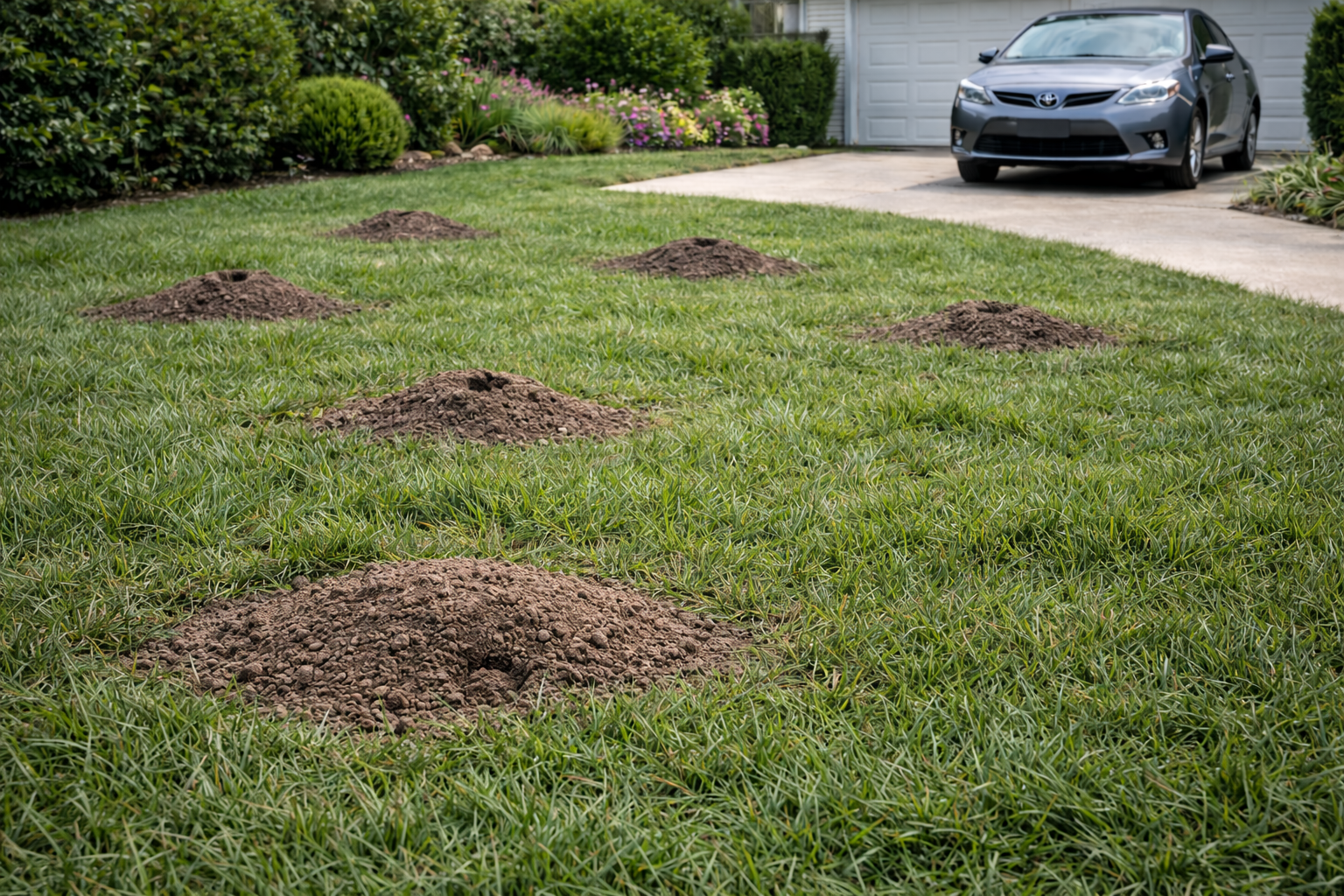
Gopher Activity in Duarte, CA
Gophers are a persistent presence throughout Duarte, the small residential community nestled in the San Gabriel Valley at the base of the San Gabriel Mountains. Property owners in this foothill community frequently encounter evidence of gopher tunneling systems beneath lawns, gardens, and landscaped areas. Understanding the conditions that support gopher populations in Duarte helps residents recognize why these burrowing rodents thrive in this particular region.
Why Duarte Has Significant Gopher Activity
The San Gabriel Valley's distinctive geography and climate create ideal conditions for gophers. Duarte sits on alluvial soils deposited over millennia from mountain runoff—these soils are typically well-draining, friable, and easy for gophers to excavate. The area's semi-arid Mediterranean climate brings concentrated winter and spring rainfall, which softens soil and increases the moisture that gophers require for tunnel construction and survival.
Residential landscaping in Duarte depends heavily on irrigation systems to maintain vegetation through long, dry summers. Sprinkler lines, drip irrigation, and watered lawns create pockets of moisture-rich soil that attract gophers seeking both food and accessible digging conditions. The community's proximity to undeveloped foothill areas, including portions of land within view of the San Gabriel Mountains, provides a constant reservoir of gopher populations that can migrate into cultivated residential properties.
Additionally, Duarte's topography transitions from valley floor to ascending terrain. This elevation change creates varied microclimates and soil conditions across different neighborhoods. South-facing slopes experience different moisture retention patterns than north-facing aspects, influencing where gophers concentrate their activity. The combination of available water, suitable soil texture, abundant food sources in ornamental plantings, and proximity to wild populations makes Duarte particularly conducive to gopher establishment.
Common Gopher Species in Duarte
The Botta's pocket gopher (Thomomys bottae) is the primary gopher species found throughout Duarte and the greater Los Angeles area. These medium-sized rodents typically measure six to eight inches in body length, with small eyes, prominent front teeth, and powerful forelimbs adapted for digging. Their coloration varies from dark brown to reddish-brown, often with lighter undersides. Botta's pocket gophers possess external fur-lined cheek pouches—the "pockets" from which their name derives—used for transporting food and nesting material through their tunnel systems.
The species is solitary and territorial by nature. Individual gophers maintain extensive tunnel networks that can span hundreds of square feet of a property. Unlike social rodent species, Botta's pocket gophers typically remain alone within their burrow systems except during brief breeding periods. This solitary behavior means that property owners may encounter multiple separate gopher populations within a single yard, each operating independently from others.
In Duarte's environment, these gophers have adapted to both wild and cultivated landscapes. They thrive in the loamy soils characteristic of the San Gabriel Valley and readily exploit residential gardens, lawns, and planted areas. The species demonstrates remarkable digging efficiency, capable of creating new tunnel passages and surface mounds with regularity throughout seasons when soil conditions permit.
When Gopher Activity Peaks in Duarte
Gopher activity in Duarte follows distinct seasonal patterns tied to the region's climate and the rodents' reproductive cycle. The breeding season runs from January through March, when male gophers become more mobile searching for mates. During this period, property owners often notice increased mound activity and expanded tunnel systems as gophers move more extensively through soil. This winter-to-early-spring activity coincides with Duarte's rainy season, when winter storms and occasional spring showers soften the soil, making excavation less energy-intensive for the animals.
Spring and early summer represent peak activity months in Duarte, particularly following adequate winter and spring precipitation. As soil moisture rises and new vegetation growth provides abundant food sources, gopher populations become highly active. Young gophers born in spring disperse seeking their own territories, leading to increased tunnel construction and surface disturbance across properties. April through June typically sees the most noticeable damage to lawns and gardens in the community.
Summer activity in Duarte declines as heat intensifies and soil dries. Gophers retreat deeper into tunnel systems where moisture persists. The dry season's hot temperatures create challenging digging conditions. However, properties maintained with regular irrigation systems continue supporting active gopher populations even during summer drought. Fall sees moderate renewed activity as temperatures cool and gophers prepare for winter. Winter months bring reduced surface activity, though burrowing continues beneath the soil surface as long as conditions remain workable.
Signs of Gopher Damage in Duarte Yards
Gopher mounds represent the most obvious and characteristic sign of activity. These crescent-shaped or circular mounds of excavated soil appear across Duarte lawns and gardens, typically ranging from four to twelve inches in diameter. The mounds indicate where gophers have pushed soil to the surface while constructing or maintaining underground tunnels. Fresh mounds appear regularly in active areas, sometimes appearing overnight. The soil composing these mounds differs slightly from surrounding garden soil, often containing clay-rich material from deeper layers gophers excavate.
Subsurface tunneling creates another damage pattern common in Duarte properties. Gophers hollow out extensive burrow networks, which can undermine soil stability beneath lawns and planting beds. Soft, spongy areas in otherwise firm ground indicate tunnel passages below. Lawn sections may collapse slightly as tunnel roofs weaken. In Duarte's many sloped properties, this tunneling can contribute to soil movement on hillsides.
Plant damage occurs as gophers consume roots, bulbs, and tender vegetation. Many Duarte properties feature fruit trees, shrubs, and perennial plantings vulnerable to gopher feeding. Trees may decline mysteriously when gophers girdle their root systems. Vegetable gardens experience damaged crops as gophers consume planted roots and tubers underground. Irrigation system damage appears as gophers chew through drip lines and PVC pipes, creating leaks that waste water—a significant concern in the water-conscious San Gabriel Valley.
Landscape Considerations for Duarte Properties
Duarte's landscaping reflects traditional Southern California residential preferences, with many properties combining drought-tolerant plantings alongside water-requiring ornamentals and edibles. The community's foothill context means many yards incorporate native shrubs, decorative grasses, and stone hardscaping alongside turf and planted beds. This diversity of plantings creates varied vulnerability to gopher damage across the neighborhood.
Certain plants prove particularly attractive to gophers throughout Duarte. Root vegetables including carrots, parsnips, and potatoes face significant risk in vegetable gardens. Fruit tree rootstocks become gopher targets, especially young trees with tender bark on lower trunks and roots. Herbaceous perennials with bulbous roots, including dahlia, daylily, and agapanthus—common in Duarte landscaping—suffer gopher predation. Conversely, some plants deter gophers through taste or toxicity, including hellebores, foxgloves, poppies, and lavender.
Hardscape elements including patios, walkways, and stone edging provide physical barriers that can reduce gopher access to specific garden areas. Properties incorporating extensive hardscaping report fewer gopher problems in protected zones. However, the San Gabriel Valley's aesthetic preferences lean toward softscape landscaping with visible soil and plantings rather than hardscape-dominated designs. This cultural preference inadvertently maximizes gopher habitat opportunity across Duarte's residential landscape. Understanding this dynamic helps property owners make informed choices about landscape design and maintenance strategies suited to living alongside gopher populations.
For professional gopher control in Southern California, visit Rodent Guys — serving Los Angeles, Orange, San Bernardino, and Riverside counties.