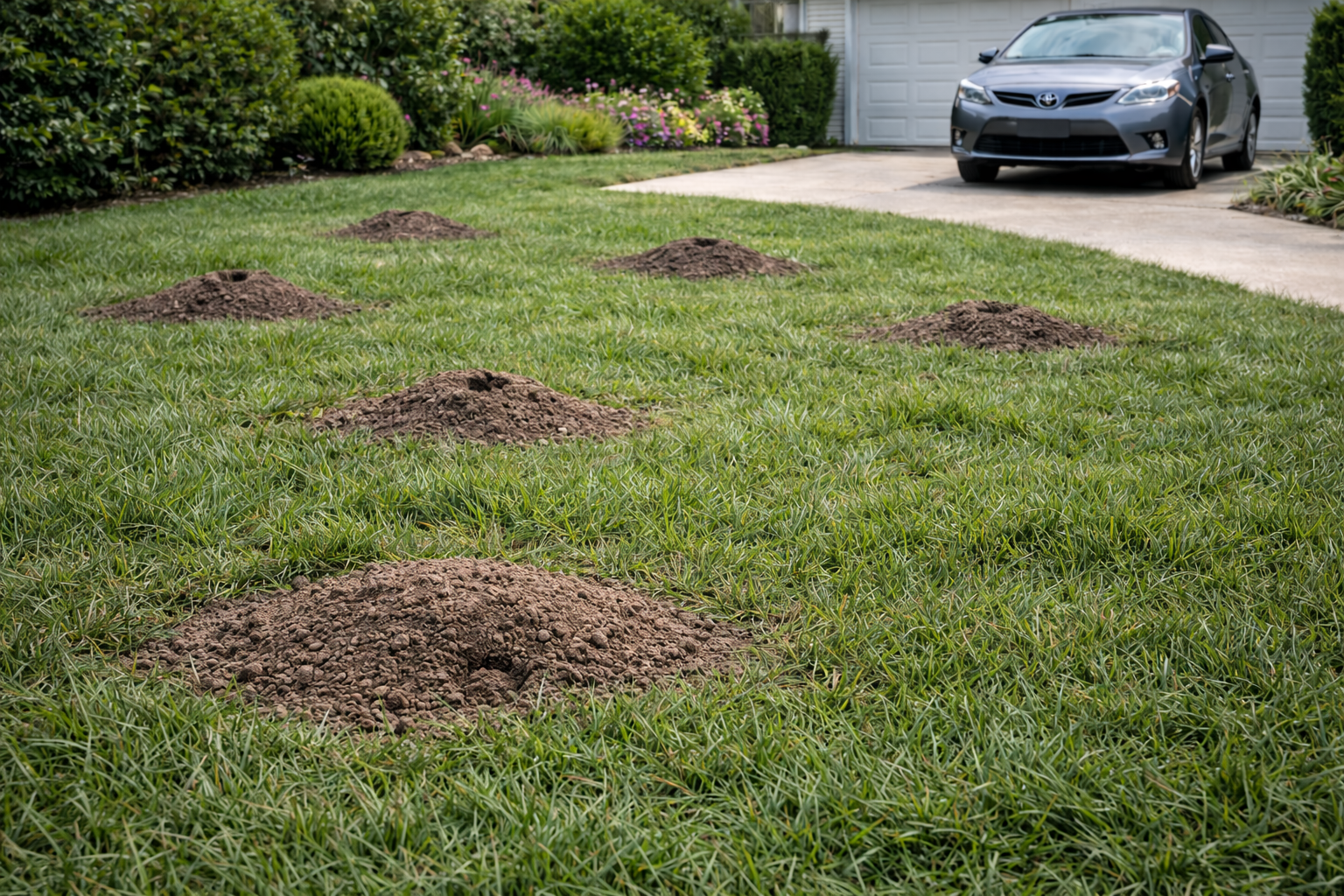
Gopher Activity in Eastvale, CA

Gopher activity represents a notable wildlife management concern throughout Eastvale, a rapidly developing community in western Riverside County. The combination of agricultural heritage, suburban expansion, and favorable environmental conditions has created ideal habitat for pocket gophers across residential properties, commercial landscaping, and transitional areas. Understanding gopher behavior and ecology specific to Eastvale's geography provides essential context for property owners and land managers encountering these burrowing rodents.

Why Eastvale Has Significant Gopher Activity

Eastvale's geohydrological and climatic characteristics create particularly favorable conditions for pocket gopher populations. The region sits within the San Bernardino Valley's alluvial plain, characterized by deep, friable soils derived from sedimentary deposits that are exceptionally well-suited to burrowing. These soils—primarily sandy loams and gravelly loams typical of the valley floor—offer minimal resistance to excavation compared to harder clay-dominated soils found in surrounding foothill areas.

Irrigation infrastructure represents another critical factor in Eastvale's gopher abundance. The community developed from agricultural lands where flood irrigation and subsurface water delivery became standard practice. Even as Eastvale transitioned to suburban development, residential properties maintained extensive irrigation systems for landscape maintenance. This consistent soil moisture, particularly from October through May when winter rains supplement irrigation schedules, creates soft soil conditions that gophers actively exploit for tunnel construction and foraging.

Eastvale's Mediterranean climate—with warm, dry summers and mild winters averaging 40–65°F—eliminates the harsh dormancy periods that limit gopher populations in colder climates. The extended growing season supports year-round vegetation, providing consistent food sources. Additionally, Eastvale's proximity to the San Jacinto River corridor and surrounding open spaces in unincorporated Riverside County maintains wildlife connectivity, allowing gopher populations to persist and reestablish from adjacent undeveloped areas.

Common Gopher Species in Eastvale

The Botta's pocket gopher (Thomomys bottae) dominates gopher populations throughout Eastvale and the broader San Bernardino Valley region. This species adapts successfully to both agricultural and suburban environments, making it the primary gopher encountered by property owners in the area. Botta's pocket gophers typically measure 5–7 inches in head-and-body length, with short, sparsely furred tails approximately 1–1.5 inches long that remain visible above ground, distinguishing them from the larger valley pocket gopher (Thomomys townsendii).

Individuals possess characteristic physical features including small eyes, prominent external cheek pouches that extend backward along the body, and powerful front claws adapted for soil excavation. Coloration varies regionally; Eastvale populations typically display brown to tan dorsal coloring with lighter ventral surfaces. These pocket gophers are strictly solitary and territorial outside breeding periods, with each individual maintaining an extensive burrow system within a defined home range.

Botta's pocket gophers occupy diverse microhabitats within Eastvale, from well-irrigated residential lawns to native scrubland margins, agricultural fields, and parks. They demonstrate remarkable soil adaptation, capable of tunneling through compacted urban soils and agricultural hardpans. This habitat flexibility, combined with reproductive capacity and relatively short generational time, explains why Botta's pocket gophers maintain persistent populations despite ongoing development and landscape modification in Eastvale.

When Gopher Activity Peaks in Eastvale

Gopher activity in Eastvale exhibits distinct seasonal patterns driven by reproduction cycles and environmental moisture availability. Primary breeding occurs from January through March, coinciding with increased soil moisture from winter precipitation and irrigation startup. During this period, males actively tunnel and search for receptive females, resulting in elevated surface disturbance and mound creation that property owners notice most readily.

Spring months (March–May) witness continued high activity as juvenile gophers disperse from maternal burrow systems, establishing new territories and excavating their own tunnel networks. The combination of young animals seeking suitable habitat and established residents expanding existing burrows generates maximum visible impact during spring. Early summer (June–July) shows moderate activity levels as established territories become more defined and soil moisture decreases.

Late summer through early fall (August–October) typically represents a relative lull in surface disturbance, though subsurface activity continues as gophers harvest available plant materials and prepare for cooler months. Fall and early winter activity increases again as gophers respond to autumn rains and increased vegetation growth from reduced summer heat stress. In Eastvale's irrigated landscape, however, this seasonal pattern shifts somewhat—consistent water availability sustains activity year-round in properties with automatic irrigation systems, potentially creating secondary activity peaks in late fall and winter when naturally occurring moisture is limited.

Signs of Gopher Damage in Eastvale Yards

Property owners in Eastvale recognize gopher presence primarily through characteristic mound formation and subsurface tunnel evidence. Gopher mounds appear as discrete piles of loose soil, typically 3–6 inches in diameter and 2–4 inches in height, distributed across lawns, landscape beds, and open areas. These mounds differ visibly from mole mounds (which are conical and composed of compacted soil) and ground squirrel burrow aprons (which show concentrated gravel around entrance holes). Eastvale residents commonly observe multiple mounds scattered across properties in spring and fall, particularly in areas with established gopher populations.

Subsurface tunnel activity causes visible surface settling and creates shallow ridges in irrigated lawns where gophers construct lateral tunnels just below the sod surface. These ridge formations disrupt turf aesthetics and indicate active foraging tunnels. Irrigation system damage represents a secondary but significant impact—gophers commonly bite through drip lines and buried irrigation tubing while tunneling, creating leaks and pressure loss that reduces irrigation efficiency across affected zones.

Plant damage becomes evident as established shrubs, trees, and garden plants suddenly wilt or decline. Gophers girdle woody plant roots and consume bulbs, tubers, and tender root systems, with damage often appearing suddenly rather than progressively. Native and ornamental plant material favored in Eastvale landscaping—including roses, fruit trees, junipers, and drought-tolerant shrubs—suffers particular vulnerability to gopher feeding and root damage.

Landscape Considerations for Eastvale Properties

Contemporary Eastvale residential landscapes reflect a transition from water-intensive turf and ornamental gardens toward drought-tolerant native and adapted plant communities. This shift, driven by regional water conservation policies and changing aesthetic preferences, paradoxically creates both opportunities and challenges regarding gopher management. Traditional Eastvale neighborhoods—particularly those in established sections near downtown and along major arterials—maintain higher proportions of irrigated turf, landscape shrubs, and fruit or shade trees that gophers actively exploit.

Newer developments incorporate drought-resistant plants including California natives such as ceanothus, toyon, California buckwheat, and various sage species alongside Mediterranean-origin plants like rosemary, lavender, and cistus. While these plants generally require less water, their shallow root systems in Eastvale's typical landscape mulch layer remain vulnerable to gopher feeding. Hardscape elements—including decorative rock, gravel, pavers, and mulch—proliferate in contemporary Eastvale landscapes partly as water conservation measures. These materials neither prevent gopher tunneling nor eliminate damage; gophers tunnel effectively beneath hardscape installations, emerging within planted areas or creating settling damage under permeable paving.

Eastvale properties with mixed softscape and hardscape arrangements often experience concentrated gopher activity at landscape bed margins where soil texture transitions from compacted mulch to native or amended soils. Understanding these localized activity patterns helps property owners anticipate damage zones and develop targeted management responses appropriate to their specific landscape configuration.