Gopher Activity in El Segundo, CA

El Segundo, a coastal community in southwestern Los Angeles County, experiences persistent gopher activity throughout the year. The combination of Mediterranean climate, irrigation-dependent landscaping, and proximity to the Dominguez Gap Wetlands and coastal sage scrub areas creates ideal conditions for pocket gopher populations. Residents and property managers across this city frequently encounter evidence of gopher burrowing in yards, parks, and commercial properties.

Why El Segundo Has Significant Gopher Activity

El Segundo's geographic location and environmental conditions make it particularly susceptible to gopher infestations. The city sits on the Los Angeles coastal plain, characterized by fine sandy loam soils that are ideal for burrowing mammals. These soils, deposited over millennia by the Los Angeles River system, lack the dense clay composition found in inland areas, making tunnel excavation relatively easy for pocket gophers.

The city's climate pattern—mild winters with temperatures rarely dropping below freezing and warm, dry summers—allows gophers to remain active throughout the year without the dormancy periods common in colder regions. Additionally, El Segundo's extensive irrigation infrastructure supports lush vegetation that gophers depend on for food. Turf grass, ornamental shrubs, and cultivated gardens throughout residential neighborhoods and commercial properties provide abundant forage.

The proximity of El Segundo to natural habitat corridors amplifies local gopher populations. The Dominguez Gap Wetlands to the north and remnant coastal sage scrub areas serve as source populations from which gophers naturally disperse into developed areas. Furthermore, the El Segundo Blue Butterfly Preserve and other protected open spaces harbor native pocket gopher populations that may migrate into adjacent properties as their burrow systems expand.

Common Gopher Species in El Segundo

The Botta's pocket gopher, scientifically known as Thomomys bottae, is the primary gopher species encountered throughout El Segundo. This medium-sized rodent measures approximately six to eight inches in body length and weighs between two and four ounces, making it smaller than many people expect based on the size of damage they observe.

Botta's pocket gophers display several distinctive physical characteristics. They possess small, dark eyes and nearly hairless ears positioned high on their heads—adaptations for life spent mostly underground. Their front feet have prominent claws used for excavating burrows, while their mouth contains fur-lined cheek pouches that extend from the cheeks to the shoulders, allowing them to transport food and nesting material through their tunnel networks without using their front paws.

The species takes its common name from these external cheek pouches, with "pocket" referring to their pouch-like appearance. Coloration varies from brownish-gray to reddish-brown, with lighter undersides. In El Segundo specifically, populations tend toward the darker end of this spectrum, possibly due to local soil coloration providing camouflage advantage during rare above-ground forays. Botta's pocket gophers are solitary animals, with each individual maintaining exclusive territories marked by their burrow system networks that may extend across multiple properties.

When Gopher Activity Peaks in El Segundo

Gopher activity in El Segundo follows predictable seasonal patterns influenced by breeding cycles and environmental moisture. The breeding season typically begins in January and extends through March, with peak activity occurring in February and early March. During this period, male gophers expand their burrow systems extensively while searching for mates, resulting in noticeable surface mounding across yards and lawns.

Spring months, particularly March through May, witness heightened visible activity as emerging vegetation provides abundant food resources and gophers construct additional burrows to accommodate expanding populations. The response to local rainfall patterns also affects gopher behavior; El Segundo's average annual precipitation of approximately nine inches falls primarily between November and April. Heavy winter and spring rains soften soil, making excavation easier and stimulating gopher movement and burrowing activity.

Summer activity typically decreases in visibility, though gophers remain active underground where soil remains moist from irrigation systems. The dry season from June through September might appear to show reduced gopher presence above ground, but irrigation-sustained landscapes actually support continuous subsurface activity. Fall months bring renewed vigor as cooling temperatures and occasional autumn rains encourage burrowing in preparation for winter. Year-round irrigation in El Segundo's developed areas essentially removes true seasonal dormancy, maintaining gopher populations at consistent levels with activity fluctuations rather than population decline.

Signs of Gopher Damage in El Segundo Yards

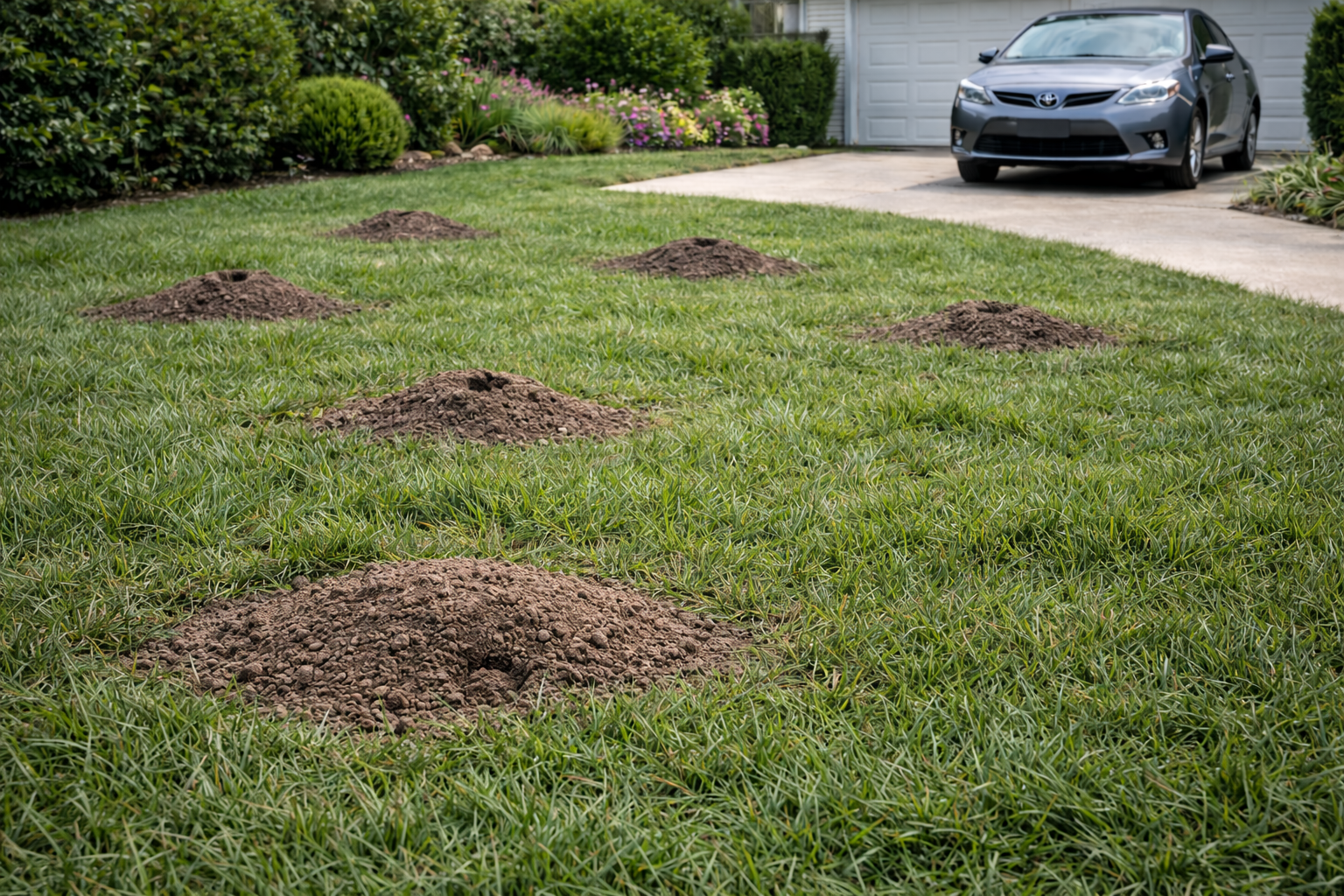
Identifying gopher damage in El Segundo properties requires understanding characteristic signs these animals leave behind. The most visible indicator is the presence of mounds—cone-shaped or crescent-shaped soil accumulations that appear regularly across affected lawns and gardens. Botta's pocket gophers create distinctive fan or half-moon shaped mounds, typically three to six inches high and six to twelve inches in diameter, though multiple mounds can appear within hours during active burrowing periods.

These mounds differ from those created by moles, which are more uniform in shape and often present lateral ridges along the soil surface. Gopher mounds represent excavated soil pushed directly upward from subsurface tunnels. In El Segundo's sandy loam soils, these mounds become especially visible and numerous because the loose soil compacts readily into discrete piles rather than dispersing across the surface.

Beyond mounding activity, gopher damage manifests through dead or declining vegetation patches where tunnels undermine root systems or where gophers have clipped plants from below ground. Irrigation system damage occurs frequently when gopher burrows intersect drip lines or sprinkler pipes, causing water leaks and dry spots in landscapes. Plant nurseries and commercial landscaping throughout El Segundo report significant losses to young shrubs and perennials when gopher burrow systems tunnel through planting beds. In some cases, gophers may girdle plant stems from underground, severing vascular tissue and killing established trees and shrubs from below the soil surface.

Landscape Considerations for El Segundo Properties

El Segundo's predominant landscaping style reflects coastal Southern California aesthetics combined with practical water management considerations. Most residential properties feature combinations of irrigated turf grass, drought-tolerant shrubs such as California lilac (Ceanothus), toyon, and various sage species, along with ornamental accent plants. This mix of softscape and hardscape creates environments where gophers find both abundant food resources and ideal burrowing conditions.

Turf grass, ubiquitous throughout El Segundo neighborhoods from Lakeview to the coastal areas near Manhattan Beach Boulevard, represents a highly preferred gopher food source. The consistent moisture from residential irrigation systems keeps grass roots in the upper soil layers where pocket gophers forage. Young ornamental plants commonly installed in El Segundo landscapes—including various Ceanothus species native to California, Russian sage, and flowering shrubs—suffer disproportionate gopher damage compared to established native vegetation adapted to local conditions.

Hardscape features such as driveways, patios, and decorative rock beds offer no barrier to gopher activity; these animals readily tunnel beneath and around such features. Conversely, some property owners have observed that areas with substantial tree canopy and deep mulch layers experience reduced mounding, possibly because gophers prefer open, cultivated soil areas. Commercial properties along El Segundo Boulevard and in the downtown corridor that maintain minimal landscaping generally report fewer gopher issues than properties with extensive planted areas. The relationship between landscape design choices and gopher vulnerability remains significant for property managers planning maintenance and damage mitigation strategies.