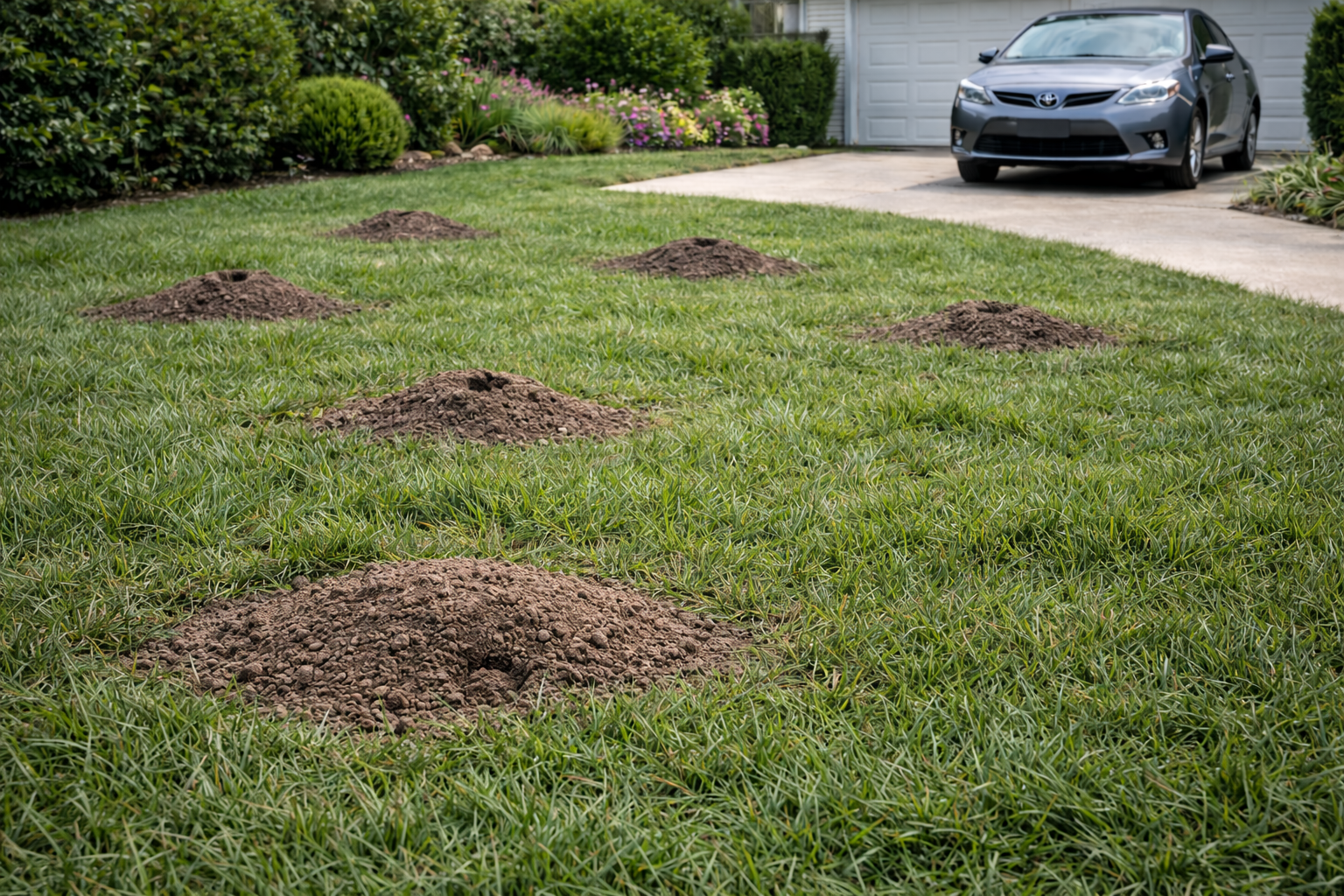
Gopher Activity in Encino, CA

Encino, located in the Los Angeles foothills of the Santa Monica Mountains, experiences significant gopher activity throughout the year. The neighborhood's combination of rich soil, abundant irrigation systems, and proximity to undeveloped canyon lands creates an ideal environment for pocket gophers to thrive. Property owners in this affluent hillside community frequently encounter evidence of gopher tunneling in their landscaped yards and gardens.

Why Encino Has Significant Gopher Activity

The geological and environmental conditions of Encino create particularly favorable circumstances for gopher populations. The area sits on nutrient-rich alluvial soil transported from the Santa Monica Mountains, which gophers find ideal for burrowing and locating plant roots. The soil composition—primarily sandy loam with volcanic mineral deposits—allows for easier tunnel construction compared to harder clay substrates found in other parts of Los Angeles.

Irrigation practices in Encino significantly contribute to gopher presence. Most residential properties maintain extensive sprinkler systems to sustain ornamental landscaping and gardens in the semi-arid Southern California climate. These irrigation systems create consistently moist soil conditions that attract gophers seeking hydration and soft soil for tunneling. The moisture also promotes abundant root growth, which serves as the primary food source for pocket gophers.

Encino's proximity to wild canyon lands and open spaces amplifies gopher activity. The neighborhood borders the Santa Monica Mountains National Recreation Area and several preserved canyons, including Encino Canyon Park and Sepulveda Basin Wildlife Reserve. Gopher populations in these undeveloped areas naturally expand toward residential zones, particularly during dry seasons when canyon vegetation becomes scarce. The interconnected nature of Encino's properties—with many homes sitting on larger lots with natural drainage patterns—facilitates gopher movement between yards.

Climate patterns also favor gopher persistence. Encino experiences mild winters with occasional rainfall and dry summers, allowing gophers to remain active year-round. Unlike regions with harsh winters or prolonged droughts, Encino's moderate climate sustains consistent vegetation growth and soil conditions suitable for continuous tunneling and foraging.

Common Gopher Species in Encino

The Botta's pocket gopher (Thomomys bottae) represents the predominant gopher species affecting Encino properties. This medium-sized rodent measures approximately five to seven inches in body length, with a short tail extending roughly one inch. Coloration varies from dark brown to reddish-brown, with lighter underbelly fur. Botta's pocket gophers possess distinctive front teeth that protrude slightly even when the mouth is closed—an adaptation for their burrowing lifestyle.

The species derives its name from the external cheek pouches used for transporting food and nesting materials. These fur-lined pouches can extend from the mouth toward the shoulders, allowing gophers to carry substantial quantities of roots, tubers, and seeds back to their underground chambers. The front claws of Botta's pocket gophers are remarkably enlarged and curved, creating efficient digging tools perfectly suited to excavating extensive tunnel networks.

Encino's habitat perfectly matches Botta's pocket gopher preferences. The species thrives in areas with loose, easily workable soil and abundant vegetation—both characteristics of Encino's irrigated residential landscape. Botta's pocket gophers prefer areas with moderate moisture and established plant communities, making the neighborhood's mature gardens and landscaped properties ideal habitat. The species has successfully adapted to urban and suburban environments throughout Southern California, demonstrating exceptional tolerance for human-modified landscapes.

Botta's pocket gophers are solitary animals, with each individual maintaining and defending its own extensive tunnel system. In Encino, a single gopher can establish tunnels covering several hundred square feet across adjacent properties, creating the impression of multiple animals when only one individual may be responsible.

When Gopher Activity Peaks in Encino

Gopher activity in Encino demonstrates distinct seasonal patterns influenced by breeding cycles and water availability. The breeding season typically occurs from January through March, when female Botta's pocket gophers enter estrus and males actively seek mates. During this period, gopher movement increases substantially as males traverse established tunnels and excavate new passages to locate females. Property owners frequently notice increased mounding activity during these months.

Spring rains, typically occurring between February and April in the Los Angeles area, create peak gopher activity conditions. Rainfall softens Encino's soil, making tunnel excavation easier and reducing the energy expenditure required for burrowing. Simultaneously, rainfall stimulates plant growth, providing abundant fresh vegetation and newly developing roots. Gophers respond to this combination by intensifying their tunneling efforts and expanding their foraging range.

Late spring through early summer represents a secondary activity peak. Young gophers born during the winter breeding season disperse in search of unoccupied territories, often expanding into neighboring yards. Encino's hillside topography and varied property sizes create numerous suitable habitat patches, facilitating this dispersal process. Summer dry conditions typically reduce surface activity as gophers retreat deeper into tunnel systems where soil moisture persists.

Fall months, particularly September and October, show renewed gopher activity as animals prepare for winter by storing food caches and reinforcing tunnel systems. The returning autumn rains of Southern California's seasonal pattern further stimulate tunnel expansion. Winter months see reduced but continuous activity, particularly in Encino where freezing temperatures rarely occur.

Signs of Gopher Damage in Encino Yards

Characteristic mound formations represent the most visible indicator of gopher presence in Encino properties. Unlike moles, which create ridge-like surface tunnels, Botta's pocket gophers excavate soil and deposit it in distinctive mounds typically measuring four to twelve inches in diameter. These mounds appear scattered across yards without apparent linear patterns. Encino property owners often observe fresh mounds appearing overnight, particularly following irrigation or rainfall.

Gopher tunneling creates direct damage to underground irrigation systems common throughout Encino. Drip lines, soaker hoses, and sprinkler lines frequently become punctured or severed by burrowing activity. This damage results in water waste and uneven irrigation coverage, particularly noticeable in Encino's hillside properties where water pressure and distribution already face challenges. Detecting irrigation damage may take weeks, manifesting as increasingly brown or stressed vegetation.

Plant damage from gopher feeding occurs both above and below ground. Gophers consume root systems of ornamental plants, vegetables, and landscape shrubs commonly found in Encino yards. Young trees and newly planted specimens suffer particular vulnerability. Above-ground feeding, though less common than root consumption, occurs when gophers push through soil to access low-growing vegetation. Sudden wilting of plants with no visible surface cause often indicates gopher root damage.

Encino property owners may notice depressed or settling areas in yards where extensive tunnel networks have been excavated beneath the surface. Over time, tunnel collapse creates soft spots in lawns. Gopher feces appear as small dark pellets visible near tunnel entrances, confirming active occupation of specific burrow systems.

Landscape Considerations for Encino Properties

Encino's distinctive landscaping style—characterized by drought-resistant native plants, Mediterranean-style gardens, mature shade trees, and manicured turf areas—creates specific gopher vulnerability patterns. The neighborhood's hillside topography, with properties ranging from modest to estate-sized, generates varied landscape compositions across small distances. Many Encino properties feature mixed hardscape and softscape designs, with stone walls, paved areas, and wood elements interspersed with planted zones.

Certain plants common in Encino landscapes attract gopher feeding activity disproportionately. Young fruit trees, including citrus varieties established in many Encino yards, suffer substantial root damage from gophers. Root vegetables and bulbs planted in Encino gardens—carrots, potatoes, tulips, and daffodils—represent preferred gopher food sources. Ornamental plants frequently selected for Encino properties, such as lavender, roses, and rhododendrons, experience varying susceptibility based on root structure and depth.

The interplay between Encino's natural water scarcity and intensive irrigation creates the ideal moisture balance for gopher populations. Hardscape elements like patios, driveways, and retaining walls restrict gopher tunneling to adjacent planted areas, often concentrating gopher activity in remaining garden spaces. Vegetable gardens, increasingly popular in Encino as residents pursue sustainability, provide concentrated food sources that attract and support higher gopher densities.

Encino's canyon-adjacent neighborhoods experience different gopher pressure patterns than interior hillside areas. Properties bordering open space face continuous gopher immigration from undeveloped land. Interior neighborhoods with smaller lots and denser development may experience lower gopher pressure, though established populations can persist indefinitely in suitable habitat.