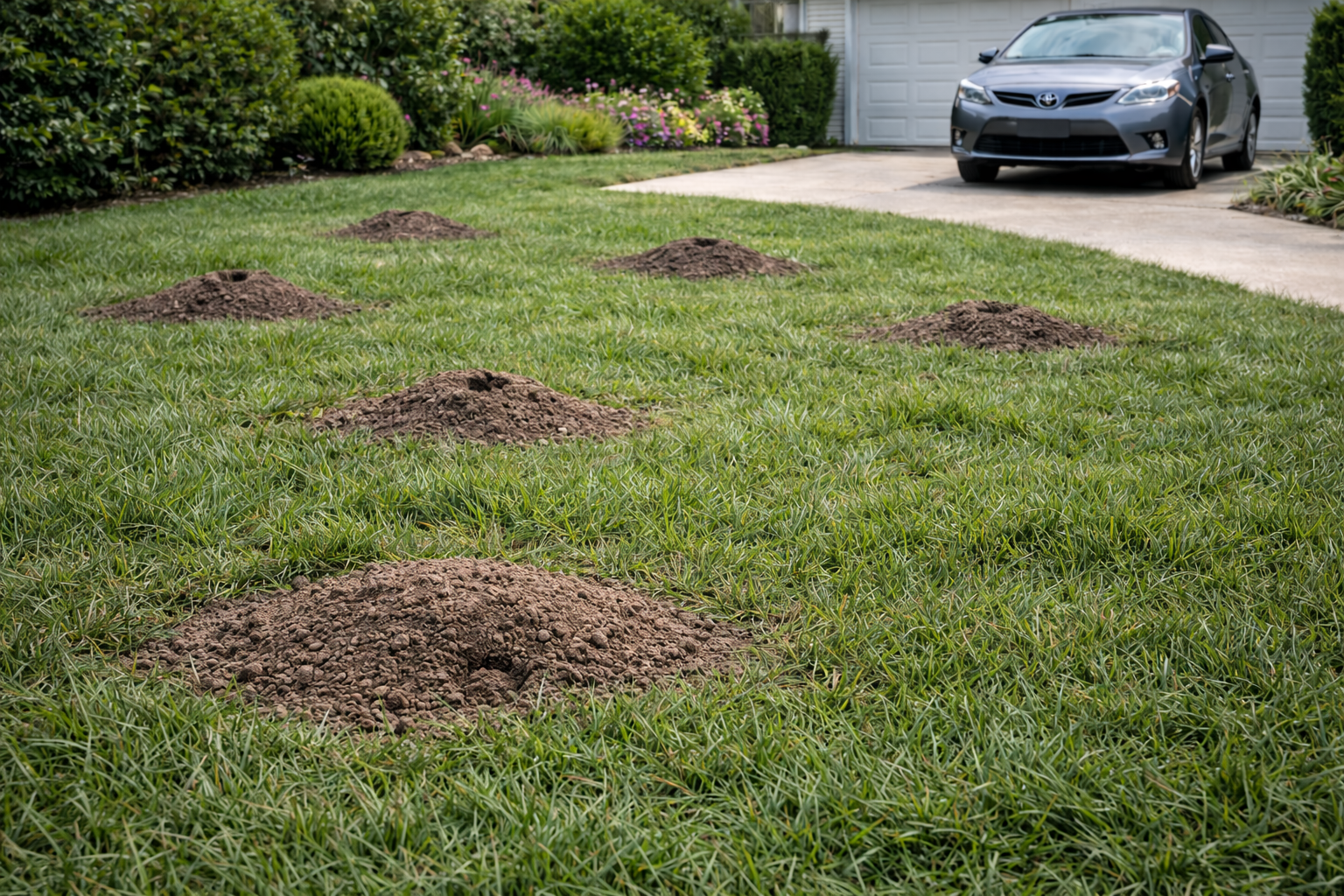
Gopher Activity in Fontana, CA
Fontana, located in San Bernardino County in the Inland Empire region of Southern California, experiences considerable gopher activity throughout the year. The city's combination of irrigated residential landscapes, agricultural heritage, and proximity to undeveloped foothill areas creates ideal conditions for pocket gopher populations. Property owners in Fontana frequently encounter evidence of gopher burrowing in yards, gardens, and landscaped areas.
Why Fontana Has Significant Gopher Activity
Several interconnected factors make Fontana particularly suitable for gopher colonization and survival. The region's soil composition—primarily composed of alluvial deposits and sandy loam typical of the San Bernardino Valley floor—provides excellent burrowing conditions. These soils are neither too compacted nor too loose, allowing gophers to excavate tunnel systems with relative ease while maintaining structural integrity.
Fontana's semi-arid climate, with average annual precipitation around 10 to 12 inches, makes irrigation systems essential for maintaining lawns and ornamental plantings throughout the year. The widespread use of automated sprinkler systems and drip irrigation creates consistently moist soil conditions that gophers favor. Moisture-rich soil is easier to excavate, and the presence of water attracts earthworms and grubs—primary food sources for pocket gophers.
The city's urban-wildland interface contributes significantly to gopher populations. Fontana's northern and eastern boundaries transition into San Bernardino National Forest lands and undeveloped foothills. These wild areas serve as gopher reservoirs, allowing populations to naturally disperse into developed neighborhoods. Residential areas with mature shade trees, established gardens, and well-maintained landscaping situated near these transition zones often experience recurring gopher problems.
Additionally, Fontana's history as an agricultural community means many properties retain cultivation patterns that favor gopher habitation. Properties with vegetable gardens, fruit trees, and root crops provide abundant food sources that sustain gopher populations and encourage continued burrowing activity.
Common Gopher Species in Fontana
The Botta's pocket gopher (Thomomys bottae) is the predominant gopher species throughout Fontana and the broader Inland Empire region. This species is well-adapted to the local environmental conditions and soil types found throughout San Bernardino County. Botta's pocket gophers are medium-sized rodents, typically weighing between 2 and 4 ounces, with body lengths ranging from 5 to 7 inches. Their fur coloration varies from brown to grayish-brown, and they possess small ears, small eyes, and prominent front teeth designed for gnawing through soil and roots.
The common name "pocket gopher" derives from external, fur-lined cheek pouches that these rodents use to transport food and nesting materials through their underground tunnel systems. These pouches can expand to remarkable sizes, allowing a single gopher to transport substantial quantities of plant material and seeds. Botta's pocket gophers are solitary animals outside of breeding season, meaning individual gophers typically occupy separate burrow systems within a given property.
Fontana's various neighborhoods support Botta's pocket gopher populations in different densities depending on local soil conditions and irrigation patterns. Older established neighborhoods with large lots, mature landscaping, and well-developed irrigation systems—such as areas near Slover Avenue and Citrus Avenue—often experience higher gopher densities. Conversely, areas with compacted soils, minimal landscaping, or limited irrigation may support lower populations. The species thrives equally in residential yards, community gardens, and park areas throughout Fontana where suitable habitat conditions exist.
When Gopher Activity Peaks in Fontana
Gopher activity in Fontana exhibits distinct seasonal patterns influenced by the region's climate and gopher breeding cycles. Late winter and early spring, particularly from January through March, represents peak gopher activity season. During this period, gophers enter their primary breeding season, and males become increasingly active as they travel through soil tunnels seeking mates. This heightened movement results in more visible mounding activity and increased damage to landscaping as gophers expand their burrow systems and forage more extensively.
Spring rains, while modest in Fontana compared to other California regions, trigger increased soil moisture that makes tunneling easier and more energy-efficient for gophers. Even light rainfall increases earthworm and insect populations in the upper soil layers, drawing gophers into more active foraging behavior near the soil surface. This combination of breeding activity and improved burrowing conditions makes spring the most noticeable season for gopher-related property damage.
However, gopher activity continues year-round in Fontana's irrigated landscapes. Summer months see somewhat reduced surface activity as established tunnels remain moist from regular irrigation, reducing the need for new excavation. Fall and winter months bring continued activity as gophers prepare for breeding season and take advantage of cooler temperatures that reduce energy expenditure. Property owners should anticipate encountering fresh gopher mounds and signs of activity during any season, though spring remains the period of maximum visibility and impact.
Signs of Gopher Damage in Fontana Yards
The most visible indication of gopher presence in Fontana properties is the appearance of characteristic mounds of displaced soil. Botta's pocket gophers create mounds by excavating soil from tunnel systems and pushing accumulated dirt to the surface, often forming crescent or horseshoe-shaped mounds 3 to 12 inches in diameter. These mounds appear suddenly in lawns, gardens, and landscaped areas, sometimes developing overnight. Multiple mounds across a property indicate established gopher occupation rather than transient activity.
Subsurface damage to irrigation systems represents a significant problem in Fontana's irrigated yards. Gophers tunnel through soil without regard to underground utilities, often severing drip lines, soaker hoses, and buried PVC pipes. Property owners may notice sudden dry patches in otherwise well-watered lawns or discover damaged irrigation components when performing maintenance. In some cases, extensive gopher tunneling can compromise the structural integrity of lawn surfaces, creating soft spots and uneven terrain.
Vegetation damage provides another clear indicator of gopher activity. Gophers feed on roots, bulbs, and underground portions of plants, causing wilting, yellowing, or sudden decline of established plants and shrubs. They are particularly destructive to root systems of trees and ornamentals. Gophers also consume seeds planted in gardens and will strip bark from young trees and shrubs, potentially girdling them. Vegetable gardens in Fontana frequently show evidence of gopher predation on planted crops, especially root vegetables, legumes, and brassicas.
Landscape Considerations for Fontana Properties
Fontana's landscape design aesthetic has evolved significantly from its agricultural roots. Contemporary residential landscaping in Fontana neighborhoods typically incorporates a blend of water-efficient ornamental plantings, hardscape features, and irrigated turf areas. Mediterranean-style landscaping with drought-tolerant shrubs, native California plants, and decorative stone or concrete has become increasingly popular as water conservation concerns influence local design choices. Simultaneously, many established Fontana properties maintain traditional lawn-based landscapes with fruit trees, vegetable gardens, and mixed shrub borders that reflect the region's horticultural heritage.
Certain plants commonly used in Fontana landscaping are particularly vulnerable to gopher damage. Fruit trees—including apple, pear, peach, and citrus varieties popular in local yards—are highly susceptible to gopher root damage. Root vegetables such as carrots, beets, and potatoes are consumed directly by gophers. Bulb plantings, including tulips and daffodils popular in Fontana spring gardens, attract gopher feeding activity. Conversely, some plants demonstrate greater resistance to gopher predation, including mature native oaks, established rosemary and sage plantings, and dense groundcovers that make burrowing difficult.
Properties incorporating extensive hardscape features—stone patios, concrete walkways, decorative rock landscaping, and gravel pathways—experience less gopher pressure than landscaping dominated by irrigated soil and living plants. The transition toward xeriscaping and reduced turf in Fontana properties can indirectly reduce gopher populations by eliminating the moist soil conditions that gophers prefer. Conversely, properties with large lawn areas, extensive irrigation, and minimal hardscape features create optimal gopher habitat that encourages population establishment and persistence.
For professional gopher control in Southern California, visit Rodent Guys — serving Los Angeles, Orange, San Bernardino, and Riverside counties.