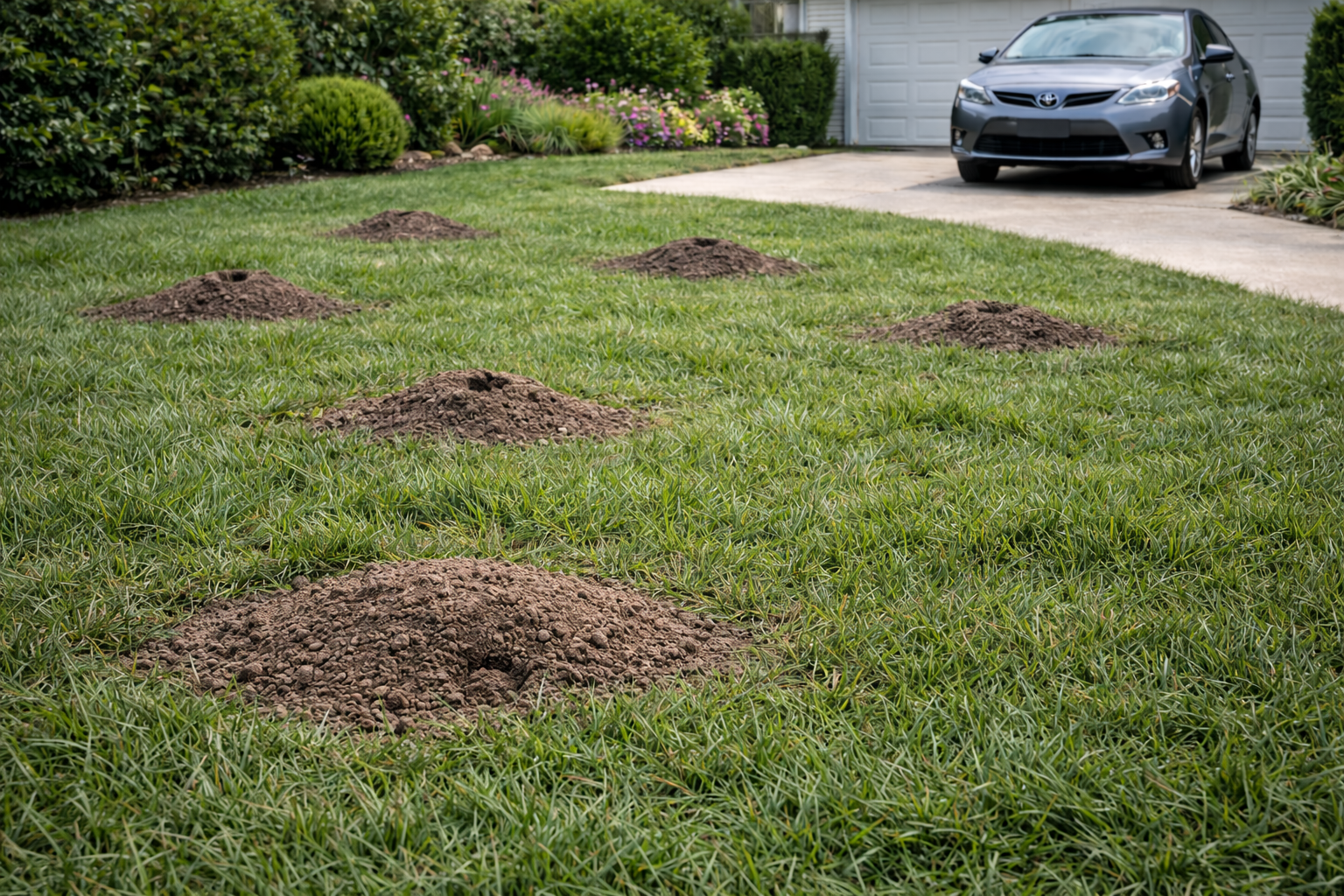
Gopher Activity in Fullerton, CA

Fullerton, located in north-central Orange County, experiences regular gopher activity across residential, commercial, and agricultural properties. The city's combination of well-irrigated landscaping, clay-loam soils, and Mediterranean climate creates an ideal habitat for pocket gophers. Property owners throughout neighborhoods including Sunny Hills, Orangetree, and areas near the Fullerton Golf Course frequently encounter evidence of gopher burrowing.

Why Fullerton Has Significant Gopher Activity

The soil composition across Fullerton makes the region particularly susceptible to gopher colonization. Much of the city sits atop clay and clay-loam soils derived from alluvial deposits—these soil types are easier for gophers to tunnel through than compacted clay or rocky substrates. The city experiences a semi-arid Mediterranean climate with hot, dry summers and mild, wet winters, and the contrast between dry and wet seasons drives gopher activity patterns throughout the year.

Fullerton's extensive irrigation infrastructure supporting both residential landscapes and recreational facilities like Basset Park and Fullerton High School's athletic fields creates moist soil conditions that gophers actively exploit. The city sits between natural areas including the San Gabriel River watershed to the west and the Santa Ana Mountains foothills to the southeast. While Fullerton itself is heavily urbanized, these nearby wild spaces serve as natural gopher populations from which individuals may disperse into residential areas. The prevalence of ornamental landscaping—lawns, shrubs, and vegetable gardens throughout the city—provides abundant food sources that sustain established gopher populations.

Common Gopher Species in Fullerton

The Botta's pocket gopher (Thomomys bottae) is the primary gopher species found in Fullerton and throughout Orange County. This species is relatively small, typically weighing between 2 and 4 ounces, with body lengths of 5 to 7 inches. Botta's pocket gophers possess distinctive external cheek pouches that extend from the mouth to the shoulders, used for transporting food and nesting materials through tunnel systems.

Physically, Botta's pocket gophers display dark brown to nearly black fur, though color variation occurs depending on local soil composition—individuals in Fullerton often match the tan and brown clay soils where they burrow. The species has small eyes and ears, reduced relative to body size, reflecting their subterranean lifestyle. Front legs are particularly muscular and equipped with long claws adapted for excavation. Botta's pocket gophers are solitary and highly territorial, with each individual maintaining its own extensive burrow system. Evidence suggests that most gophers encountered in Fullerton yards represent individual animals defending territories rather than large colonies, though multiple gophers may inhabit neighboring properties.

When Gopher Activity Peaks in Fullerton

Gopher activity in Fullerton exhibits distinct seasonal patterns aligned with soil moisture and breeding cycles. The breeding season begins in January and extends through March, coinciding with increased moisture from winter rains. During these months, male gophers expand their tunnel systems while searching for mates, and female gophers prepare nesting chambers, resulting in multiple visible mounds appearing across properties over short periods.

Spring rains, which typically occur between February and April in Fullerton, create optimal burrowing conditions as soil moisture increases digging ease. Property owners frequently report sudden mound appearances following significant rainfall events. Summer activity typically decreases as irrigation maintains soil moisture but ambient temperatures rise, causing gophers to burrow deeper and spend less time at surface level. Fall activity increases moderately as temperatures cool and soil remains workable. Winter activity, while reduced compared to spring breeding season, continues whenever soil moisture permits tunneling. The driest months—May through August—often show reduced surface evidence despite continued subsurface activity. Understanding these seasonal patterns helps property owners anticipate when monitoring efforts should intensify.

Signs of Gopher Damage in Fullerton Yards

Mound identification represents the most obvious indication of gopher presence in Fullerton properties. Botta's pocket gophers create characteristic mounds by pushing excavated soil to the surface, forming crescent or horseshoe-shaped piles typically 3 to 6 inches high and 6 to 12 inches in diameter. Unlike mole tunnels that create ridges, gopher mounds appear as discrete piles scattered across lawns and garden beds. Examining mound composition reveals the local soil type—reddish-brown mounds indicate iron-rich clay, while tan mounds reflect lighter alluvial soils common in northern Fullerton neighborhoods.

Irrigation damage frequently accompanies gopher activity in Fullerton. Gopher burrows intersect underground irrigation lines, drip tubing, and water pipes, creating punctures and leaks that waste water and reduce irrigation system efficiency. Property owners may notice unusual wet patches in yards, sudden increases in water bills, or reduced water pressure to certain landscape zones. Plant damage from gophers includes wilting and death of shrubs and trees as gophers sever roots while tunneling. Vegetable gardens suffer direct damage from gophers consuming planted bulbs, seeds, and roots. In some cases, gophers create shallow lateral tunnels just beneath the surface, exposing roots and desiccating plants. The combination of multiple damage types—visible mounds, irrigation leaks, and plant decline occurring simultaneously—strongly suggests active gopher infestation requiring attention.

Landscape Considerations for Fullerton Properties

Fullerton's dominant landscaping style reflects its semi-arid climate and Mediterranean vegetation patterns, with extensive use of water-wise plants, ornamental shrubs, and maintained lawns. Many neighborhoods feature drought-resistant species including California native plants adapted to local conditions. These landscapes, while appropriate for the climate, create complex terrain for gopher management since plant roots provide both food sources and structural elements gophers navigate during burrowing.

Vulnerable plants in Fullerton yards include fruit trees (particularly young citrus and stone fruit), ornamental shrubs with shallow root systems, and vegetable gardens. Gophers demonstrate particular preference for tulip bulbs, garlic, carrot roots, and tender young tree roots. Established large trees tolerate gopher damage better than newly planted specimens, since mature root systems provide redundancy even when portions are severed. Hardscape elements including patios, concrete walkways, and raised bed borders create barriers that gophers navigate around rather than through, making these features less vulnerable than open garden beds. The contrast between hardscaped and softscaped areas across typical Fullerton residential properties creates diverse microhabitats—some favoring gopher activity and others providing natural deterrence through physical barriers and root density.