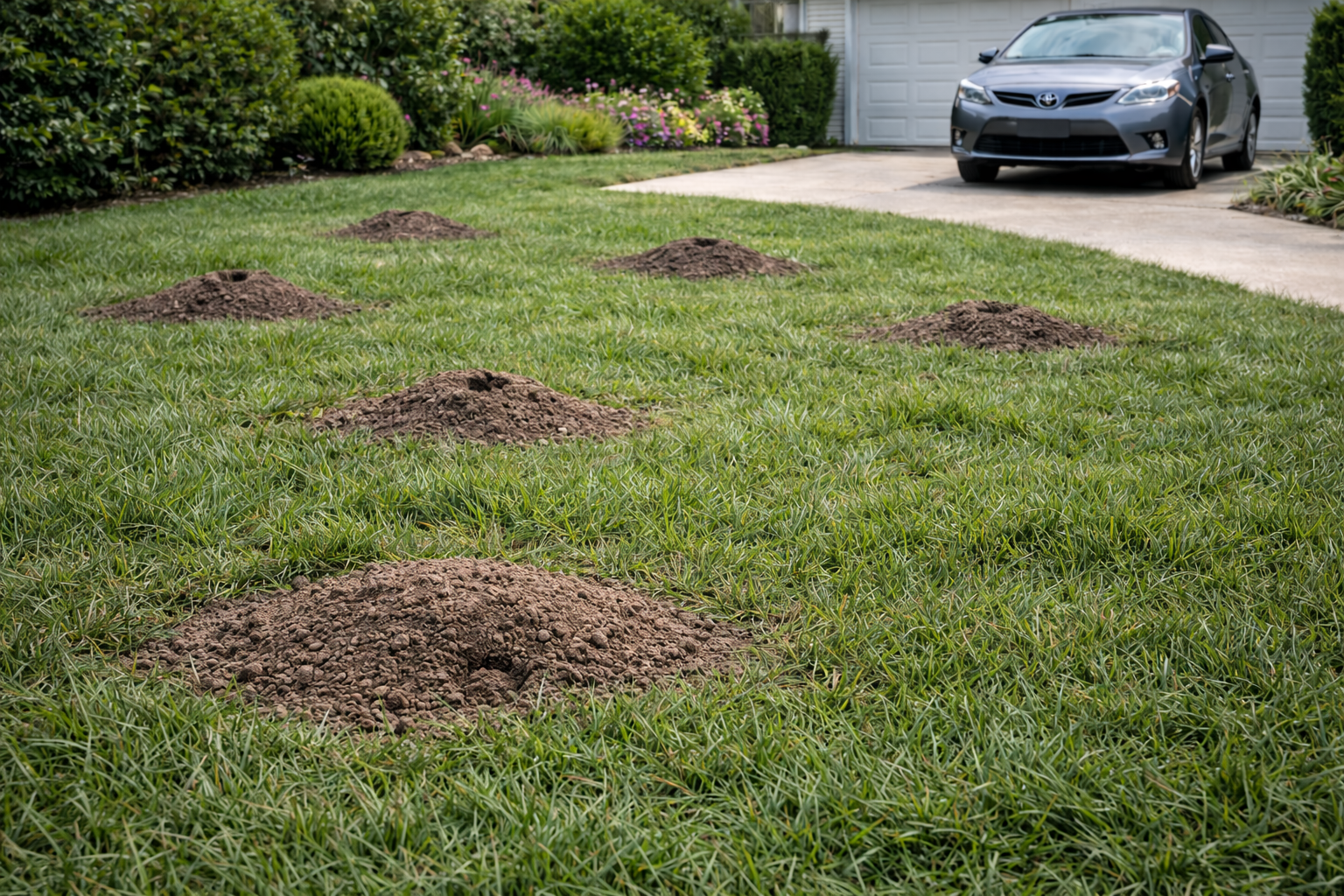
Gopher Activity in Garden Grove, CA

Garden Grove, located in central Orange County, experiences consistent gopher activity throughout the year, with populations well-established across residential, commercial, and semi-rural areas. The city's combination of irrigated landscapes, favorable soil conditions, and moderate climate creates an ideal environment for pocket gophers to thrive. Understanding gopher behavior and seasonal patterns helps residents recognize activity before extensive damage occurs.

Why Garden Grove Has Significant Gopher Activity

Garden Grove's environmental characteristics make it particularly suitable for pocket gopher populations. The city sits in the Santa Ana Basin, an area characterized by sandy loam and clay loam soils that are relatively easy for gophers to excavate. Unlike harder, rocky soils found in some nearby regions, Garden Grove's soil composition allows gophers to tunnel efficiently with minimal energy expenditure, encouraging establishment of extensive burrow systems.

The region's irrigation infrastructure significantly contributes to gopher activity. Most residential and commercial properties in Garden Grove maintain landscaped yards, gardens, and turf areas that require regular watering. This consistent moisture softens the soil, making tunneling easier and creating optimal conditions for the vegetation that gophers depend upon for food. The proximity to the Santa Ana River and its associated groundwater also means soil moisture remains relatively stable even during drier periods.

Garden Grove's Mediterranean climate, with warm, dry summers and mild, wet winters, allows gophers to remain active year-round. Unlike regions with harsh winters that force gophers deeper underground or restrict activity, Garden Grove's moderate temperatures permit continuous foraging and burrow expansion. Additionally, the city's location near undeveloped areas in the foothills east of Garden Grove and adjacent to Anaheim Hills provides natural gopher populations that can migrate into developed neighborhoods.

Common Gopher Species in Garden Grove

The Botta's pocket gopher (Thomomys bottae) represents the primary gopher species affecting Garden Grove properties. This species, native to California, is well-adapted to Orange County's climate and soil conditions. Adult Botta's pocket gophers measure approximately 5 to 7 inches in body length, with an additional 1 to 1.5-inch tail. Their fur typically ranges from light brown to nearly black, though Garden Grove populations commonly display medium to dark brown coloring.

Botta's pocket gophers possess several distinctive physical features. Their front feet contain elongated claws specifically adapted for digging, while their lips can close behind their incisors, allowing them to carry soil and materials through tunnels without ingesting dirt. Small eyes and ears reflect their primarily subterranean lifestyle, as these features are less critical underground. The "pocket" in their name refers to fur-lined cheek pouches used to transport food and nesting materials through tunnel networks.

In Garden Grove, Botta's pocket gophers establish habitats in virtually any area with suitable soil and vegetation. Residential yards, parks, golf courses, nurseries, and agricultural plots throughout the city provide ideal conditions. These gophers demonstrate strong territorial behavior, with individual burrow systems often spanning hundreds of square feet. A single gopher may spend its entire life within one established territory, continuously expanding and maintaining tunnel networks that can persist for years even after the original inhabitant departs.

When Gopher Activity Peaks in Garden Grove

Gopher activity in Garden Grove follows predictable seasonal patterns influenced by breeding cycles and environmental conditions. The primary breeding season extends from January through March, when gophers increase surface activity searching for mates. During this period, residents frequently observe fresh mounds and increased tunnel construction as males traverse territories seeking females. This winter breeding cycle aligns with Garden Grove's rainy season, when soil moisture facilitates easier tunneling and plant growth provides abundant food resources.

Spring months, particularly March through May, represent peak activity periods in Garden Grove yards. The combination of mating season concluding with the emergence of spring vegetation creates intense foraging behavior. Young gophers born during winter breeding begin dispersing from maternal burrows in spring, establishing their own territories and creating visible surface disturbance. Heavy rains typical of March and April soften Garden Grove soils to optimal consistency for tunneling, encouraging maximum burrow expansion.

Summer activity decreases somewhat as temperatures rise and soil dries from reduced irrigation and natural drying. However, gophers remain active, particularly in well-watered landscapes and near consistent water sources. Fall brings renewed activity as gophers prepare for winter, expanding burrows and stockpiling food resources. The timing of autumn rains in Southern California typically occurs in October and November, creating secondary activity peaks before winter settles in. Year-round presence in Garden Grove means gopher populations never enter complete dormancy, distinguishing this region from cooler climates where winter significantly restricts gopher activity.

Signs of Gopher Damage in Garden Grove Yards

Identifying gopher activity requires recognition of distinctive surface signs. The most obvious indicator consists of mounds—piles of loose soil pushed to the surface during tunnel excavation. Garden Grove gophers typically create mounds ranging from 3 to 6 inches in height and 4 to 8 inches in diameter. Unlike mole mounds, which form symmetrical volcanic cones, gopher mounds appear more irregular with soil scattered in various directions. The characteristic crescent or horseshoe shape on one side of the mound often indicates the tunnel opening, though gophers frequently collapse these entrances after use.

Subsurface damage frequently exceeds visible surface indicators. Gopher tunnels undermine turf and planting beds, creating soft spots and areas where the ground feels hollow underfoot. Sudden wilting of plants in otherwise well-irrigated Garden Grove landscapes suggests gophers have severed root systems or damaged irrigation lines running through soil. Drip irrigation systems, popular throughout Garden Grove for water conservation, prove particularly vulnerable to gopher damage as gophers often tunnel directly through lines while foraging or traveling between food sources.

Plant damage patterns reveal gopher feeding activity. Trees and shrubs may show bark stripped from root systems or sudden decline despite appropriate watering. Gophers feed on roots of virtually any plant species, though they demonstrate preferences for certain ornamentals common in Garden Grove landscapes. Vegetable gardens suffer severe damage as gophers consume root crops including carrots, potatoes, and onions while also targeting above-ground crops like lettuce and beans. Multiple young plants disappearing overnight, pulled underground entirely, represents another signature of active gopher feeding in residential gardens.

Landscape Considerations for Garden Grove Properties

Garden Grove's dominant landscape style reflects Southern California suburban development patterns, combining turf lawns with drought-tolerant plantings and hardscape features. Mediterranean-style yards prevalent in neighborhoods like Westridge, Acacia, and Central Gardens include mature trees, ornamental shrubs, and colorful perennials vulnerable to gopher activity. Spanish-colonial and mid-century residential architecture throughout Garden Grove typically features courtyards with container plantings and mixed borders where gophers tunnel beneath decorative plants and structural foundations.

Certain plant choices common to Garden Grove landscapes prove particularly susceptible to gopher damage. Young citrus trees, increasingly popular as homeowners seek fruit-producing specimens adapted to Orange County conditions, suffer severe root damage from gopher activity. Ornamental species including roses, lavender, California poppies, and ornamental grasses—all frequently installed by Garden Grove landscapers—face both root damage and direct feeding pressure. Native California plants such as California lilac (Ceanothus) and toyon, while more drought-tolerant, do not deter gophers from establishing burrows in proximity to plantings.

Hardscape elements offer some degree of protection against gopher tunneling. Concrete patios, decks, and pathways create barriers to tunnel expansion and concentrate gopher activity in adjacent soil areas. Homes with extensive hardscaping may experience reduced gopher problems compared to properties dominated by softscape plantings. However, gophers readily tunnel beneath hardscape features, and settling caused by subsurface tunneling can crack or heave patios and walkways. The balance between aesthetic preferences for living landscapes and practical gopher management influences decisions about property design throughout Garden Grove neighborhoods.