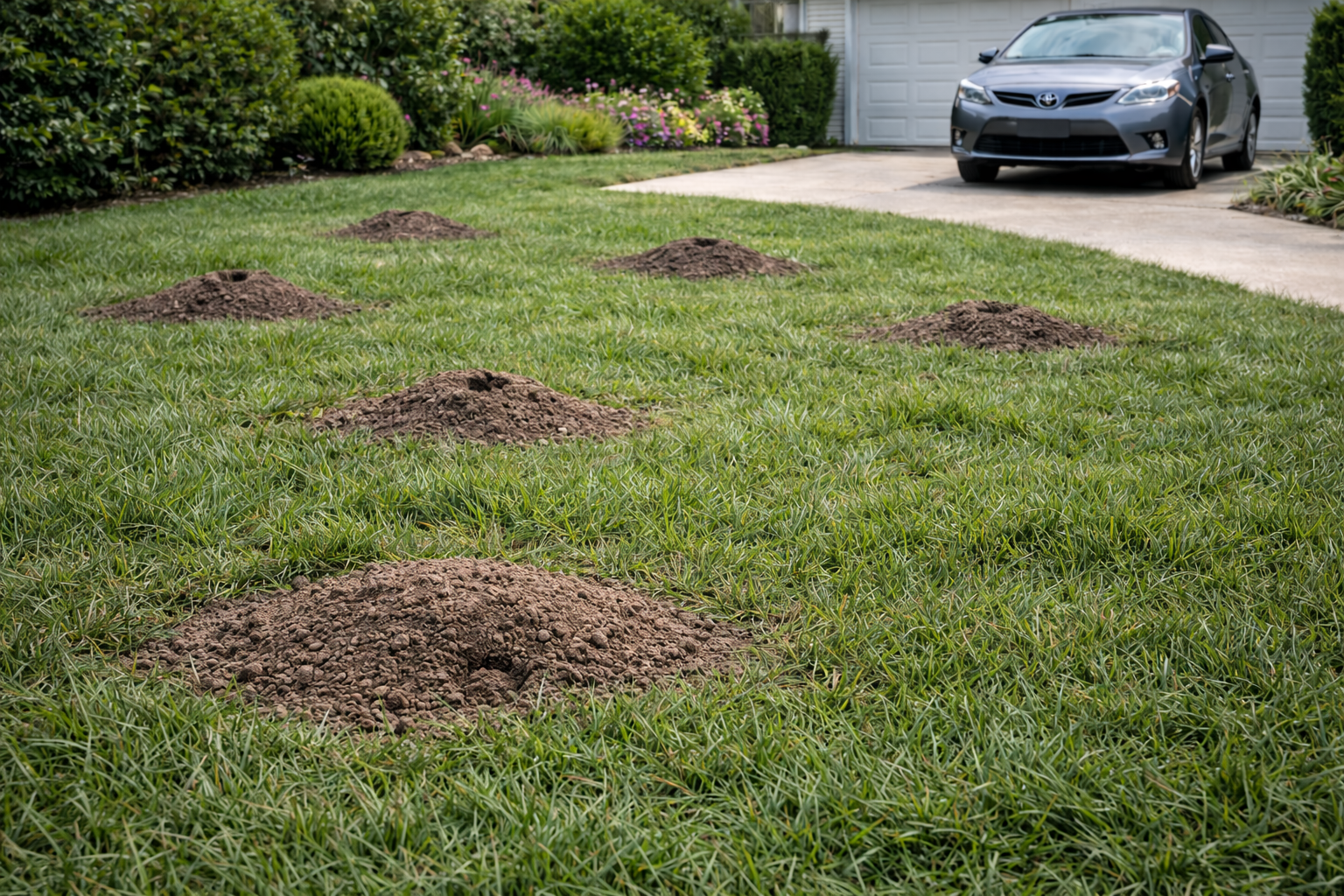
Gopher Activity in Grand Terrace, CA

Grand Terrace, a small community in western San Bernardino County nestled between Riverside and Colton, experiences consistent gopher pressure throughout the year. The combination of the town's sandy loam soils, established residential neighborhoods with mature landscaping, and proximity to undeveloped foothills creates ideal conditions for pocket gophers to thrive. Property owners in Grand Terrace frequently encounter evidence of gopher activity, from characteristic mounding patterns in yards to damage along irrigation lines that service the area's water-dependent vegetation.

Why Grand Terrace Has Significant Gopher Activity

The geographical and environmental characteristics of Grand Terrace make it particularly susceptible to gopher colonization. The town sits on relatively permeable sandy loam and loamy soil typical of the San Bernardino Valley floor, which pocket gophers find ideal for burrowing and tunnel construction. Unlike areas with dense clay or hardpan soils that restrict digging, Grand Terrace's soil composition allows gophers to establish extensive burrow systems with minimal energy expenditure.

Grand Terrace's elevation of approximately 1,200 feet, combined with its location at the base of the Box Springs Mountains to the south and east, places residential areas in a transitional zone between urban and semi-wild habitat. The undeveloped hills and chaparral-covered slopes provide natural gopher populations that continuously seek new territory, particularly during breeding season and when resource availability changes seasonally. This proximity to wild areas means that Grand Terrace properties exist on the expanding edge of gopher range extension.

The town's climate also supports year-round gopher activity. With warm, dry summers and mild winters, Grand Terrace does not experience the hard freezes that inhibit gopher breeding in higher elevations. The area receives approximately 10-15 inches of annual rainfall, concentrated primarily between November and March. This winter-to-spring precipitation pattern encourages vegetation growth that attracts and sustains gopher populations. Additionally, most Grand Terrace properties maintain landscape irrigation systems during the dry season, providing supplemental moisture that creates lush vegetation—essentially artificial food sources that support larger gopher populations than would naturally occur in the semi-arid environment.

Common Gopher Species in Grand Terrace

The Botta's pocket gopher (Thomomys bottae) is the dominant gopher species found throughout Grand Terrace and the broader San Bernardino Valley. This species is named for its ability to create deep burrow systems and for the external cheek pouches—or "pockets"—that the animal uses to carry food and nesting material. Botta's pocket gophers typically measure 8-10 inches in total body length, with stout, compact bodies covered in fur that ranges from brown to yellowish-brown, depending on the soil color in their local habitat.

Botta's pocket gophers possess several physical adaptations that make them efficient burrowers. Their front feet have elongated claws that serve as primary digging tools, and their small ears and eyes reflect their underground lifestyle where vision is less critical than tactile sensation. The species has a high reproductive rate, with females capable of producing multiple litters annually under favorable conditions. In Grand Terrace's temperate climate with reliable food sources from residential landscaping, these population dynamics mean that initial infestations can expand rapidly without intervention.

These gophers are solitary creatures and highly territorial, with individual burrow systems serving as both feeding territory and living space. A single burrow system in a Grand Terrace yard may extend across several thousand square feet, connecting feeding chambers, nesting areas, and tunnel networks used for regular movement and foraging. The burrow architecture reflects the gopher's optimization for underground life, with separate latrine chambers and sealed nesting areas lined with grass and plant material.

When Gopher Activity Peaks in Grand Terrace

Gopher activity patterns in Grand Terrace follow seasonal cycles driven by breeding, vegetation growth, and moisture availability. The primary breeding season extends from January through March, coinciding with Grand Terrace's rainy winter period. During these months, increased soil moisture makes digging easier and triggers vegetation growth that provides abundant food. Males expand their territory and activity levels during this breeding season, leading to increased mounding and more visible surface evidence of gopher presence.

Spring rains, typically occurring from February through April, create a second period of heightened activity as juvenile gophers disperse from maternal burrow systems to establish their own territories. This dispersal phase is characterized by rapid tunnel expansion and new mounding patterns throughout properties, as young gophers seek out suitable habitat and adequate food resources. Property owners in Grand Terrace often notice a substantial increase in mound appearance during late winter and early spring months.

Summer and fall activity remains consistent but may appear less obvious to property owners because many gophers reduce surface activity during hot, dry months when digging is more difficult and surface foraging is more dangerous due to predation risk. However, established gopher populations remain active in Grand Terrace yards year-round, continuously maintaining and extending their burrow systems and feeding. The mild winters mean that gophers do not enter true hibernation but continue limited activity even during the coolest months, distinguishing the San Bernardino Valley from higher-elevation areas where gopher activity becomes almost invisible during winter.

Signs of Gopher Damage in Grand Terrace Yards

Property owners in Grand Terrace learn to recognize the distinctive visual indicators of active gopher presence. The most obvious sign is the characteristic mounding pattern—fresh gopher mounds appear as roughly circular or crescent-shaped mounds of loose soil, typically 4-8 inches in diameter and 2-4 inches in height. In Grand Terrace's sandy loam soils, these mounds can appear quite suddenly and are often most noticeable in lawns where the disturbed soil contrasts with surrounding turf. Gophers create mounds by pushing excavated soil up from tunnel construction, and the frequency and distribution of mounds indicate burrow system size and activity level.

Grand Terrace properties with established irrigation systems frequently experience gopher damage to irrigation lines and components. Gophers tunnel along pipe routes, crushing drip irrigation tubing or plastic pipes in search of moisture and the plant roots that concentrate near water sources. This damage can create costly water leaks and dead zones in irrigated landscapes, as sections of the yard receive no water once the delivery system is compromised. Many Grand Terrace residents discover gopher activity only after noticing sudden areas of wilting or dead vegetation despite adequate watering.

Vegetation damage provides additional evidence of gopher feeding activity. Young trees and shrubs commonly planted in Grand Terrace yards—including fruit trees, ornamental shrubs, and young landscape specimens—experience root damage as gophers feed on bark and roots. Plants may wilt suddenly, yellow, or die back without obvious surface cause, as gophers have severed root systems underground. In vegetable gardens, entire crops can be lost as gophers consume plant roots and emerging growth. Gophers also clip landscape vegetation at or below soil level as they harvest plants for food and nesting material.

Landscape Considerations for Grand Terrace Properties

Grand Terrace's landscape aesthetic typically reflects both its semi-arid climate and its suburban character. Many established properties feature a combination of water-conserving native plants, ornamental trees, turf grass lawn areas, and hardscape elements such as patios, pathways, and decorative rock. Drought-resistant shrubs like California buckwheat, toyon, and manzanita mix with more traditional landscape plants that require supplemental irrigation. This diversity of plantings creates varied habitat appeal for gophers, offering multiple food sources and habitat types within a relatively small yard area.

Certain plant species commonly found in Grand Terrace yards prove particularly vulnerable to gopher damage. Citrus trees, widely planted in San Bernardino Valley yards for both ornamental and productive purposes, attract gophers through their root systems. Alfalfa, clover, and other legumes in disturbed or semi-maintained areas provide high-protein food sources that support larger gopher populations. Young landscape trees, particularly fruit and ornamental varieties planted in the last 5-10 years, face significant root damage risk. Established perennial plantings also suffer as gophers feed continuously on available roots.

The contrast between hardscape and softscape areas influences gopher distribution within Grand Terrace properties. Extensive paved areas, rock landscaping, and hardscape features create barriers to gopher movement and reduce overall suitable habitat. Properties with predominantly vegetated yards—including turf grass, multiple planting beds, and scattered trees—provide more extensive burrow habitat and food availability, supporting larger and more visible gopher populations. Understanding these habitat preferences helps property owners interpret why certain areas of their yards experience more gopher activity than others, with vegetated, irrigated zones predictably showing more evidence of gopher presence than hardscaped or minimally planted areas.