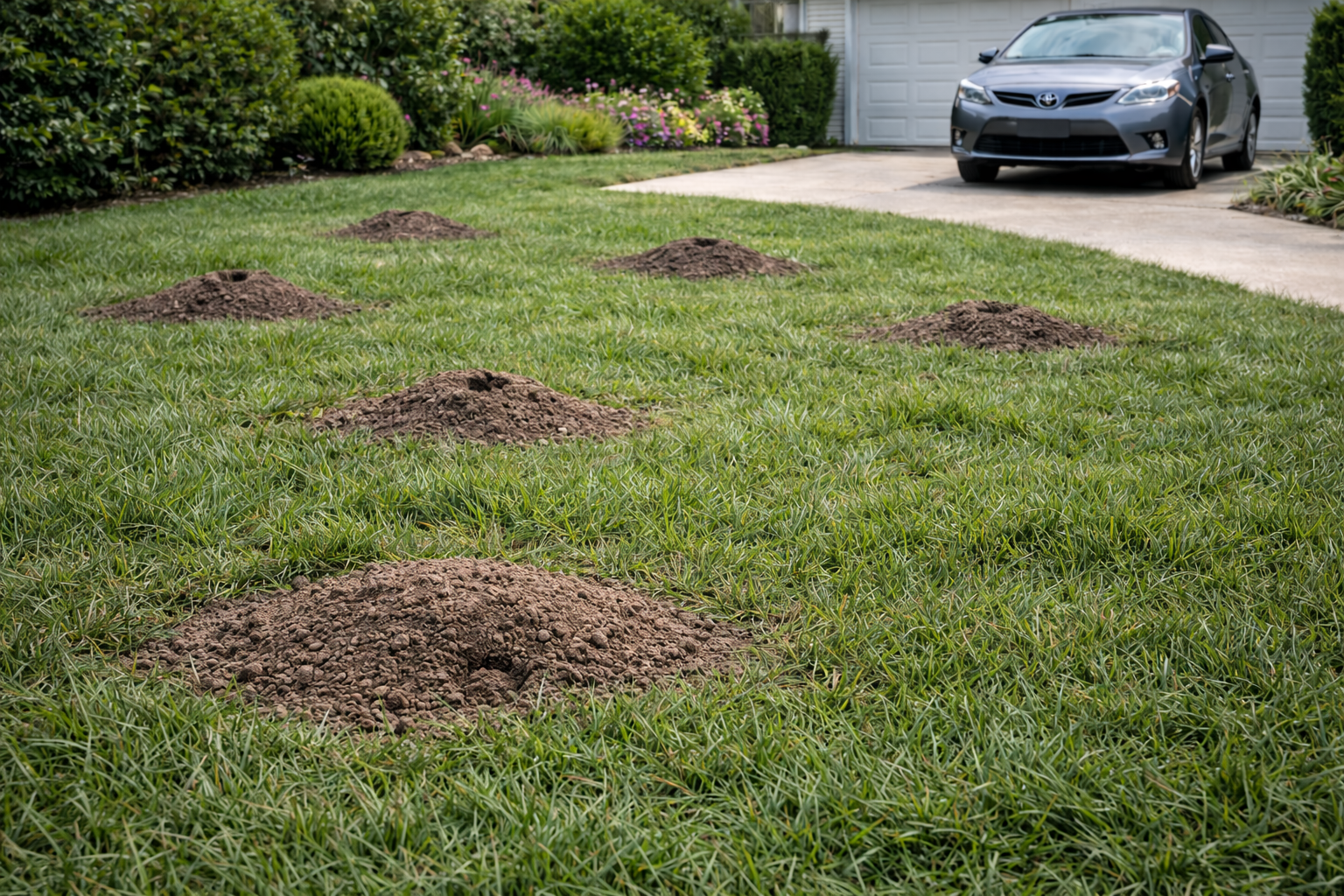
Gopher Activity in Hacienda Heights, CA
Gopher activity represents a significant ecological and horticultural consideration for residents of Hacienda Heights, a community in southeastern Los Angeles County. The combination of ideal soil conditions, moderate climate, and extensive residential landscaping creates an environment where pocket gophers thrive year-round. Understanding gopher behavior, identification, and seasonal patterns helps property owners recognize activity and make informed decisions about landscape management.
Why Hacienda Heights Has Significant Gopher Activity
Hacienda Heights experiences consistent gopher populations due to multiple environmental factors specific to the region. The area sits at elevations between 1,000 and 1,500 feet, positioned on the northern edge of the San Gabriel Valley with direct adjacency to the Puente Hills—a range that contains extensive undeveloped chaparral and scrubland habitat. This proximity to wild terrain provides a continuous source population from which gophers colonize residential properties.
Soil composition throughout Hacienda Heights proves particularly favorable for gopher activity. The underlying geology consists primarily of Holser and Chino soil series, characterized by moderate clay content and friable texture that allows for efficient burrowing without excessive compaction resistance. These soils maintain moisture levels suitable for sustained tunnel systems, especially when supplemented by residential irrigation systems.
The local climate pattern—with mild winters (average January lows near 45°F) and warm, dry summers—eliminates the dormancy period that restricts gopher populations in colder regions. Hacienda Heights receives approximately 15 inches of annual rainfall, concentrated primarily between November and March, with summer months remaining largely dry. This rainfall distribution creates predictable soil moisture conditions that gophers exploit for maximum activity during winter breeding months and early spring.
Common Gopher Species in Hacienda Heights
The Botta's pocket gopher (Thomomys bottae) represents the dominant and essentially only pocket gopher species inhabiting Hacienda Heights and surrounding Los Angeles County communities. This species derives its common name from the fur-lined cheek pouches used for transporting food and nesting materials throughout extensive burrow networks.
Adult Botta's pocket gophers measure 5 to 7 inches in body length, with stocky, compact proportions optimized for subterranean tunneling. The head appears disproportionately large relative to body size, equipped with small eyes positioned high on the skull—an adaptation that allows visual surveillance with minimal surface exposure. Coloration typically ranges from dark brown to nearly black, though local Hacienda Heights populations display considerable individual variation, with some individuals exhibiting reddish or grayish tones in their fur.
The species possesses powerful foreleg claws that extend approximately one-quarter inch beyond the paw pads, specialized for excavating and maintaining burrow systems. Incisors remain perpetually exposed, a characteristic feature of rodents that distinguishes gophers from other burrowing mammals. Botta's pocket gophers occupy diverse habitats within Hacienda Heights, from cultivated residential yards and golf courses to native scrub areas along the Puente Hills foothills, demonstrating exceptional adaptability to both disturbed and undisturbed environments.
When Gopher Activity Peaks in Hacienda Heights
Seasonal patterns in gopher activity directly correspond to rainfall patterns and breeding cycles characteristic of southern California's Mediterranean climate. Peak gopher activity in Hacienda Heights occurs between January and March, coinciding with the region's heaviest rainfall period and the primary breeding season for the species. During these months, increased soil moisture softens earth, facilitating tunnel excavation and expansion, while hormonal changes drive mating behavior and territorial establishment.
Secondary activity peaks develop in April and May as newly weaned juvenile gophers disperse from maternal burrow systems and establish individual territories. These young gophers, driven by inexperience and inexperience-related aggression, create conspicuous new mounding activity as they prospect for suitable habitat. Property owners often notice increased mounding frequency during this period, particularly in landscapes with maintained irrigation systems.
Summer months (June through September) typically show reduced surface mounding activity, though subsurface tunneling and feeding continue unabated. This apparent lull reflects behavioral adaptation to drying soil conditions rather than population decline. Fall and early winter months (October through December) show moderate activity levels, with increasing intensity as rainfall returns. Understanding these seasonal patterns enables property owners to anticipate activity timing and plan management responses appropriately.
Signs of Gopher Damage in Hacienda Heights Yards
The most visible sign of gopher presence consists of characteristic mounding activity—crescent or horseshoe-shaped mounds of freshly excavated soil appearing seemingly overnight throughout lawns and garden beds. These mounds, typically 3 to 6 inches high and 6 to 12 inches in diameter, represent the displaced soil from tunnel excavation and represent the primary method by which property owners detect active gopher populations. Unlike moles, which create continuous ridged tunnels, gophers produce discrete, distinct mounds at irregular intervals.
Subsurface damage often exceeds the severity suggested by surface mounding alone. Gophers tunnel extensively through soil at depths of 6 to 18 inches, creating networks that disrupt root systems, irrigation lines, and soil structure. Established gopher burrow systems in Hacienda Heights yards frequently extend 100 feet or more, incorporating multiple chambers and lateral branches. Property owners frequently discover gopher damage indirectly through irrigation system failures, as gopher tunneling disrupts underground drip lines and water delivery systems common in the region's xeriscaped landscapes.
Plant damage represents another consequence of gopher activity, though less direct than irrigation damage. Gophers feed on roots, bulbs, and underground plant portions, particularly favoring the root systems of trees, shrubs, and perennials. Properties featuring extensive plantings of fruit trees, citrus, or ornamentals may show progressive decline in plant vigor and productivity as gopher tunneling compromises root function. Young trees and recently planted landscaping features increased vulnerability to gopher damage.
Landscape Considerations for Hacienda Heights Properties
Hacienda Heights residential landscapes reflect diverse design philosophies, ranging from drought-resistant native plantings to traditional ornamental gardens featuring water-intensive specimen plants. The community encompasses neighborhoods with varying property sizes, density, and maintenance intensity, from small suburban lots typical of mid-century developments to larger estate-style properties on Puente Hills slopes. This landscape diversity creates varied gopher habitat suitability and management challenges across the community.
Common vulnerable plant species in local landscapes include established fruit trees (citrus, avocado, stone fruits), large specimen trees (coast live oak, California sycamore), ornamental shrubs, and spring bulbs. These plants attract gopher activity through both food value and the soil conditions created by irrigation and cultivation. Conversely, landscapes featuring hardscape elements—extensive patios, stone walls, gravel areas, and pathways—provide natural barriers to gopher colonization and reduce overall population establishment potential.
Properties incorporating native plant communities typical of adjacent Puente Hills chaparral sometimes experience greater initial gopher colonization, reflecting the species' preference for native habitat characteristics. However, such landscapes often prove less economically damaging than cultivated gardens, as native plants exhibit greater resilience to root disturbance. Understanding individual property conditions, plant communities, and gopher habitat suitability enables property owners to make informed decisions about landscape design and management approaches suited to Hacienda Heights' unique environmental context.
For professional gopher control in Southern California, visit Rodent Guys — serving Los Angeles, Orange, San Bernardino, and Riverside counties.