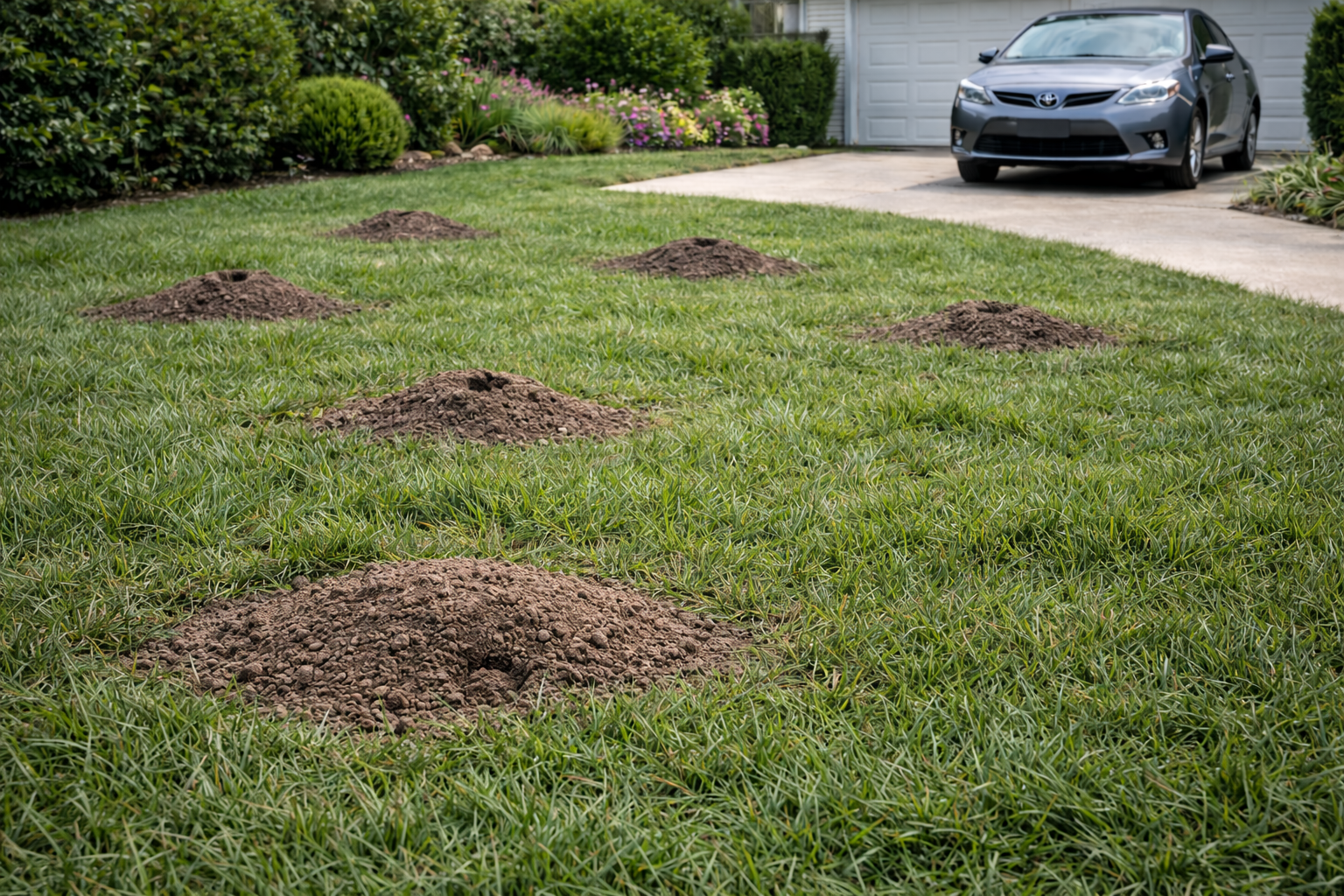
Gopher Activity in Hawaiian Gardens, CA
Gopher activity represents a persistent ecological and residential management concern in Hawaiian Gardens, a small community located in Los Angeles County's Gateway Cities region. The combination of the area's sandy loam soils, consistent irrigation infrastructure, and proximity to native habitat creates ideal conditions for pocket gopher populations to establish and thrive. Understanding the patterns and characteristics of gopher activity in Hawaiian Gardens provides valuable context for residents dealing with this common challenge.
Why Hawaiian Gardens Has Significant Gopher Activity
Hawaiian Gardens' geographic position and environmental characteristics create particularly favorable conditions for gopher populations. The community sits within the Los Angeles Basin, an area characterized by alluvial soils deposited over centuries by regional waterways. These soils—predominantly sandy loam with moderate clay content—are ideal for burrowing mammals because they compact enough to hold tunnel structure yet remain soft enough for efficient excavation.
The region's semi-arid Mediterranean climate receives most precipitation during winter months (November through March), with typical annual rainfall between 12 and 15 inches. Despite this relatively dry overall climate, the extensive residential irrigation systems throughout Hawaiian Gardens provide consistent moisture that gophers require. Landscape irrigation, particularly in the area's numerous single-family residential neighborhoods, maintains soil conditions favorable for tunnel maintenance and food availability year-round. Additionally, Hawaiian Gardens' location near the Los Cerritos Wetland and its proximity to undeveloped areas means gopher populations from native habitat continually move into residential zones seeking resources. The area's modest elevation and flat terrain do not present barriers to gopher movement or population expansion.
Native vegetation in nearby preserves and the plant species commonly selected for Hawaiian Gardens landscaping both support gopher populations. The combination of artificial moisture, cultivated food sources, and accessible soils makes residential properties particularly attractive to gophers seeking to establish new territories.
Common Gopher Species in Hawaiian Gardens
The Botta's pocket gopher (Thomomys bottae) represents the primary gopher species found throughout Hawaiian Gardens and the broader South Bay region. This species is native to California and occurs naturally across much of the state in suitable habitat. Botta's pocket gophers are medium-sized rodents, typically weighing between 2 and 4 ounces, with stocky, cylindrical bodies adapted for underground life.
Physical characteristics of Botta's pocket gophers include small eyes positioned high on the head—an adaptation reflecting their subterranean lifestyle—and powerful front legs equipped with long claws designed for excavation. Their fur coloration ranges from dark brown to grayish-brown, providing natural camouflage in soil environments. The species possesses external cheek pouches, which give rise to the common name "pocket gopher," used for transporting food and nesting material through tunnel systems.
Individual Botta's pocket gophers are largely solitary creatures, with each mature animal maintaining its own extensive tunnel network that may cover an area of several hundred square feet. In Hawaiian Gardens' residential environment, these tunnel systems frequently extend beneath yards, landscaped areas, and into foundation perimeters. The species' preference for areas with adequate soil moisture and accessible vegetation makes Hawaiian Gardens neighborhoods—with their irrigated lawns, garden beds, and ornamental plantings—particularly suitable habitat. Gophers in this region remain active throughout the year, though their surface activity and mound-building become most apparent during periods of soil moisture availability.
When Gopher Activity Peaks in Hawaiian Gardens
Gopher activity in Hawaiian Gardens follows seasonal patterns influenced by the region's climate and the reproductive biology of pocket gopher populations. The primary breeding season for Botta's pocket gophers extends from January through March, coinciding with winter and early spring moisture availability in the Los Angeles Basin. During this period, male gophers expand their tunnel networks while seeking female territories, resulting in increased surface activity and more frequent mound construction. Female gophers prepare nesting chambers and gather additional food stores, also contributing to visible ground disturbance.
Spring months (March through May) bring increased rainfall to Hawaiian Gardens, further stimulating gopher activity. The combination of mating season and improved soil moisture creates conditions where gophers tunnel more actively and construct multiple surface mounds. This period typically represents the most noticeable time for gopher presence in residential yards. Summer months (June through September) bring drier conditions, but continued irrigation in Hawaiian Gardens maintains soil moisture in landscaped areas, preventing the population slowdown that might occur in purely natural settings. Fall months see some reduction in breeding activity, though established populations remain active, particularly in irrigated zones.
Winter provides variable conditions—while soil moisture increases with seasonal rains, cooler temperatures slightly reduce metabolic demands. However, in Hawaiian Gardens' temperate climate, freezing temperatures do not restrict gopher activity to the extent observed in colder regions. This extended activity window throughout much of the year means gopher management concerns persist across multiple seasons rather than being concentrated in a single period.
Signs of Gopher Damage in Hawaiian Gardens Yards
Identifying gopher activity in Hawaiian Gardens properties requires understanding the characteristic signs these animals leave. The most obvious indicator is the appearance of soil mounds—distinctive raised, crescent or circular formations of loose earth appearing across lawn areas. Hawaiian Gardens residents frequently discover these mounds in their front and back yards, particularly in areas with healthy grass or ground cover. Mounds may be several inches high and 4 to 6 inches in diameter, and they often appear overnight, indicating recent tunnel construction.
Beyond surface mounds, gophers cause damage through subsurface tunnel activity. Their burrows can destabilize soil under hardscaping elements, creating settling and cracking in patios, walkways, and driveways—common hardscape features in Hawaiian Gardens' residential neighborhoods. Tunnel systems frequently damage underground irrigation lines, causing water loss and creating wet spots in yards even during dry periods. These damaged irrigation lines often go unnoticed until water bills increase or brown patches appear where moisture should be present.
Plant damage provides another critical sign of gopher presence. Gophers feed on roots, bulbs, and tender plant material. In Hawaiian Gardens' landscaped properties, residents may notice sudden wilting or death of shrubs, ground covers, or perennials without obvious above-ground cause. Root vegetables and bulbs—including those in garden beds and ornamental plantings—are particularly vulnerable. Young trees and shrubs may be girdled at the root crown or have their root systems severely compromised. The damage often appears asymmetrical across a yard rather than uniformly distributed, reflecting the scattered nature of individual gopher tunnel systems.
Landscape Considerations for Hawaiian Gardens Properties
Hawaiian Gardens' residential aesthetic emphasizes water-conscious landscaping adapted to Southern California's Mediterranean climate, though properties vary significantly in their specific plantings and hardscape designs. The area features predominantly single-family homes with modest lot sizes, typically ranging from 5,000 to 8,000 square feet. Most properties combine turf areas—often St. Augustine or Bermuda grass—with drought-tolerant shrubs, ornamental plants, and hardscape features including concrete driveways, patios, and walkways. This landscaping configuration creates variable vulnerability to gopher activity depending on specific plant selections and irrigation patterns.
Certain plants common in Hawaiian Gardens landscaping attract gophers more readily than others. Root vegetables, legumes, and plants with bulbs or tubers face the highest risk. Ornamental species such as roses, young fruit trees, and many flowering perennials are also vulnerable. Conversely, some established shrubs and plants with minimal root appeal—including certain cactus species, some ornamental grasses, and plants with stronger chemical defenses—experience less gopher predation. The prevalence of irrigation systems in Hawaiian Gardens neighborhoods creates additional vulnerability because consistent soil moisture extends gopher habitat even during naturally dry periods.
Hardscape elements, while physically less vulnerable to direct gopher damage than soft landscaping, suffer from subsurface gopher activity. The flat terrain and typical residential construction in Hawaiian Gardens means that settling caused by gopher tunneling can create uneven surfaces and cracks in concrete features. Additionally, the area's aging infrastructure in some neighborhoods means that gopher tunnel systems may interact with older irrigation systems, underground utilities, and foundation drainage systems in ways that create cascading problems beyond immediate gopher damage.
For professional gopher control in Southern California, visit Rodent Guys — serving Los Angeles, Orange, San Bernardino, and Riverside counties.