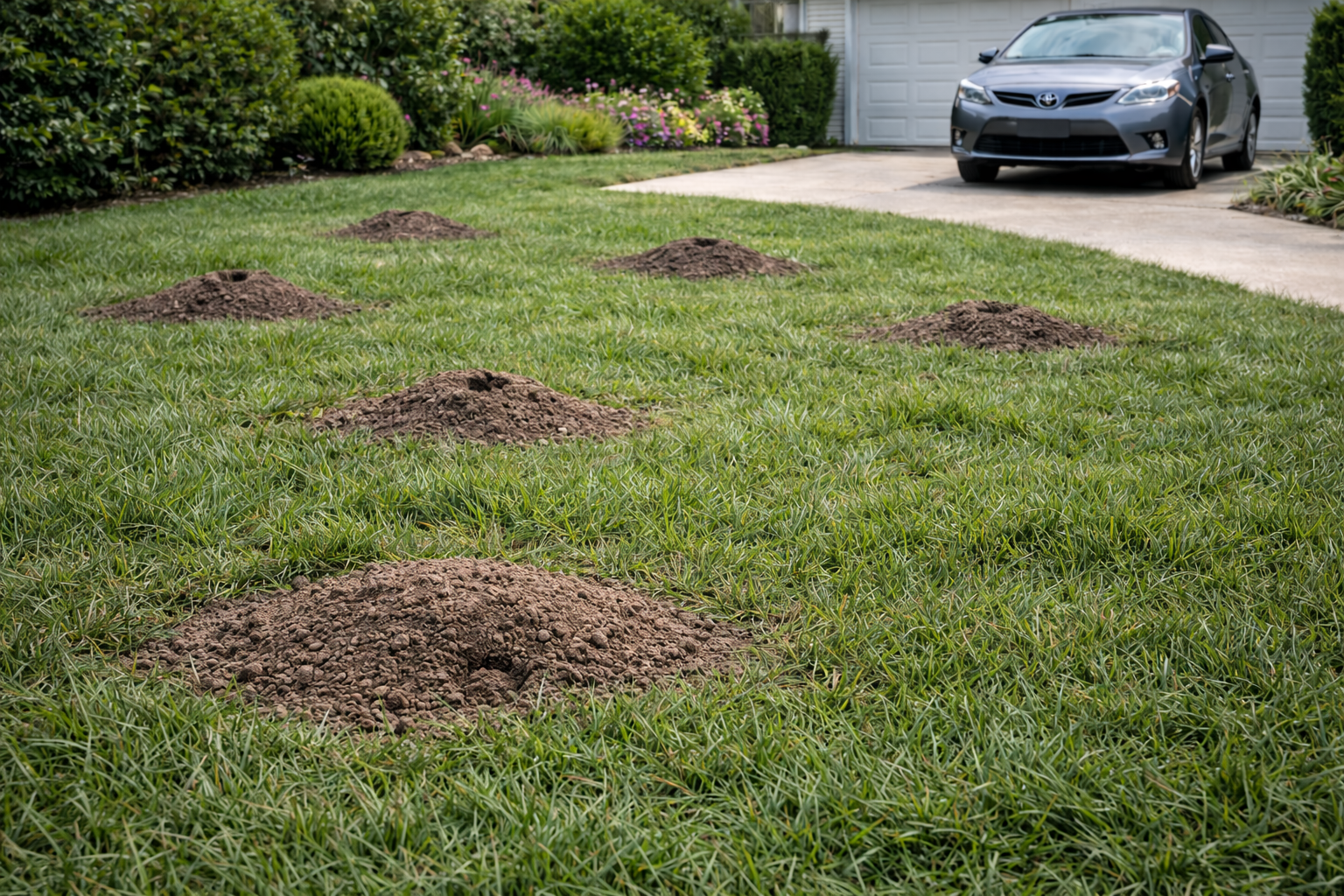
Gopher Activity in Hemet, CA

Gophers are a persistent presence throughout Hemet, California, a city located in western Riverside County in the San Jacinto Valley. The combination of the region's Mediterranean climate, extensive residential irrigation infrastructure, and proximity to natural chaparral and oak woodland habitats creates ideal conditions for these burrowing rodents. Property owners throughout Hemet—from the lakeside neighborhoods near Lake Hemet to the sprawling developments in the valley floor—regularly encounter evidence of gopher activity in yards, gardens, and landscaped areas.

Why Hemet Has Significant Gopher Activity

Hemet's geography and climate make it particularly conducive to gopher populations. The city sits in the San Jacinto Valley at approximately 1,400 feet elevation, characterized by warm, dry summers and mild winters with seasonal rainfall concentrated between November and March. This precipitation pattern, combined with the extensive irrigation systems that many residential properties maintain to sustain lawns and ornamental plantings in the semi-arid climate, provides gophers with consistent access to moisture and soft soil conditions ideal for tunnel construction.

The underlying soil composition in much of Hemet consists of sandy loam and granitic soils, which are particularly easy for gophers to excavate compared to clay-heavy or rocky substrates. These soil types drain relatively quickly, making them attractive for burrowing species that need to manage moisture while maintaining stable tunnel networks. Furthermore, Hemet's location at the western edge of the San Jacinto Valley places numerous residential areas adjacent to or within close proximity to undeveloped chaparral, oak woodland, and grassland habitats that serve as natural reservoirs for gopher populations. Wildlife corridors along washes and open space areas—such as those surrounding the San Jacinto River corridor and the lands managed for watershed protection—allow gophers to disperse from wild populations into residential neighborhoods with relative ease.

Common Gopher Species in Hemet

The gopher species most commonly encountered in Hemet is the Botta's pocket gopher (Thomomys bottae), a rodent well-adapted to the region's ecological conditions. Adult Botta's pocket gophers typically measure 5 to 6 inches in body length, with short, stocky builds and powerful front legs equipped with long claws optimized for digging. Their fur generally appears brown or grayish-brown, providing camouflage in local soils. The animals derive their "pocket" designation from fur-lined cheek pouches used to transport food and nesting materials through their burrow systems.

Botta's pocket gophers are solitary, territorial animals that maintain individual burrow systems rather than forming colonies like some rodent species. Each gopher's tunnel network can extend across a substantial portion of a residential lot, often encompassing hundreds of linear feet of pathways. These burrows serve multiple functions: they provide access to food sources such as roots, bulbs, and tender plant material; offer shelter from predators and temperature extremes; and facilitate reproductive activities during breeding seasons. The species is particularly abundant in Hemet's valley-floor neighborhoods where irrigation supports consistent vegetation and soil moisture, though they also inhabit the drier foothill and bench lands where native plants and scattered ornamental landscaping provide adequate food resources.

When Gopher Activity Peaks in Hemet

Gopher activity in Hemet follows distinct seasonal patterns tied to the regional climate and reproductive cycles. The most intense period of surface activity and mound construction typically occurs between January and March, coinciding with the species' primary breeding season and the arrival of winter and early spring rainfall. During this window, gophers actively excavate new tunnels and push soil to the surface as they expand their burrow systems in preparation for reproduction and in response to increased soil moisture that makes digging easier.

Spring months—particularly February and March when Hemet receives much of its annual precipitation—witness the highest frequency of visible gopher mounds and tunnel damage in residential yards. The increased moisture softens clay layers and compacted soil, allowing gophers to work at greater depths and expand laterally throughout properties. Summer activity declines somewhat as gophers respond to drying soil conditions by focusing on maintaining existing tunnel systems rather than expanding them extensively. However, irrigation-dependent landscapes in Hemet provide a year-round water source that sustains gopher populations even during the dry season from May through October. Fall months see a resurgence in activity as gophers prepare for winter and as autumn rains begin to moisten the soil. In neighborhoods with consistently watered lawns and gardens—common throughout Hemet's residential areas—gopher activity can remain relatively constant throughout the year, though it still tends to peak during the spring breeding and rainfall season.

Signs of Gopher Damage in Hemet Yards

Property owners in Hemet can identify gopher activity through several characteristic signs. The most obvious indicator is the presence of fresh mounds—symmetrical, fan-shaped piles of excavated soil typically 3 to 6 inches high and 4 to 8 inches in diameter. Botta's pocket gophers create distinctive plug-centered mounds where soil is pushed directly upward from the tunnel, resulting in a dome with a small hole at the apex. Over time, as residents observe their yards, they notice these mounds appearing in new locations as gophers tunnel through the soil.

Beyond mounds, gophers cause damage through feeding and tunneling. Subsurface burrows create spongy, collapsing areas in lawns where the soil above tunnel systems settles. Irrigation lines running through yards—common in Hemet's landscaped neighborhoods—become damaged or severed by burrowing activities, disrupting water distribution. Plant damage appears as unexplained wilting or death of ornamental shrubs and vegetables, caused either by gophers severing roots and bulbs as they tunnel or by consuming the roots directly. In vegetable gardens and nursery beds throughout Hemet neighborhoods, gophers may pull entire seedlings into their burrows and consume them underground. Gnawed bark on young trees and the disappearance of bulbs planted in fall are additional signs of gopher presence.

Landscape Considerations for Hemet Properties

The landscaping styles prevalent in Hemet reflect the region's semi-arid climate and the preferences of its diverse population. Many residential properties combine traditional irrigated turf lawns with ornamental shrubs, flowering plants, and shade trees—a pattern that originated during earlier periods of development when water availability seemed more abundant. Common landscaping plants in Hemet include coastal live oaks, desert-adapted shrubs such as California buckwheat and coyote brush, ornamental junipers and photinias, fruit trees including citrus and stone fruits, and various succulents and drought-tolerant perennials. Many yards also incorporate vegetable and herb gardens, particularly in neighborhoods near the city's rural edges and in established residential areas with larger lots.

Different plants present varying levels of vulnerability to gopher activity. Newly planted specimens and young trees are particularly susceptible to damage as gophers investigate root systems and consume tender bark. Fruit trees and nut trees attract gophers to their root systems, especially during seasons when above-ground food sources are scarce. Vegetable gardens and flower beds with soft, regularly irrigated soil make ideal gopher habitat. In contrast, mature trees with established, woody root systems and plants with tough or unpalatable foliage offer less attractive feeding opportunities. Properties that employ extensive hardscaping—including patios, walkways, and decorative rock features—create barriers that can discourage gopher tunneling compared to properties with continuous softscape. However, Hemet's climate and cultural preferences favor planted landscapes over minimalist hardscape designs, meaning most residential properties support gopher populations to some degree.