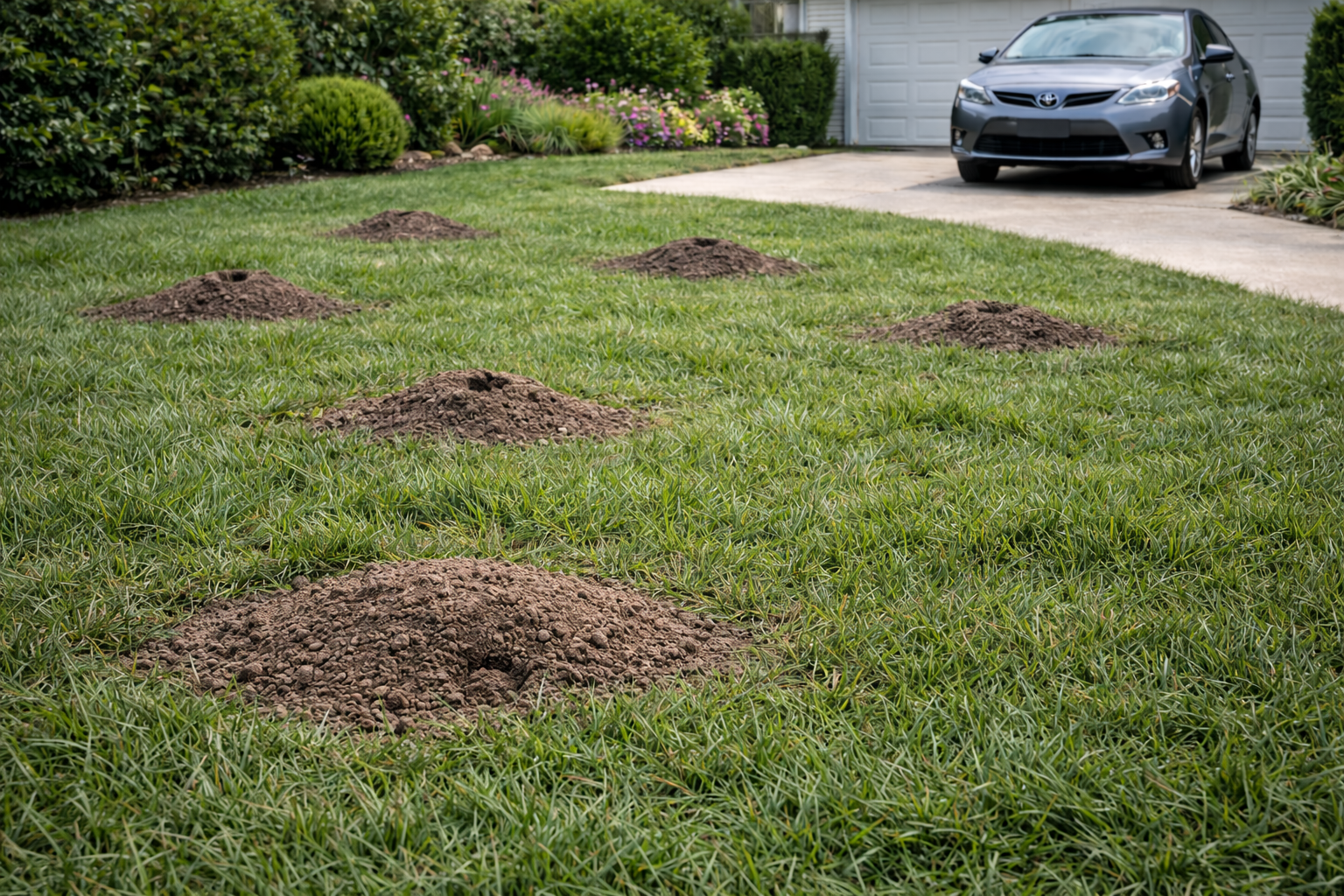
Gopher Activity in Highland, CA

Gophers maintain an active and persistent presence throughout Highland, California, a community in San Bernardino County situated in the Inland Empire region. The combination of irrigated residential landscapes, sandy loam soils, and proximity to undeveloped hillside terrain creates ideal conditions for year-round gopher populations. Property owners in Highland regularly encounter evidence of burrowing activity, particularly during spring months when soil moisture and vegetation growth peak.

Why Highland Has Significant Gopher Activity

Highland's geographic location and environmental characteristics make it particularly susceptible to gopher colonization. The area sits at approximately 2,100 feet elevation on the alluvial fans descending from the San Bernardino Mountains, with soil composition dominated by sandy loam and gravelly materials typical of piedmont zones. This soil type, while challenging for traditional agriculture, offers minimal resistance to gopher tunneling compared to compacted clay soils found in other parts of the Inland Empire.

Water availability serves as a critical factor in Highland's gopher ecology. The community features extensive irrigation infrastructure supporting both residential landscaping and agricultural remnants, creating consistent moisture that gophers require for survival during the region's hot, dry summers. Neighborhoods east of Sterling Avenue and near the foothills contain abundant ornamental plants, fruit trees, and irrigation systems that sustain larger gopher populations than would naturally occur in unwatered desert terrain.

Additionally, Highland's transition zone between urban development and open space provides migration corridors. The Highlands, the undeveloped hillside areas to the north and northeast, harbor wild gopher populations. As development fragments habitat or as rodent populations exceed carrying capacity, gophers disperse downslope into residential and commercial properties. This constant source population means that even properties with successful gopher removal may experience reinfestation within seasonal cycles.

Common Gopher Species in Highland

The Botta's pocket gopher (Thomomys bottae) represents the predominant, and often sole, gopher species encountered in Highland and surrounding San Bernardino County regions. This medium-sized rodent measures approximately 5 to 7 inches in body length, with an additional 1 to 1.5-inch tail that remains mostly hairless. Coloration ranges from light brown to dark reddish-brown, often matching the local soil tones, which provides effective camouflage within burrow systems.

Physical adaptations perfectly suit Botta's pocket gophers for their subterranean lifestyle. Powerful forelimbs equipped with long claws enable rapid soil excavation, while small eyes and external ear flaps offer minimal impedance to burrowing. The species derives its common name from large, fur-lined cheek pouches used to transport soil and plant material within tunnel networks. These pouches allow gophers to move substantial quantities of excavated earth without requiring surface trips, minimizing their vulnerability to predators.

Within Highland's varied terrain, Botta's pocket gophers occupy multiple microhabitats from valley floor residential areas to foothills. Population density and activity levels correlate directly with soil moisture and available vegetation. Gophers in Highland's foothill zones, where irrigation is minimal, maintain smaller territories and lower population numbers compared to suburban neighborhoods where regular watering sustains year-round food availability and favorable burrow conditions.

When Gopher Activity Peaks in Highland

Highland experiences pronounced seasonal variation in visible gopher activity, with spring months representing the period of maximum surface impact. Breeding season extends from January through March, during which male gophers expand territories while seeking mates, and females prepare maternity burrows. This reproductive phase intensifies burrowing activity and generates more numerous, more prominent mounds across lawns and landscaped areas.

Late winter and early spring precipitation, though modest in Highland's semi-arid climate, improves soil moisture conditions and stimulates fresh plant growth. Gophers respond to increased food availability and softer, more workable soil by expanding their tunnel systems and creating additional entrance mounds. The period from March through May typically represents peak visible damage, as gophers complete spring breeding cycles while young emerge from nests and demand substantial forage.

Summer activity declines noticeably in Highland as temperatures exceed 95 degrees Fahrenheit regularly and soil moisture from winter rains diminishes. However, properties with active irrigation systems maintain gopher populations throughout summer, as consistent moisture and cultivated plants continue to support burrowing and feeding. Fall months bring moderate activity renewal as temperatures cool, though this secondary peak remains less pronounced than spring activity. Winter months from November through December show variable activity depending on rainfall patterns and soil conditions.

Signs of Gopher Damage in Highland Yards

The most visible and distinctive sign of gopher presence involves surface mounds, conical accumulations of freshly excavated soil. In Highland's sandy loam soils, these mounds typically stand 3 to 6 inches high and span 2 to 4 inches in diameter. Unlike mole mounds, gopher mounds appear asymmetrical, with soil pushed to one side as the animal backs through the tunnel entrance. Identifying these mounds on Highland properties, particularly in spring months, confirms active infestation requiring attention.

Subsurface tunnel damage often exceeds surface mound damage in severity. Gopher burrow systems undermine irrigation lines, creating breaks that cause water loss and dry spots in lawns and landscape beds. In Highland neighborhoods where drip irrigation and soaker hoses support the typical desert landscaping aesthetic, gophers frequently sever these delivery systems. The resulting dry patches may appear unrelated to gophers until close inspection reveals severed irrigation components within shallow burrow networks.

Plant damage manifests as sudden wilting, yellowing, or death of trees, shrubs, and vegetables. Gophers feed on roots, bulbs, and underground plant parts, particularly targeting fruit trees (common in Highland yards), young shade trees, and ornamental plantings. Damage often appears sudden because gophers sever the root system entirely rather than causing gradual decline. Circular or irregular patches of dead grass and herbaceous plants indicate gopher feeding areas within burrow systems.

Landscape Considerations for Highland Properties

Highland's distinctive landscaping character reflects both water conservation trends and historical development patterns. Properties throughout the community feature combinations of native desert plants, drought-tolerant ornamentals, and maintained green spaces. This diversity of landscape types presents variable vulnerability to gopher damage. The common practice of clustering irrigated "oasis" zones—often surrounding homes or concentrated near patios—creates attractive gopher habitat with accessible water and concentrated food sources.

Certain plant species popular in Highland landscaping show particular susceptibility to gopher damage. Fruit trees including citrus varieties, stone fruits, and pomegranates attract gopher feeding due to nutritious root systems. Young shade trees, especially liquid ambers and desert-adapted species newly installed in Highland developments, often suffer severe root damage from gopher activity. In contrast, mature, deeply rooted specimens show greater resilience. Native shrubs and groundcovers in established Highland xeriscapes experience variable damage depending on rooting depth and hardiness.

Hardscape features—gravel, bark mulch, decomposed granite common to Highland yards—do not prevent gopher activity but may reduce damage visibility. Tunnels running beneath hardscape areas remain undetected until surface collapse occurs. Properties that combine hardscape zones with focused irrigation areas often experience damage concentration at the interface between these features. Strategic landscape design considering gopher ecology—spacing susceptible plants, clustering irrigation, maintaining vegetation-free buffers around structures—offers reasonable approaches to damage reduction for Highland property owners.