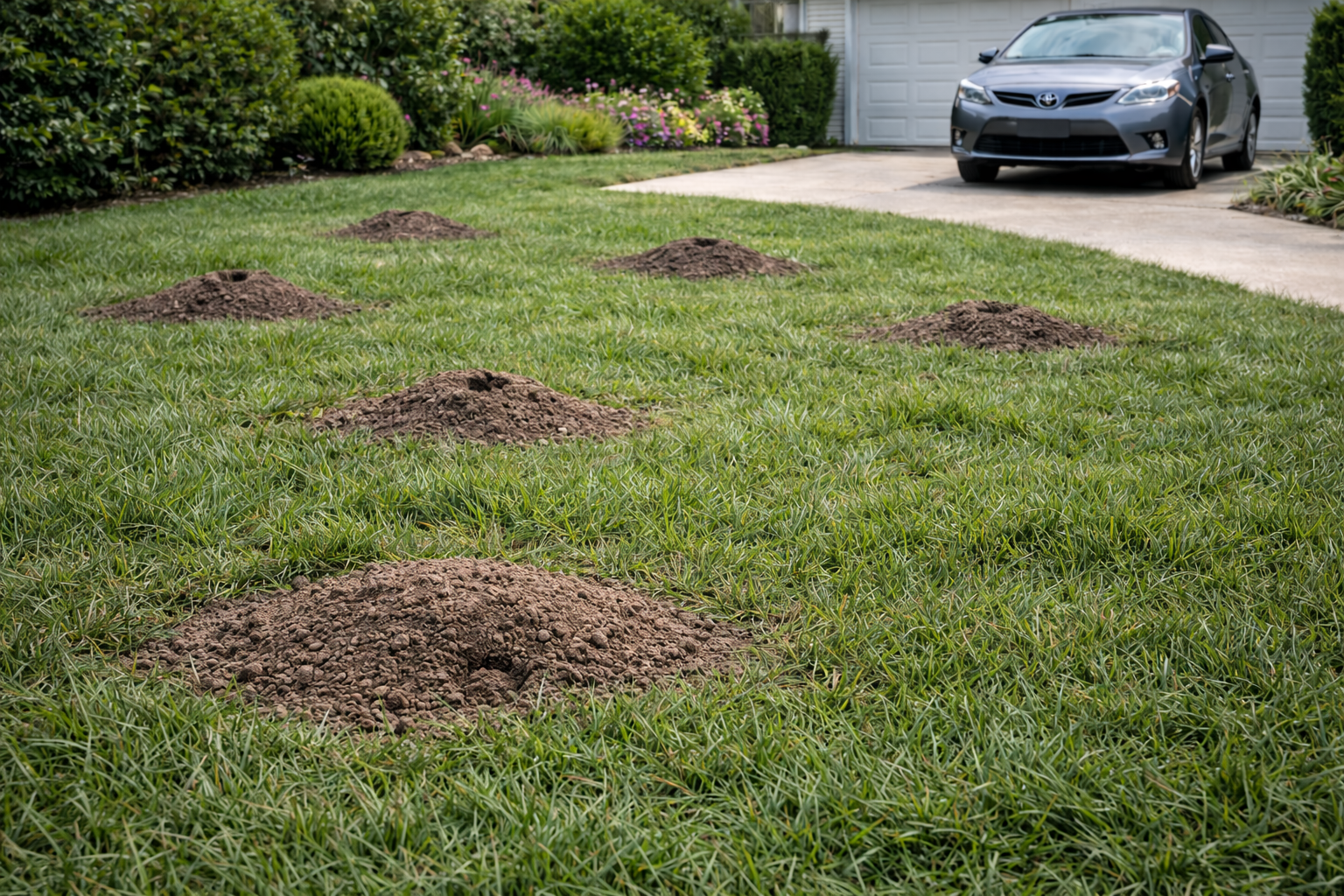
Gopher Activity in Huntington Beach, CA

Huntington Beach, located in central Orange County along the Pacific Coast, experiences consistent gopher activity throughout the year. The combination of coastal climate, irrigation-heavy landscaping, and sandy loam soils creates an ideal environment for pocket gophers to establish and maintain active tunnel systems. Residents and property managers across neighborhoods from Huntington Harbour to the Bolsa Chica area regularly encounter evidence of gopher burrowing in yards, gardens, and managed landscapes.

Why Huntington Beach Has Significant Gopher Activity

Huntington Beach's geography and environmental conditions make it particularly suitable for gopher populations. The city sits on coastal plains with predominantly sandy loam and clay loam soils that are relatively easy to excavate, allowing gophers to tunnel efficiently without expending excessive energy. The underlying soil structure, typical of Orange County's coastal areas, provides minimal resistance to burrowing activity.

Water availability significantly influences gopher presence in Huntington Beach. The city maintains extensive irrigation systems throughout residential neighborhoods, commercial properties, and public parks including Central Park and Huntington Central Library grounds. This consistent moisture from landscape irrigation mimics the water conditions gophers naturally seek, as moisture helps soften soil and supports the vegetation they consume. Additionally, Huntington Beach's Mediterranean climate—characterized by mild, wet winters and dry summers—creates seasonal patterns where gophers are particularly active during and immediately after the winter rainy season when soil moisture peaks.

Proximity to natural open spaces contributes to gopher populations as well. The Bolsa Chica Ecological Reserve and other coastal wetland areas nearby serve as natural gopher habitat, and populations from these undeveloped regions frequently expand into adjacent residential and commercial zones. The expansion is particularly noticeable in neighborhoods bordering these natural areas, such as those near Bolsa Chica Boulevard and properties adjoining coastal bluff areas.

Common Gopher Species in Huntington Beach

The Botta's pocket gopher (Thomomys bottae) is the primary gopher species affecting Huntington Beach properties. This species is well-adapted to coastal Southern California conditions and represents the most commonly encountered pocket gopher throughout Orange County.

Botta's pocket gophers are relatively small rodents, typically measuring 5 to 7 inches in body length with an additional 1 to 2 inches of tail. They display brown to reddish-brown fur coloration, though variations exist depending on local soil composition and genetics. Their most distinctive features include small, beady eyes adapted for subterranean life, prominent incisors visible even when the mouth is closed, and specialized front claws designed for excavation. The name "pocket gopher" derives from their external cheek pouches, which they use to transport soil and plant material.

These gophers are solitary, territorial animals that establish individual tunnel systems rather than communal colonies. Each active burrow system typically represents one gopher occupying roughly 200 to 500 square feet of territory. In Huntington Beach yards, multiple gopher individuals may operate separately across a single property, giving the appearance of extensive activity. Botta's pocket gophers are active year-round, though their surface activity and mounding behavior vary seasonally. They spend most of their time underground, where they create extensive tunnel networks used for nesting, food storage, and travel.

When Gopher Activity Peaks in Huntington Beach

Gopher activity in Huntington Beach follows predictable seasonal patterns tied to moisture availability and breeding cycles. The most noticeable activity typically occurs from January through April, when winter and early spring rains saturate the soil. Increased soil moisture makes tunneling easier and stimulates vegetation growth, providing abundant food sources. This period coincides with gopher breeding season, which generally occurs from January through March in coastal Orange County. During breeding season, males expand their territories searching for females, resulting in increased surface activity, additional mounding, and occasionally visible surface tunneling.

Spring months, particularly March and April, often see the highest concentration of gopher mounds in Huntington Beach yards. As soil dries slightly but remains moist enough for easy digging, gophers engage in active tunnel maintenance and expansion. They create new mounds while clearing old tunnels, making their presence unmistakable.

Summer activity (May through September) generally declines as irrigation becomes the primary moisture source and gophers move deeper underground to access cooler, more humid soil layers. However, properties with consistent landscape irrigation may maintain active gopher populations throughout summer. Fall activity increases again as soil temperatures moderate and autumn rains begin, though typically less dramatically than spring peaks. Winter rain arrivals in November and December reinitiate the cycle of increased surface activity heading into the new year.

Signs of Gopher Damage in Huntington Beach Yards

Identifying gopher activity requires recognizing specific damage patterns and signs. The most obvious indicator is the presence of mounds—fresh soil excavations typically appearing as symmetrical, crescent-shaped or circular mounds 2 to 6 inches tall scattered across lawns and planting areas. Fresh mounds appear light-colored and slightly raised with soil clumped together. Older mounds become flattened and darker as they weather and integrate with surrounding soil.

Gophers also damage underground irrigation systems common throughout Huntington Beach's residential areas. As gophers tunnel, they frequently encounter PVC and drip irrigation lines, either puncturing them or severing connections. Property owners may notice sudden dry patches in previously well-watered landscape sections or unexpected water pooling where irrigation has been compromised. In some cases, entire irrigation valves or connection points become exposed as gophers tunnel around them.

Plant damage includes wilting, yellowing, and sudden death of shrubs and ornamental plants. Gophers girdle plant roots by removing bark in circular patterns, effectively cutting off nutrient and water transport. Young trees and established woody plants throughout Huntington Beach neighborhoods are particularly vulnerable. Vegetable gardens and planted areas experience severe damage as gophers consume plant roots, bulbs, and tubers. Sunken areas in lawns indicate collapsed tunnel systems or areas where soil has been removed and packed into burrow structures. Gophers also create visible surface runs—raised ridges of soil pushed up along existing tunnel routes near the ground surface.

Landscape Considerations for Huntington Beach Properties

Huntington Beach's popular landscaping style emphasizes water-wise, Mediterranean-influenced design with coastal native plants, ornamental grasses, and drought-tolerant shrubs. However, many properties, particularly older homes in neighborhoods like Sunset Beach and older sections of central Huntington Beach, feature traditional turf lawns with extensive irrigation systems. This combination of soft landscape elements and consistent moisture creates vulnerability to gopher damage.

Common ornamental plants in Huntington Beach yards demonstrate varying degrees of gopher susceptibility. Soft-barked shrubs, young trees, and delicate root systems are particularly vulnerable. Mediterranean fan palms, commonly planted throughout the city, occasionally experience gopher damage though they are less preferred than softer-barked specimens. Succulent plantings and drought-tolerant groundcovers are less attractive to gophers than lush, irrigated landscapes, partly because they require less frequent digging in soil and have tougher, less palatable root structures.

Properties with hardscape elements—pavers, rock mulch, decomposed granite—show reduced gopher activity in those specific areas, as gophers avoid extensive hard materials. Conversely, areas with rich garden soil, wood mulch, and dense plantings attract and sustain active gopher populations. The contrast between beach-adjacent properties with minimal irrigation and inland neighborhoods with extensive lawn areas significantly influences local gopher prevalence. Residents and property managers in highly vegetated, irrigated areas should expect more persistent gopher pressure than those in minimalist, hardscape-dominant designs.