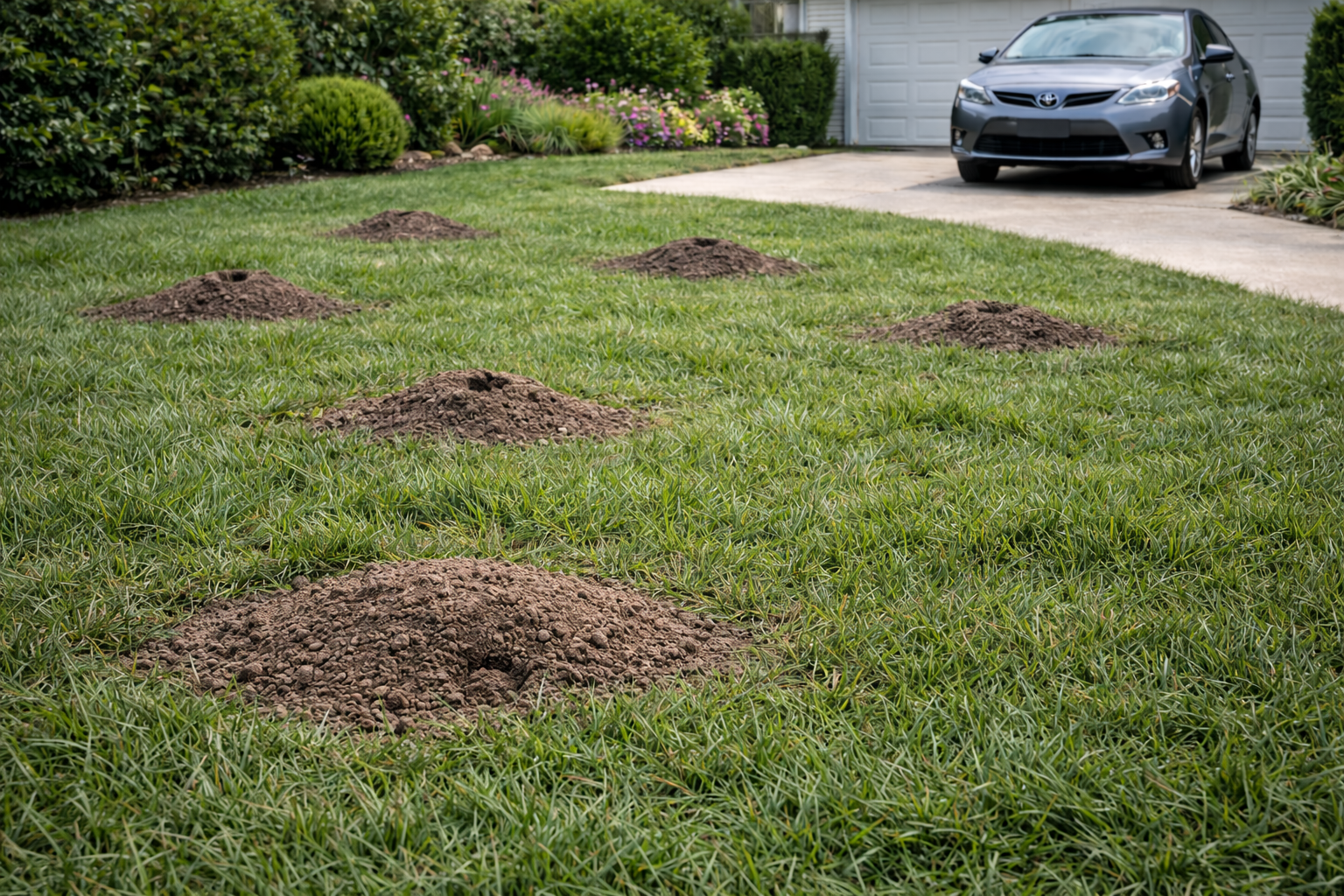
Gopher Activity in Jurupa Valley, CA
Jurupa Valley, located in western Riverside County between the cities of Riverside and Corona, experiences notable gopher populations that affect residential properties, agricultural lands, and landscaped areas throughout the region. The valley's combination of irrigated landscapes, alluvial soil conditions, and proximity to undeveloped foothills creates an ideal habitat for pocket gophers. Property owners in communities from Rubidoux to Glen Avon frequently encounter evidence of gopher burrowing activity, particularly during warmer months when animal activity intensifies.
Why Jurupa Valley Has Significant Gopher Activity
The geographic and environmental characteristics of Jurupa Valley create particularly favorable conditions for gopher populations. The valley floor consists primarily of alluvial soils deposited by the Santa Ana River—these soils are relatively loose and easy to burrow through, lacking the dense clay or hardpan layers that make digging more difficult in other regions. The warm, semi-arid climate of the area supports year-round gopher activity, though seasonal patterns vary significantly.
Irrigation infrastructure throughout Jurupa Valley substantially enhances gopher habitat suitability. The valley includes numerous residential communities with established lawns, ornamental gardens, and irrigation systems that maintain soil moisture levels throughout the year. This consistent moisture is essential for gopher survival in a region that receives only approximately 12 inches of annual rainfall. Agricultural properties, golf courses, and landscaped parks all maintain irrigation systems that effectively create oasis conditions attractive to burrowing rodents.
Additionally, Jurupa Valley's position adjacent to the San Bernardino Mountains and various undeveloped foothill regions means gopher populations have natural source areas from which they disperse into residential zones. The transition between developed properties and wild chaparral-covered slopes creates edge habitat where gophers thrive. Wildlife corridors along the Santa Ana River and its tributary washes facilitate population movement, allowing gophers to colonize new areas as food sources and conditions change.
Common Gopher Species in Jurupa Valley
The Botta's pocket gopher (Thomomys bottae) represents the primary gopher species encountered throughout Jurupa Valley and the broader Inland Empire region. This species is particularly well-adapted to the valley's environmental conditions and dominates the gopher population across residential, agricultural, and undeveloped areas.
Botta's pocket gophers are medium-sized rodents, typically weighing between 2 and 4 ounces with body lengths ranging from 5 to 7 inches. Their coloration varies from dark brown to tan, often matching local soil types—this variation in coat color represents an adaptive response to different soil conditions found across Jurupa Valley's diverse landscape. The species exhibits characteristic features including small eyes, relatively small ears, prominent front teeth used for digging, and specialized cheek pouches that give the animals their "pocket gopher" common name.
These pouches allow gophers to transport soil and plant material without using their mouths for carrying, enabling efficient tunnel construction and food gathering. Botta's pocket gophers possess incredibly strong forelimbs and specialized claws adapted for excavating extensive burrow systems. In Jurupa Valley's favorable soil conditions, individual gophers can maintain territory networks exceeding 2,000 square feet. The species is solitary and territorial, with adult gophers actively defending their burrow systems from intruders throughout most of the year.
When Gopher Activity Peaks in Jurupa Valley
Gopher activity in Jurupa Valley follows predictable seasonal patterns driven by breeding cycles, soil conditions, and food availability. The breeding season for Botta's pocket gophers typically extends from January through March, when males expand their range searching for females and territorial conflicts increase. During this period, property owners often notice increased mounding activity and more evident surface disturbance as gophers excavate new tunnel networks.
Spring months, particularly March through May, represent peak activity periods in Jurupa Valley. The combination of winter rainfall that softens soil conditions and the onset of spring vegetation growth creates optimal foraging opportunities. Young gophers disperse from maternal burrow systems during late spring and early summer, seeking new territories. This dispersal phase results in gophers colonizing previously unaffected yards and properties.
Summer activity typically remains elevated as irrigation maintains soil conditions favorable for tunneling and plant growth continues. The period from June through August often sees sustained gopher presence, though surface mounding may be less pronounced than in spring. Fall months bring reduced activity as soil becomes drier and vegetation growth slows, but gophers remain present and continue tunneling, particularly in irrigated areas. Even winter months can show activity in Jurupa Valley, especially following significant rainfall events that saturate soil and encourage burrow expansion. Property owners should remain vigilant year-round, as gopher populations persist throughout all seasons in the valley.
Signs of Gopher Damage in Jurupa Valley Yards
Property owners in Jurupa Valley can identify gopher presence through multiple characteristic signs visible in yards and landscaped areas. The most obvious indicator consists of fresh mounds of excavated soil scattered across lawns and garden beds. These mounds, typically 4 to 8 inches in diameter and slightly raised, appear as discrete piles rather than the ridge-like runs created by moles. Gophers push soil directly upward while constructing their burrow systems, creating these distinctive cone-shaped or horseshoe-shaped mounds.
Subsurface damage to irrigation lines and underground utilities often precedes visible surface damage. Gophers tunnel through buried drip irrigation systems and landscape fabric, disrupting water delivery to landscaped areas. Sections of yards may show sudden wilting or browning as irrigation systems become compromised by burrowing activity. Underground sprinkler lines frequently suffer damage, resulting in water leaks and inefficient irrigation coverage.
Plant damage represents another critical sign of gopher activity. Gophers consume roots, bulbs, and underground stem tissue, causing seemingly healthy plants to suddenly wilt and die. Ornamental shrubs may display sudden decline or asymmetrical growth patterns when gophers consume roots on one side of the root system. Vegetable gardens suffer particularly severe damage, with gophers consuming root vegetables, transplants, and plant roots during their initial establishment period.
Surface burrow openings, appearing as holes roughly 1.5 to 2 inches in diameter, indicate active burrow networks. Unlike mole tunnels that create visible ridges and runs across lawns, gopher burrows remain subsurface with only occasional openings. Multiple burrow entrances scattered across a property indicate established gopher territories. Fresh dirt around burrow openings, as opposed to weathered soil from older holes, indicates recent activity.
Landscape Considerations for Jurupa Valley Properties
Jurupa Valley's dominant landscaping style reflects the region's semi-arid climate and suburban character. Most residential properties feature drought-tolerant plant palettes including desert shrubs, ornamental grasses, and specimen trees adapted to hot, dry conditions. Popular landscape plants include California pepper trees, crape myrtles, desert rose, Texas privet, and Mediterranean herbs. These established plantings create the visual character throughout neighborhoods in Jurupa Valley's various communities, from the developed areas near Riverside to the more recently constructed subdivisions approaching Corona.
However, many Jurupa Valley properties also maintain significant turf areas, particularly in newer residential developments and neighborhoods with deed restrictions requiring maintained lawns. The combination of healthy irrigation systems and established lawns creates attractive habitat for gophers. Similarly, vegetable gardens and edible landscapes have become increasingly popular in Jurupa Valley, and these feature crops that are particularly vulnerable to gopher damage. Root vegetables, fruit trees, and newly planted landscapes suffer disproportionate damage from gopher populations.
Properties with established shade trees—including coast live oaks, California black walnuts, and valley oaks retained from native vegetation—face specific gopher challenges. Younger specimens in particular suffer root damage from gopher activity. Hardscape elements including patios, rock gardens, and mulched planting beds do not eliminate gopher problems but can reduce ideal habitat and encourage animals to move to better conditions.
The contrast between irrigated residential properties and adjacent undeveloped foothill terrain means landscape management significantly influences gopher presence. Well-maintained properties with consistent irrigation and established plantings attract gophers from surrounding areas. Landscape design choices, plant selection, and irrigation management all influence whether individual properties remain attractive to gophers or become less favorable habitat.
For professional gopher control in Southern California, visit Rodent Guys — serving Los Angeles, Orange, San Bernardino, and Riverside counties.