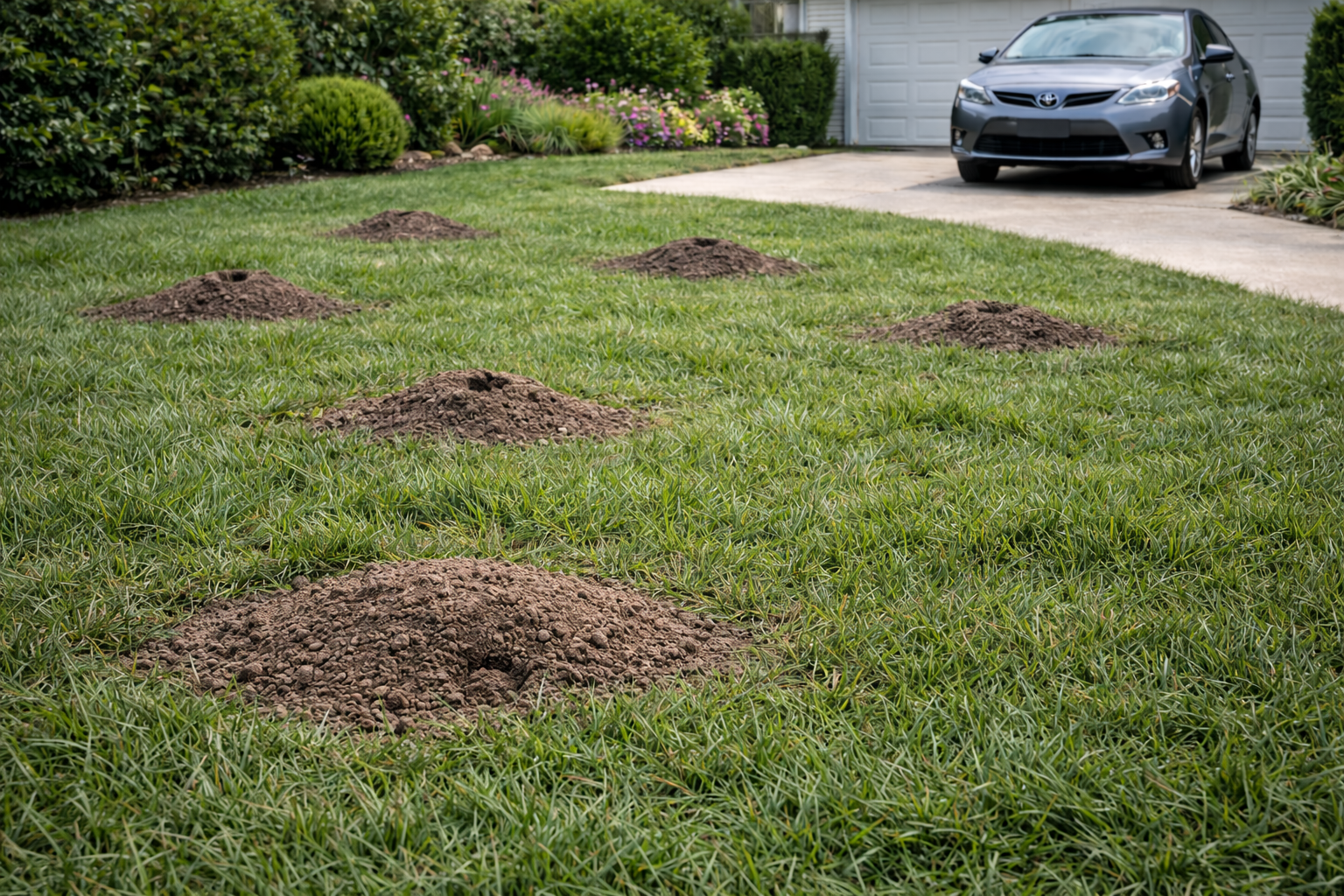
Gopher Activity in La Verne, CA
Gopher activity represents a persistent landscaping challenge throughout La Verne, a city located in the San Gabriel Valley east of Los Angeles County. The combination of suitable soil conditions, abundant irrigation infrastructure, and proximity to undeveloped foothill areas creates an environment where gophers thrive year-round. Property owners across La Verne's residential neighborhoods, from downtown near the college to the hillside developments adjacent to the San Dimas Canyon, frequently encounter evidence of gopher tunneling and feeding damage.
Why La Verne Has Significant Gopher Activity
La Verne's geography and climate create ideal conditions for gopher populations. The city sits on the alluvial plain of the San Gabriel Valley, with soil composition dominated by sandy loam and clay loam derived from mountain weathering and sediment deposition. This soil type—neither too compacted nor too loose—allows gophers to tunnel efficiently while constructing stable burrow systems. The region's annual rainfall averaging 15 to 18 inches, concentrated primarily between November and March, softens the soil during winter and early spring months, making excavation easier.
Irrigation systems throughout La Verne's landscaped properties provide year-round moisture that keeps soil workable even during drier months. Most residential yards feature drip irrigation, sprinkler systems, or both, maintaining the soil moisture levels that gophers require to construct and maintain their tunnel networks. Additionally, La Verne's proximity to undeveloped land in the foothills to the north, including areas along San Dimas Canyon and near the Cleveland National Forest boundary, means gopher populations continually immigrate from wild habitat into developed areas. The elevation gradient from downtown La Verne (around 1,100 feet) to the foothills creates movement corridors along which gophers naturally disperse.
Common Gopher Species in La Verne
The Botta's pocket gopher (Thomomys bottae) represents the dominant gopher species in La Verne and throughout the San Gabriel Valley. These gophers measure 5 to 7 inches in body length, with a short tail extending another 1 to 2 inches. Their fur coloration typically ranges from dark brown to reddish-brown, providing camouflage in local soil conditions. Botta's pocket gophers possess distinctive external cheek pouches, which give the species its "pocket" designation—these pouches allow individuals to transport seeds, roots, and soil while tunneling.
The species takes its common name from Harriet Botta, a naturalist's wife, and occurs naturally throughout much of California below 8,000 feet elevation. In La Verne, Botta's pocket gophers occupy a wide range of microhabitats, from moist irrigated yards in residential neighborhoods to drier chaparral scrub in the foothills. They demonstrate remarkable adaptability to urban and suburban landscapes, utilizing gardens, turf areas, and ornamental plantings as food sources. Unlike ground squirrels or moles, which are sometimes confused with gophers, Botta's pocket gophers remain solitary and fossorial (adapted for life underground), rarely venturing above ground except to change burrow systems or disperse to new territory.
When Gopher Activity Peaks in La Verne
Gopher activity in La Verne follows predictable seasonal patterns tied to breeding cycles and soil moisture availability. The breeding season extends from January through March, when male gophers become particularly active searching for females and establishing or expanding burrow systems. During this period, residents frequently notice increased mounding activity and fresh tunnel construction in their yards. The peak of this breeding-driven activity typically coincides with La Verne's rainy season, when the soil reaches optimal moisture content for tunneling.
Spring rains, which fall primarily between February and April in the San Gabriel Valley, trigger secondary peaks in gopher activity. Moisture penetration softens deeper soil layers, allowing gophers to expand their burrow networks vertically and horizontally with less energy expenditure. Throughout summer and into early fall, despite water restrictions and reduced irrigation in many La Verne properties, gophers remain active underground where soil retains moisture from spring irrigation and rainfall. Fall typically brings another surge as gophers prepare food caches and strengthen burrows before winter. Winter activity diminishes somewhat but does not cease entirely, since year-round temperatures in La Verne remain mild enough to permit continued feeding and tunneling. Property owners should expect gopher activity throughout all twelve months, with January through May representing the most visible and pronounced period.
Signs of Gopher Damage in La Verne Yards
Gopher mounds represent the most visible indicator of activity on La Verne properties. These mounds appear as conical or crescent-shaped piles of fresh soil, typically 4 to 6 inches in height and 6 to 12 inches in diameter, scattered across lawns and garden areas. Unlike mole mounds, which appear as ridges or raised tunnels, gopher mounds are discrete piles created when individuals push soil upward while excavating below-ground tunnels. A single gopher can create multiple mounds weekly during peak activity periods. The presence of fresh mounds indicates recent excavation, with older, weathered mounds becoming harder and losing their conical shape over time.
Gophers damage irrigation systems by chewing through plastic drip lines, soaker hoses, and buried supply lines. These punctures disrupt water distribution across La Verne yards, creating dry patches in landscaping or causing soil erosion around damaged lines. Garden plants throughout La Verne's residential areas suffer root damage and death when gophers tunnel directly beneath plantings, severing roots from below and creating air pockets that desiccate root systems. Vegetable gardens, fruit trees, and ornamental shrubs all fall victim to root damage. Gophers also clip plants at ground level from within their burrows, causing shoots to wilt and die. Damage patterns often show plants or sections of turf dying in linear arrangements that correspond to burrow tunnel locations. In severe infestations affecting multiple La Verne properties, sustained damage can require complete landscape replanting and irrigation system repair.
Landscape Considerations for La Verne Properties
La Verne's residential landscaping reflects the broader San Gabriel Valley aesthetic, emphasizing drought-tolerant California native plants alongside traditional ornamentals, fruit trees, and maintained turf areas. Native species including California live oak, western sycamore, and various chaparral shrubs coexist with widely planted non-natives such as crape myrtles, photinia, and phoenix palms. This landscaping diversity affects gopher vulnerability, since different plant species experience varying levels of damage. Gophers demonstrate clear preferences for tender root systems found in vegetables, young fruit trees, and certain ornamentals, while woody shrubs and established trees generally prove more resistant to root damage, though their shallow-rooted specimens remain vulnerable.
La Verne properties with extensive drip irrigation systems face particular gopher vulnerability, since well-watered landscapes support both the soil moisture gophers require and the vegetation they consume. Properties transitioning to xeriscaping—increasingly common in La Verne due to regional water conservation initiatives—may actually experience temporary increases in gopher populations as competition for available resources intensifies. Hardscape elements including concrete pathways, rock walls, and pavers can impede but do not eliminate gopher tunneling. Experienced property managers in La Verne recognize that landscaping design choices inherently affect gopher pressure; dense plantings and productive gardens attract and sustain larger gopher populations than minimally irrigated, sparsely planted yards. Understanding these dynamics allows property owners to make informed decisions about their landscaping approach, balancing aesthetic and productive goals against the biological realities of gopher presence in the region.
For professional gopher control in Southern California, visit Rodent Guys — serving Los Angeles, Orange, San Bernardino, and Riverside counties.