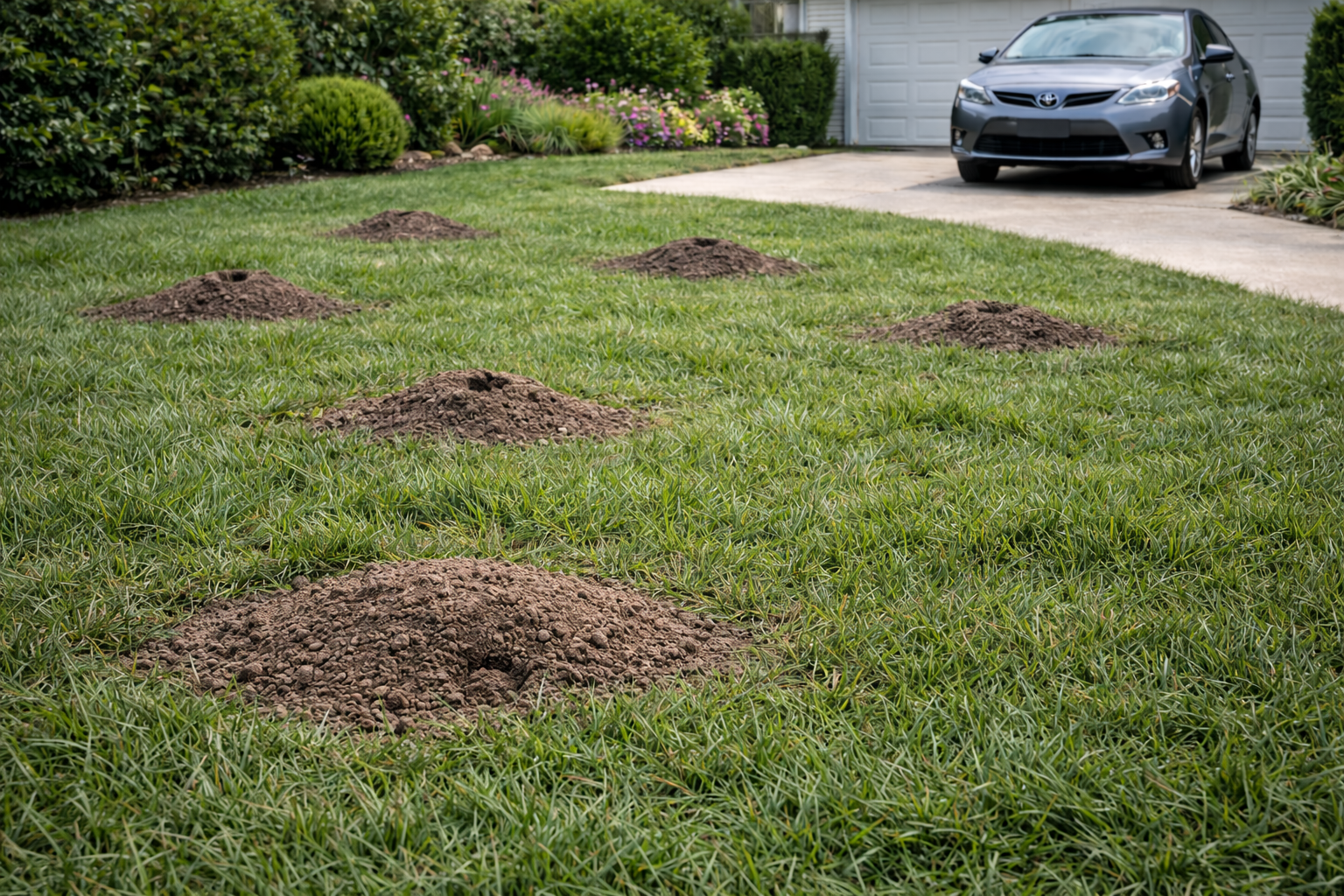
Gopher Activity in Lake Elsinore, CA

Lake Elsinore, located in southwestern Riverside County, experiences consistent gopher activity throughout the year, with populations particularly visible during spring months when soil moisture levels rise. The presence of pocket gophers in residential areas, agricultural zones, and near the shoreline reflects the region's geography, soil composition, and climate patterns. Understanding gopher behavior and seasonal activity in this area helps residents recognize damage early and appreciate the ecological role these burrowing mammals play in the local landscape.

Why Lake Elsinore Has Significant Gopher Activity

Lake Elsinore's environmental characteristics create ideal conditions for pocket gopher populations. The region sits in a semi-arid climate with average annual precipitation around 10 inches, concentrated heavily between November and March. The Elsinore Valley's alluvial soils—primarily composed of sandy loam and clay loam deposits from ancient water movement—are soft enough for efficient burrowing yet retain sufficient moisture during wet months to support the vegetation gophers depend on for food.

Residential properties throughout Lake Elsinore rely extensively on irrigation systems to maintain landscaping in the dry climate. This artificial moisture creates year-round feeding opportunities and maintains soil conditions favorable for tunnel construction. The city's proximity to the Santa Rosa Plateau and other undeveloped areas means gopher populations have natural habitat corridors, allowing animals to move between wild spaces and developed neighborhoods. Additionally, many Lake Elsinore yards feature ornamental shrubs, fruit trees, and vegetable gardens—all preferred food sources for gophers. The combination of favorable soil, consistent irrigation, abundant vegetation, and proximity to wild populations makes Lake Elsinore particularly susceptible to gopher colonization and activity.

Common Gopher Species in Lake Elsinore

Botta's pocket gopher (Thomomys bottae) is the predominant gopher species found throughout Lake Elsinore and the surrounding Riverside County area. This medium-sized rodent typically weighs between 4 and 8 ounces and measures 5 to 7 inches in body length, with a short tail. Botta's pocket gophers display brown to reddish-brown fur coloration, which blends effectively with Lake Elsinore's sandy and loamy soils. The species derives its common name "pocket" from external cheek pouches used to transport food and nesting materials through tunnel systems.

These gophers possess several adaptations suited to their subterranean lifestyle: small eyes, reduced ear pinnae, and powerful forelimbs with elongated claws designed for excavation. In Lake Elsinore, Botta's pocket gophers inhabit both undeveloped areas near the lake's shoreline and residential neighborhoods throughout the city. They occupy a variety of soil types found in the region, from the sandy washes near the water's edge to the heavier clay-loam soils in established residential districts. Individual gophers maintain solitary territories within their burrow systems, typically ranging from 2,000 to 4,000 square feet depending on soil quality and food availability. The species' ability to thrive in disturbed areas, irrigated yards, and agricultural settings makes it particularly well-adapted to Lake Elsinore's mixed urban-rural landscape.

When Gopher Activity Peaks in Lake Elsinore

Gopher activity in Lake Elsinore follows distinct seasonal patterns tied to the region's climate and the animals' reproductive cycle. The breeding season typically occurs from January through March, when soil moisture levels are highest following winter precipitation. During these months, gophers actively excavate new tunnels and expand existing burrow systems as they prepare for reproduction and increased food demands. January and February rains soften the region's normally compacted soils, making digging less energy-intensive and allowing gophers to tunnel more efficiently.

Spring months—March through May—represent the secondary peak period when juvenile gophers disperse from natal burrows and establish new territories. This territorial expansion creates visible surface activity, with fresh mounds appearing frequently in Lake Elsinore yards as young gophers tunnel through unfamiliar ground. Activity remains moderate through summer months, though it becomes less visible above ground as the intense heat and dry conditions cause gophers to tunnel deeper seeking moisture and cooler soil temperatures. By autumn, activity levels decline further as populations stabilize and gophers concentrate on food storage rather than territory expansion. Understanding these seasonal patterns helps Lake Elsinore property owners anticipate when damage is most likely to occur and when evidence of gopher presence becomes most apparent.

Signs of Gopher Damage in Lake Elsinore Yards

The most obvious sign of gopher activity in Lake Elsinore properties is the appearance of fresh mounds—conical piles of excavated soil typically 3 to 6 inches in diameter and 2 to 4 inches high. These mounds appear suddenly overnight after spring rains or during morning or afternoon hours when gophers actively tunnel. Unlike mole mounds, which are volcano-shaped and centered over vertical tunnels, gopher mounds tend to be asymmetrical, often showing a plugged entrance hole off to one side. In Lake Elsinore's sandy soils, mounds may appear lighter in color than surrounding soil as deeper, less-weathered material comes to the surface.

Gopher damage extends beyond surface mounds to affect irrigation infrastructure and plant health throughout yards. Tunnels frequently intersect with drip lines and soaker hoses, creating punctures that allow water to escape and disrupting irrigation efficiency across Lake Elsinore properties. In yards with in-ground sprinkler systems, gopher burrows can undermine sprinkler heads and create air pockets that prevent proper water distribution. Plant damage presents another critical concern: gophers clip roots and bulbs of landscape plants, causing wilting and decline of once-healthy shrubs and ornamental trees. Complete plant die-off occurs frequently when gophers severe tap roots on woody plants. Evidence of clipped vegetation may appear as plants emerging from gopher mounds—material the animals have consumed and expelled. In vegetable gardens, gophers damage crops by consuming roots and tubers directly and by creating tunnels that destabilize soil around growing plants.

Landscape Considerations for Lake Elsinore Properties

Lake Elsinore residents typically employ Mediterranean and desert-adapted landscape styles suited to the region's semi-arid climate. Native plants like California buckwheat, desert sage, and manzanita dominate drought-tolerant designs, while non-native specimens such as lantana, Russian sage, and desert rose are common in neighborhood yards. Turf grass areas, though less prevalent than in wetter climates, still appear in many residential properties near downtown Lake Elsinore and in established neighborhoods like Quail Valley and Canyon Hills. Mixed hardscape-softscape designs incorporating decomposed granite, mulched beds, and stone pathways represent increasingly popular approaches to water conservation in the area.

Gopher vulnerability varies significantly across common Lake Elsinore landscape plants. Ornamental shrubs popular in the region, including coyote brush and California lilac, remain relatively resistant to gopher damage, though gophers do consume their roots when other food sources become scarce. Fruit trees planted throughout Lake Elsinore yards—apple, citrus, and stone fruit varieties—suffer severe damage as gophers target their fleshy roots and tap roots. Vegetable gardens, particularly those growing root crops like carrots, potatoes, and radishes, experience severe gopher predation. Young trees planted in gopher-active areas face significant mortality risk during their first growing season when limited root establishment makes them vulnerable to root damage. Properties relying on extensive drip irrigation for landscape maintenance face compounded damage from gopher tunnel construction, which fragments irrigation networks and reduces system effectiveness. Understanding these landscape vulnerabilities allows Lake Elsinore property owners to make informed plant selection decisions and anticipate areas of highest gopher impact.