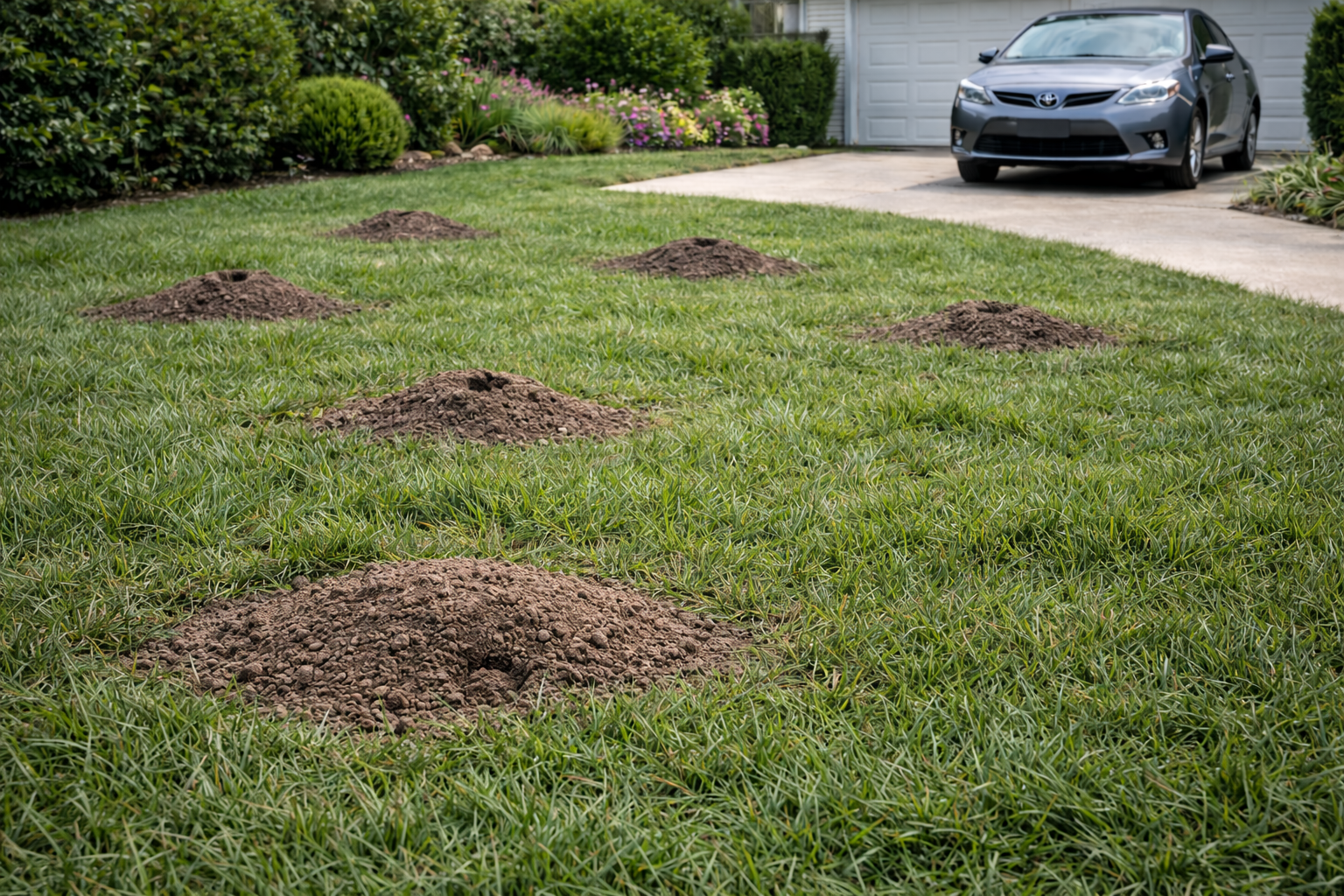
Gopher Activity in Lake Forest, CA
Lake Forest, located in south-central Orange County, experiences consistent gopher activity throughout the year due to its favorable soil conditions, Mediterranean climate, and extensive residential landscaping. The community's position at the edge of the coastal sage scrub ecosystem, combined with its well-irrigated neighborhoods, creates ideal conditions for pocket gopher populations to thrive. Understanding gopher behavior and seasonal patterns in this specific region helps property owners recognize activity early and make informed decisions about landscape management.
Why Lake Forest Has Significant Gopher Activity
Lake Forest's gopher populations are supported by multiple environmental and geographical factors unique to the region. The area sits on sandy loam and clay loam soils typical of Orange County's inland valleys, which are ideal for gopher burrowing. These soil types are neither too compacted nor too loose, allowing gophers to excavate extensive tunnel networks with reasonable effort. The soil composition differs from coastal areas to the west, where heavier clay content makes tunneling more difficult.
The residential landscape of Lake Forest—characterized by large residential lots, maintained lawns, and extensive irrigation systems—provides abundant food sources and consistent soil moisture. Neighborhoods like Serrano Summit and those adjacent to Serrano Creek support gopher populations fed by both native and ornamental vegetation. The area receives approximately 12-13 inches of annual rainfall, with most precipitation occurring between November and March. However, year-round irrigation systems in residential yards maintain soil moisture during the dry season, extending the period when gophers can actively tunnel and feed.
Lake Forest's proximity to open space areas, including portions near Oak Canyon Park and the Serrano Creek watershed, means gophers can migrate from wild habitat into residential properties. Native vegetation in these transitional zones includes brome grass, sage, and other plants that gophers consume. When adjacent open areas experience drought stress, gopher populations naturally move toward the more reliably irrigated residential landscape.
Common Gopher Species in Lake Forest
The Botta's pocket gopher (Thomomys bottae) is the predominant gopher species throughout Orange County and Lake Forest specifically. This medium-sized rodent typically measures 5 to 8 inches in body length, with a short tail approximately 1 to 2 inches long. Botta's pocket gophers display coloration ranging from brown to gray, with darker fur along the back and lighter fur on the underside. Their front legs are notably short and powerful, equipped with large claws specifically adapted for digging.
These gophers possess cheek pouches—external pouches that extend from the mouth to the shoulders—which they use to transport excavated soil and food. Their eyes are relatively small and positioned high on their skull, an adaptation for tunnel living where vision is less critical than tactile sensation. Botta's pocket gophers are solitary creatures except during breeding season, with each individual maintaining its own tunnel system within defined territories.
In Lake Forest specifically, Botta's pocket gophers inhabit both maintained residential landscapes and native habitat areas. They show a preference for areas with adequate moisture and soft, workable soil. The species is well-adapted to Orange County's specific soil types and has established stable populations throughout the Lake Forest community, expanding and contracting seasonally based on food availability and moisture conditions.
When Gopher Activity Peaks in Lake Forest
Gopher activity in Lake Forest follows seasonal patterns influenced by the region's climate and the gophers' reproductive cycle. Activity typically increases noticeably between January and March, coinciding with the gophers' breeding season. During this period, males expand their tunneling activity in search of mates, creating more visible mounding as they excavate and push soil to the surface. Females also increase their burrowing activity as they prepare nesting chambers for upcoming litters.
Spring rains in Lake Forest, usually occurring between February and April, further stimulate gopher activity. Increased soil moisture softens the ground, making excavation easier and creating better conditions for tunnel maintenance and expansion. Property owners often notice more fresh mounds appearing after significant rainfall events. Activity remains relatively high through late spring and early summer as newly independent juvenile gophers establish their own territories.
Summer activity in Lake Forest can actually decrease as soil conditions become drier and irrigation alone may not fully mimic natural moisture patterns. However, properties with automatic irrigation systems maintain enough soil moisture to support continuous gopher activity year-round. Fall months typically show moderate activity as gophers prepare for winter and take advantage of cooler temperatures to tunnel more actively. Winter activity slows somewhat but does not cease entirely in Lake Forest, unlike in regions with sustained freezing temperatures.
Signs of Gopher Damage in Lake Forest Yards
Property owners in Lake Forest can identify gopher presence through several distinctive signs. The most obvious indicator is the appearance of fresh mounds—crescent or circular mounds of loose soil that range from 4 to 12 inches in diameter. Unlike mole mounds, which are cone-shaped and centrally plugged, gopher mounds are typically lateral, with soil pushed to one side of a plugged tunnel entrance. Fresh mounds appear lighter in color than settled soil and feel soft and recently worked.
Gophers cause damage to irrigation systems throughout Lake Forest's neighborhoods, particularly in areas with drip irrigation or poly-pipe systems common in the region's landscaping. Gophers gnaw through plastic tubing to access moisture and vegetation roots, disrupting water delivery to plants. Over time, extensive tunneling creates subsurface voids that can cause soil settling and uneven ground surfaces, particularly noticeable in maintained lawns throughout neighborhoods like Ridgetop or along Serrano Parkway.
Plant damage from gophers appears as wilting or dying shrubs and trees, sometimes with roots severed completely. Gophers will consume roots, bark, and foliage of many landscape plants common to Lake Forest, including ornamental grasses, young trees, and flowering shrubs. In areas with extensive native plantings, gophers may target native buckwheat, toyon, and sage species. Homeowners may notice plants declining for no apparent surface reason—often the root system has been compromised by gopher tunneling and feeding activity below ground.
Landscape Considerations for Lake Forest Properties
Lake Forest's landscaping style has evolved significantly over recent decades, with many properties transitioning from water-intensive turf to California native plantings and drought-resistant designs. This shift in landscape composition affects gopher vulnerability across the community. Traditional lawn-based landscapes in established neighborhoods like Oakside or newer properties in the Summit area present gophers with continuous root systems and soil disturbance opportunities. Turf maintenance and irrigation create ideal conditions for gopher activity.
Native plant landscapes incorporating California buckwheat, sage species, coyote brush, and California lilac offer different challenges. While these plants are less palatable to gophers than many ornamentals, gophers will still tunnel through native plantings to access moisture and roots. Hardscape elements—including decorative stone, mulch pathways, and gravel areas—can actually reduce gopher activity in localized zones by creating barriers to easy tunneling.
Lake Forest properties with mixed hardscape and softscape designs show reduced but not eliminated gopher problems. The extensive use of automatic irrigation throughout residential areas, combined with the region's mild winter temperatures, supports year-round gopher populations regardless of landscape style. Properties positioned near open space areas consistently experience higher gopher pressure than those in central residential blocks. Understanding local soil conditions, seasonal moisture patterns, and the specific layout of one's property helps residents contextualize their own gopher activity within Lake Forest's broader environmental patterns.
For professional gopher control in Southern California, visit Rodent Guys — serving Los Angeles, Orange, San Bernardino, and Riverside counties.