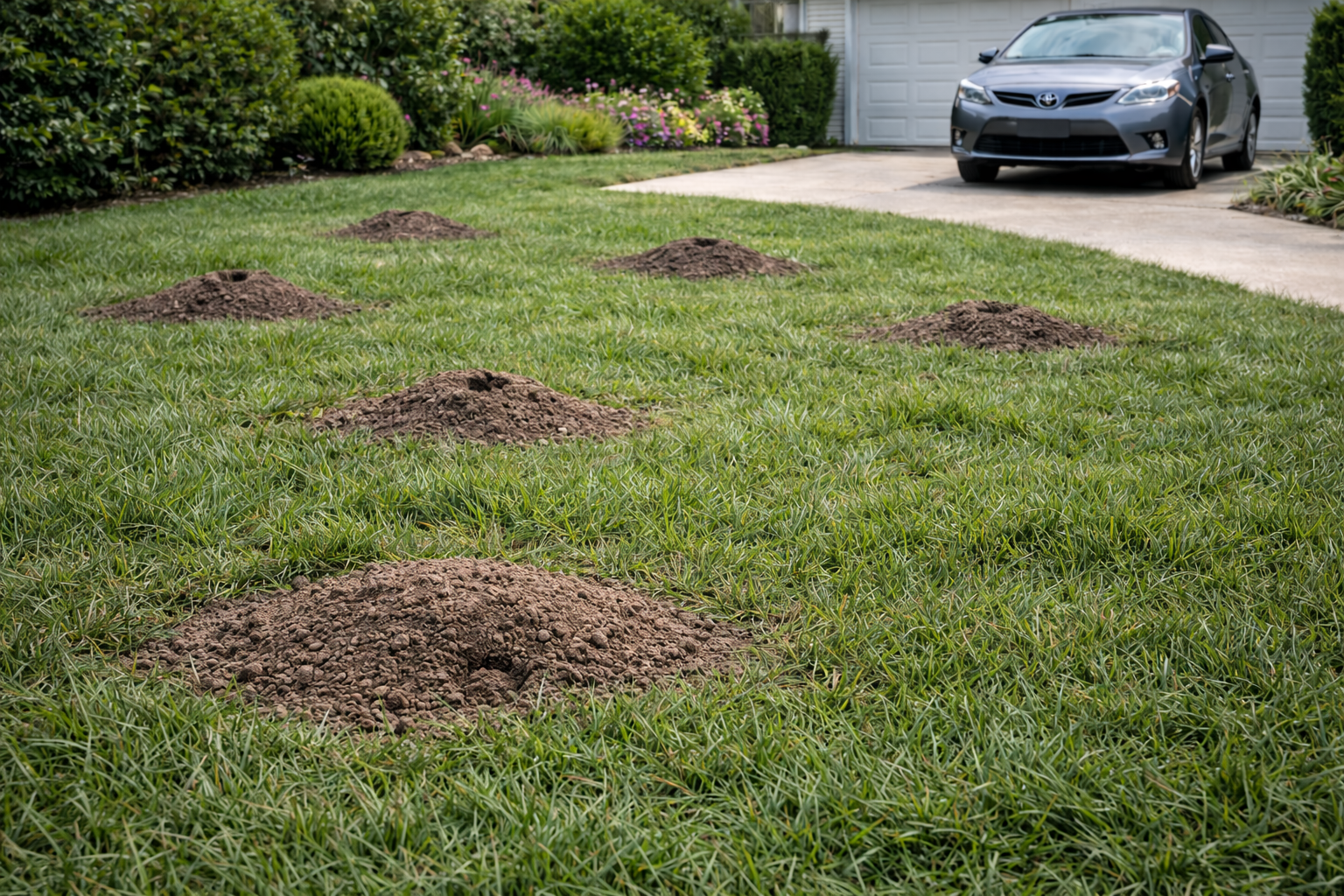
Gopher Activity in Lakewood, CA
Lakewood, California, located in Los Angeles County's Southeast region, experiences consistent and notable gopher activity throughout the year. The combination of the city's suburban landscape, extensive residential irrigation systems, and underlying soil composition creates an environment where pocket gophers thrive. Property owners across Lakewood's neighborhoods frequently encounter evidence of gopher tunneling, from visible mounds in lawns to damage in ornamental gardens and vegetable beds.
Why Lakewood Has Significant Gopher Activity
Several interconnected factors make Lakewood particularly attractive to gopher populations. The city sits within the Los Angeles coastal plain, characterized by alluvial soils that are relatively soft and easy to excavate. These soils, deposited over millennia by the San Gabriel River system, lack the dense clay or rocky composition found in some surrounding areas, allowing gophers to construct their tunnel networks with minimal energy expenditure.
Lakewood's climate plays a substantial role in gopher persistence. With average annual rainfall of approximately 12–15 inches concentrated primarily between November and March, the region experiences a semi-arid Mediterranean climate. This precipitation pattern keeps soil moisture levels adequate for gopher survival during winter and early spring months, while summer dryness does not eliminate populations because of widespread irrigation infrastructure. The vast network of residential sprinkler systems, common throughout Lakewood's single-family home neighborhoods, maintains soil moisture year-round—precisely the conditions gophers prefer for tunneling and foraging.
Proximity to undeveloped and semi-wild areas amplifies gopher presence. The Los Cerritos Wetlands, located southwest of Lakewood's main residential areas, and surrounding riparian corridors support native gopher populations that periodically disperse into developed neighborhoods. Additionally, Lakewood's position between larger open spaces and its own green belts and parks creates corridors through which gophers migrate seasonally.
Common Gopher Species in Lakewood
The Botta's pocket gopher (Thomomys bottae) is the primary and dominant species found throughout Lakewood and the greater Los Angeles area. Named after early naturalist Paolo Botta, this medium-sized rodent measures approximately 5–7 inches in body length, with a stocky, barrel-shaped frame adapted for underground life. Adult individuals typically weigh between 2–3 ounces, though larger specimens in resource-rich environments can reach 4 ounces.
Botta's pocket gophers display several distinctive physical characteristics. Their fur ranges from light brown to nearly black, with coloration varying by individual and sometimes by local population. The name "pocket gopher" derives from the external, fur-lined cheek pouches that these rodents use to transport food and nesting material through tunnels. These pouches can extend from the animal's mouth back to its shoulders and do not open into the mouth itself—a defining feature of the Thomomys genus.
In Lakewood's specific habitat, Botta's pocket gophers construct extensive burrow systems in yards, parks, and landscaped areas where soil conditions permit. They are solitary, territorial animals, with individual gophers occupying tunnel networks that can span hundreds of square feet. Each gopher maintains separate chambers for nesting, food storage, and waste, creating complex three-dimensional labyrinths beneath the surface. The species is active year-round in Lakewood, unlike some pocket gopher populations in colder climates that reduce activity during winter.
When Gopher Activity Peaks in Lakewood
Gopher activity in Lakewood exhibits pronounced seasonal variation tied to breeding cycles, soil moisture, and food availability. The primary breeding season occurs between January and March, coinciding with Lakewood's winter rainy period. During these months, soil moisture increases, making tunneling easier and expanding the availability of fresh vegetation. Males expand their territories in search of females, leading to increased surface activity and more visible mound construction during early spring.
Spring rains, typically heaviest in February and March, trigger heightened gopher activity throughout residential Lakewood. Fresh plant growth emerges as temperatures warm, providing abundant food sources. Young gophers born in late winter and early spring begin dispersing from maternal burrows by late spring and early summer, creating secondary peaks of activity and visible damage in lawns and gardens.
Summer months (June through August) in Lakewood bring reduced rainfall and higher temperatures, yet gopher activity does not cease. Instead, animals shift behavior, tunneling deeper to access moisture and cooler soil layers. Residential irrigation systems sustain surface-level activity throughout summer, as lawns and landscaped areas remain moist despite absent rainfall. Fall months (September through November) show variable activity; early fall maintains summer patterns, while November through December brings renewed activity as cooler temperatures and occasional autumn rains stimulate movement and breeding preparation.
Signs of Gopher Damage in Lakewood Yards
Identifying gopher presence requires understanding the distinctive signs these rodents leave behind. Fresh mounds are the most obvious indicator, appearing as crescent or horseshoe-shaped piles of soil 4–8 inches wide and 2–4 inches high. In Lakewood's well-maintained neighborhoods, these mounds become particularly conspicuous in the manicured lawns that characterize much of the city's residential character. Unlike mole mounds, which are typically cone-shaped, gopher mounds appear pushed to one side as the animal excavates laterally from the tunnel beneath.
Damage to Lakewood's extensive irrigation systems represents another significant indicator of gopher activity. Pocket gophers frequently intersect drip irrigation lines, soaker hoses, and water pipes while tunneling. This damage disrupts water delivery to landscaping and increases water bills as systems run inefficiently. Observable wilting in normally irrigated plants, combined with evidence of gnawing on plastic irrigation components, points toward gopher activity.
Plant damage varies depending on gopher feeding patterns. These herbivores consume roots, bulbs, and underground portions of shrubs and trees. In Lakewood yards featuring vegetable gardens, gopher activity can devastate root crops—carrots, turnips, potatoes, and onions—virtually overnight. Above ground, circular bare patches appear as gophers consume vegetation around burrow entrances. Damage to tree bark at or slightly below the soil surface indicates gopher girdling, where animals strip bark to access nutritious cambium layers beneath.
Landscape Considerations for Lakewood Properties
Lakewood's landscape character reflects a blend of traditional Southern California suburban aesthetics and evolving water-conscious design. The city, incorporated in 1953, developed primarily during the 1950s and 1960s, establishing a pattern of single-family homes on relatively small lots with manicured front lawns, foundation plantings, and backyard gardens. This development pattern, still dominant, creates extensive soft-landscape areas—grass, shrubs, and flower beds—that are particularly vulnerable to gopher activity.
Certain plant species commonly found in Lakewood landscapes prove more attractive to gophers than others. Fruit trees, particularly young trees, face significant damage risk as gophers girdle roots and stems. Ornamental bulbs frequently planted in Lakewood properties—tulips, daffodils, and iris—are eagerly consumed. Conversely, some plants demonstrate greater gopher resistance. Established trees with deep root systems are less vulnerable, though young trees suffer extensively. Shrubs with strong, unpalatable foliage—such as sage species and certain ornamental grasses—discourage gopher feeding.
Hardscape elements—patios, pathways, retaining walls, and decorative stone features—are increasingly incorporated into Lakewood landscapes, partly as responses to drought conditions and partly as aesthetic preferences. These features offer some advantage in gopher management, as concrete and stone directly reduce available soft substrate for tunneling. Properties transitioning from extensive turf to mixed hardscape and softscape environments may see reduced gopher pressure in hardscaped zones, though burrowing continues in remaining soil areas. Tree wells, planter boxes, and raised garden beds represent vulnerable transition zones where gophers tunnel from adjacent lawns into contained planting areas.
For professional gopher control in Southern California, visit Rodent Guys — serving Los Angeles, Orange, San Bernardino, and Riverside counties.