Gopher Activity in Manhattan Beach, CA

Manhattan Beach, a coastal community in Los Angeles County situated on the Palos Verdes Peninsula, experiences notable gopher activity throughout residential and landscaped areas. The combination of sandy loam soils, Mediterranean climate, and extensive irrigation systems creates an environment where pocket gophers thrive year-round. Property owners in neighborhoods from Highland Avenue to The Strand frequently encounter evidence of these burrowing rodents disrupting lawns, gardens, and irrigation infrastructure.

Why Manhattan Beach Has Significant Gopher Activity

The geological composition of Manhattan Beach directly contributes to gopher prevalence in the area. The peninsula sits atop sandy loam and silty loam soils—soil types that pocket gophers find ideal for tunnel excavation. Unlike heavy clay or compacted earth, these soils require minimal effort to dig through, allowing gophers to establish extensive burrow systems with relatively little energy expenditure. The sandy nature of the substrate also drains quickly, preventing waterlogged tunnels during the area's occasional rainfall events.

Irrigation practices throughout Manhattan Beach further support gopher populations. The community's Mediterranean climate brings warm, dry summers with minimal precipitation—typically less than 10 inches annually. To maintain the lush lawns and ornamental gardens characteristic of the neighborhood, residents rely on automated irrigation systems. These systems create consistently moist soil conditions that gophers require for tunnel maintenance and root access. The moisture from underground irrigation lines also attracts the earthworms and grubs that constitute a significant portion of a pocket gopher's diet.

Manhattan Beach's proximity to the Palos Verdes Peninsula's native coastal sage scrub and remaining undeveloped areas provides a source population for gopher dispersal. As natural habitats face development pressure, gophers naturally expand into adjacent residential zones. The area's relatively mild winters—with temperatures rarely dropping below freezing—allow gophers to remain active year-round rather than entering dormancy, as they might in colder inland regions.

Common Gopher Species in Manhattan Beach

The pocket gopher species dominant in Manhattan Beach is the Botta's pocket gopher (Thomomys bottae), which is distributed throughout coastal and inland Southern California. These rodents measure approximately 5 to 7 inches in body length, with an additional 1 to 2 inches of tail. Their fur typically ranges in color from tan to dark brown, providing camouflage in the sandy soils where they spend most of their lives. One distinctive feature is their large, powerful front teeth and relatively small eyes—adaptations reflecting their primarily subterranean lifestyle.

Botta's pocket gophers derive their common name from the external, fur-lined cheek pouches used for transporting soil and food. These pouches extend from the mouth to the shoulders and can expand significantly when laden with excavated earth. The species possesses robust front legs with long claws specifically adapted for digging, along with relatively weak hind legs used primarily for pushing soil backward out of tunnels.

In Manhattan Beach specifically, gophers prefer areas with established landscaping, maintained lawns, and accessible root systems. They are less commonly found in areas with consolidated concrete or hardscape, though they readily tunnel underneath pavement and structures. Individual gophers typically maintain territories ranging from 200 to 2,000 square feet, depending on soil quality and food availability. The relatively abundant irrigation and ornamental plantings in Manhattan Beach neighborhoods support populations at the denser end of this spectrum.

When Gopher Activity Peaks in Manhattan Beach

Gopher activity in Manhattan Beach follows seasonal patterns shaped by the area's climate and the reproductive cycle of pocket gophers. The primary breeding season occurs from January through March, coinciding with increasing day length and the emergence of fresh vegetation after winter rains. During this period, males expand their territories in search of females, resulting in increased tunnel construction and surface mound activity.

Spring represents the most visible season for gopher damage in Manhattan Beach yards. The combination of breeding activity, fresh plant growth, and increased soil moisture from winter precipitation and irrigation creates ideal conditions for gophers to expand burrow systems and feed. Homeowners typically notice the highest concentration of fresh mounds and vegetation damage between February and April. A secondary activity increase often occurs in late summer and early fall as juveniles born in spring establish their own territories.

Summer months, despite Manhattan Beach's warm, dry conditions, see somewhat reduced gopher surface activity. However, subsurface tunneling continues beneath yards as gophers follow moisture to deeper soil layers and feed on plant roots. The establishment of irrigation schedules for summer lawn maintenance actually sustains gopher populations during this otherwise dry season. Winter activity in Manhattan Beach remains relatively consistent because freezing temperatures are rare and soil rarely becomes too hard to tunnel through, unlike in inland or northern regions.

Signs of Gopher Damage in Manhattan Beach Yards

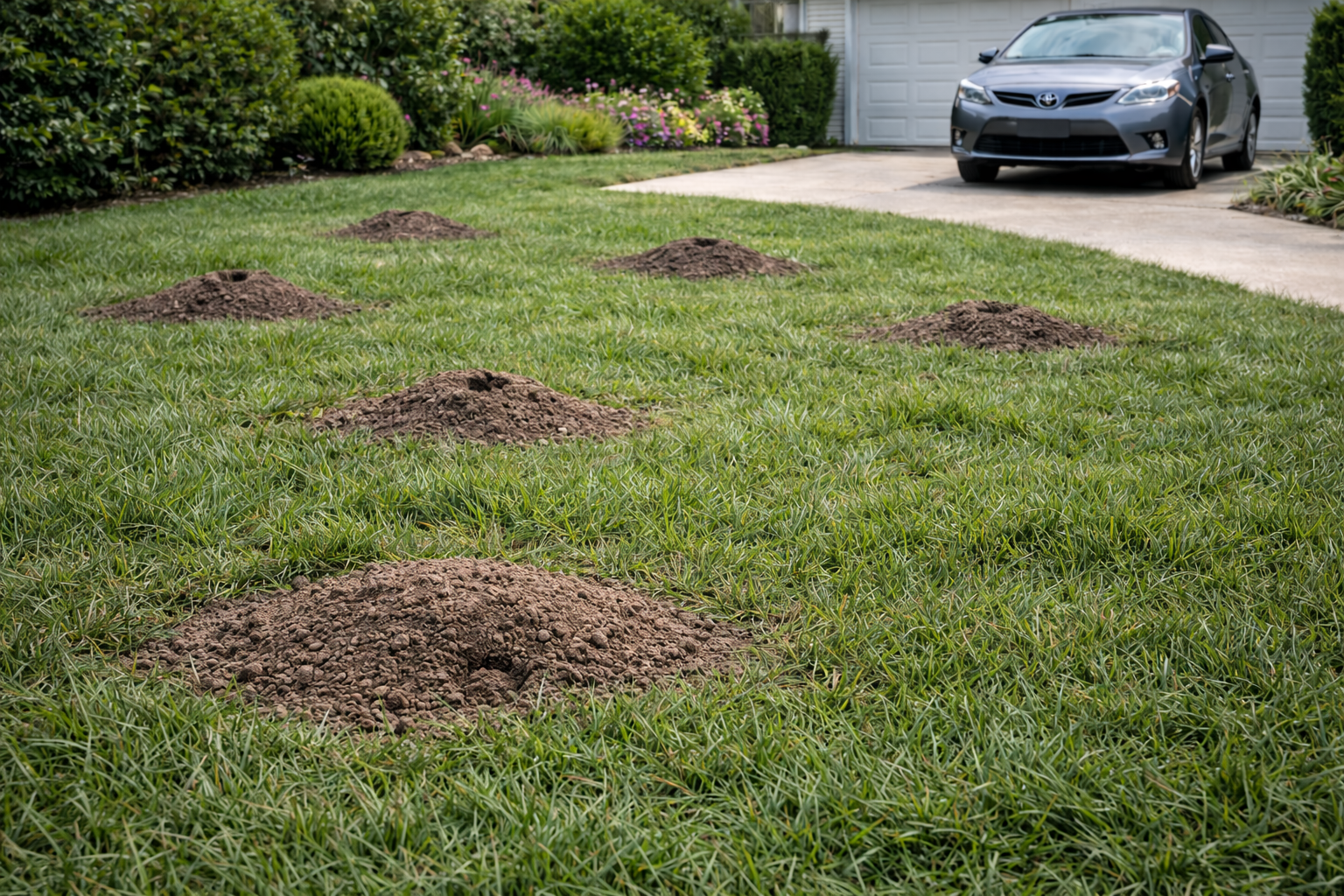
The most visible sign of gopher presence is the characteristic mound of excavated soil. Gophers create two types of mounds: fan-shaped mounds formed by pushing soil laterally out of tunnels, and cone-shaped mounds constructed as the animal backs out of a tunnel while ejecting soil. Manhattan Beach residents will observe these mounds appearing suddenly in lawns, gardens, and landscaped beds, often overnight following heavy irrigation or rainfall that softens the soil.

Irrigation damage represents another significant indicator of gopher activity in Manhattan Beach properties. Pocket gophers frequently gnaw through plastic irrigation lines and drip systems as they tunnel, seeking both the water source and the moisture-rich plants that develop around damaged lines. Sudden dry patches in otherwise irrigated lawns, combined with visible tunnel systems following irrigation lines, suggest active gopher damage to underground systems.

Plant damage manifests in several ways throughout Manhattan Beach landscapes. Gophers consume roots, bulbs, and tubers of ornamental and edible plants. Property owners may notice plants wilting despite adequate irrigation, or the complete disappearance of young plants that were pulled underground. Damage often appears in clusters as gophers systematically work through garden beds. In landscaped areas common to Manhattan Beach—including those planted with ice plant, agapanthus, and other coastal-adapted species—gophers create visible gaps in plantings as they consume underground portions of plants.

Landscape Considerations for Manhattan Beach Properties

Manhattan Beach's iconic landscaping aesthetic features coastal-appropriate plants suited to the area's sandy soils, marine layer influence, and salt-tolerant requirements. Common plantings include ice plant (Carpobrotus edulis), agapanthus, California buckwheat, and various succulents—many of which are actually less vulnerable to gopher predation than traditional lawn grasses and water-intensive ornamentals. However, the prevalence of irrigated turf lawns from The Strand neighborhoods through the residential streets creates expansive, attractive habitat for gophers.

Bulb gardens, which many Manhattan Beach residents establish with tulips, daffodils, and other spring bloomers, face particular vulnerability to gopher activity. The subterranean storage organs that make bulbs valuable to gardeners are equally attractive to burrowing rodents. Gophers will systematically consume entire bulb plantings when encountered during tunnel expansion. Vegetable gardens, present in numerous Manhattan Beach yards, similarly attract gophers seeking root vegetables, legumes, and other calorie-dense plants.

The contrast between hardscaped and softscaped areas influences gopher distribution across Manhattan Beach properties. Extensive concrete patios, driveways, and pool decks discourage gopher tunneling in specific zones but often redirect burrowing to adjacent landscaped areas. Properties with minimal hardscape and extensive planted beds naturally experience higher gopher density. Mulched planting areas, increasingly common in drought-conscious Manhattan Beach landscapes, provide ideal gopher habitat by maintaining soil moisture while requiring minimal compaction.