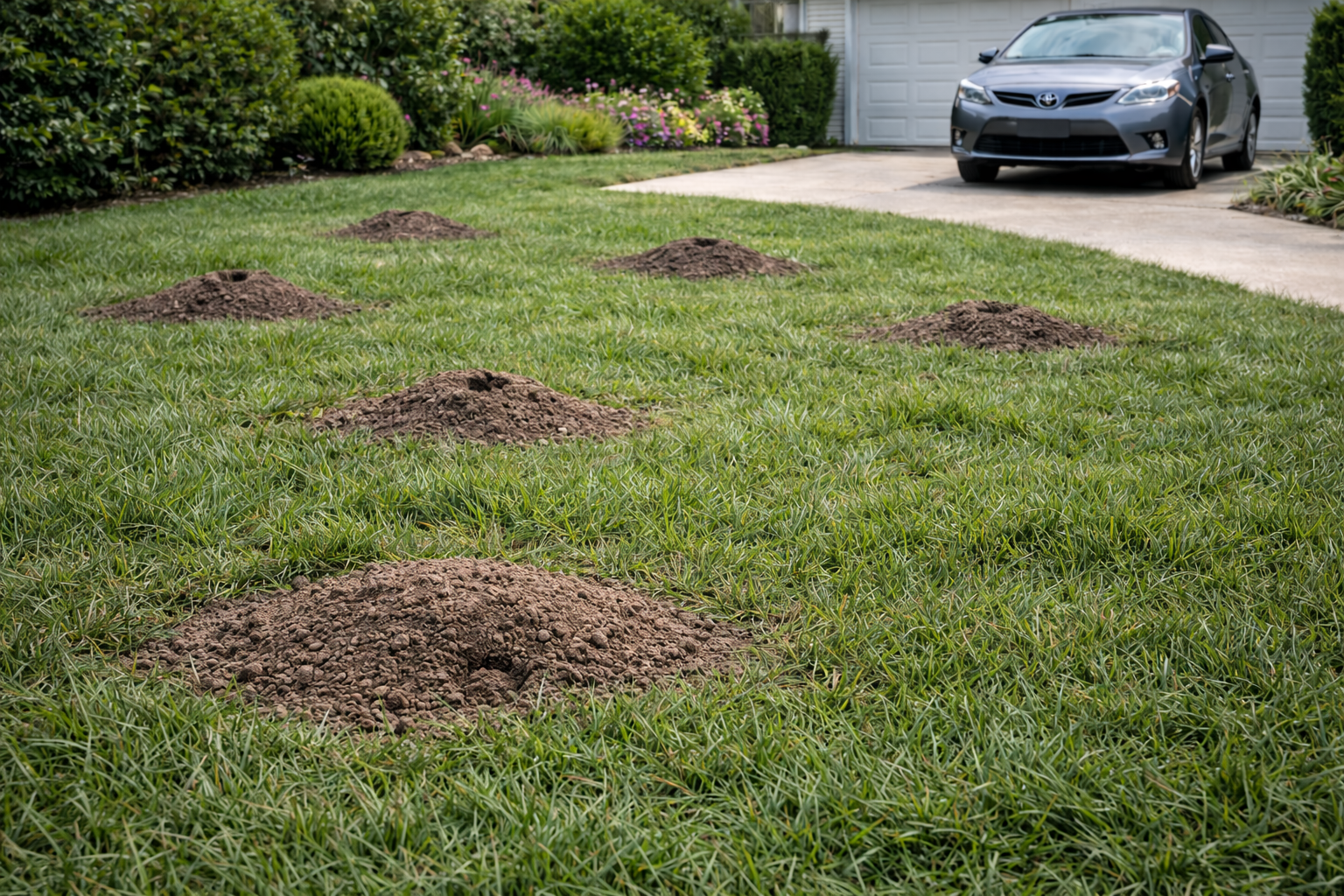
Gopher Activity in Menifee, CA
Menifee, located in southwestern Riverside County, experiences notable gopher activity throughout much of the year. The combination of sandy loam soils, residential irrigation systems, and proximity to undeveloped desert scrubland creates an ideal environment for gopher populations to thrive. Property owners across the community—from newer developments near Interstate 215 to established neighborhoods in the central and western portions of the city—frequently encounter evidence of gopher tunneling and burrowing.
Why Menifee Has Significant Gopher Activity
Menifee's geographic and environmental characteristics make it particularly susceptible to gopher colonization. The city sits at elevations between 1,400 and 2,200 feet above sea level, with predominantly sandy loam and gravelly soil compositions that gophers find relatively easy to excavate. These soil types, which dominate much of the Menifee Valley area, provide less resistance than clay-heavy soils found in other Southern California regions, allowing pocket gophers to construct extensive burrow systems with minimal energy expenditure.
The region's semi-arid climate, characterized by hot summers with temperatures frequently exceeding 95°F and mild winters with occasional freezing nights, supports year-round gopher activity. Unlike more northern climates where gophers enter dormancy during winter months, Menifee's relatively temperate conditions permit continuous feeding and breeding throughout the calendar year, though activity levels fluctuate seasonally.
Residential irrigation infrastructure throughout Menifee—including lawn sprinkler systems, drip irrigation for landscaping, and maintained green spaces—creates moisture-rich zones that attract gophers searching for succulent roots and tender plant material. The contrast between irrigated residential yards and the surrounding native chaparral and desert scrub makes developed areas particularly appealing. Additionally, Menifee's expanding residential communities in areas like Quail Valley, Sun City, and the newer subdivisions east of Newport Road have encroached upon natural habitat, bringing human development into direct contact with established gopher populations migrating from undisturbed areas.
Common Gopher Species in Menifee
The Botta's pocket gopher (Thomomys bottae) represents the dominant gopher species throughout Menifee and most of Riverside County. This rodent typically measures six to eight inches in body length, with a tail extending an additional two inches. Botta's pocket gophers display brown to grayish-brown coloring, with fur that varies in shade depending on local soil composition—animals in sandy areas often appear lighter than those in darker, clay-rich soils.
The species derives its common name "pocket gopher" from the fur-lined cheek pouches used for transporting food and nesting materials throughout tunnel systems. These external pouches, unique among North American rodents, can expand significantly and be turned inside-out for cleaning. Adult Botta's pocket gophers weigh between four and eight ounces, with males typically larger than females.
Within Menifee, Botta's pocket gophers inhabit both the disturbed soil of residential yards and the native shrubland of open spaces. They demonstrate a strong preference for areas with consistent moisture and soft, workable soil. The species shows remarkable adaptability to diverse environments, from actively maintained gardens to neglected properties with dense vegetation. Individual gophers maintain solitary, territorial behavior except during brief breeding periods, with each animal controlling a burrow system that may extend across several hundred square feet of surface area.
When Gopher Activity Peaks in Menifee
Gopher activity in Menifee follows distinct seasonal patterns, though the absence of severe winters means surface activity occurs throughout the year. The breeding season typically extends from January through March, driven by increasing daylight hours and warming temperatures common to Menifee's desert-influenced climate. During this period, male gophers expand their tunnel networks and become more mobile in search of mates, resulting in increased surface mounding and visible ground disturbance across properties.
Spring rainfall, which occasionally occurs in Menifee during February through April, coincides with peak breeding activity and also stimulates gopher movement. Adequate soil moisture facilitates easier tunnel construction and promotes the growth of succulent vegetation that gophers consume voraciously. The combination of reproductive drive and favorable food availability makes spring the season of maximum gopher visibility and property impact.
Late spring and summer activity typically decreases as temperatures rise above 100°F regularly and irrigation becomes the primary moisture source. However, well-irrigated yards maintain attractiveness to gophers even during hot months. Fall brings another period of increased activity as cooler temperatures return and gophers prepare for winter by accumulating food stores, though Menifee's mild winters prevent the true hibernation seen in more northern populations. Understanding these seasonal patterns helps property owners anticipate when gopher problems may intensify and when control efforts might prove most effective.
Signs of Gopher Damage in Menifee Yards
The most visible indicator of gopher presence consists of fresh mounding—irregular, crescent-shaped or volcano-shaped elevations of soil pushed to the surface as gophers excavate burrows. In Menifee's sandy loam soils, these mounds typically appear as loose piles four to eight inches in diameter, darker in color than surrounding soil due to moisture content and organic matter from deeper soil layers. Gophers often create multiple mounds across a single yard within weeks, and property owners may observe new mounds appearing daily during periods of active tunneling.
Subsurface damage frequently accompanies these surface signs. Gopher burrows can undermine irrigation lines, causing leaks and water waste that increases utility costs. Drip irrigation systems popular throughout Menifee communities suffer particular vulnerability, with gophers gnawing through plastic tubing to access water or the succulent roots of plants served by the irrigation line. Disrupted irrigation may result in sudden decline of landscaping, with stressed plants dying rapidly if tunnel damage prevents water delivery.
Plant damage extends beyond irrigation system interference. Gophers consume roots, bulbs, and tubers directly, with particular preference for root vegetables, deciduous tree roots, and the tender new roots of ornamental plantings common in Menifee landscapes. Prized specimens of fruit trees, roses, and other valuable plantings may suddenly wilt and die despite adequate watering when gophers sever critical root systems. The damage pattern typically appears sudden because the root system may remain functional until gopher activity severs primary root systems, causing rapid plant decline within days.
Landscape Considerations for Menifee Properties
Menifee residents typically maintain diverse landscaping styles reflecting the community's varied architecture and the influence of Southern California desert design principles. Many properties feature xeriscape elements—drought-tolerant plants selected for water efficiency and low maintenance—combined with small turf areas and ornamental gardens. While xeriscaping reduces overall gopher attractiveness compared to heavily irrigated lawns, the deep-rooted shrubs and trees common to desert-style landscaping still attract gophers seeking moisture and nutrition during dry periods.
Traditional ornamental landscaping remains popular in established Menifee neighborhoods, with homeowners maintaining roses, fruit trees, vegetable gardens, and densely planted foundation plantings. These landscape types provide abundant food sources that attract and sustain gopher populations. Strawberries, tomatoes, squash, and other garden vegetables suffer rapid losses when gophers gain access to garden beds. Even small residential vegetable gardens common throughout Menifee can support multiple gophers, and the concentrated plant density makes gardens particularly attractive compared to sparse desert landscaping.
Hardscape features—concrete patios, pathways, and retaining walls—prove less vulnerable to gopher activity but do not eliminate the threat entirely. Gophers readily tunnel beneath hardscape elements, potentially undermining structural stability and creating subsidence problems. Properties with significant hardscape combined with irrigated planting beds around perimeters offer gophers protected feeding areas while surface structures prevent easy detection of burrow activity. Strategic consideration of plant selection, irrigation placement, and monitoring for early gopher signs helps Menifee property owners minimize damage to valuable landscaping investments.
For professional gopher control in Southern California, visit Rodent Guys — serving Los Angeles, Orange, San Bernardino, and Riverside counties.