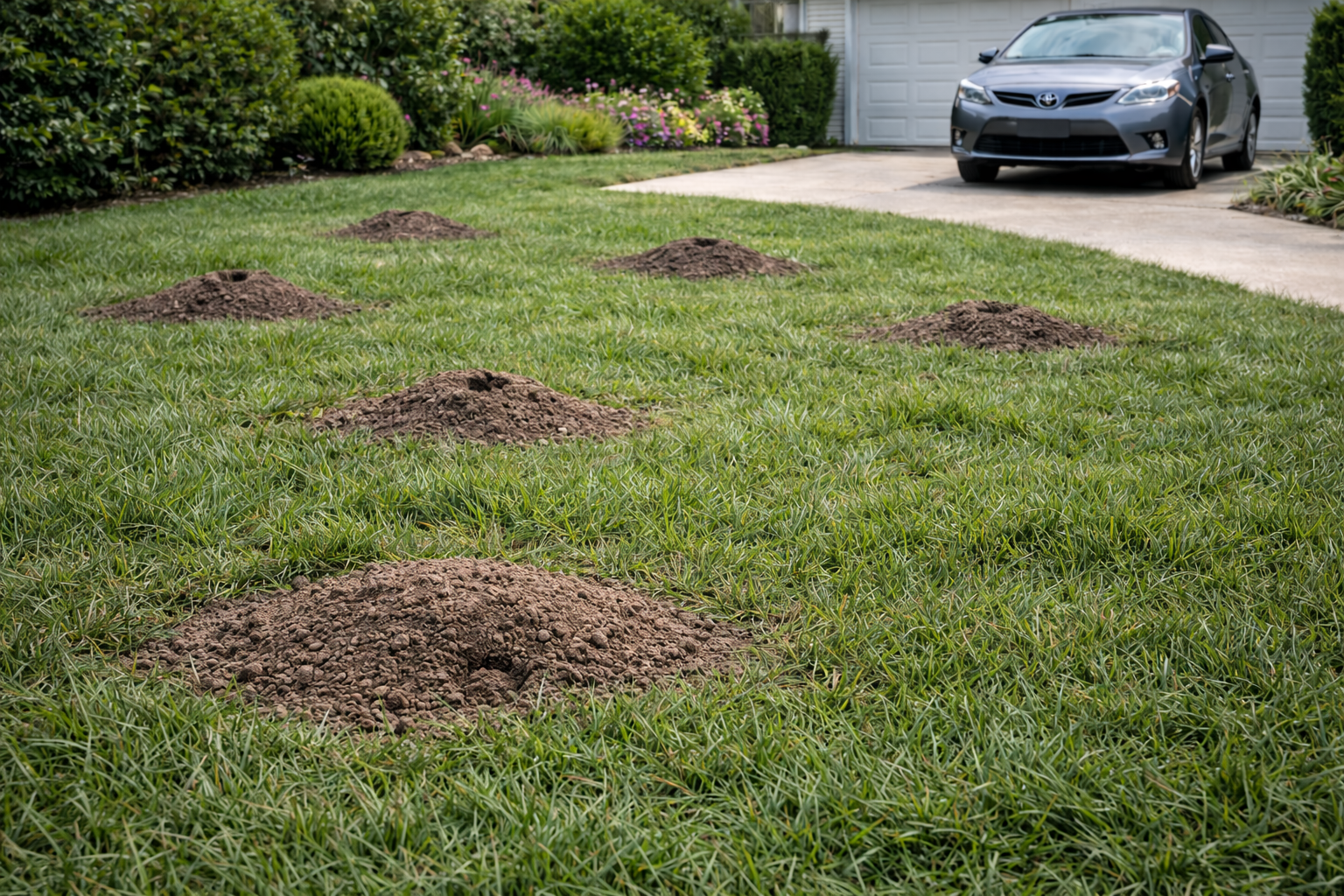
Gopher Activity in Mission Viejo, CA

Mission Viejo, located in central Orange County, experiences consistent gopher activity throughout the year, with populations particularly visible during spring and early summer months. The city's combination of mature residential landscaping, clay-based soils, and suburban proximity to open space creates ideal conditions for pocket gophers. Property owners in Mission Viejo frequently encounter evidence of gopher tunneling in lawns, gardens, and irrigation systems, making understanding gopher behavior essential for local residents.

Why Mission Viejo Has Significant Gopher Activity

Mission Viejo's geography and environmental conditions make it particularly susceptible to gopher colonization. The region sits in the foothills and valleys of central Orange County, with elevations ranging from approximately 500 to 800 feet above sea level. The underlying soil composition consists largely of clay and clay loam, which gophers find ideal for tunnel construction because these soils hold their shape well and don't collapse easily during burrowing.

The city receives approximately 14 inches of annual rainfall, with precipitation concentrated between November and March. This seasonal moisture pattern saturates the soil during winter and early spring, making tunnel excavation easier for pocket gophers while also promoting plant growth that attracts them to residential properties. Mission Viejo's extensive irrigation infrastructure, developed to support the city's foundational vision as a planned community, provides year-round water availability that sustains gopher populations even during drier months.

The proximity of Mission Viejo to undeveloped areas, including portions of the Cleveland National Forest foothills and open sage scrub habitat, allows gopher populations from wild areas to naturally expand into residential zones. The city's mature landscape design, established over decades with substantial plantings of shrubs, ornamental grasses, and ground covers, creates abundant food sources. Additionally, the widespread installation of irrigation systems throughout Mission Viejo neighborhoods provides moisture that allows gophers to establish and maintain tunnel systems year-round, unlike in purely arid environments where they face seasonal constraints.

Common Gopher Species in Mission Viejo

The pocket gopher species most commonly encountered in Mission Viejo is Botta's pocket gopher, scientifically identified as Thomomys bottae. This species is native to California and distributed throughout much of central and southern Orange County. Botta's pocket gophers are medium-sized rodents, typically weighing between 2 and 4 ounces with body lengths of 5 to 7 inches, plus a relatively hairless tail measuring 1 to 2 inches that serves sensory functions in underground tunnels.

These gophers possess several distinctive physical characteristics adapted for subterranean life. Their front claws are notably enlarged and slightly curved, functioning as specialized digging tools. Their eyes are relatively small but functional, and their ears are barely visible, reduced to small openings on the sides of their heads. The fur color of Botta's pocket gophers ranges from light brown to dark brown or nearly black, with variation occurring even within small geographic areas. Their lips close behind their large incisors, allowing them to chew soil and roots without ingesting dirt, and this adaptation is the origin of their "pocket" gopher name—referring not to actual pouches but to the cheek folds they use to carry food.

In Mission Viejo, Botta's pocket gophers inhabit residential gardens, lawns, shrublands, and the edges of developed areas bordering native habitat. They prefer areas with adequate moisture and established vegetation, making landscaped properties particularly attractive. The species can survive in various soil types but performs best in the clay and clay loam soils predominant throughout Mission Viejo, which resist tunnel collapse and provide structural stability for their burrow systems.

When Gopher Activity Peaks in Mission Viejo

Gopher activity in Mission Viejo follows predictable seasonal patterns tied to rainfall, temperature, and breeding cycles. The most visible activity typically occurs during spring months, particularly April through June, when winter rains have saturated the soil and made tunnel construction easiest. During this period, mounds appear frequently in lawns and gardens as gophers both establish new tunnel systems and maintain existing burrows.

The primary breeding season for pocket gophers in the Mission Viejo area occurs from January through March, with females typically producing one litter of three to five young per year. Juvenile gophers dispersing from maternal burrows in late spring and early summer create additional tunnel activity as they establish independent territories. This dispersal coincides with spring vegetation growth, providing abundant food sources for expanding populations.

Secondary activity peaks may occur in fall months, particularly September through November, as gophers prepare for winter and respond to autumn moisture events. However, activity during winter months (December through February) often decreases despite favorable breeding conditions, as soil moisture sometimes creates waterlogged conditions in tunnel systems. Summer activity generally remains moderate in Mission Viejo, as the dry season reduces soil workability and vegetation palatability. Understanding these seasonal fluctuations helps residents anticipate when gopher populations will be most active and visible on their properties.

Signs of Gopher Damage in Mission Viejo Yards

Identifying gopher activity requires recognizing several distinct signs of their presence and damage. The most characteristic evidence is the appearance of mounds in lawns and garden areas. These mounds, typically crescent or horseshoe-shaped, result from gophers pushing soil upward as they excavate tunnels. In Mission Viejo's clay soils, mounds often appear as relatively compact, hard-packed formations 4 to 6 inches in diameter and 3 to 4 inches in height, though large mounds can exceed 12 inches across.

Underground tunnel systems cause visible subsidence and settling of soil, creating shallow depressions or raised ridges across lawns. These surface tunnels, used as temporary pathways between burrow systems, become apparent as ridges or sunken lines in grass and ground cover. Gophers actively damage irrigation systems by chewing drip lines, PVC pipes, and soaker hoses as they tunnel through landscaped areas. This damage causes water loss, system malfunction, and often creates muddy areas where water escapes into surrounding soil.

Plant damage represents another primary impact of gopher activity in Mission Viejo yards. Gophers girdle small tree trunks and shrub stems by removing bark below the soil surface, killing plants suddenly without visible above-ground signs of herbivory. They consume roots and bulbs of desirable plants including ornamental grasses, flowering bulbs, and vegetable crops. Newly planted trees and shrubs suffer particularly severe damage as gophers cut lateral roots. In mature landscapes, gophers selectively feed on preferred plant species, creating uneven garden appearance and patchy vegetation loss.

Landscape Considerations for Mission Viejo Properties

Mission Viejo's landscape aesthetic, developed according to mid-twentieth-century planned community principles, emphasizes manicured lawns, mixed shrub plantings, and integrated irrigation systems. These design elements, while attractive, coincidentally create ideal gopher habitat. The predominance of turf grass, which requires regular watering, provides both food and moisture that sustains gopher populations. Ornamental shrubs, groundcovers, and specimen plantings offer diverse food sources throughout the year.

Certain plants common in Mission Viejo landscaping demonstrate particular vulnerability to gopher damage. Ornamental grasses, including California native selections popular in local xeriscape designs, attract gophers with their tender shoots and rhizomes. Flowering bulbs such as tulips and daffodils prove attractive despite their toxicity to many animals. Small fruit trees and decorative fruit-bearing shrubs suffer girdling damage. By contrast, some plants demonstrate relative resistance to gopher feeding, including rosemary, sage, and certain native California shrubs with aromatic or toxic compounds.

The transition zone between hardscape elements and planted areas often becomes focal points of gopher activity in Mission Viejo yards. Patios, pathways, and structures adjacent to irrigation zones and planted beds create boundaries where gophers frequently tunnel. Properties with extensive lawns extending to landscape beds experience particularly heavy mounding activity. Understanding how gopher tunneling interacts with local landscape design helps residents make informed decisions about property modifications and vegetation selection.