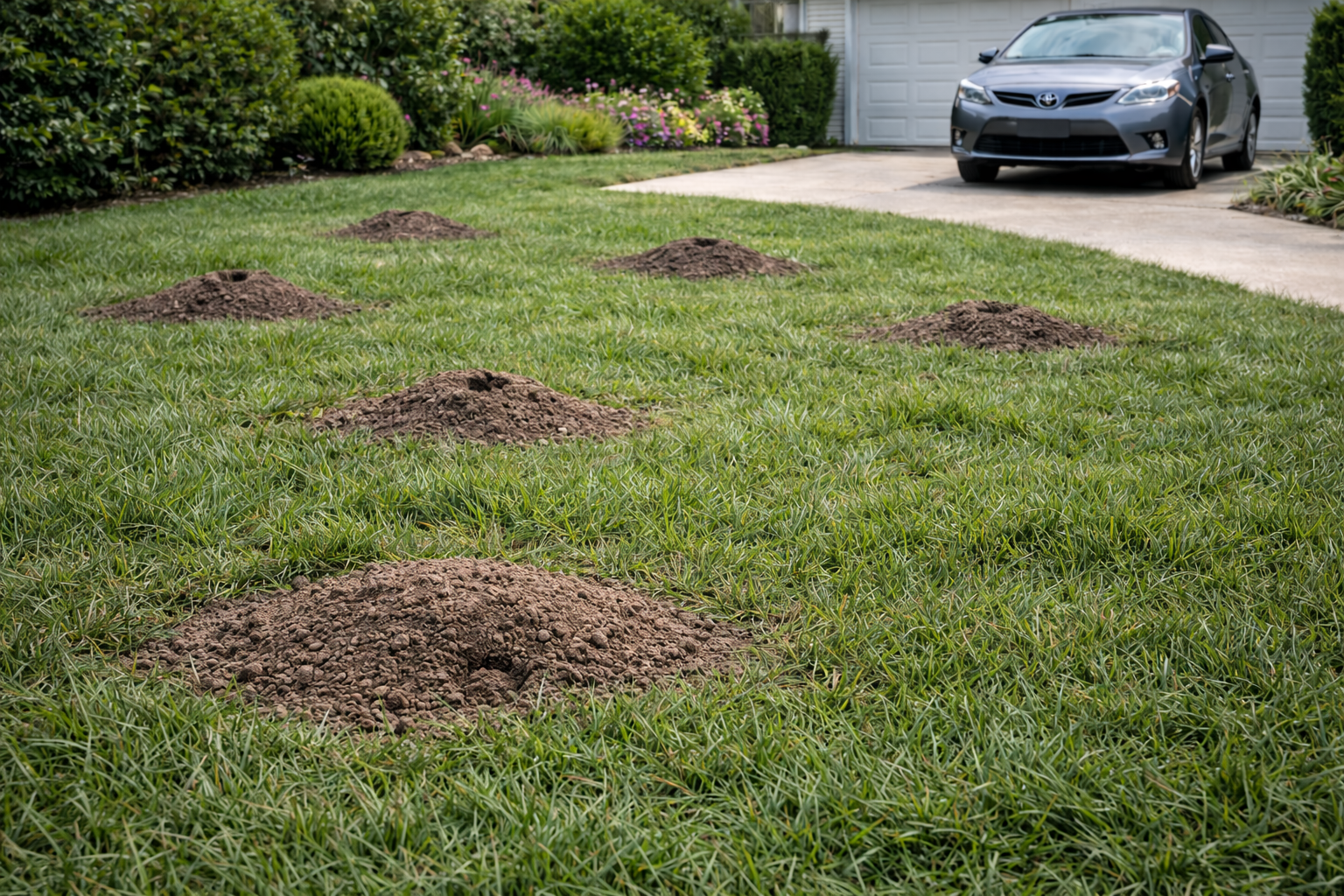
Gopher Activity in Montclair, CA

Montclair, located in San Bernardino County in the Inland Empire region of Southern California, experiences consistent gopher activity throughout residential and commercial properties. The combination of favorable soil conditions, extensive irrigation systems, and proximity to undeveloped foothill areas makes this community particularly susceptible to gopher populations. Property owners in neighborhoods ranging from the foothills near Ontario to the valley floor consistently report gopher-related landscape damage.

Why Montclair Has Significant Gopher Activity

Montclair's geography and environmental conditions create an ideal habitat for gophers. The area's soil composition consists primarily of sandy loam and clay loam soils, which are relatively easy for pocket gophers to excavate and tunnel through. Unlike rocky or compacted clay-heavy regions, Montclair's predominantly alluvial soils derived from the San Gabriel Mountains allow gophers to construct extensive burrow systems with minimal effort. The soil drainage characteristics in many yards—particularly in developments built on pre-existing agricultural land—remain conducive to pocket gopher colonization.

Irrigation represents another critical factor in Montclair's gopher problem. Properties throughout the community rely on consistent watering to maintain landscaping in the region's semi-arid climate. Residential landscapes feature abundant turf grass, ornamental shrubs, and vegetable gardens that require regular irrigation. This consistent moisture availability attracts gophers seeking both hydration and the tender plant roots that accompany irrigated systems. The established irrigation networks in subdivisions, particularly those developed during the mid-to-late 20th century, have become permanent attractants for gopher populations.

Climate patterns also influence gopher activity. Montclair experiences mild winters with average temperatures rarely dropping below freezing, allowing gophers to remain active year-round rather than entering extended dormancy. The average annual rainfall of approximately 12-14 inches, concentrated in winter months, creates spring conditions when vegetation growth peaks and gopher breeding activity intensifies. Proximity to the San Gabriel Mountains foothills means that wild gopher populations in native chaparral and grassland habitats exist within relatively close proximity to residential zones, facilitating population movement into developed areas.

Common Gopher Species in Montclair

The Botta's pocket gopher (Thomomys bottae) represents the primary gopher species affecting Montclair properties. This species derives its common name from its fur-lined cheek pouches, which the animal uses to transport food and nesting materials. Adult Botta's pocket gophers typically measure 5-7 inches in body length, with small, rounded ears and nearly hairless tails proportionally short compared to their overall body size. Their front feet possess noticeably enlarged claws used for digging, while their incisors remain continuously visible even when the mouth is closed.

Botta's pocket gophers display coloration ranging from yellowish-brown to dark brown, depending on local soil conditions. In Montclair, where soils contain significant clay and mineral content, gophers typically exhibit darker pelage. The species is solitary by nature, with each individual maintaining its own territory and burrow system. This territorial behavior means that multiple gophers indicate multiple established populations rather than transient visitors, complicating management efforts on affected properties.

Within Montclair's landscape context, Botta's pocket gophers thrive equally well in residential gardens, ornamental landscapes, golf courses, and institutional grounds. They adapt readily to both native and non-native plant communities, though they show strong preference for areas featuring succulent root systems and regular moisture availability. Their burrowing activity occurs at varying soil depths, from shallow feeding tunnels near the surface to deeper main burrows extending 18-24 inches below grade where nesting chambers are located.

When Gopher Activity Peaks in Montclair

Gopher activity in Montclair exhibits distinct seasonal patterns driven by breeding cycles and environmental conditions. The primary breeding season extends from January through March, corresponding with Montclair's winter rainy period. During these months, juvenile gophers disperse from maternal burrow systems, seeking new territory and establishing independent populations. This seasonal expansion often results in increased visible mounding activity and evidence of new burrow construction across affected properties.

Spring represents the peak period for observable gopher damage in Montclair yards. As winter moisture promotes vigorous plant growth beginning in February and March, gopher feeding activity intensifies to capitalize on abundant food resources. The combination of breeding dispersal and optimal foraging conditions creates maximum gopher pressure during spring months. Homeowners frequently report discovering new mounds and damaged plants during March, April, and May.

Summer activity, while less dramatic than spring, continues at moderate levels throughout June, July, and August. Montclair's summer irrigation practices actually sustain gopher populations through the dry season by maintaining moisture and food availability. Fall months (September-November) show reduced activity as temperatures moderate and gophers consolidate populations before winter. However, the cessation of peak activity does not eliminate gophers; populations persist year-round beneath the surface, remaining capable of causing damage whenever conditions permit surface activity or feeding.

Signs of Gopher Damage in Montclair Yards

The most obvious indicator of gopher presence is the characteristic mound—a crescent-shaped or horseshoe-shaped accumulation of excavated soil appearing in lawns and garden beds. Gophers create these mounds as they push dirt from their tunnels to the surface, typically creating one primary mound every 4-6 feet along their burrow lines. In Montclair yards, mounds frequently appear suddenly overnight, with individual mounds containing 5-10 pounds of soil. Unlike mole mounds, which appear as rounded hills, gopher mounds display asymmetrical shapes with the soil pushed to one side.

Subsurface tunneling causes secondary damage often more destructive than visible mounding. Gophers create horizontal feeding tunnels just beneath the soil surface, frequently destroying irrigation lines and drip systems common in Montclair landscapes. Homeowners observe unexplained dry patches in otherwise irrigated turf grass, indicating compromised water delivery. These shallow feeding tunnels also create an unstable soil surface that collapses under foot traffic or equipment weight, creating hazardous conditions on lawns and pathways.

Plant damage occurs through both direct consumption and root disruption. Gophers consume ornamental plants, vegetables, and turf grass roots from below, causing sudden wilting and plant death without obvious surface explanation. Entire rows of vegetables in Montclair community gardens have been eliminated by gopher root-feeding activity. Additionally, gophers sever roots while tunneling, which causes plant stress and decline even when root consumption is minimal. Preferred food plants include alfalfa, clover, roots of fruit trees, and succulent bulbs—all common in Montclair landscaping.

Landscape Considerations for Montclair Properties

Montclair's landscape aesthetic varies significantly by neighborhood and elevation, with implications for gopher vulnerability. Properties in foothills neighborhoods feature native California vegetation including sage scrub, chamise, and non-irrigated native plantings that generally experience less gopher pressure than irrigated landscapes. Conversely, valley-floor subdivisions developed between the 1970s and 1990s feature extensive turf grass, ornamental shrubs requiring regular irrigation, and mixed-use landscaping combining edibles with ornamentals. These irrigated suburban landscapes provide optimal gopher habitat, resulting in consistent infestations.

Certain plant species prove particularly vulnerable to gopher damage in Montclair yards. Citrus trees, stone fruit trees, and young deciduous trees frequently experience gopher girding and root damage. Tender perennials including dahlias, roses, and hybrid tea roses suffer significant predation. Vegetable gardens featuring root crops—carrots, beets, turnips—attract intense gopher feeding activity. Conversely, established native shrubs, mature tree plantings, and hardscape-dominant landscapes experience minimal gopher impact.

Hardscape features—concrete, pavers, pathways, and decking—create barriers that limit gopher access to certain areas but simultaneously concentrate burrow activity in remaining accessible spaces. Properties maximizing hardscape coverage relative to planted areas report reduced overall gopher activity, though not elimination. Strategic placement of raised beds, containerized plantings, and above-ground gardens offers effective alternatives for Montclair homeowners seeking to pursue gardening despite gopher populations. The combination of selective hardscaping with plant selection focused on deeper-rooted, gopher-resistant species represents the most sustainable landscape approach for properties in active gopher zones.