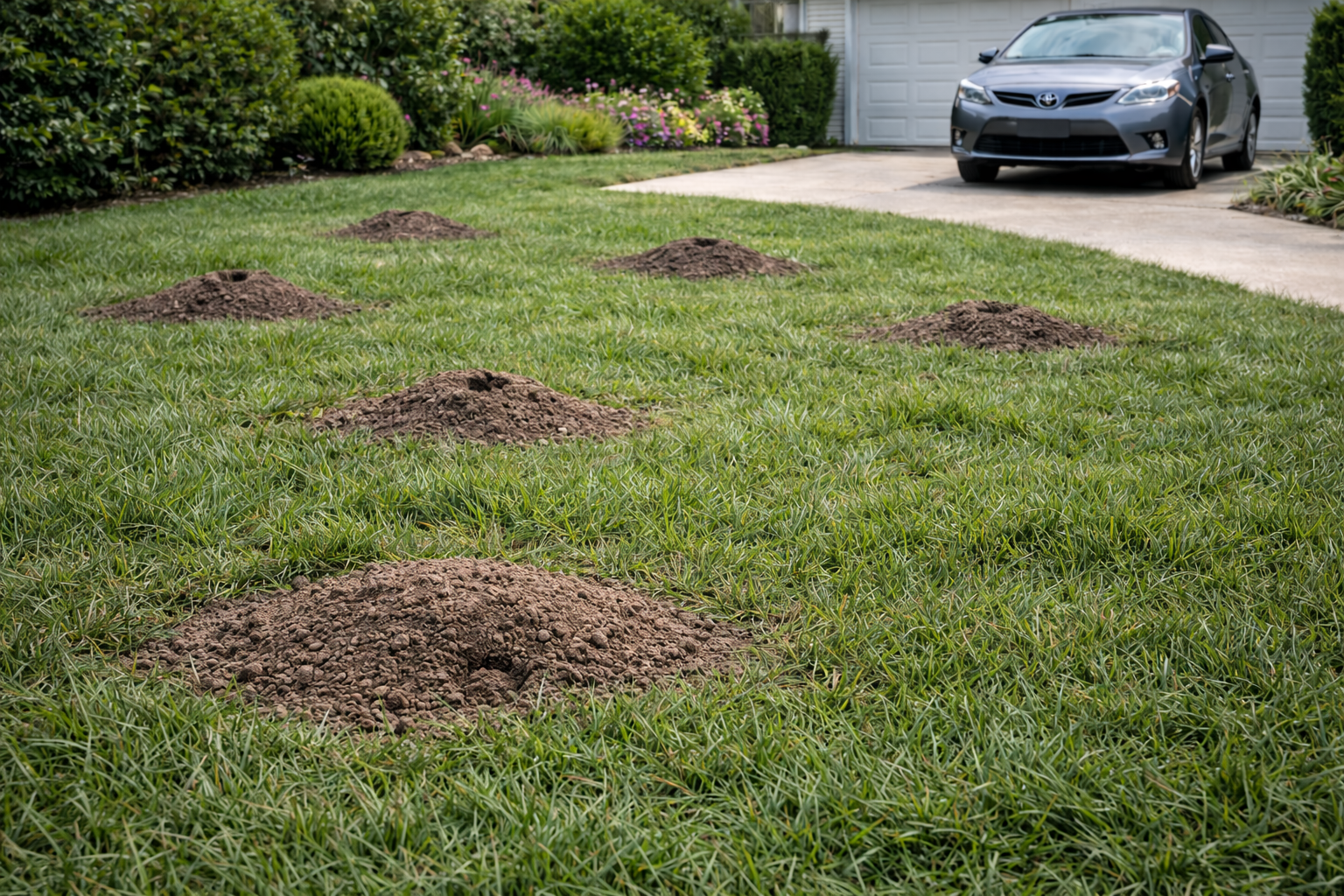
Gopher Activity in Monterey Park, CA
Monterey Park, located in Los Angeles County in the San Gabriel Valley, experiences notable gopher activity throughout the year. The combination of the region's soil composition, irrigation practices, and moderate climate creates favorable conditions for pocket gopher populations. Property owners in Monterey Park frequently encounter evidence of gopher tunneling in residential yards, parks, and landscaped areas.
Why Monterey Park Has Significant Gopher Activity
The San Gabriel Valley's geological and environmental characteristics create an ideal habitat for gopher populations. Monterey Park sits on alluvial soils deposited by historical flooding from the San Gabriel River, which are typically loamy and rich in organic matter—exactly the type of substrate that pocket gophers prefer for burrowing. These soils are neither too compacted nor too sandy, allowing gophers to tunnel efficiently while finding abundant plant roots and soil invertebrates to consume.
Water availability substantially influences gopher activity in Monterey Park. The area receives moderate rainfall, with winters bringing precipitation that softens the soil and promotes vegetation growth. Additionally, the extensive irrigation systems that service Monterey Park's residential neighborhoods, parks, and commercial landscaping maintain soil moisture year-round. This consistent moisture supports robust plant growth and makes the soil easier to excavate, which gophers actively exploit.
The geographic setting contributes significantly to gopher populations. Monterey Park's proximity to the San Gabriel foothills and regional green spaces means gophers move between wild populations and residential areas. Though Monterey Park itself is densely developed and predominantly urban, gophers establish colonies in yards, parks, golf courses, and any landscaped area offering suitable food sources and soil conditions. The gradual transition from more rural areas to the east ensures a steady reservoir of gopher populations that expand into available habitat.
Common Gopher Species in Monterey Park
The Botta's pocket gopher (Thomomys bottae) is the primary gopher species found throughout Monterey Park and the San Gabriel Valley. These rodents are medium-sized burrowing mammals, typically weighing between 4 and 8 ounces and measuring 5 to 7 inches in body length, with a short tail extending roughly 1 to 2 inches. Botta's pocket gophers display fur coloration ranging from light brown to dark gray, with fur patterns sometimes matching local soil tones—an adaptation that aids camouflage in their native habitats.
The species derives its common name from the external fur-lined pouches located on either side of its face, which gophers use to transport food and nesting materials through tunnels. These cheek pouches are distinctive anatomical features that distinguish pocket gophers from other burrowing rodents. Botta's pocket gophers possess powerful forelimbs with enlarged claws, specialized for excavating extensive tunnel systems. Their eyes are small and somewhat reduced in functionality, reflecting their primarily subterranean lifestyle where vision provides limited advantage.
In Monterey Park, Botta's pocket gophers occupy a wide variety of landscaped settings. They thrive in residential yards featuring lawns, gardens, and ornamental plantings. Parks, schoolyards, and other public green spaces support gopher colonies. The species demonstrates remarkable adaptability, establishing colonies in areas ranging from pure clay soils to sandier compositions, though they show strong preference for the loamy alluvial soils characteristic of the San Gabriel Valley. Gophers in Monterey Park remain active throughout the year, though activity levels fluctuate seasonally based on breeding cycles and environmental conditions.
When Gopher Activity Peaks in Monterey Park
Gopher activity in Monterey Park exhibits distinct seasonal patterns driven by breeding cycles and environmental conditions. The primary breeding season occurs from January through March, during which gopher populations become exceptionally active. Male gophers expand their tunnel systems while searching for mates, and pregnant females undertake significant excavation to prepare nesting chambers. This winter and early spring period typically generates the most visible gopher activity, with numerous fresh mounds appearing in Monterey Park yards and landscaped areas.
Spring rainfall intensifies gopher activity through mechanisms beyond breeding behavior. The San Gabriel Valley typically receives precipitation from December through April, with January and February often bringing substantial moisture. This rainfall softens the soil profile, reducing the energy required for tunneling. Simultaneously, spring growth initiation provides abundant fresh plant roots and tender shoots—prime food sources that support active foraging. As soil moisture increases, root availability expands, motivating gophers to expand existing tunnel networks and establish new feeding areas.
Activity levels generally decline during the hotter, drier months of summer and early autumn. As temperatures rise and irrigation becomes the primary moisture source, gophers may reduce surface activity and consolidate their tunnel networks. However, the consistent irrigation schedules maintained by many Monterey Park property owners mean that soil moisture remains adequate year-round compared to non-irrigated native landscapes. This perpetual availability of moisture and supplemental water prevents the complete dormancy that gophers might experience in purely rain-dependent environments. Late autumn and winter precipitation triggers renewed activity cycles, establishing a pattern where Monterey Park residents typically observe peak gopher problems during late winter and spring months.
Signs of Gopher Damage in Monterey Park Yards
The most visible indicator of gopher presence in Monterey Park consists of characteristic mounds of excavated soil. Fresh gopher mounds appear as volcano-shaped or horseshoe-shaped accumulations of soil, typically 4 to 12 inches in diameter, scattered across lawns and garden areas. These mounds result from gophers pushing soil upward while excavating tunnels beneath the surface. The mounds' distinctive appearance distinguishes them from ant hills, which are smaller and differently structured. In Monterey Park's diverse yard environments—ranging from small urban lots to larger suburban properties—fresh mounds become increasingly numerous during active seasons.
Underground tunnel networks inflict substantial damage to irrigation infrastructure common throughout Monterey Park neighborhoods. Gophers burrow beneath drip irrigation lines, soaker hoses, and buried PVC pipes, often severing water delivery systems in the process. Property owners frequently discover that portions of their landscape irrigation fail despite no apparent surface damage, eventually discovering gopher tunnel damage when investigating water flow problems. The extensive irrigation networks required to maintain landscaping in Monterey Park's semi-arid climate make properties particularly vulnerable to this type of infrastructure damage.
Plant damage appears as sudden wilting, girdling of stems, and disappearance of roots. Gophers consume plant roots directly, using them as food sources during tunnel excavation. Young trees and shrubs suffer particularly severe damage, sometimes dying when gophers sever root systems below ground. Garden beds experience destruction as gophers consume bulbs, tubers, and young vegetable plants. Landscaping featuring roses, citrus, fruit trees, and vegetables—all common in Monterey Park yards—faces notable vulnerability. Observant property owners may notice plants loosening in soil as gophers tunnel beneath the root zone, destabilizing root anchoring without immediately killing plants.
Landscape Considerations for Monterey Park Properties
Monterey Park's diverse residential character encompasses properties with varying landscape styles and maintenance philosophies. Many established neighborhoods feature traditional ornamental plantings with mixed shrubs, ground covers, and lawns. Newer developments increasingly incorporate drought-tolerant Mediterranean and native California plants suited to the region's semi-arid climate. These landscape preferences directly influence gopher vulnerability. Properties with extensive lawns and irrigated flower beds attract gophers through abundant food sources and favorable digging conditions. Conversely, properties dominated by hardscape elements—pavers, gravel, concrete—present fewer opportunities for gopher establishment, though determined gophers may still tunnel beneath hardscape to access adjacent vegetated areas.
Specific plant species common in Monterey Park landscaping exhibit varying degrees of gopher susceptibility. Ornamental trees including stone fruits (plum, apricot), citrus varieties, and flowering ornamentals face significant root damage when gophers establish tunnel systems nearby. Shrubs such as roses, boxwood, and photinia experience both root damage and stem girdling. Vegetable gardens attract gophers particularly strongly, as gophers consume both root crops and young plant roots indiscriminately. Interestingly, certain plant species prove less attractive to gophers. Gophers generally avoid plants with toxins or strong chemical defenses, though universal gopher-resistant plants do not exist.
The distinction between extensive softscape (lawn and planting beds) and hardscape (patios, walkways, driveways) influences long-term gopher management considerations. Properties with substantial lawn areas provide maximum habitat for gopher colonization. Transitioning portions of Monterey Park yards from lawn to xeriscaping, rock gardens, or paved surfaces may reduce overall gopher habitat attractiveness, though established gopher colonies may persist even in minimally vegetated yards if connected to surrounding properties supporting gopher populations. The interconnected nature of Monterey Park's residential areas means that individual yard management decisions, while valuable, work most effectively as part of neighborhood-wide pest management approaches.
For professional gopher control in Southern California, visit Rodent Guys — serving Los Angeles, Orange, San Bernardino, and Riverside counties.