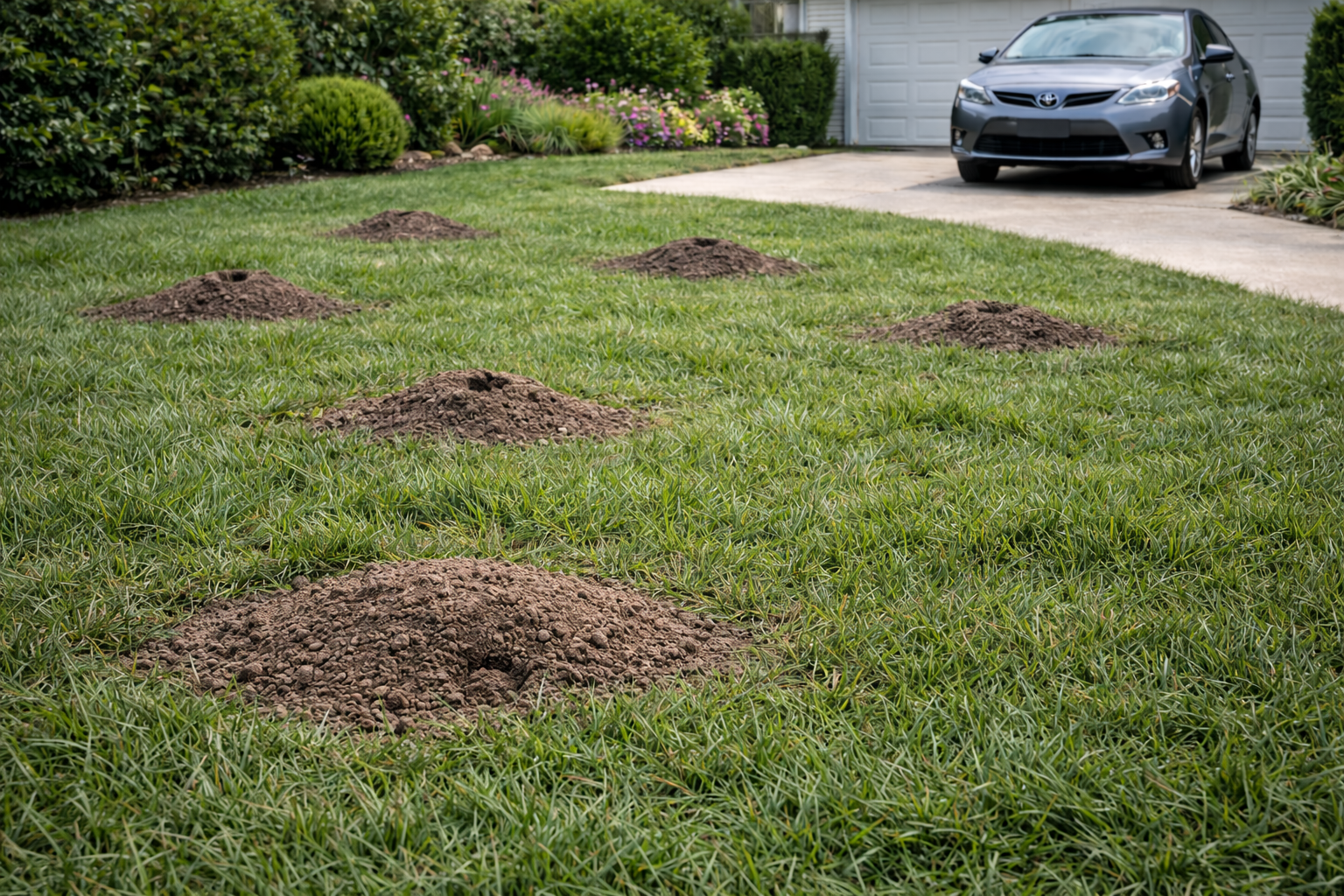
Gopher Activity in Murrieta, CA

Gopher activity represents a notable concern for property owners across Murrieta, California, particularly those with established landscaping and irrigation systems. The city's combination of suitable soil conditions, year-round moisture from residential irrigation, and proximity to undeveloped chaparral areas creates an environment where pocket gophers thrive. Understanding the scope and nature of this activity helps residents recognize problems early and make informed decisions about property management.

Why Murrieta Has Significant Gopher Activity

Murrieta's landscape and environmental conditions make it naturally attractive to gopher populations. The region sits within southwestern Riverside County, characterized by clay-loam and sandy-loam soils that are ideal for tunnel excavation. These soil types, common throughout the area's residential neighborhoods and commercial developments, provide minimal resistance to burrowing and allow gophers to create extensive tunnel networks with relative ease.

The city's semi-arid climate, with average annual rainfall around 10-12 inches, contrasts sharply with the artificial moisture created by residential and commercial irrigation systems. This irrigation paradoxically supports gopher activity; the moist soil near planted areas and irrigated lawns becomes far easier to tunnel through than the naturally dry ground found in surrounding chaparral. Properties with drip irrigation, in-ground sprinkler systems, and regularly watered landscaping essentially create ideal foraging zones.

Murrieta's development pattern also contributes to gopher presence. The city has expanded significantly from its historic downtown core into areas that were previously undeveloped scrubland dominated by sage, buckwheat, and California juniper. Wild gopher populations inhabit these remaining natural areas throughout western Riverside County, and as residential development continues, gophers encounter new food sources and suitable habitat within neighborhood gardens and yards. Properties bordering or near open space, canyons, and recreational areas experience particularly frequent gopher colonization.

Common Gopher Species in Murrieta

The primary gopher species in Murrieta is the Botta's pocket gopher, scientifically known as Thomomys bottae. This rodent is the most abundant burrowing mammal throughout Southern California and dominates the local gopher population. Understanding the characteristics of this species helps residents identify evidence of their presence and understand their behavior patterns.

Botta's pocket gophers are relatively small rodents, typically weighing between 2 and 4 ounces and measuring 6 to 8 inches in total body length. Their fur coloration ranges from brown to grayish-brown, providing natural camouflage in soil and dirt. One of their most distinctive features is their external cheek pouches, which give the species its common name "pocket gopher." These pouches extend from the cheeks to the shoulders and serve as biological storage bags, allowing gophers to transport food, nesting material, and soil back to their burrow systems.

Botta's pocket gophers possess several anatomical adaptations suited to subterranean life. Their front teeth are large and continuously growing, providing efficient tools for gnawing through roots and soil. Their eyes are relatively small and less functional than those of above-ground rodents, as vision is less critical in underground environments. Their bodies are compact and muscular, with powerful front legs and claws optimized for digging. Throughout Murrieta's neighborhoods—from areas near Copper Canyon Road to the communities around Old Town Murrieta—Botta's pocket gophers inhabit gardens, landscaped yards, and undeveloped parcels. They prefer areas with good soil structure and adequate moisture, making irrigated properties particularly susceptible to colonization.

When Gopher Activity Peaks in Murrieta

Gopher activity in Murrieta follows distinct seasonal patterns tied to reproductive cycles and environmental conditions. The spring months, particularly February through April, represent the peak period of visible surface activity. During this window, gophers emerge from hibernation or periods of reduced activity and begin breeding. Male gophers become more active as they search for mates, and females prepare to give birth and raise young. This reproductive urgency translates into increased tunneling, more frequent mound construction, and greater likelihood of property damage.

The relationship between Murrieta's winter rainfall and gopher activity cannot be overlooked. The region typically receives most of its annual precipitation between November and March, softening the soil and making it substantially easier for gophers to excavate and expand their burrow systems. Following these winter rains, spring growth of vegetation provides abundant food resources, further supporting increased gopher populations.

Summer and early fall bring secondary activity peaks in Murrieta. Although temperatures regularly exceed 90 degrees Fahrenheit during June through September, residents maintaining active irrigation systems create persistent moist conditions in the subsurface. Gophers respond by continuing tunnel construction and feeding activity throughout these months, even as above-ground conditions become desiccated. Fall months, particularly September through November, see another increase in activity as gophers prepare for winter by stockpiling food and reinforcing their burrow systems. Winter itself shows reduced but continued activity; gophers do not hibernate in the traditional sense and remain active underground, particularly on warmer days or following rare rainfall events.

Signs of Gopher Damage in Murrieta Yards

Residents can identify active gopher populations through several distinctive signs visible on their properties. The most obvious indicator is the presence of fresh mounds—conical piles of excavated soil typically 4 to 6 inches tall and 8 to 12 inches in diameter. These mounds appear in irregular patterns across lawns and landscaped areas, often overnight. In Murrieta's clay-rich soils, these mounds are particularly noticeable due to the soil's reddish-brown color. The presence of fresh mounds indicates active tunneling within the past few days.

Gopher activity extends beyond surface mounding. Underground tunnels create subsurface voids that become apparent when lawns develop soft, spongy patches or small surface collapses. Residents walking across affected areas may notice ground giving way slightly underfoot. In properties with in-ground irrigation systems—extremely common in Murrieta's residential developments—gophers frequently damage poly-vinyl chloride (PVC) pipe and drip irrigation lines as they tunnel. Water escaping from damaged lines creates wet patches in landscaped areas and reduces irrigation efficiency.

Plant damage represents another significant indicator of gopher presence. Gophers feed on roots of numerous ornamental plants popular in Murrieta landscapes, including ornamental grasses, shrubs, perennials, and young trees. Affected plants may wilt, yellow, or die despite adequate watering. Some plants simply disappear as gophers pull them down into their tunnels for food. In vegetable gardens, gophers consume root vegetables and damage above-ground plants by severing their root systems. Peculiarly, gophers may also consume the stems and leaves of surface plants while remaining mostly underground.

Landscape Considerations for Murrieta Properties

Murrieta's distinctive landscaping style reflects its semi-arid climate and Riverside County location. The region's popular residential aesthetic emphasizes low-water ornamentals, native and adapted plantings, and hardscape features including decomposed granite, rock, and pavers. Understanding how these landscaping choices interact with gopher activity helps property owners make informed decisions about yard development and maintenance.

Native and drought-tolerant plants common to Murrieta landscapes exhibit varying susceptibility to gopher damage. Succulent plants like agave and certain varieties of sedums are generally less attractive to gophers due to their tough, fibrous structure and low nutritional content. Conversely, tender perennials, young shrubs with succulent roots, and ornamental grasses with fibrous root systems attract significant gopher feeding activity. Popular Murrieta plantings including Texas privet, desert willow, lantana, and desert marigold face potential root damage in properties with active gopher populations.

Properties with extensive hardscape features—including the decorative rock and mulch areas prevalent throughout Murrieta's newer developments—sometimes provide gophers with additional protection for their surface tunneling. Gophers tunnel directly beneath rocks and mulch, making their activity less visible while potentially protecting them from predators. Conversely, large expanses of pavers, concrete, and solid hardscape do limit gopher colonization by preventing tunnel construction.

The relationship between irrigation practices and gopher activity deserves particular attention in Murrieta. Properties with micro-irrigation and drip systems popular in the region sustain the moist soil conditions gophers prefer. Adjusting irrigation schedules to reduce soil moisture, if landscape choices and climate permit, may reduce gopher attractiveness to the property. Selecting hardy, established plants over tender perennials, using raised garden beds with barriers, and maintaining clear sight lines across yards can all reduce the practical and aesthetic impact of gopher activity.