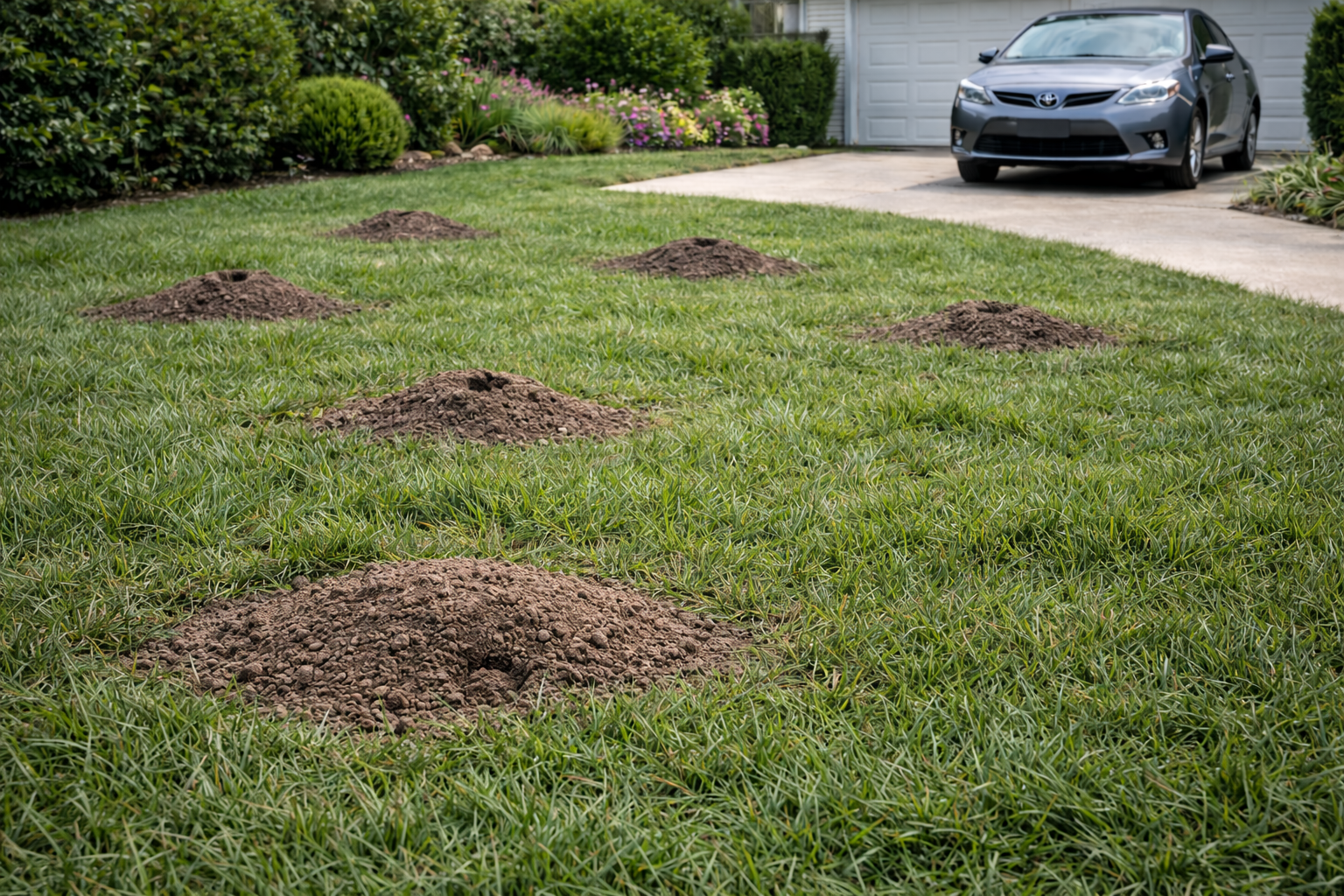
Gopher Activity in Orange, CA
Orange, California, located in north-central Orange County between Santa Ana and Anaheim, experiences persistent gopher activity that affects both residential and commercial properties throughout the city. The combination of favorable soil conditions, consistent irrigation practices, and proximity to natural habitats creates an environment where gophers thrive year-round. Understanding gopher behavior and activity patterns helps property owners recognize problems early and make informed decisions about landscape management.
Why Orange Has Significant Gopher Activity
Several interconnected factors make Orange particularly conducive to gopher populations. The city sits within the coastal plain region of Orange County, where soils range from sandy loams to clay loams—ideal textures for burrowing and tunnel construction. These soil types, prevalent throughout Orange's neighborhoods from the districts near Chapman Avenue to those bordering Santa Ana, provide minimal resistance to digging while maintaining structural integrity for tunnel systems that can span dozens of feet.
Orange's irrigation infrastructure substantially contributes to gopher activity. The city's warm Mediterranean climate and consistent water demands mean that residential and commercial landscaping requires regular irrigation. This moisture keeps soil conditions soft and workable, making tunnel excavation easier while simultaneously attracting gophers seeking water-rich plant roots and tubers. Properties with drip irrigation systems, common in Orange's newer developments and maintained gardens, inadvertently create ideal feeding corridors for foraging gophers.
Proximity to undeveloped areas amplifies the problem. Orange's location between the Santa Ana River riparian zone to the west and remaining chaparral and grassland habitats to the east creates natural wildlife corridors. Gophers moving through these corridors regularly colonize adjacent residential properties, particularly those with established landscaping and mature trees. The city's mix of developed residential blocks and remnant natural areas means that gopher populations can continuously migrate into gardens and yards.
Common Gopher Species in Orange
The Botta's pocket gopher (Thomomys bottae) represents the primary gopher species affecting Orange properties. This medium-sized rodent measures approximately 5 to 7 inches in body length, with a stocky, robust build adapted for underground life. Botta's pocket gophers display brown to grayish-brown fur, with lighter coloration on their undersides and characteristically small eyes positioned high on their heads—an adaptation reflecting their subterranean existence where vision plays minimal importance.
Identifying features include large, visible front teeth and prominent cheek pouches that extend from mouth to shoulder, giving the gopher its "pocket" designation. These pouches serve as biological transport containers, allowing individual gophers to move substantial quantities of soil, seeds, and plant material while burrowing. The species' powerful forelimbs and large claws enable efficient soil excavation, while their relatively hairless tails assist in navigating tunnel systems in darkness.
Botta's pocket gophers in Orange establish complex burrow networks consisting of main tunnels, lateral branches, and multiple surface mounds. The extensive tunnel systems can extend 100 to 500 feet across a single property, with multiple access points. Unlike some burrowing rodents, pocket gophers are highly territorial solitary animals, meaning each tunnel system typically supports one individual gopher. This territoriality means that multiple mounds on a property often indicate multiple resident gophers rather than exceptional activity from a single animal.
When Gopher Activity Peaks in Orange
Gopher activity in Orange follows seasonal patterns tied to breeding cycles and environmental conditions. January through March represents the primary breeding season when male gophers expand their tunnel systems searching for mates, resulting in increased mound appearance and visible surface activity. During this period, property owners frequently notice new mounds seemingly overnight, though gophers are actually intensifying tunneling efforts related to reproductive behavior rather than suddenly colonizing new territory.
Spring months following winter and spring rains see elevated activity as moisture softens soil and triggers abundant plant growth. The combination of easier digging conditions and increased food availability—fresh green plant shoots and tender roots—encourages more active foraging behavior. Orange's Mediterranean climate means that April through June typically provides the most consistent rainfall, creating optimal conditions for gopher activity expansion into previously unaffected yard areas.
Summer presents moderate activity levels as soil hardens and moisture decreases, though established gopher populations remain active along irrigation lines and near water sources. Fall activity increases again as gophers prepare for winter and expand food storage behaviors. While winter represents the lowest activity period in most regions, Orange's mild winters mean gopher activity continues throughout the year at reduced but consistent levels. Property owners should expect mound appearance and tunneling activity during any month, with January through June representing the most intensive periods.
Signs of Gopher Damage in Orange Yards
Identifying gopher damage requires understanding the distinctive patterns these animals create. Fresh gopher mounds appear as crescent or fan-shaped mounds of loose soil scattered across lawns and garden areas. Unlike mole mounds, which form symmetrical volcano-shaped structures, gopher mounds remain irregular and often slightly flattened, with soil pushed to one side of the tunnel opening. Orange homeowners should distinguish between active fresh mounds—containing soft, recently excavated soil—and inactive older mounds that have hardened and settled.
Direct plant damage reflects gopher feeding behavior. Gophers pull entire plants underground from root level, creating sudden plant death with visible removal from the soil—a phenomenon distinctly different from above-ground herbivory. Valued landscaping plants in Orange yards, particularly fruit trees, flowering shrubs, and vegetable gardens, attract gopher feeding activity. Gophers damage root systems of established trees, sometimes killing plants that appeared healthy days earlier after gophers severed critical root structures.
Irrigation system damage represents a significant though often overlooked impact. Gophers tunneling through properties frequently intersect buried drip lines, soaker hoses, and underground irrigation pipes. These intersections create water leaks that waste significant water quantities and reduce irrigation efficiency. Over time, chronic gopher burrowing can damage extensive sections of irrigation infrastructure, particularly in properties using underground lateral lines common throughout Orange's residential areas.
Landscape Considerations for Orange Properties
Orange's landscape character reflects Southern California's horticultural traditions mixed with water-conservation awareness. Properties throughout the city display diverse landscaping ranging from traditional California native plantings to Mediterranean-inspired gardens with drought-tolerant species. This diversity creates varying vulnerabilities to gopher activity. Native plants like California buckwheat, manzanita, and toyon generally tolerate gopher presence better than cultivated ornamentals, though gophers will feed on virtually any plant material when preferred foods prove unavailable.
Fruit trees constitute particularly attractive gopher targets in Orange's many residential yards. Citrus, stone fruits, and other productive trees establish extensive root systems that provide concentrated nutrition drawing gopher foraging effort. Properties with established pecan, walnut, or almond trees face similar elevated gopher pressure. Vegetable gardens present seasonal vulnerabilities, particularly when underground crops like potatoes, turnips, and carrots provide easily accessible food sources.
Hardscape features—including patios, walkways, and retaining walls—offer some protection from gopher activity, though gophers readily burrow adjacent to hardscape elements. Properties relying heavily on turf grass and ornamental plantings without hardscape integration face more uniform gopher pressure across entire yard areas. Irrigation design significantly influences gopher impact; properties with concentrated irrigation zones experience localized gopher activity, while extensive sprinkler systems distributing water throughout properties attract diffuse gopher presence across multiple areas.
For professional gopher control in Southern California, visit Rodent Guys — serving Los Angeles, Orange, San Bernardino, and Riverside counties.