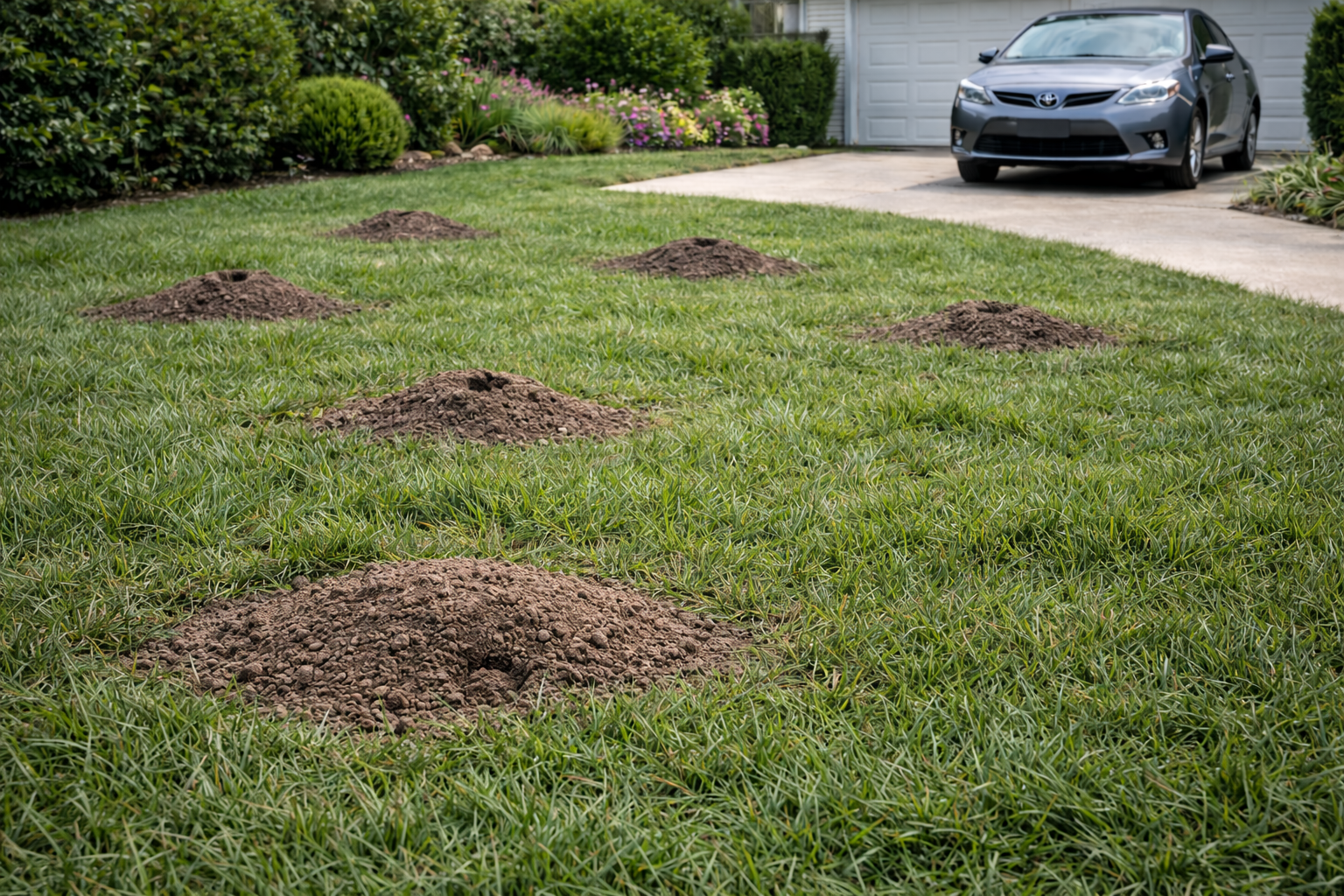
Gopher Activity in Paramount, CA
Paramount, located in southeastern Los Angeles County, experiences consistent gopher activity throughout the year due to its favorable environmental conditions and extensive residential landscaping. The city's flat topography, proximity to agricultural lands, and well-irrigated yards create ideal habitats for pocket gophers. Understanding gopher presence in this community helps residents recognize activity patterns and identify damage before it becomes extensive.
Why Paramount Has Significant Gopher Activity
Paramount's geographic location and soil composition make it particularly susceptible to gopher colonization. The city sits on the Los Angeles coastal plain, characterized by alluvial soils deposited by the Rio Hondo and San Gabriel River systems. These soils tend to be silty loams and clay loams—soft enough for easy tunnel excavation yet stable enough to maintain burrow structure. The fine-textured nature of Paramount's native soils creates optimal burrowing conditions compared to areas with rockier or heavily compacted substrates.
Irrigation infrastructure throughout Paramount's residential neighborhoods provides consistent moisture that gophers require. Established landscaping, including the prevalent ornamental gardens, fruit trees, and foundation plantings common in mid-century Paramount homes, supplies abundant vegetation for gopher foraging. The city's semi-arid climate (averaging 14-15 inches of annual rainfall) means that irrigated yards represent islands of moisture and food availability, making properties attractive to gophers seeking resources.
Proximity to larger natural areas and agricultural zones surrounding Paramount facilitates gopher movement into residential areas. The nearby Dominguez Channel ecosystem and remnant agricultural parcels in adjacent unincorporated areas serve as source populations. When food becomes scarce in these outlying areas, or as populations naturally expand, gophers move into Paramount's suburban landscape where resources are abundant and competition may be lower.
Common Gopher Species in Paramount
The Botta's pocket gopher (Thomomys bottae) represents the primary gopher species affecting Paramount properties. This medium-sized rodent measures 5.5 to 7.5 inches in head-and-body length, with a relatively short tail extending 1 to 2 inches. Botta's pocket gophers display variable coloration, ranging from light tan to dark brown, though Paramount populations typically exhibit medium-brown fur that blends with local soil conditions. The species derives its common name from the distinctive fur-lined cheek pouches used for transporting food and nesting materials through tunnel systems.
These gophers possess adaptations perfectly suited to the burrowing lifestyle. Their powerful forelimbs feature elongated claws, their eyes are small and positioned high on the skull, and their external ear openings are minimal—all features reducing injury risk during tunnel construction. Botta's pocket gophers have continuously growing incisors, a characteristic of rodents that requires constant gnawing activity to maintain manageable tooth length.
Within Paramount's urban context, Botta's pocket gophers establish burrow systems in yards, gardens, and landscaped areas where soil conditions permit easy excavation. A single gopher may maintain a territory covering 200 to 2,000 square feet, with tunnel systems extending several inches below the surface and occasionally reaching depths of 4 to 5 feet. The species is solitary, with individuals maintaining separate burrow systems except during brief breeding periods. This territorial nature means that multiple gophers indicate multiple territory holders rather than a single animal causing all observed damage.
When Gopher Activity Peaks in Paramount
Gopher activity in Paramount exhibits distinct seasonal patterns influenced by the region's climate and the species' reproductive cycle. Winter months (December through February) see increased surface activity as gophers respond to soil moisture from seasonal rainfall. Though Paramount's winters are mild, the period from January through March represents the primary breeding season for Botta's pocket gophers, causing males to expand their tunnel systems and become more active in search of mates. During this period, fresh mounds may appear frequently in affected yards.
Spring represents another significant activity period in Paramount. March through May brings both seasonal rainfall and warming temperatures that stimulate plant growth—the primary food resource for gophers. Young gophers dispersing from maternal burrows search for suitable territories, leading to increased tunnel construction and mound activity across neighborhoods. The combination of adequate soil moisture and abundant vegetation makes spring an optimal period for gopher population expansion.
Summer months in Paramount (June through August) see reduced surface activity despite continued subsurface tunneling. High temperatures and low rainfall in the region can stress gophers living in dry soils, though irrigation in residential yards partially mitigates drought stress. Gophers remain active underground, feeding on roots and rhizomes, but mound construction slows as surface conditions become harder and less favorable for excavation. Fall (September through November) shows variable activity depending on rainfall timing, with activity increasing if autumn rains arrive early.
Signs of Gopher Damage in Paramount Yards
Fresh mounds represent the most visible indication of gopher presence in Paramount properties. These mounds appear as cone-shaped or crescent-shaped piles of soil pushed up through the lawn surface, typically measuring 3 to 8 inches in diameter and 1 to 4 inches high. Unlike mole mounds, gopher mounds often display a plug of soil pushed from a roughly central location. A single active gopher may produce 10 to 20 mounds weekly during peak activity periods. Mounds appearing in landscaped beds or under shrubs indicate active tunnel systems in those specific areas.
Subsurface tunnel damage affects irrigation systems throughout Paramount yards. Gophers frequently burrow along water lines and drip irrigation tubing, either severing lines intentionally while constructing tunnels or causing damage incidentally. Homeowners may notice sudden dry areas in otherwise irrigated zones, indicating compromised water delivery. Raised or settling soil in lawn areas suggests tunnel networks running just below the surface, and repeated settling indicates ongoing gopher activity rather than old, abandoned burrows.
Plant damage provides clear evidence of gopher feeding activity. Gophers clip plants at soil level or below, causing sudden wilting of garden plants, shrubs, and young trees. Unlike above-ground herbivores, gophers often sever plants completely, leaving stumps just above or below the soil surface. Irregular patches of dead turf, particularly in irrigated lawns common throughout Paramount neighborhoods, suggest underground feeding on grass roots. Ornamental plants, vegetable gardens, and foundation shrubs represent common targets for gopher damage in residential settings.
Landscape Considerations for Paramount Properties
Paramount's residential aesthetic emphasizes landscaped yards with diverse vegetation, creating environments attractive to gophers. The city developed primarily during the 1950s through 1970s, with much of the housing stock featuring traditional suburban yards with lawn areas, foundation plantings of shrubs, and scattered trees. These landscapes typically include ornamental species and in many cases productive fruit trees or vegetable gardens—all preferred gopher food sources. Updating or maintaining landscaping in Paramount often means selecting species with varying gopher-susceptibility profiles.
Certain plants commonly found in Paramount yards attract significant gopher feeding activity. Fruit trees, including avocado, citrus, stone fruits, and walnut, face considerable root-feeding pressure from gophers. Root vegetables such as carrots, turnips, and potatoes in vegetable gardens represent highly preferred foods. Bulbs planted in ornamental beds, particularly tulips and young dahlia tubers, suffer heavy predation. Tender young trees and shrubs, common in newly landscaped properties throughout Paramount, face bark-stripping and root damage from gophers.
Hardscape features and plant selection strategies can reduce gopher damage in Paramount properties. Mature, well-established trees and shrubs with extensive, deep root systems tolerate gopher feeding better than newly planted specimens. Some plants demonstrate relative tolerance to gopher activity, though no species proves completely gopher-proof. Installing physical barriers such as gopher baskets or screening around individual plants provides targeted protection for valuable landscaping. Properties relying primarily on hardscape elements—patios, walkways, and minimal planting—experience significantly reduced gopher damage compared to heavily planted yards typical of many Paramount neighborhoods.
For professional gopher control in Southern California, visit Rodent Guys — serving Los Angeles, Orange, San Bernardino, and Riverside counties.