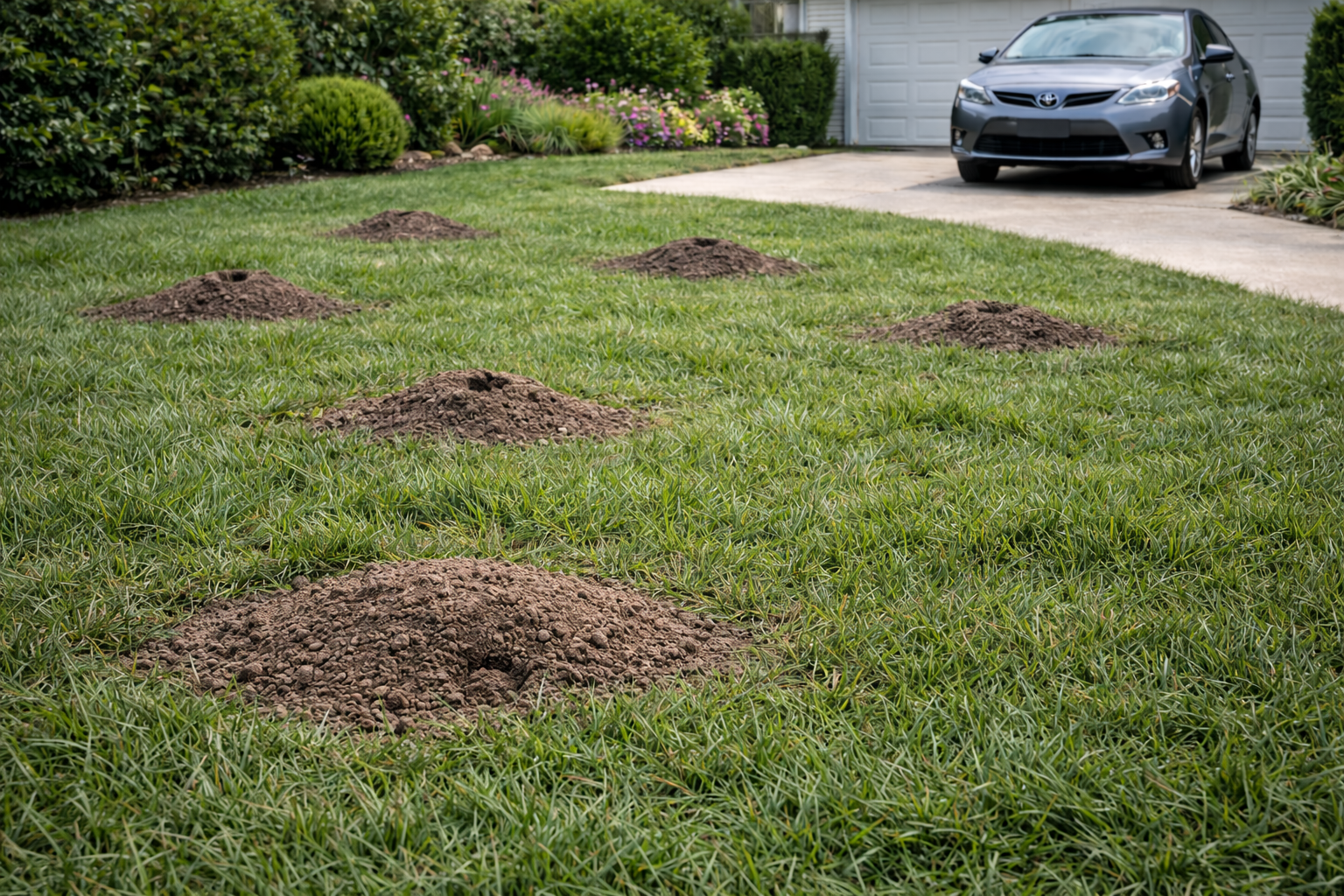
Gopher Activity in Perris, CA
Perris, located in western Riverside County, experiences notable gopher activity throughout the year, particularly during spring and early summer months. The combination of the area's sandy loam soils, extensive irrigation systems, and proximity to undeveloped land creates ideal conditions for pocket gopher populations to thrive. Property owners across neighborhoods ranging from agricultural areas near Menifee to residential subdivisions frequently encounter evidence of gopher burrowing on their land.
Why Perris Has Significant Gopher Activity
The geology and hydrology of Perris make the region particularly conducive to gopher colonization. The area sits on quaternary alluvial deposits characteristic of the San Jacinto Valley floor, resulting in predominantly sandy loam and silt loam soils that are relatively easy for pocket gophers to excavate. These soil types lack the compaction and clay content found in some neighboring regions, allowing gophers to tunnel with minimal energy expenditure.
Perris's semi-arid climate, with average annual rainfall around 10 inches concentrated primarily between November and March, means that irrigation becomes essential for maintaining landscaping and agriculture. The extensive network of irrigation lines, flood irrigation systems, and residential sprinkler networks creates reliable moisture sources that attract gophers seeking both food and water. This pattern is especially pronounced in neighborhoods like Windy Acres and areas with established orchards and vineyards, where irrigation infrastructure supports both rodent populations and their preferred vegetation.
The city's location on the periphery of more urbanized regions also places it adjacent to undeveloped chaparral and coastal sage scrub habitat extending toward the San Jacinto Wildlife Area. Gophers inhabiting native vegetation in these surrounding lands frequently disperse into developed properties, particularly as seasonal conditions fluctuate. The interface between wild and developed land serves as a continuous source population for residential and commercial infestations.
Common Gopher Species in Perris
The Botta's pocket gopher (Thomomys bottae) is the dominant gopher species throughout Perris and the broader Inland Empire region. Named for naturalist Paolo Botta, this species is medium-sized, typically weighing between 2 and 4 ounces with a body length of 5 to 7 inches, though individuals can occasionally reach larger dimensions. Their fur coloration ranges from brown to gray-brown, with some populations displaying slightly darker dorsal surfaces and lighter ventral regions.
Botta's pocket gophers possess several anatomical features adapted to subterranean life. Their front limbs are relatively large and equipped with prominent claws suited for excavation. External cheek pouches, which give the species its "pocket" designation, extend from the mouth to the shoulders and are used to transport food and nesting materials through tunnel systems. Their small eyes and ears represent adaptations to life underground, where vision is less critical than tactile sensitivity.
In the Perris area, Botta's pocket gophers establish burrow systems in yards, agricultural areas, landscaped properties, and native vegetation. They are solitary animals except during breeding season, with each individual maintaining its own tunnel network that can extend 50 to 200 feet in favorable soil conditions. These gophers are active year-round, though activity levels and visibility vary seasonally, and they can be encountered across all residential neighborhoods and undeveloped parcels throughout the city.
When Gopher Activity Peaks in Perris
Gopher activity in Perris follows predictable seasonal patterns closely tied to breeding cycles and soil moisture availability. The primary breeding season extends from January through March, driven by lengthening daylight hours and the arrival of spring moisture. During this period, male gophers expand their tunnel systems and increase surface activity while searching for females, resulting in heightened mound-building visible on residential properties and throughout the area.
Spring rains, typically occurring between February and April in Perris, soften the soil and make excavation easier while also increasing the availability of succulent plant growth that gophers consume. Property owners frequently report the most visible evidence of gopher presence during the months immediately following significant rainfall events. The combination of moisture and available food resources creates ideal conditions for population expansion during this window.
Summer activity in Perris remains substantial but becomes somewhat less visible as established tunnel systems become hardened and gophers spend more time below ground. However, sustained irrigation of lawns and gardens throughout June, July, and August maintains moisture levels that support continued gopher populations. Fall months bring a secondary surge in activity as gophers prepare for winter by accumulating food reserves and reinforcing burrow systems. By November, activity generally decreases, though Perris's relatively mild winters mean gophers never truly become dormant and remain capable of causing damage year-round.
Signs of Gopher Damage in Perris Yards
The most recognizable evidence of gopher presence in Perris properties consists of crescent or fan-shaped mounds of fresh soil. These mounds, typically 4 to 12 inches in diameter and 2 to 4 inches high, are created as gophers push excavated soil upward while expanding their tunnel systems. Mounds appear individually scattered across yards rather than in organized lines, and the soil comprises a mix of textures reflecting various soil layers from different tunnel depths. In the sandy loam soils common to Perris, mounds appear relatively uniform in color, typically tan or light brown.
Gophers damage irrigation systems extensively throughout Perris properties, particularly in areas with drip lines and buried mainlines. Gopher tunnels frequently intersect with irrigation infrastructure, causing breaches that result in water loss and irregular watering patterns. Property owners may notice suddenly dry sections of landscape that were previously well-watered, or unexpected areas of surface saturation caused by broken underground lines. Landscape damage becomes visible as plants wilt and die in patches, particularly in vegetable gardens and ornamental plantings.
Direct plant damage appears as severed roots and damaged bulbs, with gophers sometimes pulling entire small plants underground through their tunnels to consume roots and foliage. Perris homeowners commonly discover missing perennials, damaged shrubs, and compromised vegetable gardens. In residential areas with fruit trees and established landscaping, tree and shrub damage can be severe, with gophers girdling roots that may eventually lead to plant death. Hardscape damage, including settling foundations and broken pathways, results as tunnel networks undermine soil stability beneath patios, walkways, and driveways.
Landscape Considerations for Perris Properties
The landscaping aesthetic common throughout Perris reflects both desert adaptation and traditional suburban preferences. Many properties feature drought-tolerant xeriscape elements including decorative rock, mulch beds, and native shrubs supplemented by established lawns irrigated year-round. This combination of soil-level plantings, frequently watered softscape, and ground-level landscape features creates extensive gopher habitat and food sources within residential properties. The prevalence of vegetable gardens and fruit tree cultivation, particularly in older neighborhoods and rural-adjacent subdivisions, provides additional incentive for gopher colonization.
Perris properties with extensive turf grass are especially vulnerable to gopher damage, as the consistent moisture from irrigation systems supports both gopher populations and the roots they consume. Root systems of common landscape plants in the Perris area, including junipers, coyote brush, California buckwheat, and various flowering shrubs, exist within the active tunneling zone where gophers forage. Ornamental perennials, particularly bulb-forming varieties and shallow-rooted plants, suffer significant predation from pocket gophers.
Hardscape elements such as decorative rock borders, mulched beds, and pathways characteristic of contemporary Perris landscaping actually facilitate gopher activity by maintaining soil moisture and providing cover for tunnel entrances. Areas with abundant hardscape and minimal live vegetation experience reduced gopher pressure compared to intensively planted yards with active irrigation systems. Properties incorporating raised garden beds, container plantings, and well-maintained hardscape boundaries experience fewer gopher-related issues than traditional in-ground landscape designs common to many Perris neighborhoods.
For professional gopher control in Southern California, visit Rodent Guys — serving Los Angeles, Orange, San Bernardino, and Riverside counties.