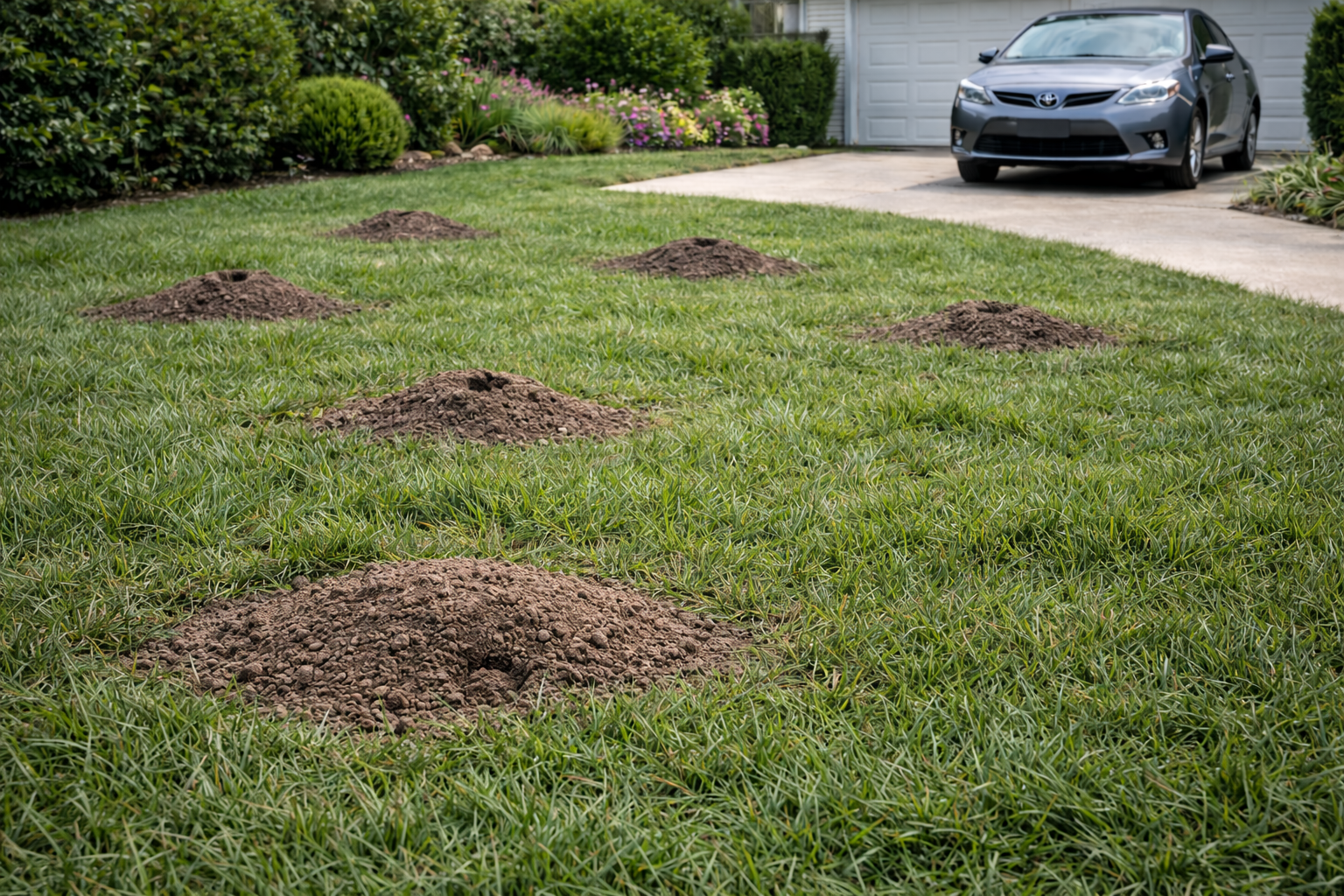
Gopher Activity in Redlands, CA
Gophers are a persistent presence in Redlands, California, where the combination of sandy loam soils, abundant irrigation infrastructure, and proximity to undeveloped foothill terrain creates ideal conditions for these burrowing rodents. Residents throughout the city—from the historic neighborhoods near the University of Redlands to the newer developments in south Redlands—regularly encounter signs of gopher activity on their properties. Understanding local gopher behavior and the environmental factors that support their populations helps property owners recognize problems early and make informed decisions about land management.
Why Redlands Has Significant Gopher Activity
Redlands sits at approximately 1,200 feet elevation in San Bernardino County, positioned at the transition zone between the San Bernardino Valley floor and the San Bernardino Mountains. This geographic location provides Redlands with distinct advantages for gopher survival and reproduction. The city's underlying soil composition—predominantly sandy loam with areas of clay loam—offers minimal resistance to tunneling and burrow construction, allowing gophers to establish extensive underground networks with relatively little effort.
The region receives an average of 15 to 18 inches of annual rainfall, concentrated primarily between November and March. This moisture pattern, combined with Redlands' extensive network of irrigation systems that support residential landscaping, golf courses, and agricultural parcels, maintains soil conditions favorable for gophers year-round. Properties with drip irrigation, lawn watering systems, and ornamental plantings create particularly attractive habitat because the disturbed, irrigated soil is easier to burrow through than compacted or dry earth.
Additionally, Redlands' proximity to undeveloped foothills, national forest lands, and open space areas means that gopher populations from wild areas regularly disperse into developed neighborhoods. The city's tree-lined streets and extensive use of native and ornamental plantings provide food sources that attract and sustain gopher populations. Properties backing up to Prospect Park, areas near Mill Creek, and neighborhoods adjacent to the San Bernardino National Forest experience particularly consistent gopher pressure.
Common Gopher Species in Redlands
The Botta's pocket gopher (Thomomys bottae) is the primary gopher species found throughout Redlands and the surrounding San Bernardino County region. Named after naturalist Paolo Botta, this species is well-adapted to the semi-arid conditions and soil types characteristic of Southern California's inland valleys and foothill zones. Botta's pocket gophers typically weigh between 2 and 4 ounces and measure approximately 5 to 7 inches in body length, with a short, sparsely haired tail that rarely exceeds 1 inch.
These gophers possess distinctive physical characteristics that distinguish them from ground squirrels and other burrowing mammals. Their front legs feature large, curved claws specifically adapted for excavating soil, and their lips close behind their large front teeth, allowing them to carry soil in their mouth without ingesting dirt. Their fur coloration ranges from light brown to nearly black, depending on local soil composition and individual variation. Most Botta's pocket gophers in Redlands display medium to dark brown pelage, which provides camouflage in the region's sandy and clay soils.
In Redlands specifically, Botta's pocket gophers thrive in the loose, well-irrigated soils of residential yards, parks, and agricultural lands. They prefer areas with softer substrate and available food resources, making yards with mature trees, shrubs, and perennial plantings particularly susceptible to colonization. Unlike some gopher species that prefer denser clay soils or higher elevation habitats, Botta's pocket gophers are generalists well-suited to Redlands' variable soil conditions and mixed land-use environment.
When Gopher Activity Peaks in Redlands
Gopher activity in Redlands follows seasonal patterns influenced by breeding cycles, soil moisture conditions, and food availability. The primary breeding season extends from January through March, when moisture levels are highest and soil conditions are most favorable for burrow expansion and pup rearing. During this period, male gophers become more active as they search for mates, and females begin constructing enlarged chamber systems to accommodate litters of three to five young.
Spring months (March through May) represent peak activity periods for gophers throughout Redlands because the combination of winter rainfall and spring irrigation creates optimal soil conditions. Redlands gardeners and property managers typically notice fresh mounds appearing most frequently during late winter and spring. As summer arrives and irrigation schedules intensify to combat the region's hot, dry conditions, gopher activity may decline temporarily in areas with less frequent watering, but properties receiving regular irrigation maintain active gopher populations.
Fall months (September through November) show secondary activity peaks as gophers prepare for winter by creating food caches and expanding burrow systems. The cooler temperatures of autumn also make surface activity less energetically costly than during the heat of summer. Winter activity varies with rainfall patterns; years with abundant winter moisture may show continued activity throughout the season, while drier winters see reduced gopher surface presence. However, Redlands' consistent irrigation practices mean that winter dormancy is less pronounced here than in unirrigated regions.
Signs of Gopher Damage in Redlands Yards
Property owners in Redlands can identify gopher presence through several distinct signs. The most obvious indicator is the presence of fresh mounds—conical or crescent-shaped piles of excavated soil appearing in lawns, garden beds, and landscaped areas. Gopher mounds in Redlands' sandy loam soils tend to be relatively small, often 3 to 6 inches in diameter and 2 to 4 inches high, though multiple mounds in a single yard indicate established populations rather than transient visitors.
Subsurface tunneling damage represents another significant concern for Redlands property owners. Gophers create horizontal and vertical burrow networks that can undermine sidewalks, patios, and irrigation lines. Properties with drip irrigation systems frequently experience damage where gophers chew through plastic tubing or disrupt emitter placement, leading to dry patches and wasted water. Damage to sprinkler lines, underground electrical conduits, and other buried utilities is common in established gopher colonies.
Plant damage provides additional evidence of gopher activity. Gophers in Redlands yards consume a wide variety of plants, including roots, bulbs, and shoots. Homeowners may observe wilting or dying plants that appear healthy above ground but have been severed or gnawed below the soil surface. Gnawed tree bark at or just below the soil line indicates gopher feeding on young fruit trees or ornamental plantings. In garden beds, missing vegetables or herbs, particularly root crops and bulbs, often result from gopher foraging rather than other pest activity.
Landscape Considerations for Redlands Properties
Redlands' distinctive landscape character reflects both its historic citrus agriculture heritage and contemporary residential development patterns. Many established neighborhoods feature mature citrus and avocado trees, ornamental palms, and drought-tolerant plantings suited to the region's Mediterranean climate. These landscaping preferences, while aesthetically and ecologically appropriate, can either attract or deter gopher activity depending on specific plant selection and property management practices.
Certain plantings common throughout Redlands are particularly vulnerable to gopher damage. Citrus trees, including the orange, lemon, and grapefruit varieties that characterize older Redlands properties, face significant risk from gophers that girdle young trees or damage root systems. Root vegetables, bulbs, and succulent perennials popular in Redlands water-wise gardens—including agave, aloe, and ornamental grasses—attract gophers seeking moisture and nutritious food sources. Properties featuring extensive vegetable gardens, native plant gardens, or newly installed landscape plantings experience higher gopher impact than properties with hardscape-dominated designs.
The balance between softscape (planted areas) and hardscape (patios, pathways, structures) significantly influences gopher activity on Redlands properties. Yards with extensive lawn areas and dense plantings provide continuous habitat and food resources that support established gopher populations. Conversely, properties with substantial hardscape features, minimal irrigation, and sparse vegetation experience less frequent gopher colonization. Redlands residents considering landscape modifications should evaluate how their design choices might either encourage or discourage gopher settlement and activity.
For professional gopher control in Southern California, visit Rodent Guys — serving Los Angeles, Orange, San Bernardino, and Riverside counties.